Product recalls due to packaging failures represent a financial nightmare and a severe reputational blow for manufacturers. Often, the culprit is not the bottle structure or the chemical formulation of the product, but a compromised seal. When oxygen, moisture, or contaminants breach the headspace, shelf life plummets, and consumer safety is jeopardized. While high-barrier induction foils offer theoretical protection, they fail catastrophicallly if not applied with absolute geometric perfection.
This reality highlights the critical limitation of manual or semi-automatic processes. Human operators cannot maintain the consistency required to align thousands of liners per hour without error. Misalignment, missing wads, and biological contamination are inevitable variables when relying on manual labor. Consequently, the Bottle Cap Foil Wad Inserting Machine has evolved from a convenience tool into a necessity. It provides the process reliability required to guarantee that a liner’s barrier properties actually perform at scale.
In this article, we examine how automated insertion technology secures the "hermetic standard," reduces the cost of poor quality, and serves as a critical control point in modern packaging lines.
Key Takeaways
Precision = Preservation: Shelf life claims rely on the hermetic integrity of the seal, which is dictated by the precise placement of the foil wad prior to capping.
Beyond Barrier Films: Modern automation supports complex liner structures (active packaging, induction wads) that manual processes cannot handle consistently.
ROI Factors: Return on investment is driven not just by speed, but by waste reduction (reject rates) and the elimination of product recalls.
Compliance Control: Automated insertion integrates with vision systems to ensure 100% verification for regulated sectors (pharma/food).
The Barrier Science: Why Consistency is the Enemy of Spoilage
To understand the value of automation, we must first define what the packaging is fighting against. Shelf life is not an abstract concept; it is a calculated duration during which a product resists specific environmental antagonists. A liner that is slightly misaligned compromises the entire defense system.
The "Four Threats" Framework
Manufacturers generally battle four primary antagonists that degrade product quality. If the barrier film is not seated correctly, these threats bypass the seal:
Oxygen (Oxidation): The primary cause of rancidity in fats and oils. Even microscopic channels in a seal allow enough oxygen ingress to alter flavor profiles and degrade pharmaceutical potency.
Moisture (Staleness/Clumping): For hygroscopic powders, humidity is the enemy. It causes clumping and chemical instability. Conversely, for liquid products, moisture loss leads to changed viscosity.
Light (UV Degradation): Ultraviolet light degrades photosensitive vitamins and causes discoloration. Aluminum foil is superior here, offering a complete block against UV radiation compared to translucent plastics.
Microbes: Bacterial and fungal growth require ingress pathways. A hermetic seal is the only barrier between a sterile product and a non-sterile environment.
The Hermetic Standard
In food safety and pharmaceuticals, a seal that is "99% good" is a 100% failure. The concept of permeability differs from that of an absolute barrier. Plastic caps have permeability; they breathe over time. Induction wads, particularly those with aluminum layers, create an absolute barrier.
However, this barrier is rendered useless if the liner is tilted, folded, or inverted inside the cap. When a cap with a poorly seated liner is torqued onto a bottle, the induction sealer cannot apply even pressure. This results in "cold spots" where the polymer doesn't bond to the bottle lip, leaving invisible micro-leaks. Consistency in insertion is, therefore, the prerequisite for the hermetic standard.
Material Evolution
The stakes are rising as materials evolve. We are shifting from simple laminates to "Active Packaging." Modern liners often contain oxygen scavengers or desiccant layers engineered to actively maintain the internal atmosphere. These materials are often thicker, stiffer, or more delicate than traditional foam wads. Manual handling risks damaging these functional layers before they even reach the bottle. Automation ensures these advanced materials are handled with the specific mechanical care they require.
How the Bottle Cap Foil Wad Inserting Machine Secures Integrity
The chemical barrier is provided by the foil, but the performance is delivered by the machine. The mechanical precision of the insertion process is a direct variable in shelf-life extension.
Mechanical Precision as a Shelf-Life Variable
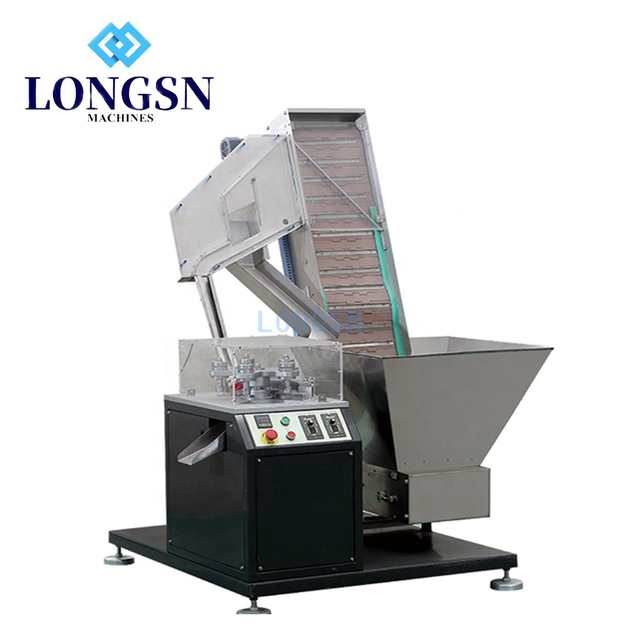
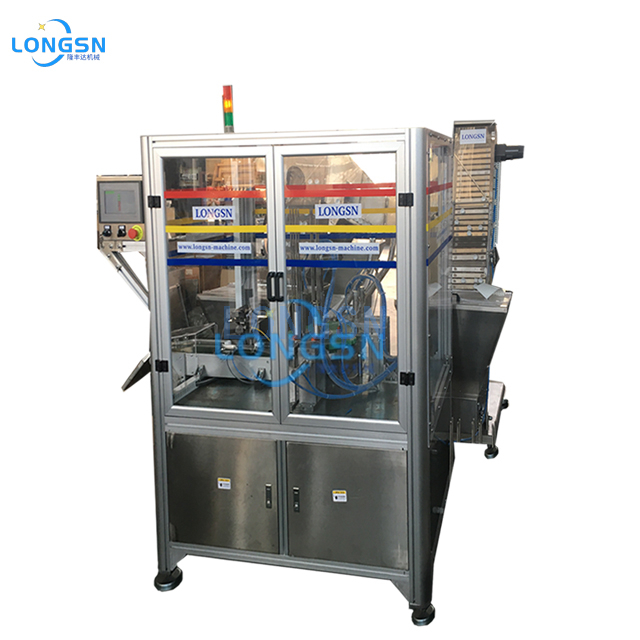
Automated insertion systems, whether rotary or linear, utilize precise tooling to force the wad to the very bottom of the cap. This is not merely about getting the piece inside; it is about seating it flat against the cap floor, under the thread retention beads.
A high-quality Bottle Cap Foil Wad Inserting Machine prevents common defects such as "cocked caps" or "folded wads." A folded wad creates a gap twice the thickness of the liner on one side of the bottle lip and zero pressure on the other. This uneven distribution guarantees an induction failure. By mechanically verifying that every liner is seated flat, the machine ensures that downstream capping and sealing equipment can function within their validated parameters.
Handling Complex Laminates
Modern multi-layer barrier films present handling challenges. They can be prone to static electricity, causing them to stick to each other or jump out of the cap. Traditional wads might be forgiving, but pharmaceutical-grade laminates are not.
Advanced automation combats this using vacuum pick-and-place systems coupled with mechanical pushers. Vacuum cups securely hold the liner during transfer, while mechanical plungers seat it firmly. This dual-action approach ensures that even stiff or static-prone materials are placed without curling or edge damage, preserving the integrity of the barrier layers.
Hygiene and Contamination Control
In dairy, beverage, and pharmaceutical sectors, the machine plays a vital role in hygiene. Manual insertion introduces the "human vector"—the risk of operators transferring oils, skin cells, or pathogens onto a liner that will directly touch the product. Enclosed, hygienic machine designs eliminate this contact. Stainless steel construction and HEPA-filtered enclosures allow these machines to operate within cleanroom environments, maintaining the sterility chain from liner manufacturing to final capping.
Critical Features for Evaluating Insertion Automation
Not all automation delivers the same level of security. When evaluating equipment, buyers must look beyond simple speed and focus on features that guarantee seal integrity.
Detection and Rejection Systems
The most critical feature for shelf-life preservation is the "Zero-Defect" capability. High-end inserters integrate vision sensors or mechanical probes to inspect every single cap.
The system must detect:
Missing Wads: Ensuring no bottle goes unsealed.
Double Wads: Preventing fitment issues and sealing failures.
Inverted Wads: Critical for liners with different sides (e.g., foil facing up vs. down).
The decision logic is simple: if the machine cannot verify the insertion, the cap is rejected immediately. This prevents the defective cap from ever reaching the filling line.
Throughput vs. Accuracy
Buyers often face a trade-off between Caps Per Minute (CPM) and placement accuracy. While rotary machines can achieve high speeds, stability mechanisms are essential. At high velocities, centrifugal force can dislodge a lightweight liner before it is fully seated. Look for machines utilizing star wheels or vacuum belts that maintain positive control of the cap throughout the entire index cycle. Accuracy should never be sacrificed for raw throughput.
Flexibility and Changeover
Production environments are rarely static. A single line may run 18mm pharmaceutical caps in the morning and 120mm wide-mouth food jar caps in the afternoon. The machine must handle various wad types, including EPE foam, induction foil, and pressure-sensitive liners.
| Feature | Standard Machine | Advanced Shelf-Life Focused Machine |
|---|
| Wad Handling | Gravity feed / Simple slide | Vacuum pick-and-place with static elimination |
| Quality Control | Random spot checks | 100% Vision Inspection & Auto-Reject |
| Changeover | Tool-heavy, 1+ hours | Tool-less, quick-release parts (<15 mins) |
| Data Integration | Local counter only | Ethernet/IIoT ready for defect logging |
Rapid changeover tools reduce the Total Cost of Ownership (TCO) by minimizing downtime. If a machine takes four hours to switch formats, operators may rush the setup, leading to calibration errors that threaten shelf life.
The Economic Case: ROI Beyond Throughput
Justifying the capital expenditure for automated insertion often relies on calculating the Return on Investment (ROI). However, smart buyers look beyond labor reduction and calculate the cost of risk mitigation.
Cost of Poor Quality (COPQ)
Manual insertion carries hidden costs. Rework time is significant; if a batch of caps is found to have missing liners, thousands must be manually inspected. Wasted foil and caps add up. However, the exponential cost lies in a leaking bottle reaching a retailer. A single spoilage event can trigger a recall, retailer fines, and brand damage that costs significantly more than the automation equipment itself.
Labor Reallocation
The narrative of automation is often about replacing jobs, but in modern manufacturing, it is about labor reallocation. Repetitive manual insertion is a low-value task prone to repetitive strain injuries and boredom-induced errors. By automating this process, companies can up-skill labor towards line monitoring, quality control, and machine maintenance. Humans are better suited for solving problems than for performing the same motion 60 times a minute.
Scalability and TCO
Total Cost of Ownership includes the maintenance of wear parts like vacuum cups and punches. High-quality machines are built for longevity, reducing long-term CapEx. Furthermore, integrating machine data into broader plant automation or ERP systems allows for traceability. You can track exactly how many rejects occurred during a specific batch, providing data trails that are essential for audits and scalability.
Implementation Risks and Validation Protocols
Deploying automation requires careful planning to ensure compatibility and compliance.
Compatibility Checks
Cap Geometry: Not all caps are simple flat cylinders. Flip-tops, sport caps, and dispensing pumps have complex internal geometries. Standard wads may not seat easily in these designs without specialized tooling. It is vital to verify that the machine's plungers are designed to navigate these obstructions.
Foil-Machine Interaction: Static is a persistent issue. Ensuring the machine has active static elimination systems (ionizing bars) is critical. Without them, foil laminates can jam the feed tracks, leading to downtime.
The Validation Phase (IQ/OQ/PQ)
For buyers in the pharmaceutical and food sectors, the purchase is not complete without validation. This typically follows the V-model:
Installation Qualification (IQ): Verifying the machine is installed correctly according to manufacturer specifications.
Operational Qualification (OQ): Testing that the machine operates within its defined limits (speed, pressure, accuracy) under worst-case scenarios.
Performance Qualification (PQ): Proving the machine consistently produces shelf-stable seals during actual production runs.
Using simulation and trial runs before final purchase is recommended. Sending sample caps and liners to the manufacturer for a "Fat Acceptance Test" (FAT) ensures that the machine handles your specific materials correctly, avoiding costly modifications later.
Conclusion
In the quest to extend product shelf life, manufacturers often focus heavily on the chemistry of the foil and the physics of the induction sealer. However, the Bottle Cap Foil Wad Inserting Machine remains the unsung hero of the packaging line. It serves as a Critical Control Point (CCP), ensuring that the barrier material is present, positioned, and protected from contamination.
The strategic value is clear: precision equals preservation. As product formulations become more sensitive and supply chains lengthen, the margin for error shrinks. Manufacturers are advised to prioritize insertion accuracy and integrated detection capabilities over raw speed. Safeguarding brand reputation begins with the integrity of the seal.
As a next step, audit your current insertion defect rates. Understanding your current "leaker" percentage is the first step toward building a robust business case for advanced automation.
FAQ
Q: How does automated foil insertion affect induction sealing quality?
A: Automated insertion is critical for induction sealing success. Induction sealing relies on even pressure between the cap, liner, and bottle lip. If a liner is inserted manually and sits unevenly (cocked) or folded, the induction head cannot create a uniform bond. This leads to "cold spots" and leaks. Automation guarantees the liner is seated flat and tight against the cap floor, ensuring the geometry required for a perfect hermetic seal.
Q: Can a Bottle Cap Foil Wad Inserting Machine handle breathable or vented liners?
A: Yes, but it requires specific handling. Vented liners used for gas-releasing products (like bleach or fermented foods) have delicate membranes that can be damaged by aggressive mechanical plungers. Advanced machines use specialized vacuum tooling and softer placement mechanisms to insert these liners without compromising the vent’s functionality, ensuring the bottle doesn't bloat or leak.
Q: What is the difference between glued wads and friction-fit wads in automation?
A: Friction-fit wads rely on the cap’s retention beads (undercuts) to stay in place. The machine simply pushes the wad past these beads. Glued wads require a hot-melt glue module integrated into the machine. The automation applies a precise dot of glue to the cap floor before inserting the wad. This is common for liners that must stay inside the cap after the consumer opens the bottle.
Q: How do I calculate the ROI of a wad inserting machine?
A: To calculate ROI, sum the savings from three areas: reduced labor costs (wages and benefits), reduced material waste (fewer damaged foils/caps), and the elimination of spoilage/recall costs (Cost of Poor Quality). Compare this total annual saving against the machine's purchase price and maintenance costs. Often, preventing just one significant product recall justifies the entire investment.

 English