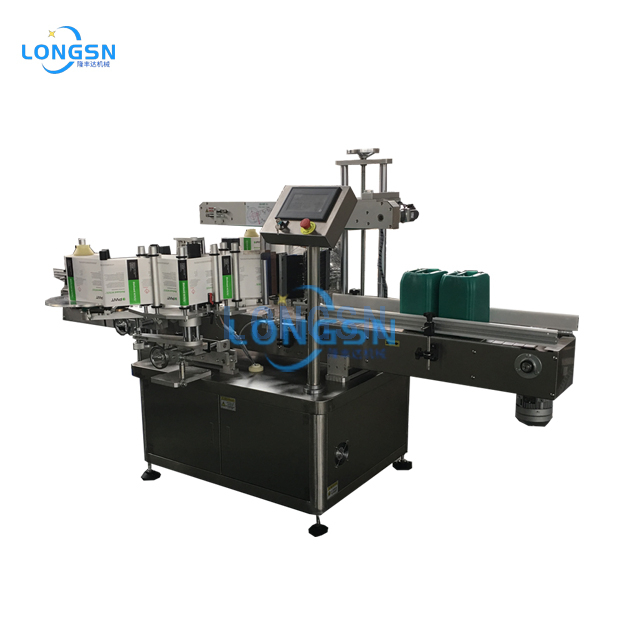
In the crowded aisles of modern retail, perception is reality. A crooked label or a peeling corner suggests a compromised product, instantly eroding consumer trust before they even open the cap. Brand perception is tied directly to packaging integrity. For manufacturers, the pressure to increase throughput often creates a conflict with quality control. Increasing line speeds can degrade placement accuracy, leading to the "speed versus precision" paradox.
Solving this requires more than just buying a faster machine. It demands a deep understanding of the engineering, integration, and operational criteria that define a high-performance packaging line. This article moves beyond basic definitions to explore how to select an Automatic plastic bottle labeling machine that delivers high Overall Equipment Effectiveness (OEE) and ensures your brand remains pristine on the shelf.
Key Takeaways
Accuracy is Systemic: Precision isn't just about the labeler; it relies on bottle stabilization, surface prep, and conveyor synchronization.
Architecture Matters: The choice between rotary and inline systems dictates the trade-off between raw speed and changeover flexibility.
The Hidden Cost of Downtime: Changeover times and unplanned maintenance often kill ROI faster than initial capital expenditure.
Vision Systems are Mandatory: For high-speed lines, automated optical inspection (AOI) is no longer optional for compliance and quality assurance.
The Business Case: Why Automate Labeling at Scale?
Transitioning from semi-automatic or manual processes to fully automated systems is a strategic financial decision. While the upfront capital expenditure is significant, the long-term operational efficiency justifies the investment for growing manufacturers.
Quantifying the Efficiency Gap
Manual and semi-automatic labeling processes are inherently limited by human speed and endurance. Industry benchmarks from organizations like PMMI indicate that switching to automated systems can yield efficiency gains of 25–40%. This gap widens significantly when you factor in "micro-stops." These are the frequent, short interruptions caused by human hesitation or minor adjustments that go unrecorded but devastate daily throughput.
Furthermore, human error is inevitable in repetitive tasks. Automation creates a predictable baseline. Data suggests that implementing high-speed automation can reduce labeling errors by 70–85%. This reduction translates directly to material savings, as fewer bottles are scrapped due to misaligned labels or wrinkling.
Consistency as a Compliance Tool
In regulated sectors like pharmaceuticals, nutraceuticals, and beverages, a label does more than sell the product. It carries critical data. Lot codes, expiration dates, and dosage instructions must be placed precisely to be legible and compliant. A high-performance Automatic plastic bottle labeling machine acts as a risk-mitigation asset. It ensures that every unit leaving your facility meets regulatory standards, protecting your business from retailer chargebacks and costly product recalls.
Labor Reallocation and Safety
The narrative around automation often focuses on replacing jobs, but the reality is labor reallocation. Repetitive motion injuries and fatigue cost the manufacturing industry billions annually. Fatigue is a primary driver of quality control failures. By automating the physical application process, you can move skilled workers to higher-value tasks. Instead of manually applying stickers, operators can focus on Quality Assurance (QA), line monitoring, and machine maintenance, reducing the $130 billion annual cost context associated with fatigue-related productivity loss.
Evaluation Criteria: Rotary vs. Inline Labeling Architectures
Selecting the right machine architecture is the most critical engineering decision you will make. The market is primarily divided between rotary and inline (linear) systems. Your choice depends on your SKU diversity and volume requirements.
Rotary Labelers (The High-Speed Specialist)
Rotary systems are the standard for massive volume industries like soft drinks and beer. In these systems, bottles enter a turret and are controlled individually by star wheels and hold-down plates.
Best for: High-volume, single-format runs requiring extreme precision at high speeds.
Mechanism: Physical control of every bottle via cam-driven or servo-driven turrets allows for complex label applications (e.g., neck and body simultaneously).
Trade-off: They have a large physical footprint. Changeovers are expensive and complex because they require specific "change parts" (star wheels, guides) for every different bottle shape.
Inline/Linear Labelers (The Flexible Workhorse)
Inline labelers are versatile and typically more compact. Bottles remain on a conveyor while a spacing wheel or screw feed separates them before they pass the applicator heads.
Best for: Contract packagers (co-packers) and facilities running multiple SKU shapes (round, square, oval) per shift.
Mechanism: Stabilization belts or chains align the product as it flows past the stationary labeling head.
Trade-off: They generally have lower top speeds compared to rotary systems and rely heavily on the bottle's stability on the conveyor.
Comparison of Labeling Architectures
| Feature | Rotary Systems | Inline (Linear) Systems |
|---|
| Throughput Speed | Extremely High (600+ ppm) | Moderate to High (50-300 ppm) |
| Bottle Control | Positive control (held on all sides) | Conveyor/Belt stability dependent |
| Changeover Speed | Slow (requires tool-based part swaps) | Fast (often tool-less adjustments) |
| Footprint | Large, complex installation | Compact, linear design |
| Cost | High Capital Expenditure | Moderate Capital Expenditure |
Adhesive Technology Considerations
Beyond the machine mechanics, the adhesive technology defines your operational costs. Pressure-Sensitive (PS) labels are dominant for the "no-label look" on clear plastic bottles. They offer clean operation and low maintenance but come with higher consumable costs per unit. Conversely, Cold Glue or Hot Melt systems are preferred for high-volume commodity beverages. While they involve messy cleanups and longer startup times, the material cost is significantly lower, making them viable for low-margin products.
Critical Integration Factors: Upstream and Downstream Dependencies
An Automatic plastic bottle labeling machine does not operate in a vacuum. Its performance is heavily dependent on the conditions created by upstream equipment and the verification systems installed downstream.
The "Clean Surface" Prerequisite
The most common cause of labeling failure isn't the labeler itself—it's the filling and washing process. If a bottle arrives at the labeling station with condensation, overflow residue, or wash-down water on the surface, the adhesive will fail. This leads to "flagging" (where the label edge lifts) or complete detachment.
To prevent this, integration must include air knives or drying tunnels immediately after the filling and capping stations. These devices strip moisture from the bottle surface, ensuring a clean, high-energy surface ready for bonding.
Synchronization and Pitch
Consistent spacing, or "pitch," is vital. If bottles arrive touching each other, the sensors cannot trigger accurately. High-speed lines utilize timing screws (scrolls) to separate bottles and accelerate them to match the labeler's conveyor speed. Modern systems use servo-driven synchronization. If the main conveyor speeds up or slows down, the labeling head automatically adjusts its dispensing speed to match, preventing skew.
Downstream Verification (The Safety Net)
In high-speed production, human operators cannot visually inspect every bottle. Machine Vision systems are now mandatory for quality assurance. Integrated automated optical inspection (AOI) cameras check for label presence, skew, and correctness (e.g., matching the label SKU to the production run). These systems link to automatic rejection stations, which divert defective bottles without stopping the line, preserving your OEE.
Defining Total Cost of Ownership (TCO) and ROI
When evaluating vendors, look beyond the sticker price. The Total Cost of Ownership (TCO) is determined by how the machine affects your daily operations over five to ten years.
Changeover Downtime
Downtime is the hidden killer of ROI. If a machine requires 45 minutes and a toolbox to switch from a 500ml round bottle to a 1L square bottle, you lose valuable production time daily. Superior machines feature "tool-less" adjustments with handwheels and digital position indicators. They also include recipe storage in the HMI (Human Machine Interface), allowing operators to recall precise settings for speed, delay, and dispense length instantly.
Predictive Maintenance & OEE
Reactive maintenance—fixing things only when they break—is obsolete. Modern labeling solutions incorporate IoT sensors that monitor motor vibration and temperature. This data allows for predictive maintenance, alerting teams to wear before a failure occurs. Furthermore, consider the accessibility of wear parts. Peel plates and drive rollers should be easily accessible to minimize Mean Time to Repair (MTTR).
Scalability and Modular Upgrades
Your production needs will change. Can the machine adapt? Modular systems allow you to add applicators later. For example, you might start with a single side labeler but later need to add a neck labeler or a second "redundant" head that allows for zero-downtime reel changes (automatically switching to the second roll when the first runs out).
Engineering for Consistency: Handling Plastic Bottle Variability
Plastic bottles present unique engineering challenges compared to glass or metal. They are lightweight, flexible, and prone to static. A standard labeler often fails to handle these nuances without specific features.
The "Squeeze" Factor
PET and HDPE bottles have thin walls. If the labeling machine applies too much pressure during application, the bottle deforms. Once the pressure is released, the bottle pops back to shape, causing the label to wrinkle or bubble. Conversely, insufficient pressure results in weak adhesion.
The solution involves top hold-down belts and spring-loaded peel plates. These components are designed specifically to stabilize lightweight plastics, applying just enough counter-pressure to ensure a smooth application without crushing the container.
Static and Environmental Control
Plastic friction generates high static electricity. A static-charged bottle acts like a magnet for dust and debris, which creates bumps under the label. Worse, static can cause the label to "jump" or curl before it touches the bottle. Essential integration for plastic lines includes ionization bars or static eliminators placed directly in the labeling zone to neutralize the charge immediately before application.
Shape Complexity
Not all plastic bottles are round cylinders. Ovals, squares, and custom ergonomic shapes are common in personal care and household products. Handling these requires orientation systems. Cameras or mechanical sensors detect a notch or a specific feature on the bottle, signaling the orientation mechanism to rotate the bottle so the label faces the correct panel perfectly.
Conclusion
Achieving consistent branding on the production line is an engineering challenge, not just a purchasing decision. It requires a delicate balance between production speed, bottle stability, and adhesion technology. The "best" Automatic plastic bottle labeling machine isn't necessarily the one with the highest theoretical speed, but the one that aligns with your specific SKU diversity, maintenance capabilities, and integration environment.
Before engaging vendors, conduct a thorough "bottle audit." Analyze your surface energy, shape variability, and upstream conditions. By prioritizing flexibility, synchronization, and automated verification, you can turn your labeling process from a production bottleneck into a competitive advantage.
FAQ
Q: What is the average OEE improvement when switching to a high-speed automatic plastic bottle labeling machine?
A: Industry benchmarks from organizations like PMMI suggest that moving from manual or semi-automatic processes to fully automated labeling can improve line efficiency by 25% to 40%. This gain comes from consistent throughput, reduction of micro-stops, and the elimination of operator fatigue, which stabilizes production speeds over long shifts.
Q: How does bottle shape (round vs. square) impact the choice of labeling machine?
A: Round bottles are typically easier to handle and can be labeled using simple wrap-around belt systems or rotary turrets. Square or oval bottles require precise orientation systems to ensure the label is applied to the flat panel. This often necessitates top hold-down belts and specific alignment mechanisms, making the machine slightly more complex than one designed solely for round containers.
Q: Can automatic labelers handle lightweight PET bottles without crushing them?
A: Yes, but the machine must be engineered for it. Systems designed for thin-walled plastic bottles utilize spring-loaded peel plates and synchronized top hold-down belts. These features stabilize the bottle and provide the necessary counter-pressure for adhesion without exerting enough force to deform or crush the lightweight plastic structure.
Q: What is the difference between "Zero Downtime" labeling and standard labeling?
A: Standard labeling requires the line to stop when the label roll runs out so an operator can splice in a new roll. "Zero Downtime" (or redundant) systems feature two labeling heads. When one roll is depleted, the system automatically switches to the second head without stopping the conveyor, allowing for continuous, uninterrupted production.
Q: How often does a high-speed labeling machine require maintenance?
A: While daily cleaning of adhesive residue and paper dust is recommended, comprehensive preventive maintenance usually follows a schedule based on running hours (e.g., every 500 or 1,000 hours). Modern machines with predictive maintenance features may extend these intervals by monitoring wear on motors and bearings, allowing teams to address issues only when necessary rather than on a rigid calendar basis.

 English