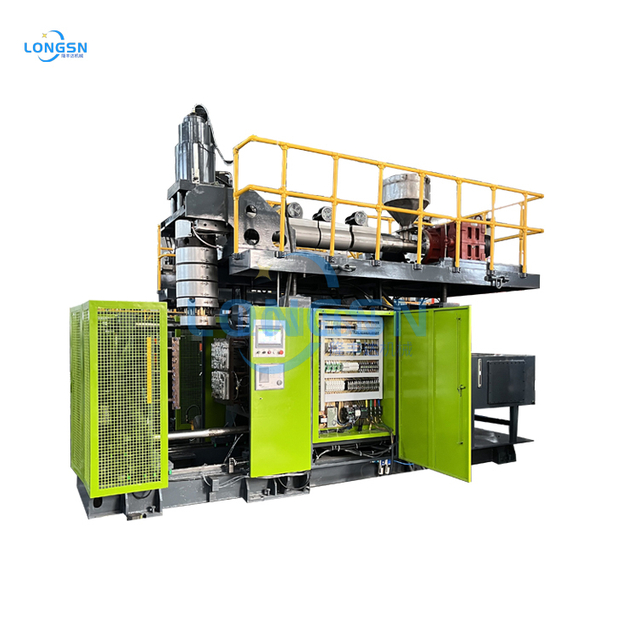
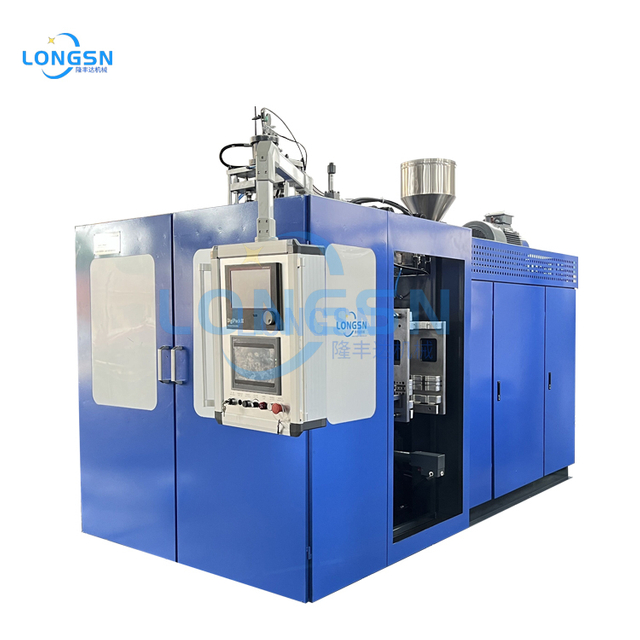
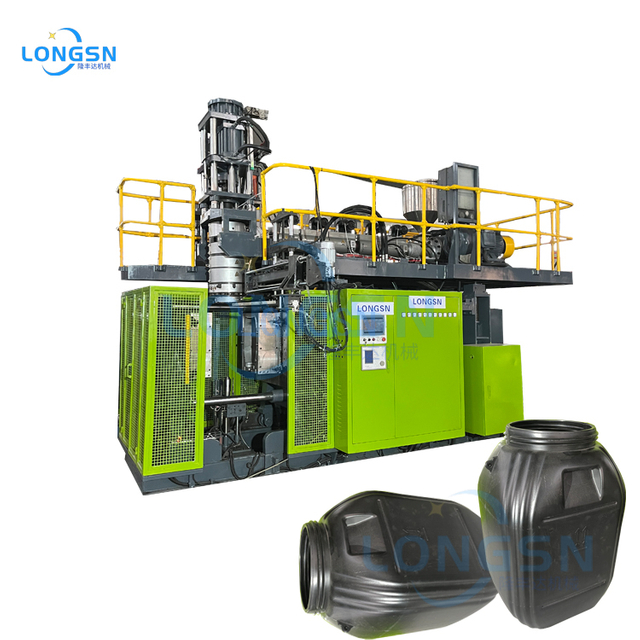
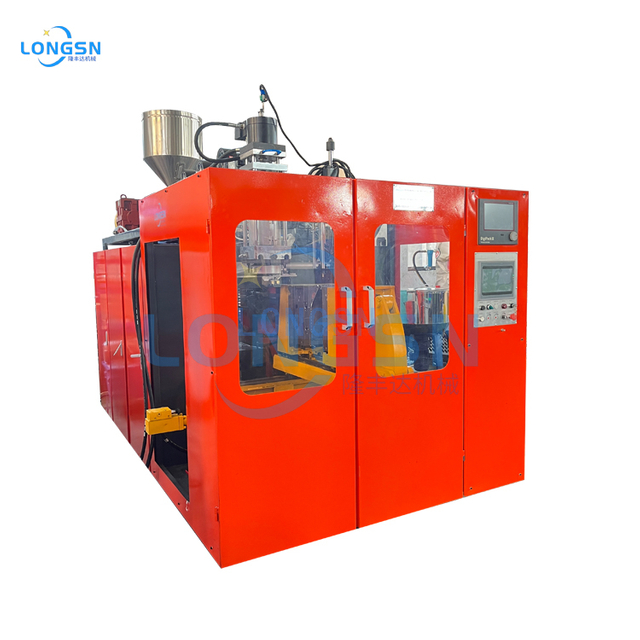
For industrial chemical manufacturers, agrochemical producers, and food ingredient suppliers, packaging failure is not merely a lost product. It represents a significant liability, environmental hazard, and potential brand damage. The integrity of the container is just as critical as the chemical stability of the liquid inside. This reality creates a constant tension in the manufacturing process: the need for high-speed production versus the strict structural integrity required for UN-certified containers.
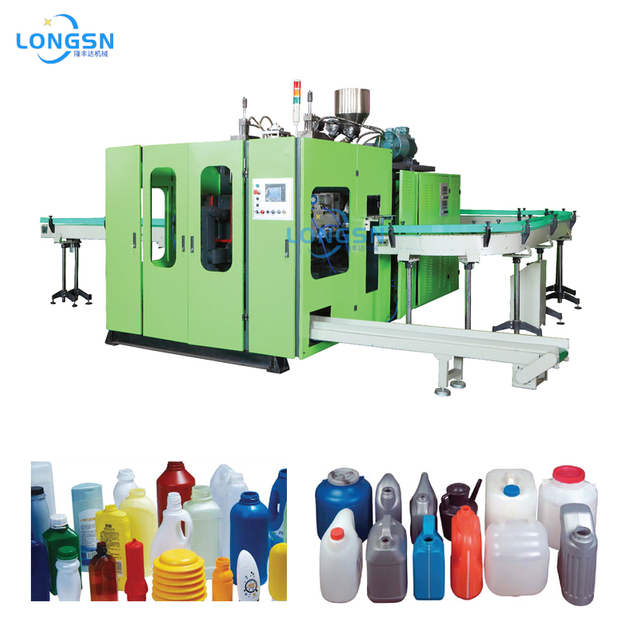
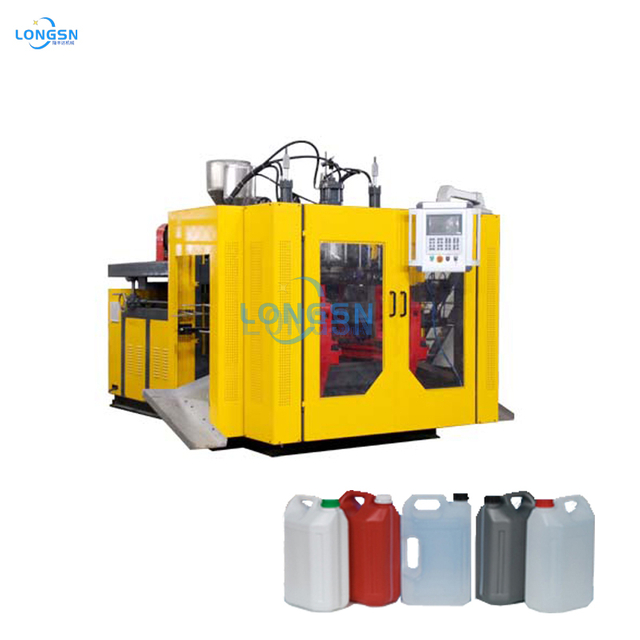
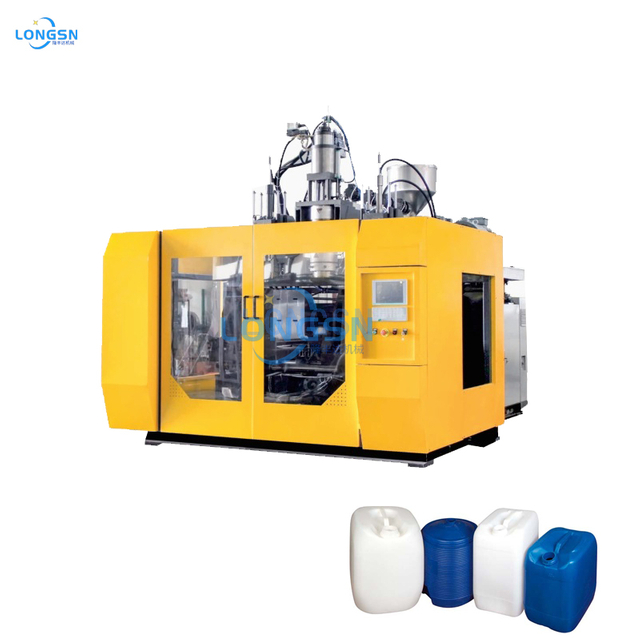
Manufacturers often struggle to balance output volume with the rigorous demands of drop tests and stack load performance. If your equipment cannot maintain consistent wall thickness across thousands of cycles, compliance becomes a gamble. This is where the specific configuration of your HDPE jerry can Extrusion Blow Molding Machine becomes the critical variable. It is no longer just a commodity tool; it is the primary driver for achieving weight optimization, material economy, and safety certification at scale. In this guide, we explore the technical requirements for producing durable jerry cans ranging from 1L to 30L.
Key Takeaways
Compliance as a Baseline: Production equipment must be capable of meeting UN 3H1/Y standards and ASTM D5272 drop tests repeatedly, not just theoretically.
Capacity Flexibility: Efficiently scaling from 1L bottles to 30L stackable drums requires specific machine configurations regarding die heads and clamping force.
Material Economy: Multi-layer co-extrusion technology allows the use of up to 80% regrind (PCR) without compromising the virgin inner/outer layers required for certification.
Thermal Realities: Proper cooling calibration is the hidden driver of cycle time and structural stability, preventing vacuum deformation in large-volume containers.
Defining "Durability": The Standards Your HDPE Extrusion Blow Molding Machine Must Meet
In the world of industrial packaging, "durability" is not a subjective marketing term. It is a measurable set of regulatory standards that your machinery must deliver on every single cycle. When producing containers for Dangerous Goods (Class II & III), specifically under UN certification (3H1/Y & 3H1/X), the margin for error is non-existent.
UN Certification and Pass/Fail Criteria
The primary benchmark for jerry can performance is the ability to survive specific drop tests without leakage. For a standard 30L chemical drum, this often involves a drop from 1.9 meters at -18°C. Your machine's parison control directly influences whether a container survives this impact.
If the extrusion process allows for inconsistent wall density, the container will fail at the stress points—typically the bottom corners or the handle seam. The machine must maintain specific weight tolerances to ensure density is sufficient. For example, a 30L jerry can typically targets a net weight of 1,200g with a strict tolerance of ± 8%. Equipment that drifts beyond this range creates a fleet of non-compliant containers.
Structural Integrity Factors
Achieving this durability requires precise control over how the molten plastic is distributed within the mold. This is where advanced parison programming becomes non-negotiable.
Wall Thickness Distribution: A machine equipped with 100-point parison thickness control allows you to reinforce critical areas like corners and handles. Simultaneously, it thins out low-stress areas to save material. Without this granularity, you are forced to make the entire container heavier just to strengthen one weak point, which wastes resin.
Flash Integrity: The seam strength is often the weakest link in a blow-molded product. This is particularly true for "Tight Head" designs where the handle is integral. Automated deflashing units must be calibrated to trim excess material without tearing into the weld line. Poor flash removal can compromise the neck area, leading to leaks during pouring or stacking.
Chemical Resistance & Permeation
Durability also extends to chemical compatibility. Microscopic voids in the HDPE wall can lead to permeation, where the chemical inside slowly migrates through the plastic. This is often a result of poor plasticization in the extruder. The screw design of your machine must ensure a homogenous melt temperature and consistent mixing. Proper plasticization eliminates these micro-voids, ensuring the container acts as a true barrier against aggressive solvents or agrochemicals.
Scalability in Production: Configuring Equipment for 1L to 30L Capacities
Scaling production from small 1L consumer bottles to industrial 30L stackable drums involves more than just changing a mold. The physics of blow molding change drastically as the container volume increases. Manufacturers must evaluate machine flexibility and tooling requirements to handle this range efficiently.
Clamping Force & Platen Size
The force required to keep a mold closed against the blow pressure varies significantly by size. A setup for 5L containers might utilize a 4-cavity mold to maximize output, requiring a specific distribution of clamping force. In contrast, a 30L setup is typically a single-cavity operation that demands concentrated force to seal a much larger perimeter.
You face a critical decision point here regarding the extrusion method:
Continuous Extrusion: Ideal for smaller, faster runs (1L - 5L). The parison is extruded continuously, and the mold shuttles over to grab it. This allows for high-speed cycle times.
Accumulator Head Systems: Essential for 20L-30L containers. A large parison (weighing over 1kg) is too heavy to hang freely while waiting for the mold. It will stretch and sag under its own weight, causing thin spots at the top. An accumulator head stores the melt and pushes it out rapidly (the "shot"), ensuring uniform thickness from top to bottom.
Die Head Versatility
For facilities running mixed SKUs, the ability to switch die heads quickly is vital. You need an HDPE jerry can Extrusion Blow Molding Machine that allows for rapid changeovers between different die head centers. This flexibility accommodates varying container widths, such as switching from a narrow 1L flat bottle to a wide 30L square stackable drum, without excessive downtime.
Output Capabilities and Benchmarks
Understanding real-world output helps in planning production shifts. Below is a comparison of typical output focuses for different container sizes:
| Metric | Small Format (1L - 5L) | Large Format (20L - 30L) |
|---|
| Primary Efficiency Driver | High-cavity speed & rapid cycle times. | Cooling time management & thermal stability. |
| Parison System | Continuous Extrusion. | Accumulator Head (FIFO). |
| Typical Weight | 40g - 250g. | 1,000g - 1,600g. |
| Output Benchmark | ~800 - 1,000 bottles/hour (depending on cavities). | ~3,000 units/day (for 1.3kg containers). |
Material Efficiency & Compliance: Evaluating Multi-Layer Co-Extrusion Capabilities
Raw material costs, specifically HDPE resin prices, are the largest variable in your operational expenses. Co-extrusion technology transforms this cost structure by allowing the use of recycled materials without sacrificing regulatory compliance.
The Economics of Layering
Modern extrusion blow molding machines often utilize a 3-layer co-extrusion die head. This setup sandwiches a cost-effective middle layer between two thin layers of high-quality virgin resin.
Inner Layer (10-20%): Virgin HDPE. This is the only layer that touches the product, ensuring food contact compliance or chemical purity.
Middle Layer (60-80%): This is where the savings occur. You can use Regrind (scrap from your own production), Post-Consumer Recycled (PCR) material, or Calcium Carbonate filler.
Outer Layer (10-20%): Virgin HDPE with colorant. This ensures the jerry can looks brand new, with a smooth finish and consistent color, masking the recycled gray/black material inside.
This approach significantly lowers Total Cost of Ownership (TCO) by mitigating resin price volatility while maintaining the external appearance and internal certification standards required by customers.
View Strip Application
Beyond basic layering, advanced machines support auxiliary extruders to add "view strips." This is a transparent vertical line running down the side of the container, allowing users to see the liquid level inside. For the agrochemical and automotive fluid sectors, this is a high-value feature that differentiates premium packaging from generic containers.
Fluorination Compatibility
If you are producing containers for aggressive solvents, fuels, or pesticides, standard HDPE may not provide enough barrier protection. Your production line must be compatible with post-mold fluorination processes or capable of co-extruding barrier layers (like EVOH) to prevent hydrocarbon permeation.
Mitigating Production Risks: Cooling, Mold Design, and Defect Prevention
The manufacturing process is fraught with thermal and geometric risks. Controlling these factors is what separates a high-yield operation from one plagued by scrap.
The Thermal Challenge
Cooling is the bottleneck of blow molding. A large 30L mass of plastic retains heat aggressively. If you rush the cooling phase to improve cycle time, the container will warp after ejection. Furthermore, "paneling" or vacuum deformation is a major risk. As a capped container cools, the air inside contracts, creating a vacuum that sucks the walls inward. To prevent this, machines and molds must be calibrated to ensure the plastic is rigid enough before ejection, and filling temperatures must be monitored (typically kept below 60-80°C).
Mold Design Considerations
The geometry of the mold dictates usability. Two critical features include:
Anti-Gurgle Geometry: Inferior jerry cans "glug" when poured, splashing dangerous chemicals. Advanced mold designs incorporate specific geometry near the neck and handle to allow air to enter smoothly as liquid exits.
Stacking Lugs: Industrial jerry cans are palletized. Precision molding of bottom and top interlocks (lugs) is essential to ensure they lock together securely on a Europallet. If these lugs are malformed due to poor blowing pressure, the entire pallet stack becomes unstable.
Inline Quality Control
Waiting for a batch test to find a defect is too expensive. Modern lines integrate automated leak testers and vision systems directly after the deflashing station. These systems detect pinholes, handle flash issues, or neck deformities immediately, rejecting the specific unit and alerting operators to adjust machine parameters before more scrap is produced.
Calculating ROI: Cycle Times, Defect Rates, and TCO
Investing in high-end extrusion blow molding equipment is a financial decision driven by Total Cost of Ownership (TCO), not just the initial purchase price.
Total Cost of Ownership Drivers
Energy consumption is a massive operational cost. Machines utilizing servo-motor driven hydraulic systems can deliver energy savings of 30-60% compared to traditional constant-speed hydraulics. The servo only draws power when movement is required, rather than idling at high pressure.
Resin savings also compound quickly. By using precision parison programming to shave just 10-15g off a heavy container—while maintaining structural specs—a manufacturer can save tons of resin annually.
Operational Efficiency
Downtime kills profitability. The cost of downtime for mold changes must be weighed against the premium for machines equipped with quick-change tooling systems. Additionally, superior clamping alignment reduces flash waste. Less flash means higher material yield and less strain on the regrind loop.
Conclusion
Producing industrial-grade jerry cans is a delicate balance of pressure, temperature, and geometry. The right HDPE jerry can extrusion blow molding machine is not just about output speed; it is about the repeatability of safety standards. Whether you are producing 1L bottles or 30L drums, the equipment must guarantee that the ten-thousandth unit is as robust as the first.
For manufacturers targeting the hazardous goods or food-grade markets, investment in precise parison control, multi-layer capability, and robust cooling systems is the only path to long-term profitability and liability protection. These features transform raw plastic into a trusted containment solution.
We encourage you to request a detailed cycle-time analysis or material cost simulation based on your specific container weight and volume requirements to see the true ROI of upgrading your production line.
FAQ
Q: What is the difference in machine requirements for 5L vs. 30L jerry cans?
A: While 5L cans often use continuous extrusion with multi-cavity molds for speed, 30L cans typically require an accumulator head system. This system manages the heavy parison shot weight (1kg+) and prevents stretching or sagging before the mold closes, ensuring uniform wall thickness.
Q: Can recycled HDPE (PCR) be used for UN-certified jerry cans?
A: Yes, but usually via Co-Extrusion. By using a 3-layer machine, you can sandwich recycled material (up to 40-80%) between layers of virgin HDPE. This maintains the structural integrity and chemical resistance required for UN certification while significantly reducing raw material costs.
Q: What is the ideal wall thickness for a 30L HDPE jerry can?
A: Wall thickness varies by design, but a standard 30L chemical drum generally requires a net weight between 1,050g and 1,250g to pass drop tests. The machine must maintain a minimum wall thickness of 1.0mm - 1.5mm at the thinnest points, which are usually the corners.
Q: How do you prevent paneling (vacuum deformation) in large jerry cans?
A: Paneling occurs when a capped container cools and internal air contracts. This is mitigated by strictly controlling the mold cooling cycle so the container is rigid before ejection. Additionally, you must ensure filling temperatures do not exceed 60-80°C without proper venting.
Q: Are special molds required for "Anti-Glug" jerry cans?
A: Yes. The "Anti-Glug" feature requires a specific mold geometry near the neck and handle to allow air to enter as liquid pours out. This complex geometry requires precise blow molding pressure to form correctly without thinning the plastic in critical areas.

 English