Procuring an extrusion blow moulding machine is a high-stakes capital expenditure where hardware specifications directly dictate unit economics, cycle times, and product consistency. Misalignment between machine capabilities and production requirements leads to over-capitalization on unnecessary features or operational bottlenecks. You might face high scrap rates, poor wall thickness distribution, and excessive energy consumption if you get this wrong. Navigating the procurement process requires a strict evaluation of machine architecture, parison control technologies, clamping mechanisms, and automation integrations. You have to ensure the selected equipment meets precise manufacturing tolerances and return targets. Understanding these technical nuances is the first step toward building a highly efficient, scalable manufacturing floor. We will break down exactly what to look for when evaluating equipment to ensure your production lines run at maximum efficiency.
- Architecture Dictates Application: The choice between continuous extrusion and accumulator head systems must be driven by part weight, resin melt strength, and production volume.
- Process Validation is Crucial: Buyers must evaluate Extrusion Blow Moulding (EBM) against Injection Blow Molding (IBM) early to align tooling budgets, neck-finish tolerances, and geometric complexity with the correct forming method.
- Precision Requires Advanced Control: Wall thickness distribution systems (WDS) and radial parison programming are non-negotiable features for reducing material waste and ensuring structural integrity in complex container geometries.
- Actuation Impacts Operating Costs: Transitioning from traditional hydraulic to all-electric or hybrid machines significantly alters energy consumption, maintenance schedules, and clean-room compliance.
- Changeover Efficiency Drives Uptime: Quick Mold Change (QMC) systems and intuitive HMI/PLC controls are critical for facilities managing high-mix, low-volume production runs.
Technical Pre-Screening: Extrusion Blow Moulding (EBM) vs. Injection Blow Moulding (IBM)
Evaluating process fundamentals is the most critical step before finalizing equipment specifications. Extrusion blow moulding mechanics involve extruding a hollow tube of molten plastic, known as a parison. The machine captures this parison in a cooled mold and inflates it with compressed air. This method excels at producing hollow parts with complex shapes, handle-ware, and variable wall thicknesses. You rely on the pinch-off edges of the mold to seal the parison at the top and bottom before inflation. Conversely, injection blow moulding mechanics rely on injecting plastic into a preform mold over a core pin. The machine then indexes this preform to a blow station. IBM is optimal for high-tolerance, scrap-free, small-to-medium pharmaceutical and cosmetic bottles where neck finish dimensions cannot vary by even a fraction of a millimeter.
Capital expenditure and tooling cost dynamics heavily favor EBM for specific applications. EBM offers significantly lower tooling costs compared to IBM. This cost advantage makes it ideal for custom designs and lower-volume product variants. Tooling for IBM requires both an injection mold and a blow mold, doubling the complexity and machining time. Facilities looking to launch multiple product lines rapidly often default to EBM to minimize upfront tooling investments. When you factor in the cost of hot runners and precision core pins for IBM, the barrier to entry becomes substantially higher.
Material efficiency and scrap management differ vastly between the two processes. EBM inherently generates flash, which includes top, bottom, and handle scrap. Operators must trim and recycle this flash to maintain material efficiency. You have to account for the regrind ratio in your material feed system. IBM, however, is a flash-free process. Understanding this distinction is vital for planning downstream automation and regrind systems. Geometric freedom is another defining factor. EBM is uniquely suited for producing irregularly shaped containers, canisters, and bottles with integrated handles that cannot be manufactured via IBM.
To properly evaluate which process fits your production floor, follow these sequential validation steps:
- Analyze the container geometry for integrated handles or extreme asymmetrical shapes, which immediately mandate EBM.
- Review the required neck finish tolerances; if you need injection-molded precision for snap-fit caps, lean toward IBM.
- Calculate the total tooling budget across all planned SKUs to see if the dual-mold requirement of IBM breaks the project budget.
- Assess your facility's capability to handle, grind, and re-blend scrap material, as EBM requires a robust closed-loop regrind system.
| Evaluation Criteria | Extrusion Blow Moulding (EBM) | Injection Blow Moulding (IBM) |
| Tooling Complexity | Single blow mold with pinch-offs. Lower cost. | Requires injection mold and blow mold. High cost. |
| Scrap Generation | Generates flash (top, bottom, handles). Requires trimming. | Flash-free process. 100% material utilization per shot. |
| Geometric Freedom | High. Can produce handles and asymmetrical shapes. | Limited. Best for symmetrical, handle-less parts. |
| Neck Finish Tolerance | Good, but requires post-mold calibration and facing. | Excellent. Injection molded neck finish is highly precise. |
| Part Weight Range | Fractions of an ounce to large 55-gallon drums. | Typically limited to smaller containers (under 1 liter). |
Aligning Machine Architecture with Production Demands
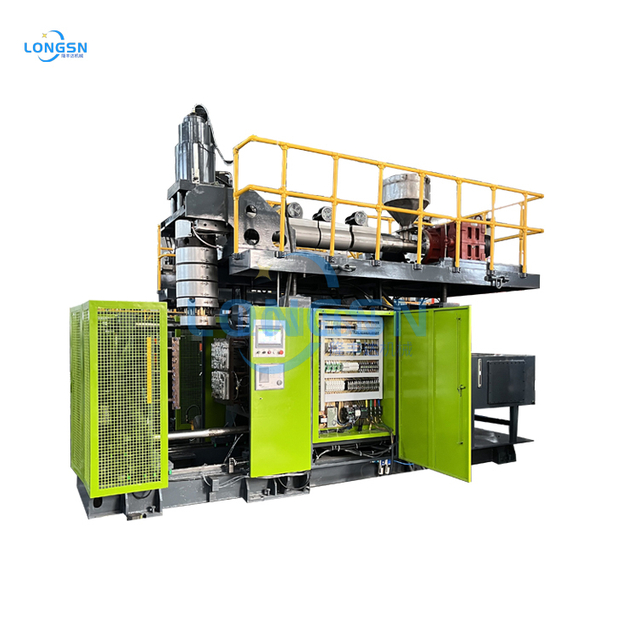
Selecting the wrong fundamental machine type results in material sagging, inefficient cycle times, or an inability to process specific resins. Continuous extrusion machines and accumulator head machines serve entirely different production demands. Evaluating shuttle configurations versus rotary wheel configurations is essential for continuous systems. The shuttle mechanism indexes molds back and forth to capture a continuously flowing parison without stopping the extruder. This design maximizes extruder uptime and stabilizes melt temperatures. When the mold closes on the parison, a carriage physically moves the mold away from the die head to a blowing station, allowing the next parison to extrude without interruption.
Continuous extrusion systems are best suited for high-volume production of lightweight to medium-weight containers. Typical applications include packaging, cosmetics, dairy bottles, and household canisters. Resin compatibility is a major consideration here. Operators frequently process HDPE, PP, PVC, and PETG on continuous machines. The steady flow of material prevents heat-sensitive resins like PVC from degrading inside the die head. If PVC sits idle in a heated barrel, it will burn and release corrosive gases, making continuous flow an absolute necessity.
Accumulator head machines operate on a completely different mechanical principle. The mechanism stores molten plastic in an internal chamber before executing a rapid, high-pressure extrusion. This rapid push prevents the heavy parison from sagging under its own weight before the mold closes. These machines are the industry standard for large industrial parts, automotive components, and heavy-walled drums. Typically, they handle parts weighing over two to three kilograms. Matching extruder output capacity with the required shot size and cooling time is critical. This balance prevents extruder idling or material starvation during long cooling cycles. If you are molding a 55-gallon drum, the cooling time might exceed two minutes; the accumulator head must size its storage capacity to match the extruder's output over that exact duration.
Critical Extrusion and Die Head Features
Evaluating the core components responsible for melting and shaping the polymer ensures long-term process stability. Extruder screw design and length-to-diameter (L/D) ratios directly impact melt quality. High L/D ratios, typically 24:1 or 30:1, promote optimal melt homogeneity without causing polymer degradation. The longer the screw, the more time the resin has to melt via mechanical shear rather than relying solely on heater bands. Specialized barrier flights and mixing sections are necessary when processing high percentages of regrind or color masterbatches. A poorly designed screw will yield un-melted particles, known as "unmelts," which create weak points and visual defects in the final container.
Parison programming and wall thickness distribution systems dictate part quality and material usage. Axial and radial parison control are essential for optimizing material distribution. Utilizing 100-point to 300-point profile control is critical for asymmetrical or complex shapes, such as off-center neck bottles. The programmer uses a servo actuator to raise and lower the die pin during extrusion, dynamically changing the gap. Advanced WDS directly supports lightweighting initiatives. By placing material exactly where it is needed—thickening the corners for drop strength while thinning the flat side panels—manufacturers improve structural integrity while driving down raw material consumption.
Multi-layer co-extrusion capabilities expand product possibilities and market reach. Evaluating multi-manifold die heads for 3-layer to 7-layer applications is necessary for specialized packaging. These setups allow for the incorporation of post-consumer recycled cores or EVOH barrier layers. An EVOH layer prevents oxygen ingress, which is mandatory for extending the shelf life of food products like ketchup or mayonnaise. The trade-offs include an increased machine footprint and complex thermal management requirements. Each layer requires a dedicated extruder, significantly increasing the complexity of the die head, the required floor space, and the maintenance burden on your technicians.
Clamping Systems and Tooling Integration
Assessing the mechanical forces required to form the part and cool it efficiently is vital for equipment longevity. Calculating the required clamp force relies on the projected part area and the internal blow pressure. You multiply the square inch area of the flattened parison by the air pressure (usually 80 to 120 PSI), and then add a safety factor of at least 20%. Insufficient clamp tonnage leads to thick pinch-offs, excessive flash, and blown-out container bottoms. Tie-bar and tie-bar-less designs offer different operational advantages. Tie-bar-less designs provide superior access for mold changes and automation integration, allowing overhead cranes to drop tooling directly into the machine. Proportional valve control ensures smooth mold closing, which protects the tooling from slamming and extends its lifespan.
Mold cooling and cycle time optimization directly impact output capacity. Evaluating platen design for optimal water flow and cooling channel integration is a standard procurement step. Efficient heat transfer out of the mold reduces the overall cycle time. You need turbulent water flow through the mold's cooling channels to extract heat rapidly from the thickest parts of the plastic, usually the neck and the tail pinch-off. The integration of chilled air blowing systems further reduces internal cooling times. By flushing the inside of the container with sub-zero air during the blow cycle, manufacturers can shave seconds off each cycle, dramatically increasing daily throughput.
Quick Mold Change systems are essential for facilities managing high-mix production schedules. Assessing magnetic platens, quick-connect fluid manifolds, and automated mold positioning systems is highly recommended. These technologies reduce changeover times from hours to minutes. Instead of manually unbolting water lines and clamp plates, operators use centralized manifolds and hydraulic clamps. Minimizing machine downtime during tooling swaps directly increases overall equipment effectiveness and production profitability.
Actuation Technologies: Hydraulic vs. Hybrid vs. All-Electric
Balancing initial capital expenditure against long-term operational costs requires a deep dive into actuation technologies. Traditional hydraulic machines offer high clamp force availability and a lower initial purchase price. They benefit from established maintenance protocols familiar to most technicians. However, the cons include higher energy consumption, the constant risk of oil leaks, and elevated ambient noise levels. Hydraulic systems also require regular fluid changes, filter replacements, and cooling towers to manage the heat generated by the hydraulic pumps.
All-electric machines represent the modern standard for high-precision manufacturing. When specifying an Extrusion Blow Moulding Machine, prioritizing all-electric actuation yields up to 50% energy savings. These machines offer strict clean-room compatibility, making them ideal for medical and food-grade applications because there is zero risk of aerosolized hydraulic oil contaminating the parts. Servo motors paired with ball screws provide unmatched precision and repeatability for carriage movements and mold clamping. The primary drawback is a higher initial capital expenditure and potential limitations in ultra-high tonnage applications where hydraulic cylinders still dominate.
Hybrid systems offer a strategic compromise for many manufacturers. Evaluating hybrid machines involves pairing electric extruders and carriage movements with hydraulic clamping. This setup provides the energy efficiency of electric drives for continuous movements while leveraging hydraulics for high-force clamping requirements. Hybrids deliver an excellent balance of speed, force, and energy conservation for medium-to-large container production. You get the fast, repeatable indexing of a servo carriage without sacrificing the brute force needed to pinch off a heavy-wall industrial container.
Automation, Deflashing, and Downstream Integration
Bottlenecks frequently occur post-moulding due to manual handling or inefficient scrap removal. In-machine deflashing is a critical feature for modern production lines. Evaluating integrated punching and trimming stations ensures clean top, bottom, and handle deflashing before the part exits the machine. In-machine deflashing positively impacts cycle time, neck finish precision, and part quality consistency. It eliminates the need for secondary trimming operations, reducing labor requirements. The tooling must be perfectly aligned; otherwise, the punch will gouge the container body, creating scrap.
Automated part handling and quality assurance systems secure the production flow. The integration of take-out robots and conveyor systems prevents part damage during ejection. Dropping warm bottles onto a hard chute causes dents and scuffs. In-line leak testing and vision inspection systems provide automated quality control. Leak testers pressurize each bottle and measure pressure decay to detect pinholes. Vision systems check the neck finish for ovality and verify label placement. These systems instantly reject defective parts, ensuring only compliant containers reach the packaging station. Automation reduces human error and maintains a continuous production rhythm.
Regrind management is the final component of a fully integrated cell. Closed-loop systems capture flash immediately after trimming. Granulators reduce the scrap into uniform particles. Vacuum loaders then re-introduce this material directly into the hopper, blending it with virgin resin at a precise ratio, usually between 10% and 30%. Efficient regrind management minimizes material waste, prevents contamination, and keeps the production floor clear of overflowing scrap bins.
Control Systems (HMI/PLC) and Industry 4.0 Readiness
Usability, data logging, and maintenance capabilities define the effectiveness of modern control systems. The importance of intuitive human-machine interfaces cannot be overstated. Modern HMIs store tooling recipes, which reduces changeover errors and minimizes operator training time. Instead of manually adjusting heater band temperatures and timer relays, a technician loads a saved recipe, and the PLC configures the machine instantly. Clear visual diagnostics help operators identify process deviations, such as a drop in chilled water pressure or a heater band failure, before they result in scrap.
Predictive maintenance and remote diagnostics are essential for maximizing uptime. Evaluating built-in sensors for vibration, temperature anomalies, and energy monitoring provides a clear picture of machine health. If a main extruder bearing starts vibrating out of tolerance, the system flags it weeks before a catastrophic failure occurs. Remote access capabilities allow OEM technicians to log into the PLC and perform troubleshooting without visiting the facility. This connectivity minimizes unplanned downtime and ensures software updates are deployed efficiently across your entire fleet of machines.
Conclusion
- Compile a comprehensive part specification sheet including 3D models, resin data, and target cycle times to ensure accurate machine sizing.
- Request highly customized RFQs and pilot run data from shortlisted OEMs to validate performance before finalizing the purchase.
- Conduct a facility audit to verify available power drops, chilled water capacity, and compressed air volume to support the new equipment.
- Schedule a factory acceptance test (FAT) using your specific production molds and resins to validate cycle times and part quality before shipment.
FAQ
Q: When should I choose an Extrusion Blow Moulding (EBM) machine over an Injection Blow Molding (IBM) machine?
A: Choose EBM when producing containers with complex geometries, integrated handles, or asymmetrical shapes. EBM is also preferable for lower-volume runs due to significantly lower tooling costs. IBM is better suited for small, high-tolerance, flash-free pharmaceutical or cosmetic bottles.
Q: What is the difference between continuous extrusion and accumulator head blow moulding?
A: Continuous extrusion pushes a steady stream of plastic and uses moving shuttle molds to capture the parison. Accumulator heads store molten plastic and push it out rapidly in one large shot, preventing heavy parisons from sagging. Accumulator heads are used for large industrial parts.
Q: How does parison programming reduce material costs in extrusion blow moulding?
A: Parison programming adjusts the die gap during extrusion, changing the wall thickness of the plastic tube at specific points. This allows manufacturers to thin out non-structural areas and reinforce corners, reducing overall part weight and saving raw material.
Q: Are all-electric extrusion blow moulding machines worth the higher initial investment?
A: Yes, for high-volume production. All-electric machines consume up to 50% less energy, eliminate hydraulic oil maintenance, and provide superior precision. The energy savings and reduced scrap rates typically offset the higher initial capital expenditure within a few years.
Q: How do you calculate the required clamp tonnage for an EBM machine?
A: Clamp tonnage is calculated by multiplying the projected surface area of the part by the internal blow air pressure, then adding a safety factor. Insufficient clamp force causes the mold to blow open slightly, resulting in thick pinch-offs and excessive flash.

 English