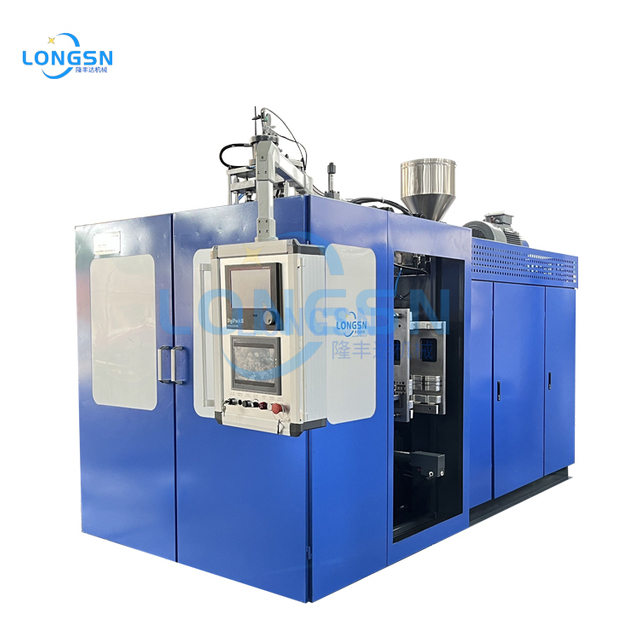
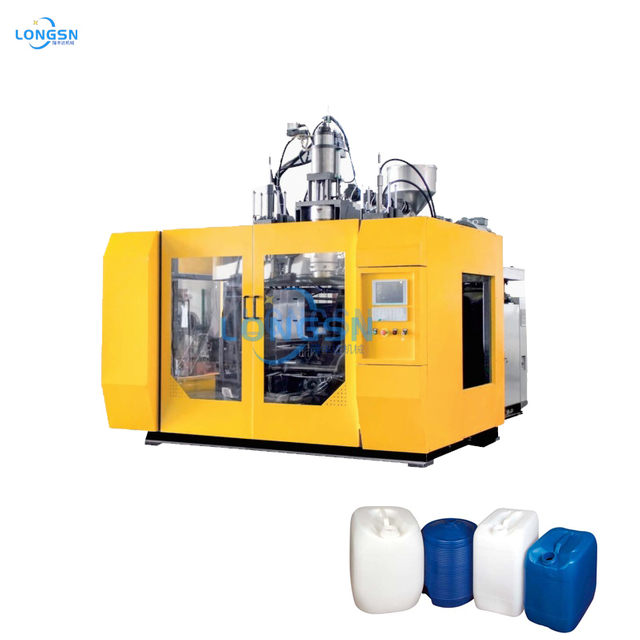
Investing in capital manufacturing equipment carries high financial and operational stakes. You cannot afford missteps when scaling your production lines. Selecting the wrong equipment leads directly to high scrap rates. It drives up energy consumption and creates crippling production bottlenecks. You need a reliable framework to evaluate your options carefully. This article provides a structured, evidence-based evaluation process. You will learn how to align technical capabilities directly to your specific manufacturing goals. We explore essential specifications, operational efficiencies, and strict compliance requirements. By the end, you will confidently match your production baseline against available technology. We guide you through part sizing, material compatibility, and critical vendor assessments. This process ensures your final equipment decision supports immediate output needs while securing long-term business growth.
Key Takeaways
- Match the extrusion technology (Continuous vs. Accumulator) directly to your part size, weight, and volume requirements.
- Prioritize Total Cost of Ownership (TCO), particularly energy consumption and raw material efficiency via precise parison control.
- Evaluate vendors based on their Factory Acceptance Test (FAT) transparency, spare parts availability, and aftermarket support, not just upfront pricing.
- Ensure the machine integrates seamlessly with existing downstream automation (deflashing, leak testing) and meets regional compliance standards.
Defining Your Production Baseline and Output Goals
Assessing Part Size and Weight
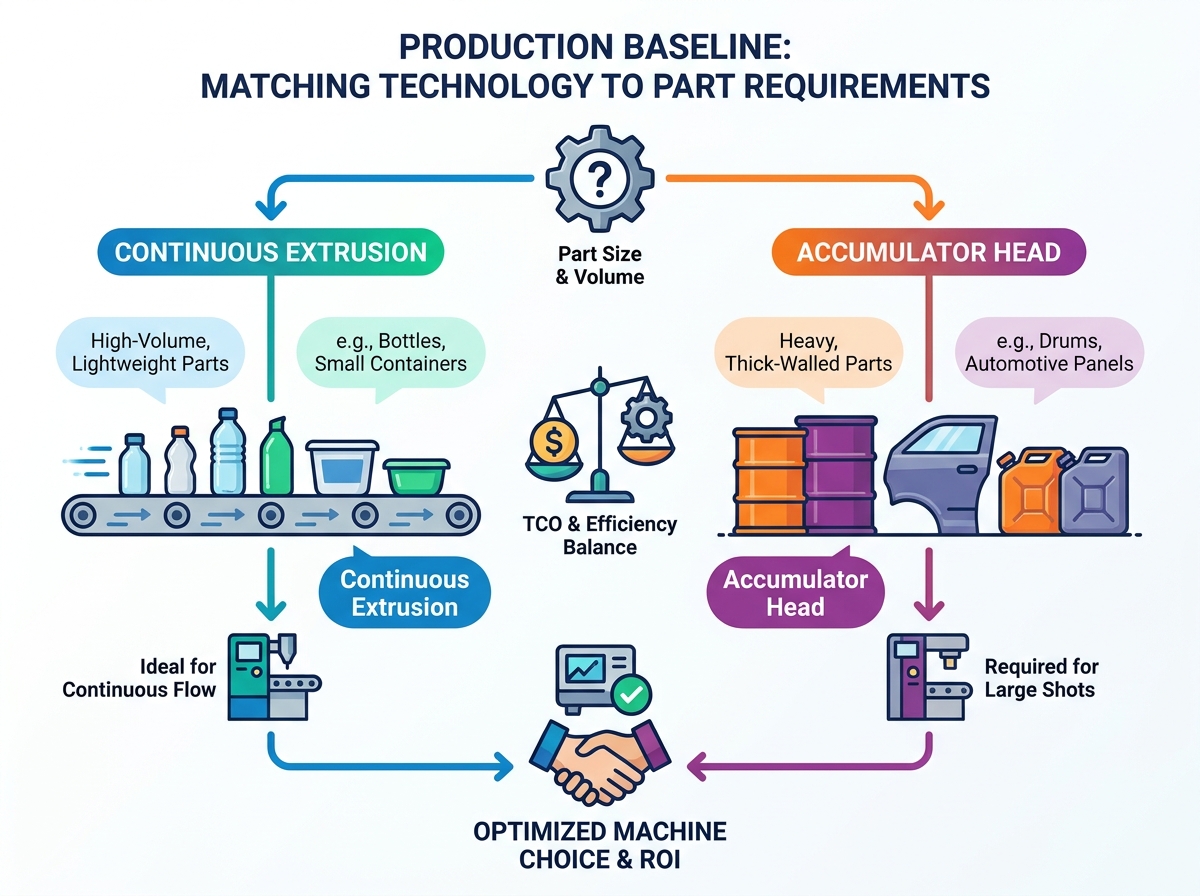
You must align your extrusion technology directly to specific part requirements. Continuous extrusion serves as the ideal method for high-volume, lightweight items. You typically use this process for consumer bottles, small containers, and personal care packaging. In this method, the extruder continuously pushes melted plastic through the die head. It forms an uninterrupted plastic tube called a parison. A flying knife or hot wire cuts the plastic tube before the mold closes. This process maximizes hourly output for smaller parts. Conversely, accumulator head technology handles heavy, thick-walled industrial parts. You require this approach for large chemical drums, intermediate bulk containers, or automotive panels. An accumulator head stores a specific volume of melted plastic in a heated reservoir. A hydraulic ram then pushes this entire plastic shot out rapidly. This rapid ejection prevents the heavy plastic tube from sagging under its own weight. If a heavy parison sags, you get uneven wall thickness and defective parts. You must evaluate your heaviest planned part to determine the correct extrusion method.
Material Compatibility
Your choice of resin directly dictates machine design requirements. Different materials require highly specific screw designs to melt properly. High-Density Polyethylene (HDPE) behaves very differently than Polypropylene (PP) during extrusion. Polyvinyl Chloride (PVC) requires specialized low-shear screws and corrosion-resistant barrel components to prevent material burning. Polyethylene Terephthalate Glycol (PETG) demands precise temperature control and thorough material drying before processing. You must specify the correct Length to Diameter (L/D) ratio for your chosen resin. A mismatched screw design causes poor melt homogeneity. It leads directly to weak parts, visual defects, and inconsistent production runs. Always provide your machine vendor exact material data sheets during the design phase. They use this data to engineer the optimal screw profile. This ensures consistent plastic melting and stable parison delivery.
Production Volume and Cavitation
You need a clear framework for calculating necessary mold cavities. Start by defining your annual volume targets clearly. Divide this number by your available production hours. This gives you the required hourly output. Next, determine an acceptable cycle time for your specific part design. You can then calculate the exact number of mold cavities needed.
- Define your total annual production volume targets.
- Calculate your available operating hours per year.
- Determine the target cycle time per individual part.
- Calculate the required number of mold cavities to meet hourly demand.
This structured math prevents you from over-specifying machine capacity. You avoid spending valuable capital on unnecessary production capabilities. A machine sized correctly runs continuously at optimal speeds. Oversized machines experience excessive idle time, which degrades melted plastic and wastes electrical energy.
Evaluating Core Technical Specifications
Clamping Force Requirements
You must calculate the required clamping tonnage accurately. Proper clamping force prevents flash and ensures perfect dimensional stability. The formula relies heavily on the projected area of your molded part. You multiply this projected area by the internal blowing pressure. Different toggle designs and hydraulic systems apply this force differently across the mold platen.
Table 1: Key Factors in Clamping Force Calculation
| Calculation Factor | Technical Description | Impact on Machine Tonnage |
| Projected Area | The maximum 2D surface area of the mold cavities. | Larger surface areas require exponentially higher clamping force. |
| Blowing Pressure | The internal compressed air pressure used to form the part. | Higher air pressure demands stronger mechanical clamp resistance. |
| Material Viscosity | The flow resistance of the melted plastic inside the mold. | Stiff materials require slight upward tonnage adjustments. |
Insufficient clamping force allows the mold halves to separate slightly during blowing. This separation creates excess flash around the parting line. It wastes valuable raw material and requires intense post-processing labor. Oversized clamps, however, consume excessive energy and increase machine footprint unnecessarily.
Extruder Output Capacity
You must match the extruder’s melt capacity directly to your cycle time. Manufacturers typically measure melt capacity in kilograms per hour (kg/hr). If the extruder produces plastic too slowly, your cycle times increase drastically. You lose overall daily production output. If it produces plastic too quickly, the melted material sits idle inside the barrel. Excessive residence time causes severe material degradation. You lose structural integrity, visual clarity, and color consistency. When selecting an Extrusion Blow Molding Machine, verify its maximum melt output carefully. Ensure it aligns perfectly with your calculated hourly material demand. You should target an extruder running at roughly 70 to 80 percent of its maximum capacity. This leaves room for future optimization while preventing unnecessary wear on the screw motor.
Parison Programming Systems
Advanced parison programming remains critical for modern, profitable manufacturing. It controls the exact wall thickness of the plastic tube during the extrusion phase. You should invest in robust 100-point or 300-point controllers. These systems adjust the die gap dynamically as the parison drops. They place more plastic in high-stress areas like bottle corners or handles. They thin out the plastic in low-stress cylindrical areas. This precision reduces raw material waste significantly. It also improves overall part strength and enhances drop-test performance. Modern controllers use servo-hydraulic or electro-mechanical actuators to move the die pin rapidly. Without parison programming, you must make the entire part thicker to satisfy the weakest point. This outdated approach wastes massive amounts of expensive resin over a production year.
Analyzing Energy Efficiency and Operational Performance
Drive Systems: Hydraulic vs. All-Electric vs. Hybrid
You must compare available drive systems objectively. Hydraulic machines offer high clamping power and lower upfront costs. However, they consume more electricity continuously and require extensive oil maintenance. All-electric machines provide superior precision, quieter operation, and massive energy savings. They do carry a noticeably higher initial capital expenditure. Hybrid machines blend both technologies effectively. They use electric servo drives for extrusion and carriage movement. They retain hydraulics strictly for high-tonnage clamping. You must weigh upfront costs against long-term operational savings carefully. If your local electricity rates run high, all-electric systems pay for themselves rapidly. They also eliminate hazardous oil disposal requirements. We recommend plotting a five-year energy usage chart to compare these three drive options accurately.
Scrap Reduction and Flash Management
Efficient flash management minimizes raw material losses instantly. You should evaluate machine features supporting automated in-line deflashing. Automated punch systems remove excess plastic from the neck and tail immediately after molding. They feed this hot scrap directly into automated regrind systems. The machine then blends the regrind back into the virgin resin hopper automatically. This closed-loop process drastically reduces material handling waste. It lowers your overall production expenses by maximizing resin yield. Hand-trimming parts slows down production and introduces human error. Automated flash management ensures every gram of purchased plastic ends up in a sellable product. You must ensure the regrind blender maintains exact dosing ratios. Too much regrind weakens the final part structure.
Energy Consumption Metrics
You must assess specific energy consumption accurately before signing any purchase order. Industry standards measure this efficiency in kilowatt-hours per kilogram (kWh/kg) of processed material.
- Request certified energy consumption data from the equipment manufacturer.
- Compare kWh/kg metrics across different machine brands and drive types.
- Project your utility costs over a standard 10-year operational lifespan.
- Factor in local electricity rates and potential peak usage penalties.
- Include the energy draw of necessary auxiliary equipment like chillers.
Accurate energy projections help you justify premium equipment purchases easily. They reveal the true operational efficiency of the machine over time. An initially cheap machine often becomes a financial burden due to excessive power draw. Always demand real-world energy testing during the evaluation phase.
Assessing Integration, Safety, and Compliance Risks
Downstream Automation Readiness
Your new equipment must interface easily into downstream automation lines. Standalone machines create severe production bottlenecks rapidly. Evaluate how the equipment connects to existing take-out conveyors. Check its compatibility with robotic part removal systems. Ensure it integrates smoothly with in-line leak detectors. Leak testing requires perfectly oriented bottles exiting the machine. Vision inspection systems require stable part positioning to detect cosmetic flaws. A well-integrated line reduces manual labor costs and improves quality control significantly. The machine controller must feature open communication protocols. Look for standard interfaces like OPC-UA or Euromap standards. These allow the blow molder to talk directly to your factory network and downstream packaging robots.
Operator Safety Standards
You cannot compromise on operator safety under any circumstances. Emphasize verifiable compliance with strict regional safety regulations. Look for documented CE, OSHA, or ANSI certifications. The machine must feature robust mechanical guarding around all moving platens. It needs reliable light curtains across all operator access points. Safety interlocks must shut down operations instantly if maintenance doors open. Strict safety compliance protects your workforce from severe crushing or burning hazards. It also prevents costly legal liabilities and factory shutdowns. Review the electrical cabinet design for proper lockout/tagout functionality. Ensure emergency stop buttons are placed intuitively around the entire machine perimeter. A safe machine allows operators to work confidently and efficiently.
Cleanroom and Industry-Specific Standards
Medical device and food-grade manufacturing require highly specialized machine designs. You must consider hygienic environments carefully. Look for enclosed linear guides to prevent grease contamination. Ensure the complete absence of hydraulic oil leaks near the molding area. All-electric machines excel in cleanroom applications for this exact reason. They eliminate airborne oil mist entirely. Stainless steel contact points and easy-to-clean sloping surfaces are mandatory. You might need positive pressure HEPA filter enclosures mounted directly over the mold area. These filters prevent airborne dust from entering the open parison. Verify the machine meets specific ISO cleanroom class requirements before ordering. Upgrading a standard machine for cleanroom use later proves incredibly difficult and expensive.
Vendor Due Diligence and Post-Installation Support
The Factory Acceptance Test (FAT)
A rigorous FAT is your final safeguard before equipment shipment. You must define clear testing parameters in your initial contract. Run the machine using your actual production mold, not a generic test block. Use the exact specified resin you plan to run in production. Do not accept tests using substitute plastics. Substitute plastics hide fatal screw design flaws. Verify cycle times, precise part weights, and actual energy consumption during the FAT. Document all results formally. Demand mechanical or software corrections before signing off. A proper FAT includes a continuous 24-hour dry run and a 4-hour wet run. This exposes thermal expansion issues or software glitches before the machine reaches your facility.
Service and Spare Parts Infrastructure
Extended machine downtime destroys your production schedules. You must evaluate the supplier’s regional technician network closely. Verify their remote diagnostic capabilities before buying. Modern machines should allow factory technicians to troubleshoot PLC software issues securely over a VPN. Check their local inventory of critical proprietary components. A vendor maintaining a regional spare parts hub minimizes your shipping delays. Reliable aftermarket support remains just as important as initial machine quality. Ask for references from current customers regarding service response times. If a critical servo motor fails, you need a replacement on-site within 24 hours. Vendors lacking local support infrastructure will leave you stranded during crucial production runs.
Training and Handover
Assess the vendor's total commitment to operator training. Advanced machines feature complex software interfaces and precise thermal controls. Poorly trained staff will underutilize these advanced features constantly. This negates the return on investment of a premium machine entirely. Demand comprehensive training programs during the installation phase. Ensure your team understands parison programming, daily maintenance routines, and basic alarm troubleshooting. Differentiate between general operator training and deep maintenance training. Maintenance staff need electrical schematics and hydraulic circuit training. Operators need UI navigation and basic process optimization skills. A well-trained team keeps the machine running at peak efficiency long after the vendor leaves.
Conclusion
Choosing the right equipment requires a careful, strategic balance. You must weigh specific part requirements against operational efficiency and equipment performance. Reliable aftermarket support remains a critical deciding factor for long-term success. We caution against defaulting to the lowest initial bidder. You must calculate long-term resin yield, energy consumption, and integration costs accurately. Assemble a cross-functional procurement team immediately to begin this process. Include your engineering, operations, and finance personnel in all discussions. Issue a detailed Request for Proposal based strictly on the technical criteria we discussed. This structured, analytical approach guarantees a highly successful equipment investment. It positions your manufacturing floor for reliable output and scalable growth.
FAQ
Q: What is the typical lead time for a new extrusion blow molding machine?
A: Standard industry timelines typically range from 4 to 8 months. Custom specifications, accumulator head systems, and complex automation integrations can extend this timeline significantly. Global supply chain variables regarding servo motors and PLC controllers also impact delivery. Always confirm guaranteed delivery dates in your purchase contract.
Q: Can I run multiple types of plastics on the same machine?
A: While possible, switching between incompatible resins like PVC and PETG proves highly inefficient. Different resins require dedicated screw designs and specific temperature profiles. Frequent switching requires extensive purging. This wastes hours of production time and generates massive raw material waste. It is best to dedicate machines to specific resin families.
Q: How long should an extrusion blow molding machine last?
A: You can expect a realistic lifespan of 15 to 20 years or more. This longevity remains contingent on rigorous preventive maintenance. You must manage hydraulic oil cleanliness, lubricate moving parts daily, and execute timely electronic component upgrades. Well-maintained structural frames often outlast multiple software generations.
Q: What is the ROI on upgrading to an all-electric blow molding machine?
A: Your return on investment depends heavily on local electricity rates and your average cycle times. However, payback typically occurs within 3 to 5 years. This payback comes through 30 to 50 percent energy savings compared to hydraulics. You also gain financial benefits from reduced oil maintenance and improved part consistency.

 English