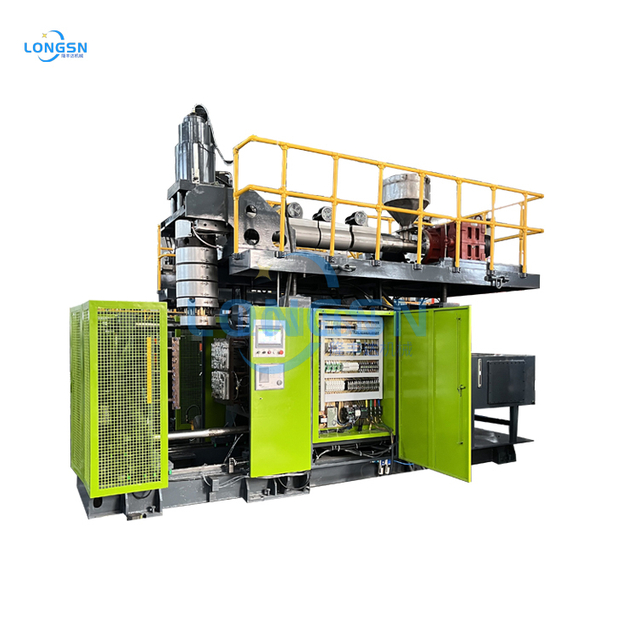
Procuring manufacturing equipment requires precise alignment between capital expenditure, production demands, and long-term operational efficiency. Over-specifying an Extrusion Blow Moulding Machine drains capital and inflates operational overhead, while under-specifying leads to production bottlenecks, poor part quality, and higher unit costs. This guide breaks down the critical technical specifications, realistic cost drivers, and implementation risks to evaluate before shortlisting equipment for your facility. By analyzing machine mechanics, tooling requirements, and facility infrastructure, plant managers can make informed procurement decisions that maximize throughput and minimize material waste.
- Market Dominance: Extrusion blow moulding (EBM) dominates roughly 75% of the hollow plastic packaging market due to its process versatility and low tooling overhead.
- Capital Expenditure: Base machine costs vary significantly between small-scale units and high-capacity, automated systems.
- Tooling Economics: Mold costs remain comparatively low due to lower operating pressures, making the process highly viable for rapid ROI.
- Production Efficiency: Cycle times typically span 10 to 60 seconds; optimizing parison control and cooling rates is critical for maximizing throughput.
- Procurement Strategy: True procurement costs must account for auxiliary equipment (chillers, grinders), energy consumption, and facility infrastructure upgrades.
Establishing Success Criteria for Extrusion Blow Moulding
Before evaluating specific machine models, plant engineers must define the exact production parameters required for their application. Establish baseline output requirements to determine necessary cycle times and multi-cavity mold configurations. Mapping the exact dimensions, weight, and target polymers of the final product dictates the required machine size and extruder type. Different resins exhibit distinct melt strength characteristics, which directly impacts how the machine handles vertical extrusion without material stretching.
Assess the specific parison-sag behavior of chosen resins. High-density polyethylene (HDPE) behaves differently than polypropylene (PP) or polyethylene terephthalate glycol (PETG) when extruded as a heavy parison. Ensure the selected machine configuration can handle these variations. Identify necessary tolerances, wall thickness uniformity requirements, and industry-specific compliance standards. Food-grade packaging requires different machine features, such as specialized lubricants and stainless-steel contact points, compared to industrial chemical containers.
| Resin Type | Melt Strength | Typical Applications | Processing Considerations |
| HDPE | High | Detergent bottles, industrial jugs | Excellent moisture barrier; requires robust cooling systems. |
| PP | Medium | Medical containers, hot-fill bottles | Prone to shrinkage; requires precise temperature control. |
| PETG | Low to Medium | Cosmetics, clear display packaging | Requires specialized screw designs to prevent degradation. |
Understanding these material behaviors allows operators to specify the correct screw geometry and heating zone configurations. Failing to match the machine's plastification capacity to the resin's thermal profile results in un-melted particles, weak weld lines, and high scrap rates.

The Four-Step Extrusion Blow Moulding Process Mechanics
To align machine specifications with operational needs, buyers must understand how the physical machinery handles each stage of the cycle. The process relies on precise timing, temperature control, and mechanical force.
- Melting (Plastification): Raw thermoplastic polymer pellets are fed into the extruder hopper. The rotating screw shears the material, generating friction heat, while external heating bands provide supplementary thermal energy. The goal is a homogeneous melt with consistent viscosity.
- Extrusion (Parison Formation): The molten plastic is forced through a die head, forming a continuous, hollow vertical tube called a parison. The die gap determines the initial wall thickness of this tube.
- Blowing (Inflation): The mold halves close around the parison, clamping it shut and pinching off the top and bottom. A blow pin injects high-pressure compressed air, forcing the plastic outward against the water-cooled cavity walls.
- Cooling and Ejection: The polymer solidifies upon contact with the cold mold. Once structurally stable, the mold opens, the hollow part is ejected, and excess plastic (flash) is trimmed away for regrinding.
Each step demands specific machine capabilities. For instance, the cooling phase often dictates the overall cycle time. Machines equipped with intensive mold cooling circuits and internal air circulation systems can significantly reduce this phase, boosting hourly output.
Core Specifications to Evaluate in an Extrusion Blow Moulding Machine
Extruder Capacity and Screw Design
Assess melt quality and throughput rates measured in kilograms per hour. Evaluate screw length-to-diameter (L/D) ratios and geometry compatibility with target resins. A general-purpose screw might handle HDPE adequately but could cause shear degradation in heat-sensitive materials like PVC. Barrier screws or mixing sections are often required for color dispersion or processing regrind materials alongside virgin resin.
Clamping Force and Platen Size
Calculate the required clamping force based on the projected surface area of the part and the blowing pressure. Extrusion blow molding typically requires lower clamping forces compared to injection molding, but undersizing the clamp leads to mold flashing and poor pinch-off quality. Ensure platen dimensions can accommodate current and future mold sizes, including multi-cavity configurations and necessary clearance for automated part removal.
Parison Programming and Wall Thickness Control
Evaluate radial and axial parison control systems. Modern machines utilize 100-point to 300-point controllers to manage thickness distribution in complex geometries. Precise wall thickness control reduces material waste, shortens cooling times, and ensures structural integrity. By profiling the parison, operators can push more material into high-stress areas like container corners while thinning out flat side panels.
Deflashing and Automation Integration
Compare in-machine auto-deflashing capabilities versus secondary downstream operations. Automated deflashing within the machine footprint saves floor space and reduces labor. Assess integration options for robotic part removal, leak testing, and automated packaging. High-speed production lines require integrated leak detectors to identify pinholes or compromised pinch-offs before the containers reach the palletizing stage.
Extrusion Blow Moulding Machine Cost Breakdown
Base Machinery Capital Expenditure
Machine costs scale with size, automation level, and technological sophistication. Entry-level machines handle simple, single-layer containers, while advanced systems feature multi-layer co-extrusion capabilities for barrier packaging. Factors driving premium capital requirements include servo-driven hydraulics, advanced PLC controls, and accumulator head configurations designed for massive industrial parts.
Tooling and Mold Costs
Tooling represents a distinct advantage for this process. Because operating pressures are relatively low, molds are frequently machined from aluminum, which offers excellent thermal conductivity for faster cooling. High-wear areas, such as the pinch-off edges, are typically fitted with hardened steel or beryllium copper inserts to maintain cutting performance over millions of cycles.
Auxiliary Equipment Investments
A bare machine cannot operate in isolation. Necessary secondary equipment includes industrial chillers, cooling towers, high and low-pressure air compressors, resin dryers, volumetric blenders, and scrap grinders. Auxiliary equipment represents a substantial portion of the initial machinery capital expenditure and requires careful sizing to prevent process bottlenecks.
Operating Costs and Operational Variables
Break down ongoing expenses such as energy consumption, raw material costs, routine maintenance, and operator labor. Energy usage varies wildly between traditional hydraulic machines and modern all-electric or hybrid models. Factor in the volume of scrap generated during startup and color changes, and calculate the processing cost of regrinding and recycling that flash back into the production stream.
Trade-offs: Extrusion vs. Alternative Molding Processes
Extrusion Blow Molding (EBM) vs. Injection Blow Molding (IBM)
EBM tooling costs are significantly lower due to lower operating pressure requirements, making mold manufacturing faster and less resource-intensive. IBM offers superior neck calibration with zero flash, making it ideal for pharmaceutical bottles requiring precise closures. However, IBM is limited in part size and struggles with asymmetrical shapes, whereas EBM accommodates massive containers, complex hollow parts, and handleware.
Continuous Extrusion vs. Accumulator Head Machines
Continuous extrusion is best for lightweight parts, small containers, and heat-sensitive resins. The parison drops continuously, and the mold shuttles to capture it. Accumulator head machines are necessary for large, heavy industrial parts like automotive ducting or 55-gallon drums. In these systems, the extruder fills a reservoir, and a hydraulic ram pushes the molten plastic out rapidly to prevent the heavy parison from sagging under its own weight before the mold can close.
Implementation Realities and Risk Mitigation
Facility and Infrastructure Requirements
Audit floor space requirements meticulously. Include clearance for mold changes, crane access for heavy tooling, and the physical footprint of all auxiliary equipment. Verify utility capacities at the installation site. Extrusion blow molding requires substantial electrical power drops for heating bands and motors, high-capacity chilled water flow rates for mold cooling, and robust compressed air systems for part inflation and pneumatic actuators.
Operator Training and Process Troubleshooting
Address the steep learning curve associated with parison programming, die-gap adjustments, and die-head tuning. Even with advanced controls, operators must understand how ambient temperature, resin batch variations, and regrind ratios affect melt behavior. Recommend vendor-supplied training programs to mitigate high scrap rates during initial startup and commissioning.
Supply Chain and Vendor Support
Evaluate Original Equipment Manufacturer Service Level Agreements. Assess the domestic availability of spare parts to minimize unplanned downtime. Components like heater bands, hydraulic proportional valves, and specialized screw segments must be readily available. Relying on overseas shipping for critical replacement parts can paralyze a production line for weeks.
Conclusion
Selecting the right equipment requires a rigorous evaluation of part geometry, resin characteristics, and facility capabilities. A well-specified machine minimizes material waste through precise parison control and maximizes output via optimized cooling and automation integration. Plant managers must look beyond the base machine and engineer a complete production cell that includes properly sized auxiliary systems.
- Audit your facility's utility infrastructure to confirm adequate electrical, chilled water, and compressed air capacities.
- Calculate your required throughput and map it against cycle time estimates to determine the necessary number of mold cavities.
- Request detailed technical datasheets from shortlisted OEMs, focusing on extruder plastification rates and clamp force specifications.
- Develop a comprehensive floor plan that accounts for the machine, automation cells, scrap grinders, and material handling equipment.
FAQ
Q: What is the average lifespan of a commercial extrusion blow moulding machine?
A: A well-maintained commercial machine typically lasts 15 to 20 years in a continuous production environment. Regular maintenance of hydraulic systems, extruder screws, and heating elements significantly extends operational life and maintains part quality.
Q: Why are mold costs lower in extrusion blow molding compared to injection molding?
A: Extrusion blow molding operates at much lower internal pressures than injection molding. This allows molds to be machined from less expensive, highly conductive materials like aluminum rather than requiring massive blocks of hardened tool steel.
Q: How do you calculate the cycle time for an extrusion blow molded part?
A: Cycle time is calculated by adding the extrusion time, mold closing time, blowing time, cooling time, and ejection time. Cooling time usually accounts for the largest portion of the cycle and dictates overall production speed.
Q: What are the most common polymers compatible with extrusion blow molding?
A: High-Density Polyethylene (HDPE), Polypropylene (PP), and Polyethylene Terephthalate Glycol (PETG) are the most common polymers due to their excellent melt strength, which prevents the parison from tearing during extrusion.
Q: What is the difference between continuous extrusion and accumulator head machines?
A: Continuous extrusion constantly pushes out a parison and is used for smaller parts. Accumulator head machines store molten plastic in a reservoir and push it out quickly, preventing sag when forming large, heavy industrial parts.

 English