Procuring packaging machinery requires significant capital expenditure. It dramatically impacts your daily operational efficiency. You cannot treat this purchase as a simple equipment upgrade. It represents a strategic alignment. This alignment links production capacity, product design, and your long-term operating margins. A poor choice leads to costly bottlenecks. A well-planned acquisition directly drives profitability. It boosts market responsiveness. Selecting a reliable pet bottle blow molding machine requires balancing immediate production needs. You must weigh these current needs against scalable throughput. You must also prioritize energy efficiency. We will guide you through establishing a production baseline. You will learn how to evaluate specific machine categories. Finally, we will help you navigate hidden system integration risks.
Key Takeaways
- Production Volume Dictates Technology: Choosing between linear and rotary configurations depends entirely on your required Bottles Per Hour (BPH).
- Process Selection Matters: Single-stage machines suit niche, custom containers, while two-stage machines dominate mass beverage production.
- Total Cost of Ownership (TCO) Exceeds CapEx: Energy consumption (specifically high-pressure compressed air) and mold changeover times are the true drivers of long-term costs.
- Auxiliary Alignment is Critical: A high-speed machine will fail without appropriately sized chillers and air compressors.
Defining Your Production Baseline and Success Criteria
Establish Bottling Output (BPH)
You must establish a rigorous production baseline first. Do not guess your required output. Establish your specific Bottling Output (BPH) mathematically. Guide your team to calculate required Bottles Per Hour based on real sales data. Factor in peak seasonal demand carefully. Beverage sales often spike during summer months. A machine handling winter volumes might fail during July. Add your planned business growth over a 3-to-5-year horizon. We recommend calculating Overall Equipment Effectiveness (OEE). This standard framework accounts for planned maintenance downtime and micro-stops. Buying equipment running at 100% capacity leaves no room for error. Always build a 15% to 20% capacity buffer into your calculations. A common mistake is buying for today's volume. This forces premature equipment replacement when demand scales.
Container Specifications
Container specifications deeply influence your equipment choices. Note how bottle volume dictates compatibility. Machines handle distinct ranges. They can produce tiny 50ml cosmetic jars up to large 5L water jugs. Neck diameter also plays a massive role. Standard 28mm closures require entirely different handling than wide-mouth jars. Shape complexity dictates your specific mold requirements. Round bottles blow easily and quickly. Asymmetric shapes, like household cleaner sprayers, require sophisticated stretching profiles. You must map out every container you plan to produce. This ensures your chosen machine accommodates your entire product portfolio. Best practice dictates creating a master specification sheet. Share this document with all potential vendors.
Preform Sourcing Strategy
Your preform sourcing strategy is a critical business decision. Decide whether you will manufacture preforms in-house. Alternatively, you can purchase them from third-party suppliers. This choice dictates the exact type of blow molding equipment required. Buying preforms externally reduces your initial capital outlay. It allows you to focus purely on bottle blowing and filling. You simply manage inventory and supplier quality control. Manufacturing preforms internally requires separate injection molding machines. It demands massive resin silos and complex material handling systems. Review your warehouse space carefully. Evaluate your cash flow before deciding to bring preform manufacturing indoors.

Solution Categories: Single-Stage vs. Two-Stage PET Blow Molding
Single-Stage (Injection Stretch Blow Molding)
Single-stage processes operate distinctly from other methods. The equipment melts raw PET resin directly. It injects the preform into a mold cavity. It then immediately stretches and blows the bottle. Everything happens in one continuous machine cycle. This method is best for custom, non-standard shapes. Cosmetic, pharmaceutical, and high-end personal care brands heavily favor this technology. Facilities prioritizing a scratch-free, high-gloss finish need single-stage systems. The trade-offs remain significant. You will face a substantially higher initial machine cost. Output speeds are generally much lower. You experience less flexibility when running different bottle designs simultaneously. A common mistake is using single-stage systems for standard water bottles. This destroys your production margins.
Two-Stage (Reheat Stretch Blow Molding)
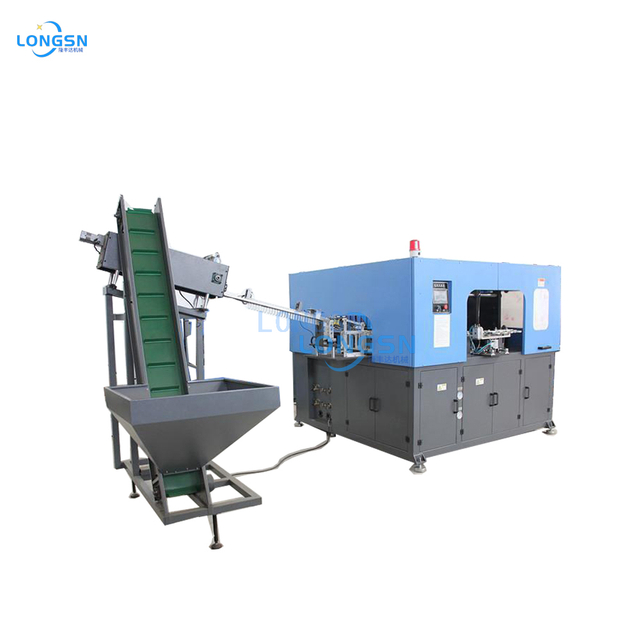
Two-stage processes separate the injection and blowing steps completely. This system uses pre-manufactured cold preforms. Conveyors feed these preforms into the machine. Infrared ovens reheat them precisely to their glass transition temperature. The machine then stretches and blows them into the final shape. It remains the best option for standard beverage bottling. Bottled water, carbonated soft drinks, and juices rely on this. It excels in high-volume mass production. You can scale operations rapidly by adding more cavities. Trade-offs exist here too. You require a highly reliable preform supply chain. You must allocate more floor space if storing bulk preforms. However, it offers significantly higher BPH. It also delivers a much lower per-unit production expense.
Process Comparison Overview
| Feature | Single-Stage Process | Two-Stage Process |
| Raw Material | PET Resin Pellets | Pre-manufactured Cold Preforms |
| Best Application | Cosmetics, Pharma, Custom Shapes | Beverages, High-Volume Water, CSD |
| Output Speed | Low to Medium | Very High |
| Initial Investment | Higher | Lower to Medium |
| Visual Quality | Exceptional (Blemish-free) | Excellent (Standard Commercial) |
Key Evaluation Dimensions: Architecture, Efficiency, and Scalability
Machine Architecture (Linear vs. Rotary)
Machine architecture determines your absolute production ceiling. Evaluate linear versus rotary configurations carefully. Linear or inline machines remain ideal for small to medium enterprises. They handle mid-volume production very easily. This typically ranges from 1,000 to 10,000 BPH. They offer much easier maintenance routines. The initial capital expenditure is remarkably lower. They are highly flexible for frequent mold changeovers. Rotary machines are built for enterprise-level continuous production. They operate seamlessly from 10,000 to 30,000+ BPH. They require massive capital investments. The maintenance procedures involve complex cam systems. However, rotary systems yield incredible efficiency at scale. Buying a rotary machine for a 5,000 BPH requirement wastes capital unnecessarily.
Energy Efficiency & Resource Consumption
Energy efficiency heavily impacts your daily operations. Evaluate high-pressure air recovery systems carefully. These systems capture exhaust air from the blowing cycle. They reuse this air for mechanical movements or pre-blowing stages. This drastically reduces the load on your external compressors. Assess the integration of servo-driven motors. Compare them against traditional pneumatic systems. Servos provide massive energy reductions. They also deliver pinpoint mechanical precision. Examine infrared oven efficiency closely. Look for closed-loop heating controls. These controls adjust heating lamps dynamically based on ambient temperature. They minimize electricity waste dramatically. They prevent preform overheating issues perfectly.
Automation and Changeover Agility
Automation and changeover agility keep your lines running profitably. Look for quick-release mold systems. Traditional bolt-on molds take hours to swap. Quick-release systems reduce changeover times to mere minutes. Seek out intuitive Human-Machine Interface (HMI) panels. Clear interfaces help operators diagnose faults rapidly. Evaluate the machine's ability to store production recipes. Operators simply load a saved profile for a specific bottle. The machine adjusts heating and blowing parameters automatically. This reduces operator error significantly. It eliminates costly downtime during product switch-overs. A best practice is demanding password-protected recipe storage. This prevents unauthorized adjustments from floor staff.
Implementation Realities: Hidden Risks and System Integration
The Auxiliary Equipment Trap
The auxiliary equipment trap catches many first-time buyers. Purchasing a pet bottle blow molding machine in isolation is a common failure point. A high-speed unit cannot function alone. You must match the machine with correctly sized auxiliaries. High-pressure air compressors are absolutely mandatory. They usually need to supply 30 to 40 bar of stable pressure. You also need heavy-duty water chillers. The molds require constant, precise cooling to maintain cycle times. High-capacity air dryers are critical. Wet air ruins bottle clarity. It also rusts your machine internals rapidly. Under-sizing your chiller guarantees deformed bottles during peak summer production.
Footprint and Facility Requirements
Footprint and facility requirements demand your strict attention. Highlight the overlooked realities of floor load limits. A high-speed rotary machine is extremely heavy. Ensure your concrete slab supports the intense dynamic weight. Measure your facility ceiling heights carefully. Silo and hopper integrations require significant vertical clearance. Ambient temperature control in the blowing area is vital. Hot warehouses alter preform reheating dynamics. The machine will struggle to maintain consistent material distribution. Install proper ventilation and exhaust fans in your production hall. Consider isolating the blow molding area from the filling room. This prevents heat contamination.
Safety and Compliance Standards
Safety and compliance standards are completely non-negotiable. Emphasize the strict need for CE or UL certifications. These marks prove the equipment meets international electrical standards. Demand comprehensive safety enclosures. Light curtains and interlocked doors protect your operators from moving parts. Verify food-grade lubrication compliance. Look for NSF H1 certified lubricants specifically. You must use these if producing food and beverage containers. Failing a compliance audit shuts down your entire operation instantly. It also damages your brand reputation permanently. Never bypass safety interlocks to speed up maintenance tasks.
Shortlisting Logic and Next-Step Actions
Vetting Manufacturers
Vetting manufacturers requires extensive due diligence. Advise your team to look far beyond the basic spec sheet. Evaluate the vendor's existing install base closely. Ask for references from companies producing similar bottles. Call those references directly. Check regional spare parts availability. A machine is useless if replacement valves take weeks to arrive. Demand guaranteed response times for technical support. Negotiate Service Level Agreements (SLAs) for remote troubleshooting. A reliable partner ensures your production line stays active. Watch out for vendors who refuse to provide local references.
Requesting a Factory Acceptance Test (FAT)
Requesting a Factory Acceptance Test (FAT) mitigates huge operational risks. We strongly recommend negotiating a FAT in the purchase contract. Require the manufacturer to run your specific molds. They must use your exact preform supply. The test must happen at their facility before shipping. Set strict, measurable passing criteria. The machine must run at the promised BPH for several continuous hours. It must produce a 99% yield of acceptable bottles. Do not release final payment until the machine passes this test. An in-person FAT remains far superior to a video demonstration.
Calculating Investment and Operating Expenses
Calculating your complete financial commitment requires detailed, comprehensive quotes. Provide a basic framework for requesting these proposals. Ensure they include much more than just the machine. Ask for itemized shipping and customs clearing costs. Request pricing for on-site physical installation and commissioning. Include thorough operator training in the final proposal. Ask for an estimated two-year spare parts package. Gathering these specific numbers prevents unpleasant financial surprises. It keeps your expansion project strictly within budget constraints. Proper planning here separates successful launches from delayed disasters.
Conclusion
- The right machine is rarely the fastest or most expensive option available on the market.
- The ideal choice aligns strictly with your facility's production volume, technical capability, and preform strategy.
- Finalize your auxiliary equipment audit early to prevent bottlenecking your new high-speed machine.
- Secure your preform supply chain contracts before committing to hardware.
- Do not sign off on the blow molding unit until every supporting piece is ready for integration.
FAQ
Q: What is the average lifespan of a commercial PET bottle blow molding machine?
A: A well-maintained machine typically lasts 10 to 15 years. You can expect around 40,000 to 60,000 operational hours. You must adhere to strict preventative maintenance schedules. Routine replacement of wear parts is critical. Upgrading servo motors and software also extends the equipment's viable lifespan.
Q: How much air pressure is required for PET blow molding?
A: It requires two distinct pressure systems. Low-pressure control air operates mechanical pneumatic cylinders at 7 to 10 bar. High-pressure blowing air actually forms the bottle. This requires 25 to 40 bar. The exact pressure depends on the bottle's wall thickness and shape design.
Q: Can one machine produce multiple bottle sizes?
A: Yes, they accommodate multiple sizes through mold interchangeability. However, you are constrained by the machine's neck finish specifications and maximum volume limits. Changing molds requires physical labor and heating profile adjustments. Frequent changeovers reduce your daily production efficiency.
Q: Is it better to buy a fully electric or pneumatic blow molding machine?
A: Fully electric servo machines carry a higher initial capital expense. However, they deliver much lower operating expenses. They consume less energy and provide superior mechanical precision. Traditional pneumatic hybrids cost less upfront but use more compressed air. Electric models usually provide better long-term value.

 English