Procuring equipment for plastic container production represents a high-stakes capital expenditure for any manufacturing facility. Plant managers, technical buyers, and procurement teams face immense pressure to select the right machinery for their specific operational needs. You cannot afford to make blind investments in this sector.
Selecting equipment with misaligned specifications often leads to immediate production bottlenecks. You might also experience excessive scrap rates and inflated energy consumption on the factory floor. A successful acquisition bridges the critical gap between theoretical machine output and actual production capabilities. It requires balancing initial machine capabilities with tooling flexibility and material compatibility across PET, HDPE, and PP resins.
We designed this guide to provide you with an objective, specification-driven framework for evaluating blow molding equipment. You will learn how to match processing types to specific bottle geometries and how to evaluate critical technical parameters. Ultimately, these insights will help you shortlist the ideal machinery for your plant.
Key Takeaways
- Process matching is non-negotiable: Extrusion (EBM), Injection (IBM), and Injection Stretch (ISBM) machines serve distinct volume thresholds and container complexities; they are rarely interchangeable without efficiency losses.
- Specs dictate ROI: Cavity count and clamping force must align precisely with your target bottles-per-hour (BPH) and container wall thickness.
- Hidden TCO factors: Air compressor efficiency, chiller requirements, and mold changeover times often impact operational profitability more than the base machine price.
- Material dictates machinery: PET production requires different heating and stretching specifications compared to HDPE or PC.
Primary Categories of Plastic Bottle Blow Molding Machines
You must understand the distinct processing categories before evaluating any equipment. Each technology serves specific material types and container shapes. Selecting the wrong category will cripple your production efficiency.
Extrusion Blow Molding (EBM) Equipment
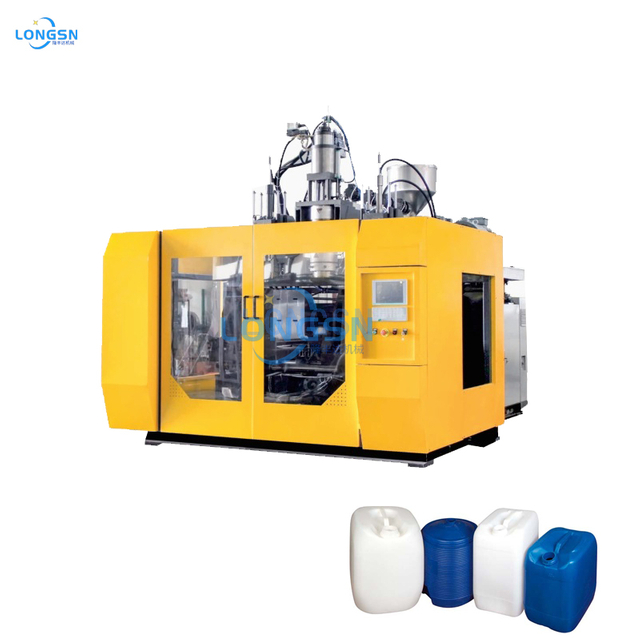
Extrusion blow molding relies on a continuous or accumulator-head extrusion process. The machine extrudes a hollow tube of melted plastic, known as a parison. A two-part metal mold closes around this parison, pinching it at the top and bottom. The system then injects compressed air, inflating the plastic to match the mold's interior walls.
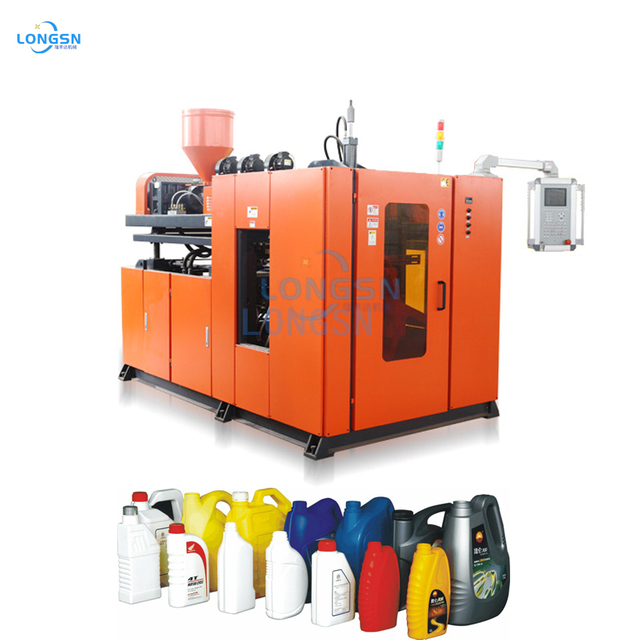
This process is the best fit for high-volume production of HDPE, PP, and PVC containers. We frequently see EBM used for asymmetrical shapes, such as detergent jugs with integrated handles. The tooling is generally less expensive than other methods.
However, EBM has distinct limitations. The pinch-off process leaves a flash (excess scrap plastic) at the top and bottom of the container. This flash requires mechanical trimming and recycling. Additionally, EBM offers lower dimensional precision at the bottle's neck finish compared to injection-based methods.
Injection Blow Molding (IBM) Equipment
Injection blow molding utilizes a highly precise three-station process. First, the machine injects molten plastic over a steel core pin to form a preform with a fully finished neck. The machine then transfers this core pin to a blow station, where air inflates the preform into its final shape. Finally, it moves to an ejection station.
IBM is the premier choice for small capacity, high-precision containers. Medical vials, pharmaceutical bottles, and high-end cosmetics rely on IBM. It produces zero scrap or flash, completely eliminating the need for downstream trimming.
The primary limitations of IBM involve cost and size constraints. It requires higher initial tooling costs because you must fabricate both an injection mold and a blow mold. Furthermore, IBM is typically limited to smaller bottle sizes, usually under one liter.
Injection Stretch Blow Molding (ISBM) Equipment
Injection stretch blow molding enhances the basic injection blow process by adding mechanical stretching. The machine stretches the preform axially using a stretch rod and radially using compressed air. This biaxial orientation realigns the polymer molecules.
This method is the absolute best fit for PET bottles. The stretching process gives PET its high clarity, superior structural strength, and essential gas barrier properties. We see this technology dominate the carbonated beverage and bottled water industries.
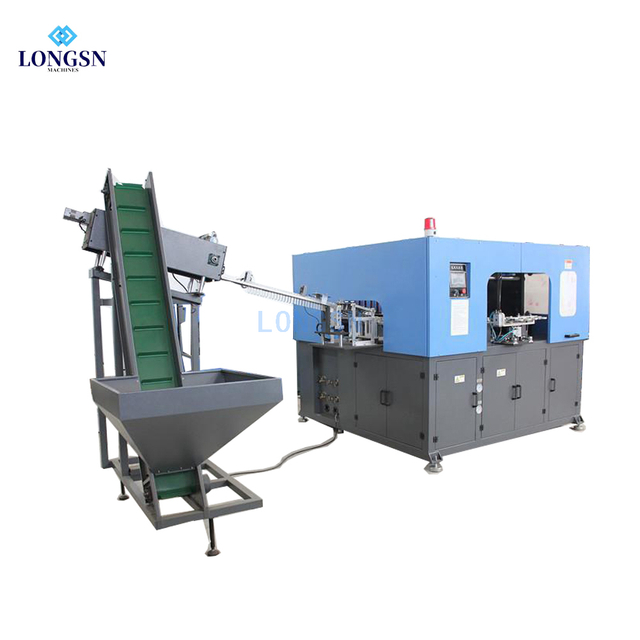
When evaluating a plastic bottle blow molding machine, you must distinguish between single-stage and two-stage ISBM. Two-stage systems use pre-made preforms that are reheated and blown. This setup is optimal for massive scalability. Single-stage systems inject and blow the preform in one continuous machine cycle, making them better for niche, high-quality bespoke production runs.

Core Technical Specifications to Evaluate
Looking past the processing type, you must evaluate the hard specifications of the machinery. These numbers dictate your actual production capabilities and ongoing utility usage.
Production Output and Bottles Per Hour (BPH)
Manufacturers often list a theoretical maximum BPH, but actual production rates vary significantly based on your specific bottle design. You must evaluate theoretical output against guaranteed output. Guaranteed output factors in your specific resin, wall thickness, and factory environment.
Output directly correlates with cycle time and cavity count. A machine with more cavities produces more bottles per cycle, but it also requires exponentially more cooling capacity. If your facility lacks the chilled water infrastructure to cool the molds rapidly, your cycle time will increase, and your actual BPH will plummet.
Clamping Force (Tonnage)
Clamping force represents the pressure applied to keep the mold halves securely closed during the blowing phase. Insufficient tonnage leads to mold separation, which creates defective bottles with heavy seam lines or blowouts.
You can calculate the required clamping force based on the projected area of the bottle and the blowing pressure. As a general rule, larger containers and higher-pressure applications (like PET stretch blowing) require substantially higher tonnage. Always select a machine with a clamping force 15-20% higher than your calculated maximum to ensure consistent operation.
Max Container Volume and Dimensions
Never assume a machine can run your bottle just because it fits the volume specification. You must rigorously evaluate the physical platen size and the tie-bar spacing. The mold for your largest required bottle design must fit comfortably between the tie-bars while allowing enough stroke daylight for the bottle to eject properly.
Energy and Air Consumption
Energy consumption remains a massive operational variable. Modern equipment often features servo-motor drives, which offer drastic efficiency improvements over traditional hydraulic systems. Servo-driven machines consume power only when moving, whereas hydraulic pumps often run continuously.
Additionally, blowing large volumes requires significant compressed air. High-pressure air recovery systems are a critical feature. These systems capture the exhaust air from the blow cycle and route it to the low-pressure pneumatic systems of the machine, reducing your ongoing utility burden.
Energy System Comparison Chart
| System Type | Energy Efficiency | Maintenance Requirements | Precision & Speed |
| Traditional Hydraulic | Moderate to Low (continuous pump operation) | High (oil changes, filter replacements, leak checks) | Standard precision, slower cycle times |
| Servo-Hydraulic Hybrid | Good (pump speed matches demand) | Moderate (fewer oil issues, longer component life) | Improved precision, faster response |
| All-Electric Servo | Excellent (power consumed only during movement) | Low (no oil, minimal wear parts) | Exceptional repeatability, ultra-fast dry cycle times |
Aligning Machine Capabilities with Industrial Uses
Your end-product dictates the machinery. Different industries impose strict compliance and design requirements on plastic containers.
Food and Beverage (PET & HDPE)
- Key Requirements: Strict FDA compliance, exceptionally high-speed output, and precise wall material distribution. Lightweighting—the practice of reducing resin use while maintaining structural integrity—is a top priority for margin improvement.
- Machine Focus: Beverage manufacturers heavily favor two-stage ISBM for water and soda bottles due to its immense speed. Dairy producers typically utilize high-speed rotary EBM machines to produce lightweight HDPE milk jugs efficiently.
Pharmaceuticals and Nutraceuticals
- Key Requirements: Cleanroom compatibility and absolute neck calibration. Pharmaceutical bottles require perfect neck finishes to ensure tamper-evident seals and child-resistant closures function correctly.
- Machine Focus: The pharmaceutical sector relies almost exclusively on IBM equipment. The enclosed, flash-free processing prevents particulate contamination and guarantees exact dimensional tolerances.
Industrial and Household Chemicals
- Key Requirements: Multi-layer capabilities (co-extrusion) are vital. Chemical bottles often require inner layers for chemical resistance, middle layers for post-consumer recycled (PCR) resin integration, and outer layers for UV protection.
- Machine Focus: Continuous EBM systems dominate this sector. They easily accommodate view-stripe features (to see liquid levels) and complex handle-forming requirements for heavy chemical jugs.
Implementation Risks and Operational Dependencies
Purchasing the primary equipment solves only half the equation. You must anticipate the operational dependencies and integration risks that dictate daily plant profitability.
Tooling and Changeover Times
Downtime destroys profit margins. If your facility runs multiple SKUs, evaluate quick-mold-change (QMC) systems aggressively. Magnetic platens or quick-connect water manifolds reduce a four-hour mold changeover to under forty-five minutes. Furthermore, factor in the lead times and costs for custom mold fabrication, as complex tooling can take months to manufacture and validate.
Ancillary Equipment Dependencies
A blow molder will fail without the correct supporting infrastructure. You must budget for the full production cell. High-pressure air compressors (often up to 40 bar for PET) are mandatory. Industrial chillers must provide exact water temperatures to the mold to ensure plastic solidifies quickly. Dehumidifiers prevent condensation on chilled molds, which would otherwise ruin bottle surface finishes.
Operator Expertise and Automation
Modern equipment relies on sophisticated microprocessor controls and complex parison programming (up to 300 points of wall thickness control). This creates a steep learning curve for operators. Prioritize machines featuring intuitive Human-Machine Interfaces (HMI) and remote diagnostic capabilities. Clear interfaces reduce scrap during start-up and allow manufacturers to troubleshoot issues remotely without dispatching a technician.
Decision Framework: Shortlisting Your Next Machine
Follow a structured procurement framework to eliminate guesswork and secure reliable machinery.
- Define the baseline constraints: Document your exact material type, maximum bottle size, and minimum viable BPH. These three variables immediately eliminate incompatible machine categories.
- Assess facility readiness: Verify your available floor space and ceiling height. Confirm that your plant can supply the required power voltage, compressed air volume, and cooling water capacity. Missing these facility requirements delays installation for months.
- Request Proof of Concept (PoC): Demand a Factory Acceptance Test (FAT) before final sign-off. The vendor should run your specific mold with your exact resin grade at their facility. Only sign off when they achieve the guaranteed cycle time and bottle weight.
- Evaluate the vendor network: Hardware is only as good as its support network. Evaluate the vendor's aftermarket support, spare parts availability in your specific region, and warranty terms on high-wear components like tie bars and servo valves.
Conclusion
Securing the ideal equipment requires looking far past the initial sticker price. You must rigorously match the machine's processing type—whether EBM, IBM, or ISBM—and tonnage to your specific container geometry and volume goals. Failing to align these technical specifications with your factory infrastructure leads to costly downtime and scrap.
As a next-step action, compile your bottle drawings, ideally as STEP files. Gather your exact resin specification sheets and define your target production output numbers. With this data in hand, reach out to reputable manufacturers to request a customized equipment audit or technical consultation for your facility.
FAQ
Q: Can one blow molding machine process both PET and HDPE?
A: Generally, no. PET requires Injection Stretch Blow Molding (ISBM) with highly specific preform heating profiles and stretching mechanisms. Conversely, HDPE is typically processed via Extrusion Blow Molding (EBM). Attempting to cross over between these materials usually requires heavily specialized, hybrid machinery that severely compromises production efficiency and container quality.
Q: What is the difference between single-stage and two-stage PET blow molding?
A: Single-stage machines melt the resin, inject the preform, and blow the final bottle in one continuous cycle. This is best for customized, lower-volume, blemish-free bottles. Two-stage machines reheat and blow pre-manufactured cold preforms. This separation makes two-stage equipment best for ultra-high-speed mass production.
Q: How does lightweighting impact machine specifications?
A: Lightweighting, which reduces the amount of plastic used per bottle, demands superior machine precision. It requires equipment with highly accurate parison programming (for EBM) or advanced preform temperature profiling (for ISBM) to ensure the bottle walls remain structurally sound despite being significantly thinner.
Q: What is a typical lead time for a commercial blow molding machine?
A: Depending on the level of customization, machine tonnage, and the manufacturer's backlog, lead times typically range from 3 to 6 months. However, tooling design, mold fabrication, and thorough testing often dictate the critical path of the timeline.

 English