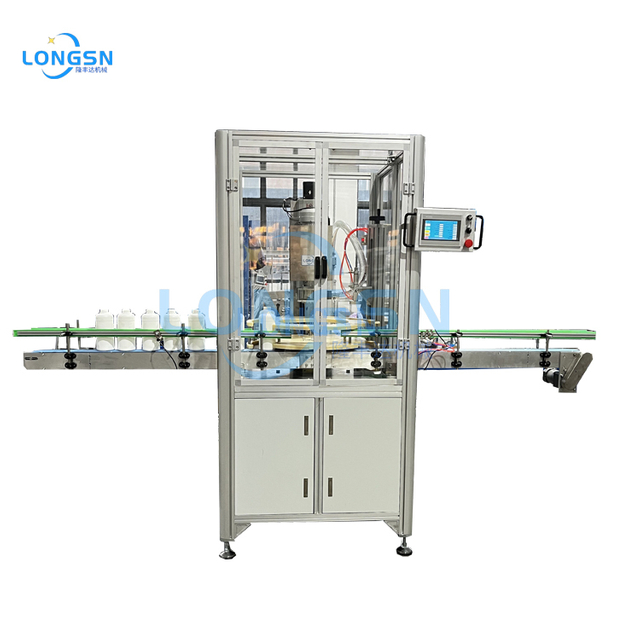
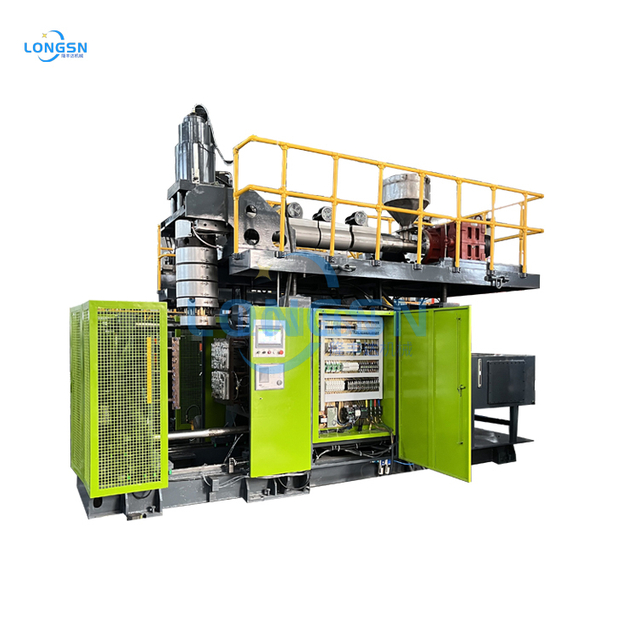
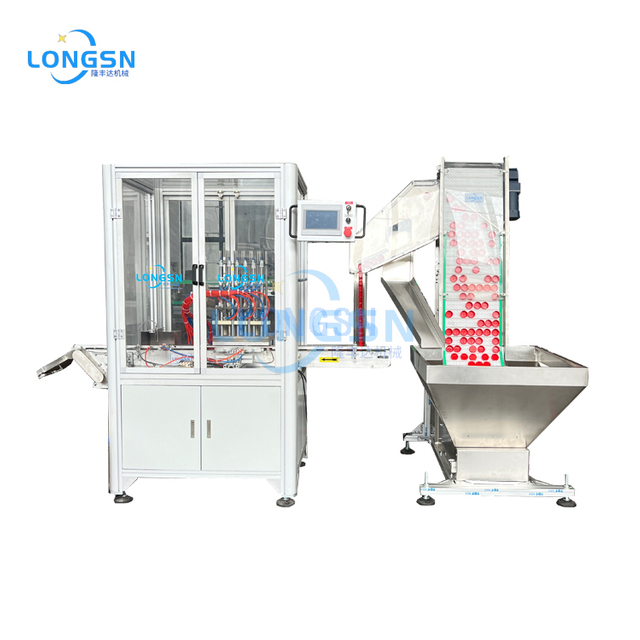
Transitioning from manual handling or outdated tertiary packaging to an automated plastic bottle bagging machine stands as a major CapEx decision. You must treat this investment as a primary lever. It stabilizes labor costs, maximizes line speed, and protects product integrity. Plant managers and packaging engineers face constant daily pressure. End-of-line bottlenecks severely limit the continuous output of upstream blow molding equipment. Manual handling frequently introduces unacceptable scrap rates, severe contamination risks, and high labor turnover.
You need verifiable ROI, not just glossy vendor brochures. We will explore where these machines genuinely deliver operational value. You will learn exactly how to evaluate them for your specific industrial environments. We strip away the marketing fluff. Our guide helps you focus on what actually drives production efficiency and secures a rapid return on your automation investment.
Key Takeaways
- Labor & Output: Automated bagging eliminates end-of-line bottlenecks, reliably matching the continuous output of upstream blow molding machines.
- Application Versatility: Core adoption is driven by five sectors: beverages, pharmaceuticals, cosmetics, chemicals, and contract packaging.
- Compliance & Hygiene: Automation removes human touchpoints, critical for medical and food-grade compliance.
- Purchasing Reality: Successful adoption depends less on "maximum rated speed" and more on floor-space integration, material compatibility (e.g., eco-films), and rapid changeover times.
Defining the Business Case: When to Automate Bottle Bagging
Manual bagging operations inevitably reach a breaking point. High labor turnover disrupts consistent daily output. Untrained hands often drop or mishandle containers. This mishandling directly causes unacceptable scrap rates due to scuffing. Furthermore, human packers simply cannot match modern blow molding speeds. End-of-line accumulation quickly fills up. Once the accumulation table overflows, the entire upstream production line stops. Line stoppages destroy your plant's profitability. You lose valuable equipment time. You waste raw resin during forced start-up sequences. Manual packaging transforms a highly efficient manufacturing process into a constrained bottleneck.
You must clearly define what successful implementation looks like. True success requires measurable Overall Equipment Effectiveness (OEE) improvements. You need exact footprint utilization metrics. Your facility should see a direct reduction in the cost-per-bag. Installing new equipment should not create a secondary traffic jam on your floor. It must synchronize perfectly seamlessly. Operators must feel comfortable managing the new system.
Choosing the right solution approach dictates your success. You must contrast semi-automatic systems against fully automated continuous-motion equipment. Semi-automatic baggers work best for highly variable, low-volume production runs. They require some human intervention but reduce ergonomic strain. Conversely, fully automated systems handle high-speed, continuous-motion demands. They excel where volume remains consistently high. They require zero human touch during the bagging cycle.
Table: Semi-Automatic vs. Fully Automated System Selection
| Operational Factor | Semi-Automatic System | Fully Automated System |
| Production Volume | Low to medium volume; variable runs. | High volume; continuous shifts. |
| Labor Requirement | Requires operator for loading/sealing. | Zero human touch points during operation. |
| Footprint | Compact and easily movable. | Larger fixed footprint; requires conveyors. |
| Best Fit | Custom packagers, small batch runs. | Beverage plants, high-speed blow molders. |

Top 5 Industrial Applications for a Plastic Bottle Bagging Machine
1. High-Volume Beverage & Water Production
Beverage manufacturers demand unrelenting speed. They produce thousands of PET bottles every hour. You must bag these empty bottles straight from the blow molder before palletizing them. Storing unprotected empty bottles introduces massive risks. Dust, insects, and airborne particles can enter open containers. A plastic bottle bagging machine immediately seals them inside a protective film barrier.
This application prevents severe contamination during warehouse storage and bulk transit. Furthermore, it allows continuous upstream production without bottlenecking the line. Bagged bottles stack efficiently onto pallets. They remain completely clean until they reach the final beverage filling destination.
2. Pharmaceutical & Medical Grade Packaging
Medical environments enforce rigorous cleanliness standards. You cannot afford arbitrary contamination in pharmaceutical packaging. This sector bags pill packers, saline bottles, and medical fluid containers inside ISO-certified cleanrooms. Every human interaction increases the risk of bio-burden transfer.
Automation eliminates human contact to maintain strict sterility. Your machinery must feature stainless-steel washdown construction. It must resist harsh sanitizing chemicals. Furthermore, validation compliance reigns supreme here. Vendors must provide rigorous Installation, Operational, and Performance Qualification (IQ/OQ/PQ) documentation. Medical regulators expect transparent, repeatable machine performance.
3. Cosmetics & Personal Care
Cosmetic brands sell visual perfection. Consumers quickly reject shampoos, serums, or lotions housed in scratched containers. Managing odd-shaped, premium-finish bottles presents a unique engineering challenge. Traditional bulk packing allows bottles to violently rub against each other during transit. This friction destroys expensive glossy or matte surface finishes.
Automated bagging provides a drastic reduction in cosmetic surface damage. The tight film bundle prevents individual bottles from vibrating. However, non-cylindrical bottles often jam standard conveyors. You need highly adaptable feeding systems. Robotic pick-and-place units or custom star-wheels safely orient odd shapes into the bagger.
4. Chemical & Agrochemical Handling
Industrial chemicals and fertilizers require rugged containment. Manufacturers use heavy-duty High-Density Polyethylene (HDPE) bottles for motor oils and industrial fluids. Bagging these bulky containers requires immense physical force. The bags ensure structural integrity and barrier protection before filling.
Machinery in this sector faces brutal operating conditions. It must handle much heavier payloads than beverage equipment. The facility atmosphere often contains corrosive micro-dust or chemical vapors. Your equipment must utilize sealed bearings, robust pneumatics, and corrosion-resistant components to survive these harsh realities.
5. E-Commerce & Third-Party Logistics (3PL)
Contract packagers live in a world of constant change. They serve multiple clients every week. A 3PL facility might run small cosmetic jars on Tuesday and large automotive fluid bottles on Thursday. They need rapid changeovers between vastly different bottle sizes and client requirements.
High flexibility defines success here. You must prioritize equipment featuring tool-less changeovers. Furthermore, consumer demand drives a massive shift toward sustainable packaging. E-commerce clients aggressively request biodegradable or recycled films. Eco-friendly film compatibility stands as a primary requirement for 3PLs future-proofing their packing lines.
Feature-to-Outcome: Key Evaluation Dimensions
Evaluating new equipment requires extreme discipline. Glossy brochures highlight maximum theoretical speeds. You must dig deeper into actual operational parameters. Focus on these core evaluation dimensions to guarantee success.
- Speed (CPM) vs. OEE Reality: Do not select machines based solely on maximum cycles-per-minute (CPM). Max speed often ignores real-world friction. You must evaluate sustained throughput instead. Factor in the time needed for film splicing. Account for minor jams caused by static electricity. Include routine maintenance stops. A slower machine running consistently yields higher OEE than a fast machine constantly stopping.
- Material & Eco-Film Compatibility: Film technology changes rapidly. Discuss the machine’s ability to run Linear Low-Density Polyethylene (LLDPE). Test its capability with recycled content and biodegradable films. Alternative films often possess extremely narrow sealing temperature windows. A poorly calibrated jaw causes excessive heat-seal failures or tension tearing. Your machine must offer highly precise, digitally controlled sealing mechanisms.
- Line Integration: A bagger never operates in a vacuum. It must integrate physically and digitally into your existing layout. Determine how the software (PLC/HMI) communicates upstream. The bagger must handshake properly with leak detectors and blow molders. If an upstream leak detector rejects a bottle, the bagger must adjust its count automatically. Seamless integration prevents cascading line failures.
Implementation Realities & Rollout Risks
Buying the machine solves only half the problem. You must successfully implement it on your factory floor. Hidden rollout risks often derail expected ROI timelines. You must address operator dynamics and mechanical vulnerabilities proactively.
The hidden cost of complex machinery lies in operator adoption. If the User Interface (UI) confuses your staff, they will bypass standard operating procedures. Look for intuitive Human-Machine Interfaces (HMIs). They should feature visual troubleshooting guides. Insist on tool-less changeover mechanisms. This reduces your daily dependence on highly specialized maintenance technicians. Empowering frontline operators keeps your lines running smoothly.
Downtime risks lurk inside every mechanical action. You must detail the most common failure points early. Heat sealer degradation happens gradually. Teflon tape wears out, causing plastic film to stick. Clear bottles frequently trick standard optical sensors, leading to miscounts or crushed containers. You mitigate these risks through rigid preventative maintenance schedules. Stock extra Teflon tape, upgrade to ultrasonic or capacitive sensors for clear PET, and clean the sealing jaws daily.
Chart: Failure Point Mitigation Strategies
| Component Risk | Common Failure Mode | Mitigation Action |
| Optical Sensors | Fails to detect clear PET bottles. | Upgrade to capacitive or specialized clear-object sensors. |
| Heat Sealer Jaws | Teflon wear causes film melting/sticking. | Implement daily inspection; replace tape proactively. |
| Film Tensioner | Tearing eco-friendly or thin-gauge films. | Utilize precise servo-driven tension control systems. |
| Infeed Conveyor | Odd-shaped bottles tip over and jam. | Install customized star-wheels or adjustable guide rails. |
Shortlisting Logic & Next Steps for Procurement
Moving from evaluation to procurement requires strict validation. Never trust a vendor's claims without seeing undeniable proof. You are spending significant capital. Protect yourself by demanding rigorous testing before taking delivery.
Demand a highly structured Factory Acceptance Testing (FAT) protocol. Instruct your purchasing team to test the machine rigorously. You must use your exact production bottles and your preferred commercial film. Never rely on the vendor's optimized test materials. Vendors often use perfectly uniform, heavy-gauge film during demos. Your reality involves thinner films and minor bottle defects. The machine must handle your real-world variability.
Service and support geographies matter immensely. A broken plastic bottle bagging machine halts entire production schedules. Prioritize vendors offering local technical support. Secure guaranteed spare-part lead times in writing. Shipping proprietary parts from overseas takes weeks. You cannot afford catastrophic line-down scenarios while waiting for a single servo motor.
Take immediate next steps today. Audit your current end-of-line bottlenecks. Document the exact physical dimensions and cycle speeds of your blow molding output. Gather your engineering team to draft a formal User Requirement Specification (URS). This document acts as your blueprint. It forces vendors to meet your engineering standards, ensuring you buy the exact capability you actually need.
Conclusion
You must view automated bagging as a strategic asset. It represents far more than just a mandatory packaging step. It serves as a strict quality control checkpoint. It optimizes your labor allocation, allowing you to redeploy workers to higher-value tasks. Proper implementation stabilizes your entire downstream workflow.
Maintain a skeptical mindset during procurement. The best machine rarely features the lowest initial price tag. Instead, the right solution offers the highest sustained reliability. It provides the quickest, most intuitive changeovers. Prioritize seamless integration, operator-friendly interfaces, and versatile film compatibility to guarantee long-term manufacturing success.
FAQ
Q: What is the typical ROI period for a fully automated plastic bottle bagging machine?
A: A fully automated system typically delivers a return on investment within 12 to 24 months. You achieve this rapid ROI primarily through significant labor savings and increased Overall Equipment Effectiveness (OEE). Facilities running two or three continuous shifts usually see the fastest financial returns due to eliminated manual handling.
Q: Can bagging machines handle multiple bottle shapes and sizes?
A: Yes, modern systems easily handle various sizes. They utilize adjustable guide rails and tool-less changeover mechanisms to swap formats quickly. However, extreme shape variations—such as switching from standard cylinders to asymmetrical cosmetic bottles—may require you to install different feeding mechanisms or custom star-wheels.
Q: How do these machines integrate with existing blow molding lines?
A: They integrate through precise physical and digital handshakes. Physically, they use synchronized infeed conveyors and accumulation tables to manage bottle flow smoothly. Digitally, the bagging machine's PLC communicates directly with the blow molder's PLC, automatically adjusting speeds to match upstream output and pausing during interruptions.
Q: Are bagging machines compatible with eco-friendly and biodegradable films?
A: Yes, most modern baggers handle eco-friendly films. However, biodegradable materials require extremely precise temperature control mechanisms on the heat sealing jaws. If the temperature fluctuates even slightly, you risk melting the delicate film or creating weak seals. Always verify compatibility during your factory acceptance testing.

 English