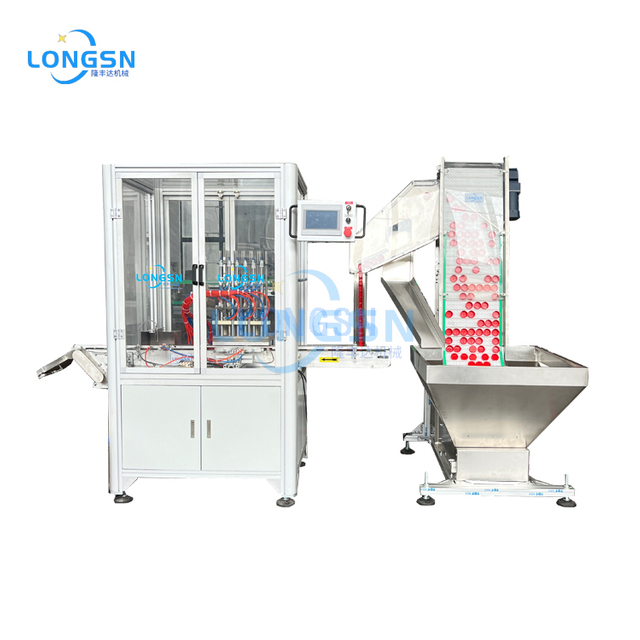
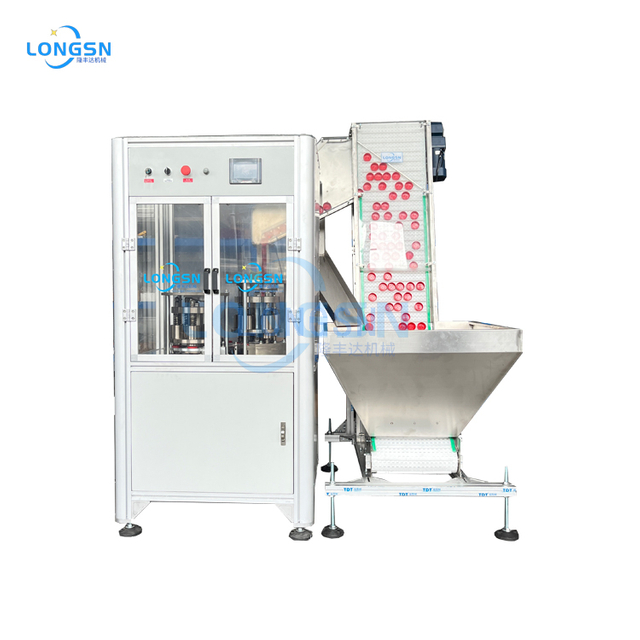
While injection or compression molding creates the basic geometry of a closure, the functional value—specifically tamper evidence and ease of application—is largely determined by post-molding automation. The mold provides the shape, but the mechanical processing that follows ensures the cap performs correctly on the bottling line and in the hands of the consumer. If this stage fails, the consequences are immediate and costly. Poorly slit bands cause line jams at the capper, leading to significant downtime. Even worse, inconsistent folding creates "hard-to-open" complaints or leaking bottles that damage brand reputation.
To mitigate these risks, the Automatic plastic cap slitting folding machine serves as a critical quality control point rather than a mere accessory. It bridges the gap between raw molding and final packaging. This article moves beyond basic definitions to evaluate precision mechanics, Total Cost of Ownership (TCO) drivers like blade life, and integration strategies for modern smart factories. We will explore how investing in precision engineering safeguards production speed and consumer safety.
Key Takeaways
Precision = Consumer Safety: Why micrometric blade adjustment is non-negotiable for consistent tamper-evident band performance.
The "Folding" Advantage: How folding mechanisms reduce subsequent capping torque and leak risks compared to standard cut-only bands.
Throughput Matching: The decision framework for choosing between Index Motion (flexibility) vs. Continuous Rotary (speed) systems.
Blade Economics: Understanding the trade-off between initial tooling costs and blade longevity (target: >100M cycles).
Future-Proofing: Preparing production lines for tethered cap regulations and sustainable material shifts.
The Engineering Case for Automatic Slitting and Folding
Understanding the necessity of this equipment requires a clear definition of the process itself. Slitting involves mechanically cutting the tamper-evident band to create "bridges." These bridges must be strong enough to survive transport but weak enough to break when the consumer opens the bottle. Folding, conversely, involves mechanically inverting the lower part of the band inward to create a conical, flap-like shape. While slitting is about security, folding is about performance.
Why Folding Matters (Beyond Aesthetics)
Many manufacturers assume folding is optional. However, in high-speed beverage lines, it provides critical mechanical advantages. First, it significantly reduces capping torque. When a band is folded inward, the flaps act as a flexible spring mechanism. This lowers the friction required during the capping process. If the torque is too high, the capping chucks may slip, or the consumer may struggle to open the bottle. Folded bands ensure a smooth application, preventing these issues.
Leak prevention is another major benefit. A folded band creates a conical profile that helps center the cap perfectly on the bottle neck. This self-centering action reduces "cocked cap" defects, where the closure sits at a slight angle. Even a microscopic misalignment can prevent the seal from engaging fully, leading to leaks. By ensuring the cap sits flat before the threads engage, folding minimizes the "Minimum Leak Angle."
Security also improves with folding. Folded flaps engage more aggressively with the bottle’s locking ring (the ratchet mechanism) than simple molded bands. The inversion creates a stiff edge that locks firmly under the bottle neck bead, ensuring the band breaks visibly upon opening. This provides unmistakable evidence of tampering, which is the primary function of the closure.
Labor & Consistency
Manual or semi-automatic finishing is no longer viable for modern production volumes. Human operators cannot achieve the consistency required for millions of closures. Defect rates in manual processing often exceed 2-3%, primarily due to inconsistent cut depths. In contrast, a fully Automatic plastic cap slitting folding machine reduces labor dependency while stabilizing defect rates to near-zero levels. The machine ensures every bridge is identical, regardless of shift changes or operator fatigue.
Evaluation Dimensions: Precision, Blade Life, and Cut Quality
When selecting machinery, the primary metric is cut quality. The industry standard is the "invisible line." The separation line between the cap and the band should be virtually undetectable until broken. Achieving this requires bridge geometry that is precise to the micron.
The "Invisible Line" Standard
To achieve an invisible cut, the machine must offer micrometric depth adjustment. Plastic resins shrink differently; Polypropylene (PP) and High-Density Polyethylene (HDPE) behave differently after molding. A fixed-blade system cannot handle these variances. Operators need the ability to adjust blade depth in micron-level increments to compensate for resin shrinkage. Without this fine-tuning, bridges will either be too thick (hard to open) or too thin (premature breakage).
Blade Technology & Longevity
The blade is the heart of the machine. Technology here splits into two camps: thermal and mechanical. Resistance-heated blades slice through plastic with heat, creating a very clean, dust-free cut. This is advantageous for specific medical or high-end applications. However, for high-speed beverage caps, standard mechanical cutting remains the workhorse due to its speed and lower energy consumption.
Lifecycle expectations for these blades are a major TCO driver. A high-quality blade should not need replacement every week. The benchmark for a top-tier system is approximately 100 million closures per knife. If a machine requires blade changes every 10 million cycles, the consumable costs and downtime will erode profit margins rapidly. Furthermore, changeover efficiency matters. Designs that allow for external blade replacement or "cartridge" systems enable technicians to swap blades in minutes rather than hours, keeping OEE (Overall Equipment Effectiveness) high.
Cap Containment & Stability
Precision cutting is impossible if the cap moves during the process. At speeds of 2,000 caps per minute, centrifugal force is significant. We must analyze how the machine stabilizes the closure. The best systems use a "pilot" concept. An internal mandrel inserts into the cap, piloting it through the cutting station. This prevents oscillation and ensures the cut depth is uniform around the entire circumference. If the cap wobbles even slightly, one side of the band will be cut too deep, while the other remains uncut. The pilot mandrel eliminates this variable.
Architecture Selection: Rotary vs. Index Motion Systems
Choosing the right architecture depends on speed, volume, and flexibility. The market divides primarily into Index Motion (linear or step) and Continuous Rotary systems. Plant managers must match the machine architecture to their specific production realities.
Segmenting by Speed & Volume
Index Motion systems operate on a step-by-step basis. They are generally best for lower speeds, ranging from 7,500 to 15,000 caps per hour. These machines excel with large-diameter caps (up to 90mm or more) found in food jars or chemical packaging. The mechanics are simpler, leading to a lower capital cost. They are also ideal for lines that require frequent changeovers between vastly different cap sizes.
Continuous Rotary (Carousel) systems are the standard for high-speed beverage lines. Running at 40,000 to over 120,000 caps per hour, these machines handle closures with a smooth, continuous motion. This reduces shock and vibration, allowing for higher OEE. Rotary systems are also better at handling lightweight caps. Because the motion is fluid, there is less risk of deforming thin-walled closures during the transfer process.
| Feature | Index Motion (Linear/Step) | Continuous Rotary (Carousel) |
|---|
| Target Speed | Low to Medium (7.5k – 15k caps/hr) | High to Ultra-High (40k – 120k+ caps/hr) |
| Cap Size Flexibility | High (Standard up to 90mm+) | Optimized for specific beverage ranges (28mm-38mm) |
| Capital Cost | Lower | Higher |
| Handling Dynamics | Intermittent (Stop-Start) | Smooth, Continuous Flow |
| Best Application | Specialty caps, Jars, Frequent SKU changes | Water, CSD, High-volume dedicated lines |
Integration with Upstream/Downstream
Standalone units are common, but "Combo" solutions are gaining traction. These 3-in-1 systems combine Slitting, Folding, and Lining/Inserting into a single footprint. This reduces conveyor requirements and unifies the control system. However, it also links the reliability of three processes; if one stops, the whole line stops.
Buffer management is equally critical. The slitting machine must sync perfectly with the injection molder. If the molder stops, the slitter needs a buffer strategy to empty the line without creating waste. Hopper and feeding systems must facilitate this balance, ensuring the slitting machine is never starved for parts nor flooded.
Operational Realities: Maintenance, OEE, and Smart Factory Integration
Buying the machine is the easy part; running it efficiently is the challenge. One common operational mistake is "blade anxiety"—the practice of replacing blades preventively based on time rather than wear. This inflates maintenance costs. We advocate for machines equipped with monitoring systems. By tracking cut quality trends, operators can maximize the declared life of a blade, replacing it only when performance actually dips.
Predictive Maintenance Features
Modern smart factories demand data, not just throughput. Predictive maintenance relies on sensors to detect issues before failure. Vibration monitoring on main drive motors and bearings can alert maintenance teams to wear months in advance. Thermal monitoring of electrical cabinets prevents overheating during summer months. Furthermore, recipe management is essential for digital changeovers. Instead of relying on an operator's memory to set blade depths, the machine should load precise settings for specific SKUs. This ensures repeatability and drastically reduces setup scrap.
Hygiene & Maintenance Protocols
For beverage applications, hygiene is paramount. The slitting process essentially cuts plastic, which generates dust and fine particles. If these particles enter the cap, they contaminate the beverage. Therefore, integrated dust extraction is not optional. High-performance vacuums must remove debris at the source.
Clean design principles also apply to the frame. Open frames constructed from stainless steel allow for easy washdowns and prevent debris accumulation. This is critical for compliance with food safety standards (like FDA or HACCP protocols). A machine that is hard to clean is a liability.
Compliance and Future-Proofing: The Tethered Cap Era
The industry is currently undergoing a massive shift due to regulatory changes, such as the EU Single-Use Plastics Directive. These rules require caps to remain attached to the bottle after opening to prevent littering. This "tethered cap" mandate fundamentally changes slitting requirements.
Machine Capability for Tethered Designs
Tethered caps require complex cutting patterns. The knife cannot simply cut a circle around the band. It must leave a specific "hinge" or uncut section, often involving non-linear or interrupted cuts. Older machines with simple rotary blades may not be capable of this geometry.
Processors face a choice: retrofit or new build. Some existing carousels can be upgraded with new cam profiles and blade holders to execute tethered cuts. However, if the machine lacks the servo-control precision for these complex paths, a replacement may be necessary. It is vital to verify if a new machine purchased today is "tethered-ready," even if you are not yet producing those caps.
Sustainable Materials
Sustainability trends also impact machine mechanics. Lightweighting involves thinning the cap walls and reducing thread depth to save plastic. Modern machines must handle these fragile caps without crushing them. The clamping pressure that worked for a 3-gram cap might deform a 1.5-gram cap. Additionally, the rise of Post-Consumer Recycled (PCR) resin introduces material variance. PCR plastics often have slight inconsistencies in viscosity and density compared to virgin resin. Drive systems must be robust enough to handle these fluctuations without stalling or producing jagged cuts.
Conclusion
Slitting and folding are not commodity processes; they define the consumer's physical interaction with the product. A cap that leaks, fails to break its band, or is impossible to open destroys brand value instantly. The choice of equipment dictates the reliability of this interaction.
When selecting technology, decision-makers must balance speed against flexibility. Rotary systems offer the throughput required for global beverage brands, while index systems provide agility for specialty packagers. Regardless of the architecture, the focus must remain on precision. Micrometric adjustments, robust blade life, and smart integration are the pillars of a successful operation.
In an era defined by lightweighting and tethered cap regulations, the precision of the automatic plastic cap slitting folding machine is the primary safeguard against line downtime and market recalls. Investing in high-quality post-molding automation is an investment in the security and sustainability of the final product.
FAQ
Q: What is the difference between slitting and folding in cap manufacturing?
A: Slitting cuts the bridges on the tamper-evident band, allowing it to break away from the cap upon opening. Folding involves mechanically inverting the lower part of the band inward. This creates a conical "flap" shape that improves the locking mechanism on the bottle neck and makes the cap easier to apply during the bottling process.
Q: How long should slitting blades last in a high-speed machine?
A: High-quality OEM blades should perform reliably for roughly 100 million cycles. However, this lifespan depends heavily on the type of resin (abrasive materials wear blades faster), the cleanliness of the environment, and the precision of the initial setup. Proper maintenance can maximize this longevity.
Q: Can one machine handle both compression and injection molded caps?
A: Yes, provided the handling parts are compatible. Star wheels and guides must be adjusted for the specific geometry of the cap. Additionally, because compression and injection molded caps have different shrinkage rates (especially between PP and HDPE), the machine must allow for micrometric adjustments to cut depth to accommodate these variations.
Q: Why is "folding" recommended for beverage closures?
A: Folding is recommended because it significantly reduces the application torque required by the capping machine. It acts as a spring, smoothing the capping process. Furthermore, it minimizes the "leak angle" by ensuring the cap centers perfectly on the bottle finish, creating a tighter and more secure seal compared to unfolded bands.
Q: Does a slitting machine support tethered cap production?
A: Advanced machines equipped with cam-controlled cutting paths can produce tethered caps. These designs require interrupted cuts to create a hinge, rather than a full 360-degree slice. Older, continuous-cut machines may require significant retrofitting or complete replacement to handle the non-linear cutting patterns required for tethered regulations.

 English