Choosing between traditional high-volume manufacturing and agile additive processes directly impacts unit economics, time-to-market, and product viability. Engineers, procurement teams, and hardware startups constantly face a core capital allocation dilemma. You have to balance the high upfront tooling costs of traditional manufacturing against the slow per-part production times of additive manufacturing. Mold cost often acts as a primary limiting factor for new product introduction, creating a significant bootstrap hurdle.
To navigate this, you need a technical evaluation framework that moves beyond a simple fast versus cheap comparison. Analyzing breakeven points, material waste profiles, post-production labor, geometric constraints, and long-term scalability is essential when comparing an Injection Molding Machine to an industrial 3D printer fleet. Making the right choice early prevents costly redesigns and production bottlenecks later.
Key Takeaways
- Volume Dictates the Method: While 3D printing historically dominated runs under 1,000 units, modern high-throughput SLA/SLS setups can push the economic viability of additive manufacturing up to 13,000+ parts depending on part size.
- CapEx vs. OpEx Trade-offs: Injection molding requires significant upfront capital for steel or aluminum tooling, whereas 3D printing shifts costs to operational expenses (higher raw material costs and manual post-processing labor).
- The Material Waste Paradox: Contrary to popular belief, injection molding can yield less net material waste than 3D printing because sprues and runners can often be reground and recycled, whereas 3D printing support structures and failed prints represent unrecoverable thermodynamic and financial waste.
- Post-Production Scaling Bottlenecks: An injection molding machine produces finalized, ready-to-use parts out of the tool. 3D printing scales linearly not just in print time, but in highly manual post-processing labor (washing, curing, support removal).
- Hybrid Viability: Modern manufacturing frequently utilizes both—leveraging 3D printing for rapid prototyping or 3D-printed bridge tooling, and transitioning to an injection molding machine for mass production.
Understanding the Core Technologies
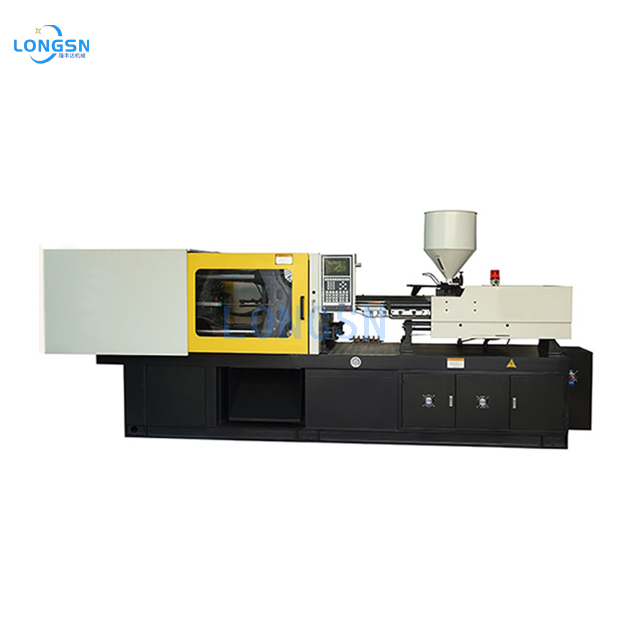
The Mechanics of an Injection Molding Machine
The process involves melting plastic pellets and injecting them under high pressure and temperature into a precision-machined metal cavity. Primary components include a material hopper, a heated barrel with distinct temperature zones, a reciprocating screw that shears and melts the polymer, and a high-tonnage clamping unit that keeps the mold shut during injection. The baseline advantage lies in rapid cycle times. Once the mold closes, filling, packing, cooling, and ejection often take mere seconds per part. Standard parts require near-zero post-processing, dropping out of the mold ready for assembly.
Operators must carefully control variables like injection speed, holding pressure, and cooling time to prevent defects such as sink marks, warp, or short shots. The heavy machinery requires robust facility infrastructure, including chilled water systems and three-phase power, making it a serious industrial commitment.
Industrial 3D Printing (Additive Manufacturing) Realities
Industrial 3D printing builds parts layer-by-layer from digital CAD data using technologies like Stereolithography (SLA), Selective Laser Sintering (SLS), Fused Deposition Modeling (FDM), or Multi Jet Fusion (MJF). It requires no physical tooling, offering a low entry barrier for hardware development. The baseline advantage is absolute design freedom. You face zero penalty for geometric complexity, allowing for immediate customization capabilities and the production of shapes impossible to mold.
However, additive manufacturing relies heavily on the Z-axis resolution, which dictates both surface finish and print time. Thinner layers mean smoother parts but exponentially longer build cycles. Industrial setups also require dedicated post-processing stations for powder removal, resin washing, and UV curing, which adds to the overall footprint and operational complexity.

Success Criteria: Defining Your Manufacturing Problem
Production Volume and the Breakeven Point
Calculating the breakeven point requires evaluating total cost as tooling cost plus the product of unit cost and quantity. The traditional 1,000-unit rule crossover threshold is shifting. Some high-throughput additive setups prove cost-effective for up to 13,000 parts. Part volume and nesting efficiency on printer build plates dictate exactly where this crossover curve sits.
| Production Volume | Recommended Technology | Primary Cost Driver |
| 1 - 500 units | 3D Printing | Machine time and raw material |
| 500 - 5,000 units | Hybrid / Bridge Tooling | Aluminum tooling and setup |
| 5,000 - 15,000 units | Depends on Geometry | Nesting efficiency vs. Tooling amortization |
| 15,000+ units | Injection Molding | Upfront steel tooling |
When evaluating the breakeven point, you must factor in the physical size of the part. Large parts consume printer build volume quickly, drastically reducing the number of units you can produce per day. In contrast, a large part in a molding press simply requires a machine with higher clamping tonnage, but the cycle time remains relatively fast.
Part Geometry and Design Constraints
Injection molding constraints require draft angles, uniform wall thickness, mold-flow considerations, and the avoidance of undercuts to prevent the need for expensive side-actions or lifters. Designing for moldability means thinking about how the steel will separate. If a feature traps the part in the mold, you have to redesign it or pay for complex mechanical actions within the tool.
Conversely, 3D printing handles complex organic shapes without mold-release concerns. You can consolidate assemblies into single parts and create internal lattices to reduce weight while maintaining strength. Additive manufacturing thrives on complexity that would be impossible or prohibitively expensive to machine into a steel mold.
Material Requirements and Mechanical Properties
Injection molding supports thousands of certified, FDA-approved, medical-grade, and aerospace-grade resins. You can source specific blends with glass fibers, UV stabilizers, or flame retardants directly from major chemical suppliers. Injection molded parts are isotropic, offering uniform strength in all directions because the polymer chains entangle under high pressure.
3D printed parts, especially FDM, are often anisotropic and weaker along the Z-axis layer lines. While SLS and MJF offer near-isotropic properties, the material selection remains limited compared to traditional molding. If your product requires specific regulatory certifications for material contact, traditional molding often provides a clearer path to compliance.
Cost Analysis and Unit Economics
Initial Capital Expenditure (CapEx) and Tooling
Upfront costs for injection molding involve CNC machining or EDM of steel or aluminum molds. The complexity of the part, the number of cavities, and the expected lifespan of the tool dictate the mold material. Aluminum molds work well for lower volumes, while hardened steel is necessary for millions of cycles or abrasive glass-filled resins. 3D printing has zero tooling costs, limiting CapEx to acquiring printers or paying outsourced service bureau fees.
When you invest in a mold, you are buying a custom piece of equipment dedicated solely to one part. If the design changes, modifying the tool involves welding and re-machining, which adds further capital expenditure and delays.
Per-Part Cost at Scale
Injection molding exhibits an inverse cost relationship. As volume increases, the amortized tooling cost per part approaches zero, leaving only raw material and machine time costs. Once the press is running, parts drop out every few seconds, driving the unit cost down to pennies. 3D printing features a linear cost curve. The 10,000th part costs roughly the same to print as the first because material consumption and machine time remain constant.
To optimize per-part costs in molding, engineers use multi-cavity or family molds. A four-cavity mold produces four parts per cycle, effectively quadrupling throughput and slashing machine time costs per unit. Additive manufacturing cannot replicate this scaling efficiency.
Hidden Costs: Post-Processing, Waste, and Labor
Material waste profiles differ significantly between the two methods. 3D printing generates non-recyclable support structures, rafts, and resin tank wear. Injection molding produces sprues and runners that can be reground, re-extruded, and blended back into the feed material. Post-production labor for 3D printing involves manual overhead like support removal, post-curing, solvent washing, and surface smoothing.
An injection molding press delivers a plug-and-play, ready-to-ship output. The hidden labor costs in additive manufacturing often catch teams off guard. Scaling a 3D printed product means scaling the human workforce required to clean and finish the parts, which eats directly into profit margins.
Speed to Market and Production Lead Times
Prototyping and Iteration Cycles
3D printing offers extreme agility, moving from CAD to part in 24 hours. It is ideal for rapid iteration, continuous design optimization, and failing fast without financial penalty. You can print five different variations of a design overnight and test them the next morning. Injection molding iterations introduce friction. Modifying a metal tool takes weeks and requires strict metal-safe design strategies where material is removed from the mold rather than added.
During the early stages of hardware development, this agility is critical. Locking in a design too early and cutting steel before functional testing is complete often leads to scrapped molds and massive project delays.
High-Volume Production Throughput
An injection molding press can produce hundreds of parts per minute with a multi-cavity mold. The sheer volume of material processed per hour dwarfs additive methods. Even large, automated industrial 3D printer fleets cannot match the throughput of a single optimized injection molding press once the tooling is qualified.
When a product goes viral or hits retail distribution, supply chain velocity becomes the primary concern. Traditional molding provides the necessary output to stock shelves globally, whereas a printer fleet would quickly become a production bottleneck.
Implementation Risks and Mitigation Strategies
Tooling Lock-in and Design Obsolescence
Investing heavily in a mold carries the risk of discovering a critical design flaw or market shift later. Once the steel is cut, your design is largely frozen. Mitigate this by mandating rigorous 3D printed prototyping and functional testing in end-use equivalent materials before committing to tooling.
Run pilot programs using additive manufacturing to gather user feedback. Only pull the trigger on a production mold when the design is validated and market demand is proven.
Scalability Bottlenecks in Additive Manufacturing
Relying on 3D printing for a product that unexpectedly scales risks crushed margins due to linear production costs and manual labor scaling. Mitigate this by designing parts for manufacturability from day one. Ensure the CAD file can transition to an injection molding press with minimal modifications when volume demands it.
Avoid designing features that are only possible to 3D print if you plan to scale later. Maintain uniform wall thicknesses and incorporate draft angles even on your printed prototypes to ensure a smooth transition to traditional manufacturing.
The Hybrid Approach: Bridging the Gap
3D Printed Molds for Short-Run Injection Molding
Printing molds using high-temperature, high-strength SLA or SLS resins is an emerging practice on the factory floor. This approach allows running 50 to 200 parts in final production-grade plastics on an injection molding press without the high cost or long lead time of a metal tool.
Bridge tooling lets you test the actual injection molding process, validate material properties, and produce short runs for beta testing. While these printed molds degrade quickly under the heat and pressure of the press, they provide invaluable data before investing in a permanent steel tool.
Conclusion
Neither technology replaces the other; they are complementary tools on the manufacturing spectrum. Choose 3D printing for volumes under 1,000, extreme geometric complexity, rapid iteration, or mass customization. Invest in traditional molding for high volumes, strict mechanical requirements, zero-post-processing needs, and the lowest possible unit cost at scale. Understanding where your project sits on this spectrum ensures you allocate capital efficiently and hit your production targets.
- Conduct a formal breakeven analysis based on your specific CAD files and projected volumes.
- Request material data sheets to ensure your chosen process meets regulatory and mechanical requirements.
- Consult with a manufacturing engineer to audit your part for manufacturability before committing to tooling.
- Print a final validation prototype in a material that closely mimics your intended production resin.
FAQ
Q: What is the realistic breakeven point between 3D printing and injection molding?
A: The typical breakeven point falls between 1,000 and 10,000 units. However, high-throughput SLS or SLA systems can push this breakeven point up to approximately 13,000 parts, depending heavily on part geometry, nesting efficiency, and overall size.
Q: Can an injection molding machine use the same plastics as a 3D printer?
A: While there is overlap with materials like ABS, Nylon, and Polycarbonate, traditional molding offers a vastly wider range of certified, standard-grade thermoplastics at a fraction of the raw material cost compared to specialized 3D printing filaments or resins.
Q: Which process produces less overall material waste?
A: Traditional molding typically produces less net material waste. Sprues and runners can often be reground and recycled directly into the process. 3D printing generates support structures and failed prints that represent unrecoverable waste.
Q: How does post-processing compare between the two methods?
A: 3D printing requires significant manual labor for washing, curing, and support removal. Traditional molding generally produces finished parts directly from the mold, requiring little to no post-processing before assembly or shipping.
Q: Is it possible to use both technologies for the same product?
A: Yes. Many manufacturers use a hybrid approach, leveraging 3D printing for rapid prototyping and design validation, and then transitioning to traditional molding for high-volume mass production once the design is finalized.

 English