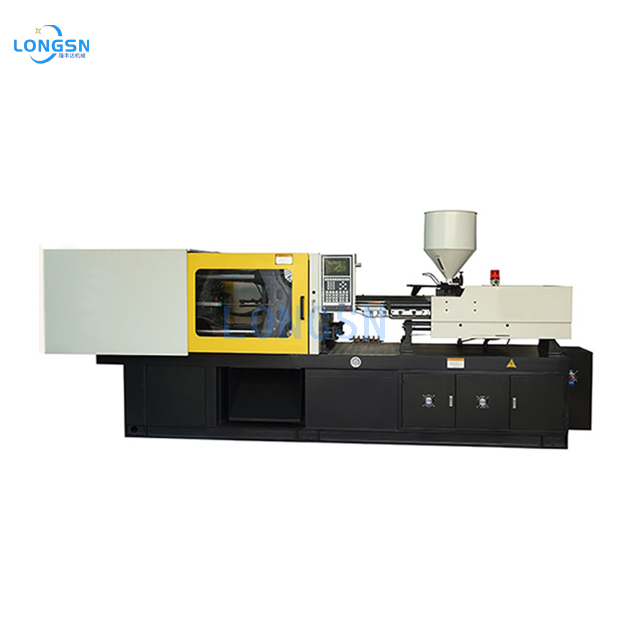
Purchasing an Injection Molding Machine is rarely a standalone capital expense. The sticker price of the press is often dwarfed by tooling, auxiliary equipment, and facility upgrades. Procurement teams and engineering directors frequently miscalculate the overall lifetime expenses by failing to align machine specifications with long-term production volume and cycle time requirements. This guide breaks down the true costs of acquiring and operating an injection molding press. We provide a framework to evaluate capital expenditures, operational overhead, and per-part economics before you request vendor quotes. You must account for every variable on the production floor. Missing a critical utility requirement or underestimating mold maintenance will destroy your profit margins. We will walk through the exact hardware, infrastructure, and operational variables you need to evaluate to ensure a successful equipment deployment.
- Base Machine Costs Vary by Technology: Expect significant price deltas between traditional hydraulic presses and highly precise, energy-efficient all-electric or hybrid models.
- Tooling Often Exceeds Machine Costs: High-volume, multi-cavity steel molds require substantial capital, heavily influencing the overall project budget and cost-per-part amortization.
- Geographic Sourcing Dictates Upfront Tooling Margins: Offshore mold fabrication offers lower initial capital expenditure but introduces logistics risks, while domestic tooling ensures higher reliability and faster design iterations.
- Auxiliary and Facility Costs are Mandatory: Chillers, material dryers, robotic sprue pickers, and high-voltage electrical drops add significant overhead to the initial capital requirement.
- Cycle Time Dictates ROI: A more expensive machine that shaves seconds off cycle times or reduces scrap rates will typically yield a lower cost per part over a high-volume production run.
The True Cost of an Injection Molding Machine: CapEx vs. OpEx
Understanding the baseline investment requires differentiating between the initial purchase price of the press and its lifetime operating costs. Focusing solely on the upfront invoice often leads to severe budget overruns during deployment. You must look at the entire lifecycle of the equipment. A press that seems like a bargain on the purchase order can quickly become a financial liability if it consumes excessive power or requires constant maintenance.
Initial Capital Expenditure (CapEx)
Your initial capital outlay extends far beyond the base price of the press. Origin impacts this baseline significantly. Domestic manufacturing typically demands a higher premium than overseas alternatives. You must account for freight, rigging, and specialized installation fees required to place the heavy equipment safely on your production floor. Rigging alone requires specialized contractors with heavy-duty forklifts and gantry systems. Software licensing and proprietary control system upgrades also add to the initial capital expenditure. If you require advanced process monitoring, closed-loop feedback systems, or specialized injection profiles, expect to pay a premium for the upgraded controller software.
- Base machine purchase based on tonnage and drive technology.
- International or domestic freight and logistics handling.
- Professional rigging and floor placement services.
- Initial hydraulic fluid fill and lubrication setup.
- Control system software licenses and interface upgrades.
Ongoing Operational Expenditure (OpEx)
Operational expenses dictate your long-term profitability. Energy consumption rates vary wildly based on the drive technology you select. You must calculate the kilowatt-hours required per kilogram of processed material. Preventative maintenance schedules represent another continuous expense. Hydraulic fluid replacement, filter changes, and inevitable screw or barrel wear require regular capital allocation. Screws and barrels degrade over time, especially when processing glass-filled or highly abrasive resins. Finally, factor in operator labor, ongoing safety training, and the salaries of specialized technicians needed to keep the equipment running efficiently. Machine downtime is the most expensive operational failure you can experience.

Sizing the Press: How Tonnage and Specifications Drive Price
Selecting the correct machine size is a critical financial decision. Oversizing wastes capital and consumes valuable floor space. Undersizing leads to part defects like flash or short shots, while causing premature machine wear. You must match the machine's capabilities exactly to your mold and material requirements.
Clamp Tonnage and Shot Size Requirements
The required clamp tonnage directly correlates with the projected area of your part and the viscosity of your chosen resin. A small component might run perfectly on a low-tonnage press, while large automotive panels demand massive clamping forces. Machine prices increase exponentially as tonnage requirements rise. You must accurately calculate your shot size and clamping needs to avoid purchasing excess capacity. The injection unit must also match the shot size. If the barrel is too large for the shot, the resin will degrade from excessive residence time. If the barrel is too small, you will not be able to fill the mold cavity completely.
Evaluating Drive Technologies
Drive technology fundamentally alters both your initial investment and your ongoing utility bills. Each system offers distinct advantages depending on your production environment. You must evaluate your facility's power capacity and your specific molding tolerances before selecting a drive type.
| Drive Technology | Initial Investment | Energy Efficiency | Best Application |
| Hydraulic | Lower Baseline | Low to Moderate | High-tonnage parts, general custom molding, thick-walled components. |
| All-Electric | Premium Tier | Extremely High | Medical devices, cleanrooms, high-precision micro-molding. |
| Hybrid | Moderate Tier | High | Projects requiring high clamp force combined with precise injection control. |
Tooling and Molds: The Hidden Financial Variable
The injection mold often represents a larger investment than the press itself. You must align your mold investment with expected production volumes and standard Society of the Plastics Industry (SPI) Classifications. A poorly designed mold will bottleneck even the most advanced injection molding press.
Prototyping vs. High-Volume Production Molds
Low-volume or prototype tooling utilizes softer materials like aluminum. These molds are cost-effective but degrade quickly under pressure. They are suitable for initial design validation and short market-testing runs. Medium-volume single-cavity steel molds offer a balance of durability and upfront expense. For maximum output, high-volume, multi-cavity hardened steel molds are required. These represent a massive initial investment but deliver the lowest possible unit cost over millions of cycles. Hardened steel molds require specialized machining, EDM processes, and extensive polishing, which drives up the fabrication time and cost.
Geographic Tooling Sourcing: Domestic vs. Offshore Trade-offs
Domestic sourcing generally involves higher upfront costs. However, it offers shorter lead times, easier engineering changes, and reduced shipping overhead. Working with a local toolmaker allows your engineers to inspect the mold during fabrication and quickly resolve design flaws. Offshore sourcing drastically lowers the initial expenditure for complex multi-cavity tools. You must balance these savings against the increased risks of custom duties, freight delays, and potential communication barriers during the design phase. Time zone differences can slow down the approval process for critical engineering changes.
Cavitation and Cycle Time Economics
Choosing between a single-cavity and a multi-cavity tool is a fundamental economic trade-off. A multi-cavity mold requires a higher initial investment and a larger press to handle the increased tonnage. However, producing multiple parts per cycle drastically lowers the unit cost. You must analyze your total production run to determine if the volume justifies the higher capital expenditure of multi-cavity tooling. A four-cavity mold will produce parts four times faster than a single-cavity mold, but it requires a larger platen, more clamping force, and a higher-capacity cooling system.
New vs. Used Equipment: A Risk-Reward Analysis
Procuring machinery involves balancing budget constraints against reliability requirements. Buying legacy equipment without a thorough mechanical audit introduces severe financial dangers. You must evaluate the mechanical integrity of any used press before committing capital.
The Case for Used Equipment
Used machinery offers immediate availability, allowing you to bypass lengthy lead times associated with new builds. The upfront savings are substantial compared to original retail prices. This route is often best suited for low-margin, non-precision commodity parts or cash-constrained operations looking to scale quickly. However, you inherit the previous owner's maintenance habits. A poorly maintained used press will suffer from inconsistent injection pressures, leaking hydraulic seals, and worn toggle linkages.
The Case for New Equipment
New presses include comprehensive warranties and direct technical support from the manufacturer. They feature modern controller interfaces and seamless integration for process monitoring. Mid-to-large-scale manufacturers strictly mandate new machinery to meet stringent overall equipment effectiveness targets and uptime service level agreements. New equipment also benefits from the latest advancements in servo-motor efficiency and barrel heating technology, which directly reduces operational overhead.
Risk Mitigation
If you opt for used equipment, rigorous inspection is mandatory. You must inspect the tie bars for stress fractures and check platen parallelism to ensure proper mold alignment. Uneven platens will cause mold damage and excessive flash. Always verify that replacement parts and legacy control boards are still available before finalizing the purchase. Check the screw and barrel for wear using a bore gauge. Inspect the hydraulic hoses for dry rot and check the main pump for unusual noise during operation.
Facility Upgrades and Auxiliary Equipment Costs
A press cannot operate in isolation. You must assess the infrastructure required to support the machine and handle the raw materials. Auxiliary equipment is critical for maintaining process stability and part quality.
Essential Auxiliary Equipment
You must surround your press with reliable support equipment. Thermolators and industrial chillers regulate mold temperatures, which directly impacts part shrinkage and cycle time. Desiccant dryers remove moisture from hygroscopic resins like nylon and polycarbonate. Processing wet resin leads to splay, voids, and brittle parts. Automated material feeding and blending systems ensure consistent resin delivery and accurate colorant mixing. Granulators allow you to recycle runners and minimize material scrap, improving your overall material yield.
- Mold temperature controllers for precise thermal management.
- Desiccant wheel dryers for hygroscopic material preparation.
- Vacuum loaders and automated hopper systems.
- Robotic sprue pickers or full multi-axis automation.
- Beside-the-press granulators for immediate scrap recovery.
Facility Infrastructure Requirements
Most industrial presses require significant facility upgrades. You will likely need electrical upgrades to support specific three-phase power requirements and dedicated drops. High-tonnage machines generate intense vibration, often necessitating foundation reinforcement or specialized mounting pads. You must ensure your concrete floor is thick enough to support the static weight of the machine and the dynamic load of the clamping mechanism. Finally, overhead cranes or gantry systems are essential for executing safe and efficient mold changes. Attempting to load a heavy steel mold with a forklift is dangerous and risks damaging the machine's tie bars.
Calculating ROI and Cost Per Part
Building a realistic financial model is critical for justifying in-house production. You must evaluate the break-even volume where the per-part cost of injection molding becomes financially superior to alternative manufacturing methods like CNC machining or urethane casting.
Amortizing Machine and Tooling Costs
Distribute your capital expenditure over the expected lifecycle of both the machine and the mold. Presses typically operate efficiently for over a decade, while high-quality molds are rated for specific cycle counts. Dividing the total investment by the expected yield provides your baseline amortization rate. You must separate the machine amortization from the mold amortization, as the mold will likely need replacement or major refurbishment long before the press reaches the end of its service life.
Factoring in Cycle Time and Machine Rates
Cycle time dictates your hourly output. Apply a burdened machine rate to determine the baseline processing cost per part. A faster cycle time directly reduces the processing cost allocated to each unit. You must also account for operational inefficiencies. Factor in setup times, routine mold maintenance lifecycles, planned downtime, and acceptable scrap rates to create an accurate financial projection. A theoretical cycle time of ten seconds means nothing if the machine is down for maintenance two days a week.
Conclusion
Purchasing an injection molding press requires a comprehensive understanding of both the immediate capital requirements and the long-term operational demands. You must evaluate the entire production cell, including the mold, the auxiliary equipment, and the facility infrastructure. Base your equipment shortlist on required clamp tonnage, material specifications, and energy efficiency targets.
- Conduct a rigorous time-study on your proposed part to estimate cycle times accurately.
- Finalize your mold cavitation requirements based on projected annual volumes.
- Request comprehensive quotes from manufacturers that include freight, rigging, and all necessary auxiliary equipment.
- Audit your facility's electrical and structural capacity before finalizing any equipment purchase.
FAQ
Q: How do you determine the correct tonnage for an injection molding machine?
A: Tonnage is calculated based on the projected surface area of the part and the viscosity of the plastic resin. You must multiply the projected area by a specific clamp force factor determined by the material. Complex parts with thin walls require higher injection pressures, which in turn demands higher clamping tonnage to keep the mold closed.
Q: What is the difference between hydraulic and all-electric injection molding machines?
A: Hydraulic machines use pressurized fluid to drive the clamping and injection mechanisms, offering robust force for large parts. All-electric machines use servo motors for every movement, providing superior precision, faster response times, and significantly lower energy consumption. Electric presses are ideal for cleanroom environments.
Q: How do you calculate the hourly rate of an injection molding machine?
A: The hourly rate is calculated by combining the amortized cost of the machine, facility overhead, energy consumption, and direct labor costs. This burdened rate is then divided by the number of parts produced per hour to determine the exact processing cost per part.
Q: Does the cost of the machine include the injection mold?
A: No. The injection mold is a separate, custom-engineered asset. Tooling costs are entirely dependent on part complexity, cavitation, and the steel grade required for your production volume. Molds must be quoted, designed, and purchased independently from the press.
Q: Is it better to buy a new or used injection molding machine?
A: New machines offer warranties, higher reliability, and modern controls, making them ideal for precision parts and high-uptime requirements. Used machines provide immediate availability and lower initial capital requirements, which suits lower-margin commodity production if the equipment is properly inspected.
Q: What auxiliary equipment is required to run an injection molding press?
A: At a minimum, you will need a mold temperature controller or chiller, a material dryer for hygroscopic resins, an automated hopper loader, and a granulator to recycle sprue scrap. These additions are mandatory for maintaining process stability and part quality.

 English