Procuring a Blow Moulding Machine represents a high-stakes capital expenditure. Technical mismatches between container geometry, target production volumes, and specific plastic resins directly result in margin erosion, excessive scrap, and production bottlenecks. Over-specifying equipment wastes capital. Under-specifying limits scalability. Before evaluating specifications, procurement teams must distinguish between hollow-part manufacturing (blow moulding) and solid or open-faced part manufacturing (injection moulding). Misunderstanding this fundamental distinction leads to misallocated resources. You need to align the machine architecture with your exact production demands. This guide provides a comprehensive, engineering-focused framework for evaluating blow moulding equipment. We compare process types, detail core technical criteria, and examine material behaviors to ensure a defensible procurement decision. We will break down the mechanical dynamics of different systems and provide actionable metrics for your next equipment upgrade.
- Process Dictates Geometry: The choice between Extrusion, Injection, and Stretch blow moulding is non-negotiable and strictly dictated by the final product's shape, neck finish requirements, and volume.
- Material Compatibility is Foundational: Machine screw design, heating profiles, and die heads must be explicitly matched to the target polymer (e.g., PET, HDPE, PP, Polycarbonate).
- Hidden Costs Reside in Auxiliaries: A successful deployment requires factoring in the footprint and capital for essential downstream equipment, including chillers, high-pressure air compressors, and leak testers.
- Automation Drives OpEx: Evaluating automated deflashing and in-line scrap recovery systems is critical for reducing long-term labor costs and material waste.
Defining Your Production Success Criteria
Part Geometry and Dimensional Tolerances
Container size dictates the physical footprint and tonnage of the machine. Production requirements span a massive spectrum, from micro-scale pharmaceutical vials under 5ml to 200L industrial chemical drums. You cannot process these extremes on the same equipment platform. Extremely small volume parts, specifically those under 10ml, demand micro-shot weight control and precise concentricity. These strict dimensional tolerances limit your process choices almost exclusively to Injection Blow Moulding (IBM). The injection phase guarantees the neck finish and overall weight remain consistent across millions of cycles.
Complex geometries impact parison manipulation and process selection. Integrated handles on detergent bottles, asymmetrical panels on automotive fluid reservoirs, or wide-mouth designs for peanut butter jars require specific machine capabilities. Extrusion Blow Moulding (EBM) handles asymmetrical shapes and integrated handles well because the parison can be pinched and blown around complex mold inserts. Neck finish precision requirements also influence your choice. Calibrated, leak-proof threads are mandatory for medical or pharmaceutical packaging. Injection-based methods deliver superior accuracy for these threads compared to the pinch-off methods used in standard extrusion.
Target Production Volume and Cycle Times
Establishing a mathematical framework for required output prevents capacity shortfalls. You must calculate the required bottles per hour based on annual demand, accounting for planned maintenance and operational shifts. A facility running 24/7 operations for 300 days a year requires a different machine durability profile than a plant running single shifts five days a week. This calculation drives the required machine throughput and dictates the number of cavities you need.
Overall machine throughput relies on the relationship between cavitation, cooling times, and cycle times. Higher cavitation increases output but demands exponentially greater clamping force and cooling capacity. You must determine the threshold where high-volume continuous production justifies investing in multi-cavity or rotary wheel machines. Single-station linear shuttle setups work well for lower volumes or frequent mold changes. Rotary wheel machines dominate high-volume, single-product runs like milk jugs or water bottles, where the continuous motion maximizes output per square foot of floor space.
Resin Selection and Material Behavior
Different polymers require distinct thermal management, melt temperatures, and extruder configurations. Material compatibility forms the foundation of machine selection. Processing PET, HDPE, LDPE, PP, PVC, and PETG on the same screw design leads to poor melt homogeneity and high scrap rates. You must match the screw geometry to the resin's specific melt flow index and thermal stability.
Melt strength dictates parison extrusion capabilities. High-molecular-weight HDPE provides the necessary melt strength for continuous extrusion, allowing the parison to hang from the die head without sagging prematurely. PET dominates stretch blow moulding due to its specific crystallization properties and strain-hardening behavior when stretched biaxially. Processing corrosive or heat-sensitive resins like PVC requires specialized equipment. You must specify chrome-plated or stainless steel screws, barrels, and die heads to prevent rapid degradation of the metal surfaces and subsequent contamination of the plastic.
Core Categories of Blow Moulding Machines
Extrusion Blow Moulding (EBM) Machines
Extrusion Blow Moulding utilizes different configurations based on part weight and material behavior. Continuous Extrusion is optimal for high-volume, lightweight containers. The extruder runs constantly, feeding a continuous tube of plastic. Shuttle machines move the mold to the die head, grab the parison, and move away to blow and cool the part. High-output rotary wheel configurations mount multiple molds on a spinning wheel, capturing the continuous parison as it passes. This setup maximizes output for lightweight dairy and personal care bottles.
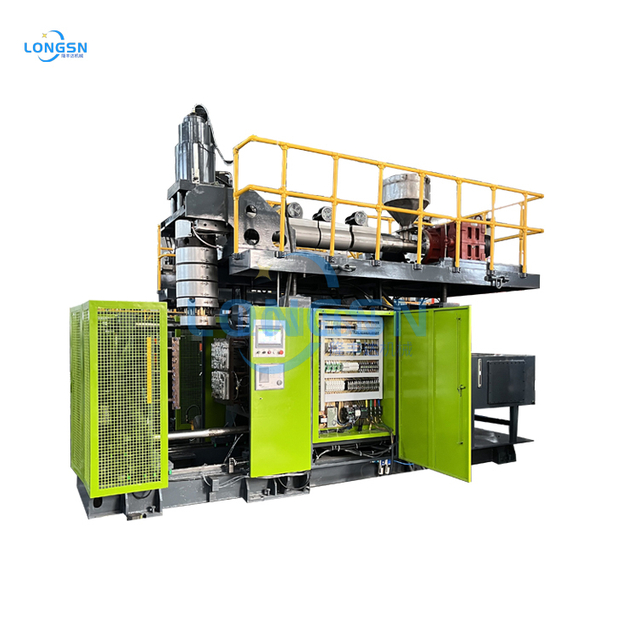
Accumulator Head machines are a mechanical necessity for large, heavy-wall industrial parts. Automotive components, fuel tanks, and large drums require massive amounts of plastic. Using continuous extrusion for a 20-pound part would result in severe parison sag; the plastic would stretch under its own weight before the mold could close. Accumulator heads store the melted plastic and push it out rapidly using a hydraulic ram, forming a thick, uniform parison in seconds. Reciprocating Screw machines offer specialized applications for lightweight dairy and juice containers by utilizing intermittent parison delivery, acting similarly to an injection molding screw but pushing the melt through an extrusion die.
Comparison of EBM Configurations | Configuration | Ideal Application | Parison Delivery | Typical Part Size |
| Continuous Shuttle | Cosmetics, Household Chemicals | Continuous | 50ml - 10L |
| Rotary Wheel | High-Volume Dairy, Water | Continuous | 100ml - 4L |
| Accumulator Head | Industrial Drums, Auto Parts | Intermittent (Ram) | 10L - 200L+ |
| Reciprocating Screw | Lightweight Dairy | Intermittent (Screw) | 200ml - 4L |
Injection Blow Moulding (IBM) Machines
Injection Blow Moulding operates via a three-station rotary table process within a single machine frame. Station one injects melted plastic into a heated cavity over a core pin, forming a test-tube-shaped preform with a fully finished neck. The rotary table indexes to station two, where the preform is enclosed in a blow mold and inflated against the chilled walls. Station three strips or ejects the finished part onto a conveyor. Some machines include a fourth station for safety checks or secondary conditioning.
IBM is the standard for small medical, pharmaceutical, and cosmetic bottles. It provides zero scrap production. There is no flash to trim from the neck or tail. The injection phase guarantees highly consistent wall thickness and exact neck tolerances. When a pharmaceutical company requires a perfectly flat sealing surface for an induction seal, IBM is the only reliable choice. The tooling is more complex and expensive than EBM, but the elimination of downstream trimming and scrap recovery justifies the investment for precision parts.
Injection Stretch Blow Moulding (ISBM) Machines
Injection Stretch Blow Moulding machines are categorized into single-stage and two-stage systems. Integrated single-stage machines process raw resin pellets into a finished bottle in one continuous thermal cycle. The machine injects the preform, conditions it to the exact stretch temperature, and blows it in a single footprint. This is ideal for custom shapes, non-round bottles, and operations wanting to control the entire process from pellet to bottle.
Two-stage systems separate the process. One machine (or a separate supplier) injection molds the preforms. The ISBM machine then reheats these cold preforms using infrared lamps and blows them into bottles. This is the standard for high-speed beverage bottling. Both methods utilize a biaxial orientation process. A mechanical stretch rod pushes the preform to the bottom of the mold while high-pressure air expands it radially. This biaxial stretching aligns the polymer chains, giving PET bottles their characteristic clarity, high tensile strength, and superior gas barrier properties.

The 7 Core Technical Criteria for Selecting a Blow Moulding Machine
1. Clamping Force and Platen Dimensions
Required clamping tonnage must be calculated based on the projected area of the part and the maximum blow air pressure. You cannot guess this metric. EBM typically requires 2 to 10 bar of blowing pressure. PET stretch blowing requires significantly more, often up to 40 bar, to force the material into the mold details. You calculate the projected area of the cavities and multiply it by the blow pressure to find the separation force. Your machine's clamping force must exceed this separation force by at least 20% to prevent the mold halves from parting during the blow cycle. Insufficient clamping force leads to flash, dimensional inaccuracies, and excessive wear on the mold parting lines.
Evaluate platen dimensions, tie-bar spacing, and daylight opening carefully. The physical size of your molds dictates the minimum platen size. Tie-bar spacing determines if you can physically load the mold into the machine. Daylight opening (the maximum distance between platens) must accommodate the mold thickness plus the stroke required to eject the part. You must ensure compatibility with your current molds and leave room for future multi-cavity mold sizes. A machine with high tonnage but narrow tie-bar spacing limits your ability to run wide, multi-cavity layouts.
2. Extruder Capacity and Screw Design
The extruder is the heart of the machine. Length to Diameter (L/D) ratios typically range from 20:1 to 30:1. A longer L/D ratio provides more residence time for the plastic, improving melt homogeneity and allowing for better mixing of colorants. Screw compression profiles impact plasticizing capacity and output rates, measured in kilograms per hour (kg/hr). If your extruder cannot melt plastic fast enough to keep up with the cycle time, the machine will sit idle waiting for the next shot. Proper screw design is critical for consistent material processing and preventing un-melted particles from entering the die head.
Specialized screw geometries are required for processing recycled materials (PCR) or masterbatch colorants. Barrier screws separate the melted plastic from the solid pellets, ensuring only fully plasticized material moves forward. Mixing sections, such as Maddock or pineapple mixers, create high shear to disperse color pigments evenly without degrading the base resin. If you plan to run high percentages of PCR, you need a robust screw design capable of handling variations in melt flow and potential contaminants.
Extruder Screw Design Parameters | Screw Feature | Function | Impact on Production |
| L/D Ratio (24:1 vs 30:1) | Determines residence time in barrel | Higher ratio improves melt quality and color mixing |
| Barrier Flight | Separates melt pool from solid bed | Increases output stability and prevents un-melted gels |
| Maddock Mixer | Applies high shear stress to melt | Disperses masterbatch colorants evenly |
| Compression Ratio | Squeezes air out of the pellet bed | Prevents bubbles in the final parison |
3. Parison Control and Programming
Multi-point electronic parison programmers are mandatory for modern EBM operations. These systems typically offer 100-point to 400-point control, dynamically varying the parison thickness as it extrudes. A servo-hydraulic or electric actuator moves the die pin up and down, changing the gap and thus the thickness of the plastic tube. This technology optimizes material usage by putting plastic exactly where it is needed and thinning it out where it is not.
Parison programming prevents thin spots on corners and reduces overall part weight. When a round parison blows into a square mold, the corners stretch the furthest and become the thinnest points. By programming a thicker ring of plastic at the exact moment that section of the parison extrudes, you ensure the corners maintain structural integrity. This maintains top-load strength for stacking while reducing the total gram weight of the bottle. Saving two grams of plastic per bottle across a 10-million-bottle run yields massive material savings.
4. Cycle Time and Cavitation Scalability
Overall cycle times are dictated by mold cooling design, platen closing speed, and blowing pressure ramp rates. Cooling is almost always the bottleneck. The plastic must solidify enough to hold its shape before ejection. Efficient cooling requires turbulent water flow through well-designed cooling channels in the mold. The machine's hydraulic or electric movements must be fast and precise to minimize dry cycle time (the time the machine takes to move without processing plastic).
Determine the optimal balance between machine cavitation and cycle speed. Pushing cycle speeds too high with maximum cavitation can cause mold deformation and excessive thermal stress on the machine frame. If you run a 10-cavity mold too fast, the outer cavities might not cool evenly, leading to warped parts. You must evaluate the machine's dry cycle speed and its ability to deliver high-volume cooling water to the platens. Scalability means buying a machine with enough structural rigidity to handle heavier, higher-cavitation molds in the future.
5. Energy Efficiency and Drive Systems
Drive architecture impacts technical performance and facility infrastructure. You must compare hydraulic, hybrid, and all-electric blow moulding machines. Traditional hydraulic machines use constant-speed motors driving variable displacement pumps. They are robust but consume energy continuously, even when idling. Hybrid machines combine hydraulic clamping for high force with electric extrusion for precision and energy savings.
All-electric machines utilize servo motors for every movement: clamping, carriage stroke, blow pin actuation, and extrusion. They offer up to 40-50% lower energy draw because the motors only consume power when moving. They also eliminate hydraulic oil leaks, making them ideal for cleanroom-compatible operation in medical or food packaging. You must analyze your local power grid capacity and facility cooling requirements, as all-electric machines generate significantly less ambient heat, reducing the load on your plant's HVAC system.
6. Automation, Deflashing, and Downstream Integration
Evaluate the integration of in-machine automated deflashing systems. In EBM processes, the mold pinches the parison, creating flash at the neck, tail, and handle. Removing this manually is slow, inconsistent, and dangerous. Modern machines feature integrated punch stations that automatically trim the flash before the bottle leaves the machine footprint. Automation reduces labor requirements and guarantees a clean, consistent finish on every part.
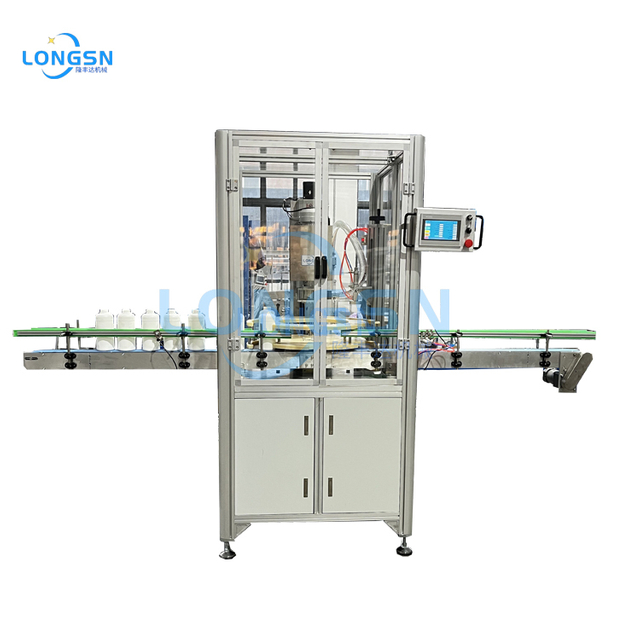
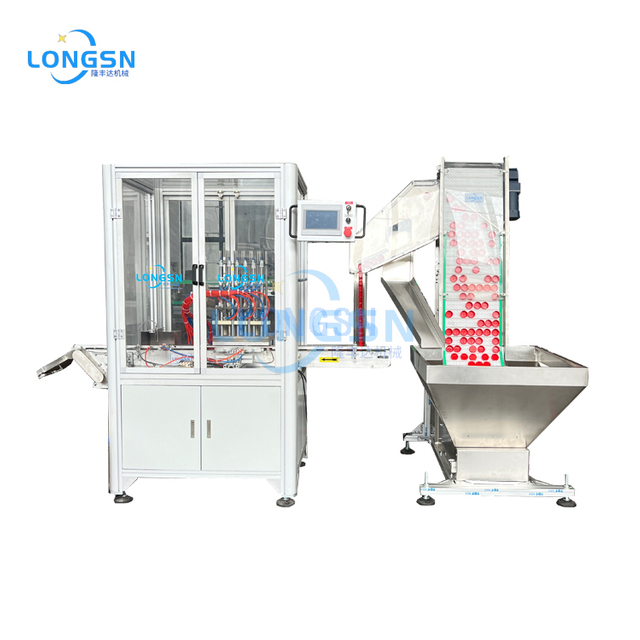
Assess the machine's compatibility with robotic take-out arms and downstream conveyor lines. The machine controller must have the necessary I/O (Input/Output) interfaces to communicate with external equipment. Bottles must be oriented correctly for downstream processes like leak testing, flame treating, and labeling. A machine that drops bottles randomly into a bin requires a secondary unscrambler, adding footprint and complexity. Direct orientation onto a conveyor ensures seamless production flow.
7. Downstream and Auxiliary Equipment Compatibility
The blow moulding machine is only one part of the production cell. You must quantify the cooling load requirements for mold chillers. Inadequate cooling creates immediate production bottlenecks. You need to calculate the tons of cooling required based on the pounds per hour of plastic you are processing and the specific heat capacity of the resin. The chiller must deliver water at the correct temperature and pressure to maintain turbulent flow in the mold channels.
Calculate high-pressure air requirements accurately. Understand the difference between low-pressure EBM air compressors operating at 7-10 bar and high-pressure ISBM PET compressors requiring 30-40 bar. High-pressure air systems require specialized piping, receivers, and safety protocols. Furthermore, materials like PET are hygroscopic and require desiccant dryers to remove moisture before melting. The machine must integrate seamlessly with these material handling systems, utilizing vacuum loaders and proportional blenders to feed virgin resin and regrind accurately.
Conclusion
Selecting the correct blow moulding equipment requires rigorous technical evaluation of your specific product geometry and material requirements. Follow these actionable steps to ensure a successful procurement process:
- Calculate precise production volume requirements to determine necessary machine cavitation and cycle times.
- Verify exact material specifications and ensure the machine's screw design and thermal profile match the chosen resin.
- Audit your facility's utility infrastructure to ensure adequate chilled water, high-pressure air, and electrical capacity are available.
- Specify integrated deflashing and automated part orientation to eliminate downstream handling bottlenecks.
FAQ
Q: What is the main difference between extrusion and injection blow moulding?
A: Extrusion blow moulding extrudes a continuous hollow tube of plastic (parison) which is captured and blown into a mold. It is suitable for high volumes and complex shapes like handles. Injection blow moulding first injects plastic over a core pin to form a preform, which is then blown. This offers precise neck finishes and zero scrap, making it ideal for small medical bottles.
Q: How do I determine the required clamping force?
A: Clamping force is calculated based on the projected area of the final part multiplied by the maximum blow air pressure required for the process. You must add a 20% safety margin. Insufficient clamping force results in mold separation, flash formation, and dimensional failure.
Q: Why is parison programming important?
A: Parison programming dynamically adjusts the thickness of the extruded plastic tube during the drop. This prevents weak, thin spots on corners and optimizes material usage. It reduces overall part weight while maintaining necessary structural top-load strength.
Q: What auxiliary equipment is essential for a blow moulding setup?
A: Essential auxiliary equipment includes industrial water chillers for mold cooling, air compressors sized for the specific process pressure, vacuum material loaders, desiccant dryers for hygroscopic resins, and scrap granulators for immediate material recovery.
Q: Are all-electric blow moulding machines worth the higher initial cost?
A: All-electric machines offer significant long-term operational advantages through 40-50% lower energy consumption, faster dry cycle times, and cleaner operation without hydraulic oil. They are highly recommended for cleanroom environments and high-volume production facilities.

 English