Acquiring a Blow Moulding Machine represents a high-stakes capital expenditure for any manufacturing facility. Misaligning equipment specifications with actual production requirements directly degrades unit economics and operational margins. Scaling the production of hollow plastic parts involves complex variables. You must balance cycle times, energy consumption, and material waste against strict quality tolerances. Compressed air and electrical draws alone can cripple operational efficiency if improperly managed. Selecting the optimal blow moulding equipment requires a rigorous evaluation of process types, polymer compatibility, and facility readiness. You need a clear understanding of how different machine architectures handle specific resins and part geometries. We will explore how to match machine capabilities with your specific manufacturing goals to ensure long-term operational success.
- Machine selection must be dictated by the specific polymer (e.g., PET vs. HDPE) and the geometric complexity of the final hollow product.
- Energy consumption—particularly compressed air for stretch blow moulding—accounts for a significant portion of operational expenditure (OpEx) and requires strict efficiency evaluation.
- Technological advancements in servo-driven systems, automated controls, and Industry 4.0 integration offer measurable reductions in cycle times and material waste compared to legacy hydraulic systems.
- Successful implementation relies heavily on precise site preparation, including foundation engineering, pneumatic infrastructure, cooling systems, and operator training.
Framing the Investment: Success Criteria for Blow Moulding Operations
Establishing baseline requirements is the first step before evaluating any equipment. You must define your target production volume, typically measured in bottles per hour (BPH). Part weight and dimensional tolerances also dictate the required machine specifications. A heavy, thick-walled industrial container demands vastly different extrusion capabilities than a lightweight water bottle. You need to map out these parameters precisely to avoid under-specifying or over-specifying the machine. Cavitation—the number of molds running simultaneously—will directly influence the required clamping force and extruder output. If you plan to run a four-cavity mold for a 1-liter bottle, the machine must deliver sufficient plastic melt and cooling capacity to support that specific throughput without extending the cycle time.
Distinguishing blow moulding from standard injection molding and profile extrusion is essential. Blow moulding is specifically engineered for hollow part design. Standard injection molding requires a solid core, making it impossible to create enclosed hollow shapes without complex, multi-part assemblies that require secondary welding. Profile extrusion creates continuous shapes like pipes but cannot form closed containers. Selecting a blow moulding system prevents fundamental capital misallocation when your primary product is a bottle, tank, or reservoir. Understanding this taxonomy ensures you direct your engineering resources toward the correct processing technology from day one.
Meeting industry-specific quality and compliance standards is non-negotiable. Food and beverage containers require strict adherence to FDA compliance, necessitating sanitary machine designs, stainless steel contact surfaces, and specific polymer handling capabilities. Industrial chemical packaging often requires UN certification for drop strength and leak resistance. Your equipment must consistently produce parts that meet these stringent regulatory requirements without excessive scrap rates. This often means specifying machines with advanced wall thickness control to ensure corners and bases have adequate material distribution to survive drop tests.
Scalability and flexibility represent a major trade-off in machine selection. Dedicated, high-speed single-product lines maximize throughput for uniform products like water bottles. They run continuously with minimal intervention. However, they lack the agility to handle diverse product portfolios. Flexible machines capable of rapid tooling changeovers suit operations running varied product lines. You must evaluate your production mix to determine which approach yields the highest operational efficiency. If your plant runs ten different bottle shapes a week, a machine with quick-mold-change (QMC) magnetic platens and recipe-driven automated setup will outperform a faster, dedicated machine that takes twelve hours to retool.
Core Blow Moulding Machine Technologies and Process Types
Extrusion Blow Moulding (EBM)
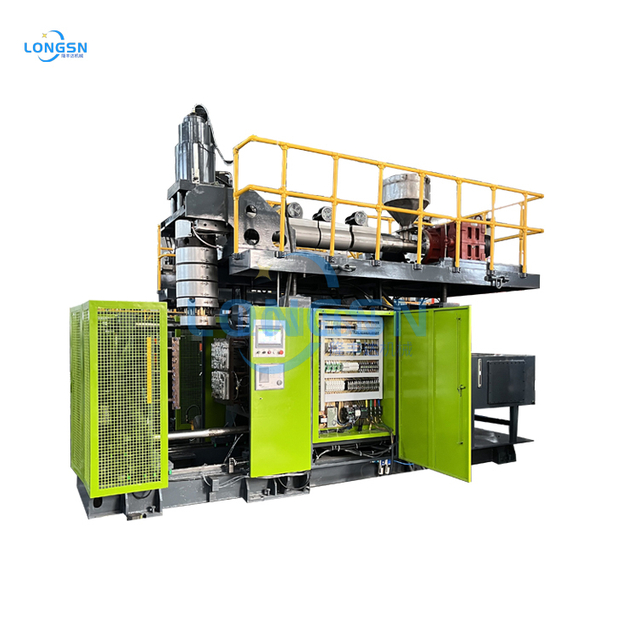
Extrusion Blow Moulding involves the continuous or intermittent extrusion of a parison. The parison is a hollow tube of molten plastic suspended from the die head. A mold clamps shut around the parison, pinching off one end. Compressed air then inflates the parison, forcing the plastic against the chilled mold walls. Once the plastic cools and solidifies, the mold opens to eject the part. Continuous extrusion is typically used for smaller parts, while intermittent extrusion (using an accumulator head) is reserved for massive parts like 55-gallon drums where the parison would sag too much if extruded slowly.
This process is highly suitable for complex shapes and asymmetrical parts. EBM excels at integrating handles directly into the container design. Common applications include detergent bottles, automotive fluid reservoirs, and large industrial drums. The ability to control the parison thickness during extrusion—known as parison programming or Wall Thickness Distribution (WDS)—allows for targeted strengthening of specific container areas. You can program the die gap to widen or narrow as the parison drops, ensuring that a sharp corner gets more plastic than a flat side panel.
EBM does have inherent limitations. The process generates scrap, commonly known as flash, at the pinch-off points (the neck, tail, and handle areas). This necessitates secondary trimming operations, either in-machine or downstream. You must also implement regrind systems to recycle the flash back into the extrusion process. This adds complexity to the material handling infrastructure, requiring granulators, proportional blending valves, and dust separation equipment to maintain material integrity.
Injection Blow Moulding (IBM)
Injection Blow Moulding is a two-step process that eliminates flash entirely. First, the machine injects molten plastic onto a core pin within an injection cavity to form a preform. This preform looks similar to a test tube with fully formed, highly precise neck threads. The machine then transfers the core pin and preform to a blow mold station. Compressed air inflates the preform to its final shape. A third station typically strips the finished container off the core pin and ejects it onto a conveyor.
IBM provides exceptional precision for small, high-tolerance containers. The injection molded neck finish guarantees a perfect seal for closures, which is why it is heavily favored in the medical sector. This makes IBM ideal for pharmaceutical bottles, cosmetics packaging, and small medical vials. The absence of flash eliminates the need for secondary trimming operations and regrind systems, keeping the production environment cleaner and reducing material degradation.
The primary limitations of IBM involve tooling complexity and part geometry. IBM tooling is generally more intricate and expensive than EBM tooling because it requires three separate sets of tooling: the injection mold, the blow mold, and the core rods. The process is also limited regarding container size—rarely exceeding one liter—and it cannot integrate complex, hollow handles. It is strictly suited for smaller, symmetrical containers.
Injection Stretch Blow Moulding (ISBM)
Injection Stretch Blow Moulding utilizes a biaxial stretching process. The machine mechanically stretches the preform axially using a stretch rod. Simultaneously, high-pressure compressed air stretches the preform radially. This biaxial orientation aligns the polymer molecules, significantly enhancing the physical properties of the final container. The stretching process forces the polymer chains into a highly ordered crystalline structure, which improves barrier properties and mechanical strength.
ISBM dominates the PET bottle industry. It is the standard process for carbonated beverages, water bottles, and edible oil containers. The biaxial stretching provides superior clarity, high tensile strength, and excellent gas barrier properties to keep carbonation in and oxygen out. This allows for aggressive lightweighting, reducing the overall polymer usage per bottle while maintaining top-load strength for pallet stacking.
ISBM systems are categorized into single-stage and two-stage configurations. Single-stage machines integrate preform injection and blowing into one continuous platform. They offer a compact footprint and excellent thermal efficiency, as the preform retains residual heat from injection. Two-stage systems use pre-manufactured preforms that are reheated in an infrared oven before blowing. Two-stage systems offer massive throughput capabilities (often exceeding 80,000 BPH) and allow you to separate preform production from bottle blowing, providing supply chain flexibility.
| Process Type | Mechanical Action | Primary Applications | Operational Limitations |
| Extrusion Blow Moulding (EBM) | Extrudes a molten parison, clamps, and inflates via blow pin. | Complex shapes, integrated handles, automotive tanks, detergent jugs. | Generates flash, requires trimming, necessitates regrind infrastructure. |
| Injection Blow Moulding (IBM) | Injects preform on core pin, transfers to blow station, inflates. | Small, high-precision bottles, pharmaceuticals, cosmetics. | Limited container size, difficult handle integration, high tooling complexity. |
| Injection Stretch Blow Moulding (ISBM) | Biaxial stretch via mechanical rod and high-pressure air. | PET beverage bottles, high-clarity containers, carbonated drinks. | Requires precise thermal profiling and high-pressure (40 bar) air systems. |

Material Compatibility and Application Matching
Polymer Selection and Machine Configuration
Processing Polyethylene Terephthalate (PET) requires specific machine configurations. PET is highly sensitive to temperature variations during the stretch blowing phase. The material must be heated to its glass transition temperature, but not to its melting point. Machines must feature precise infrared lamp heating profiles to ensure uniform heat distribution across the preform. Stretch rod speed calibration and high-pressure stretch blowing capabilities are critical for achieving optimal biaxial orientation. Improper heating or stretching leads to uneven wall thickness, pearlescence (haze caused by over-stretching), and compromised barrier properties.
High-Density Polyethylene (HDPE) and Polypropylene (PP) are semi-crystalline polymers typically processed via EBM. Machines handling these resins are optimized for melt strength and parison sag control. Since the extruded parison hangs vertically before clamping, the polymer must possess sufficient melt strength to prevent excessive stretching under its own weight. Cooling requirements are also critical, as these polymers release significant latent heat during solidification. Efficient mold cooling channels, often utilizing turbulent flow designs, are necessary to extract heat rapidly and maintain acceptable cycle times.
Engineering plastics and multi-layer co-extrusion demand specialized equipment. Applications like agricultural chemical containers or oxygen-sensitive food packaging require barrier layers such as EVOH or Nylon. Machines must be equipped with multi-layer parison heads and multiple extruders. These systems precisely combine different polymer melt streams into a single, multi-layered parison. This allows you to combine the structural integrity of HDPE on the outside with the chemical resistance of specialized barrier resins on the inside, often utilizing a tie-layer adhesive resin to bind them together.
Evaluating Machine Performance: Features to Outcomes
Energy Efficiency and Pneumatic Optimization
Compressed air management is a critical factor in operational efficiency. Stretch blowing PET requires high-pressure air, often up to 40 bar, to force the material into the fine details of the mold. Standard pneumatic operations like valve actuation and cylinder movements use low-pressure air (typically 6 to 8 bar). Modern equipment utilizes air recovery and recycling systems to maximize efficiency. These systems redirect exhaust air from the high-pressure blowing phase to power low-pressure operations or pre-blowing stages. This significantly reduces the overall load on your facility's compressor network, lowering electrical draw.
Thermal management and waste heat recovery directly impact facility-wide utility draws. Extruder barrels, infrared heating ovens, and mold cooling loops generate substantial thermal energy. Advanced systems incorporate heat reclamation technologies. You can capture waste heat from the extrusion process and redirect it to pre-heat material dryers or supplement facility heating during winter months. Efficient chiller integration ensures that mold cooling loops operate at optimal temperatures without excessive electrical consumption. Variable frequency drives (VFDs) on chiller pumps allow the system to scale cooling capacity based on real-time machine demand.
The shift from hydraulic to electrical drives represents a major leap in efficiency. Legacy hydraulic clamping systems are energy-intensive, noisy, and prone to oil leaks. Modern all-electric or hybrid servo-driven machines offer superior energy consumption profiles. Servo motors only draw power when moving, unlike hydraulic pumps that run continuously to maintain system pressure. Electric drives also provide greater speed precision, eliminate oil contamination risks in cleanroom environments, and reduce overall maintenance overhead by removing hydraulic hoses, valves, and oil filtration systems from the equation.
Automation and Technological Advancements
Control systems and Human-Machine Interfaces (HMI) dictate the usability of the equipment. Intuitive HMIs allow operators to perform real-time process monitoring and adjustments without digging through complex sub-menus. Multi-point parison programming is a critical feature on EBM machines. It allows you to control the wall thickness of the parison at up to 100 different points during extrusion. This optimizes part weight and ensures structural integrity in complex geometries. Automatic fault diagnostics quickly identify issues, highlighting the exact sensor or valve that failed, minimizing downtime and troubleshooting efforts.
Industry 4.0 and smart manufacturing integration provide unprecedented visibility into production metrics. Machines equipped with IoT edge sensors continuously monitor operational parameters like melt pressure, clamp force, and cooling water flow rates. Remote machine telemetry allows vendor engineers to diagnose issues from off-site locations, often resolving software glitches without a site visit. Predictive maintenance alerts monitor component wear, such as clamp toggle stress or servo motor thermals. This allows you to schedule maintenance before catastrophic failures occur. Cloud-based production reporting provides real-time data on throughput, scrap rates, and overall equipment effectiveness (OEE).
In-line quality assurance prevents defective parts from reaching downstream packaging lines. Automated high-speed vision systems inspect containers immediately after ejection. These camera systems detect neck defects, wall thickness variations, and black spots caused by degraded polymer in the extruder. Inline leak testing applies a slight pressure to each container to verify seal integrity, rejecting any bottle that fails to hold pressure. Integrating these systems directly into the machine's outfeed ensures that only compliant products proceed to filling or palletizing operations, protecting your brand reputation.
Implementation Realities: Installation and Adoption Risks
Site Preparation and Infrastructure
Utility requirements for blow moulding operations are exceptionally strict. Electrical drops must provide stable voltage to prevent control system faults and uneven heating profiles in the extruder zones. Cooling systems require high-volume chilled water flow rates to maintain rapid cycle times. Compressed air must meet ISO 8573-1 air quality class specifications (typically Class 1.4.1 for PET blowing). The air must be clean, dry, and oil-free, with specific dew point metrics (often -40°C) to prevent moisture contamination inside the blown containers, which can ruin the product or cause mold defects.
Vibration mitigation and foundation engineering are critical for long-term machine health. Blow moulding machines generate heavy, high-speed clamping impact forces. Structural foundation reinforcement is often necessary to absorb these dynamic loads, sometimes requiring isolated concrete pads separate from the main facility floor. Precision anchoring and leveling prevent mechanical wear on the clamp toggles and linear guides. Failure to properly engineer the foundation leads to premature component failure, inconsistent part quality, and excessive mold wear due to misalignment.
Footprint and layout planning must account for the entire production cell, not just the primary machine. Upstream material handling requires significant vertical and horizontal space for silos, blenders, material dryers, and vacuum loaders. Downstream equipment includes leak testers, trimming stations, palletizers, and conveyors. You must design the layout to optimize material flow, provide adequate clearance for mold changes using overhead cranes, and ensure safe operator access for routine maintenance and jam clearing.
Mitigating Adoption Risks
Following a step-by-step installation protocol minimizes startup delays and prevents equipment damage. You must execute the installation methodically.
- Unload the equipment and position it structurally on the reinforced, isolated foundation pad.
- Execute precision leveling and mechanical alignment, verifying the exact center alignment between the parison die head and the mold platens.
- Connect all utility hookups, ensuring electrical phasing is correct and pneumatic lines are purged of debris before connecting to the machine valves.
- Calibrate all safety enclosures, emergency stops, and light curtains, testing each interlock before applying main power.
- Perform dry cycling to test clamp movement, parison cutting mechanisms, and ejection systems without introducing polymer into the barrel.
- Execute wet testing by introducing polymer to validate the thermal profiles, extrusion stability, and mold cooling efficiency.
- Complete Factory Acceptance Tests (FAT) and Site Acceptance Tests (SAT) protocols to ensure the machine meets all contractual performance metrics.
Operator training is the final, crucial step in mitigating adoption risks. Vendor-supplied training must cover thermal profiling, parison programming, and tooling calibration. Operators must understand how to interpret HMI data and adjust process parameters to maintain part quality when ambient plant temperatures fluctuate. Training on safe jam-clearing procedures and preventative maintenance routines minimizes initial scrap rates and prevents catastrophic machine damage caused by operational errors, such as closing the mold on a cold, unplasticized parison.
Conclusion
Optimizing your production line requires matching the equipment precisely to your polymer, part geometry, and throughput needs. A rigorous evaluation of technical specifications ensures long-term operational stability. Focus on the integration of automation and energy recovery systems to maintain competitive cycle times. Implement strict site preparation protocols to support the heavy utility demands of the equipment.
- Define your precise production parameters, including part weight, dimensions, and target throughput, before evaluating machine specifications.
- Audit your facility's utility infrastructure to ensure it can support the high-pressure pneumatic and chilled water requirements.
- Prioritize equipment with advanced control systems and automated quality assurance integration to minimize scrap rates.
- Develop a comprehensive operator training program focused on process optimization and preventative maintenance.
FAQ
Q: What is the difference between single-stage and two-stage blow moulding machines?
A: Single-stage machines integrate preform injection and bottle blowing into one continuous process on a single platform. Two-stage machines require pre-manufactured preforms, which are reheated in an infrared oven before being stretch-blown into the final container shape.
Q: How much compressed air does a stretch blow moulding machine require, and how can we reduce this usage?
A: Stretch blow moulding requires high-pressure air, often up to 40 bar, depending on the bottle design. You can reduce overall compressor load by utilizing machines equipped with air recovery systems that recycle exhaust air for low-pressure operations.
Q: Which blow moulding process is best for manufacturing PET bottles vs. HDPE containers?
A: Injection Stretch Blow Moulding (ISBM) is the standard for PET bottles due to its biaxial stretching, which provides clarity and strength. Extrusion Blow Moulding (EBM) is optimal for HDPE containers, handling its melt strength and allowing for integrated handles.
Q: What are the primary maintenance requirements for an extrusion blow moulding machine?
A: Primary maintenance involves inspecting and cleaning the extrusion screw and barrel, replacing worn cutting blades, calibrating blow pins, checking pneumatic seal cylinders, and maintaining the mold cooling channels to prevent scale buildup.
Q: How do all-electric blow moulding machines compare to hydraulic models in energy usage and precision?
A: All-electric machines use servo motors that only draw power during movement, significantly reducing energy consumption compared to continuously running hydraulic pumps. They also offer superior speed precision and eliminate the risk of oil contamination.

 English