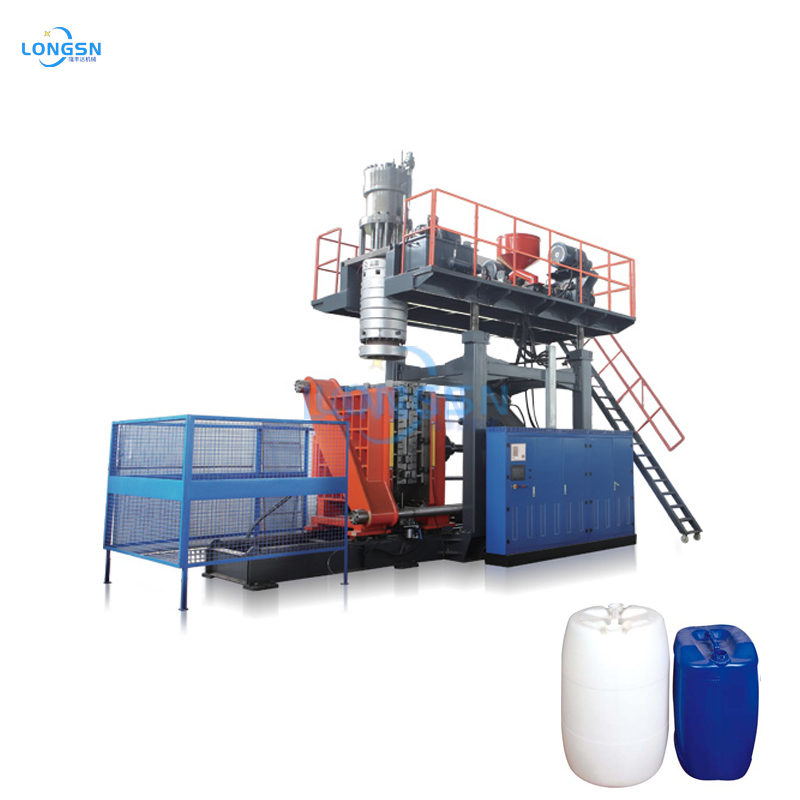
Understanding basic plastic manufacturing is only the first step. You must quickly evaluate industrial scalability and unit economics to stay competitive. Extrusion Blow Moulding (EBM) remains the standard process for creating hollow plastic parts. You see these products everywhere. The process produces everything from daily consumer bottles to massive industrial tanks. This article serves as a technical primer for operations managers and facility buyers. We will not just cover scientific explanations. We will help you evaluate an Extrusion Blow Moulding Machine for facility expansion. You will learn how to approach capital investments and product line upgrades. We will explore the mechanics, material capabilities, and facility requirements. You can then make confident decisions about your next equipment upgrade. You will understand how to balance output requirements against operational costs.
Key Takeaways
- Core Mechanism: EBM relies on extruding a hollow tube of molten plastic (parison), capturing it in a mould, and inflating it to form the final shape.
- Strategic Advantage: Offers significantly lower tooling costs and faster lead times compared to injection blow moulding, particularly for large or complex hollow geometries (e.g., containers with handles).
- Machine Evaluation: Selecting the right extrusion blow moulding machine requires balancing cycle times, multi-layer co-extrusion capabilities, and automated deflashing integration.
- Implementation Reality: Scrap management (flash) and wall-thickness control are the primary operational challenges that dictate machine quality and OEE (Overall Equipment Effectiveness).
The Mechanics: How an Extrusion Blow Moulding Machine Operates
You need to understand the mechanical sequence of this equipment. This knowledge helps you identify potential bottlenecks in production. It also highlights critical maintenance zones across the factory floor. Operational stability directly depends on mastering these mechanical fundamentals.
The Four-Step Process
We can break down the operation into four distinct phases. Each phase requires precise timing and temperature control. A failure in one step ruins the final product.
- Plasticization: The process begins in the extruder. A large rotating screw melts the raw resin pellets. Friction and barrel heaters generate the required heat. The material reaches a consistent, viscous state.
- Parison Formation: The machine pushes the molten plastic through the die head. This action forms a continuous hollow tube. We call this descending tube a parison. Gravity begins to stretch it immediately.
- Moulding & Inflation: Two mould halves clamp around the suspended parison. The mould pinches the top and bottom closed. A blow pin enters the neck area. It introduces compressed air to inflate the plastic. The plastic expands against the mould walls.
- Cooling & Ejection: The inflated plastic touches the cold mould walls. It solidifies almost instantly. Chilled water circulates through the mould to accelerate cooling. The mould opens to release the rigid part. The machine ejects the part for final trimming.
Core Machine Components
Several vital systems work together to convert raw resin into finished products. You must maintain each component to ensure production efficiency.
- Extruder and Die Head: The extruder melts and mixes the polymer. The die head determines the material distribution. It shapes the initial parison profile. A poorly maintained die head causes uneven wall thickness.
- Clamping Unit: This mechanism holds the mould halves together. It dictates the maximum tonnage and part size capacity. It must resist the internal forces of the compressed air. Weak clamping leads to blown seams and defective parts.
- Blow Pin Assembly: This component impacts the overall cycle time. It introduces the inflation air. It also helps calibrate the neck finish precision. An inaccurate blow pin creates leaky bottle threads.
Extrusion Blow Moulding vs. Injection Blow Moulding (IBM)
You need a clear decision framework before allocating capital. This ensures EBM is the correct process for your specific product application. Both methods create hollow objects, but they serve very different operational needs.
Tooling Costs and Setup Time
EBM operates at significantly lower internal pressures. This allows manufacturers to use softer mould materials like aluminum. Aluminum is easier to machine and cools faster. You benefit from faster design iterations. IBM requires high-pressure injection into a preform cavity. It demands hardened tool steel moulds. Tool steel increases initial setup time and overall investment. EBM offers a faster path to market for new product designs.
Part Geometry and Design Constraints
You must choose EBM for asymmetrical shapes. It is mandatory if your product requires an integrated handle. You cannot easily mold handles using the IBM process. The parison drops vertically, allowing the mould to pinch around complex handle geometries. IBM is superior for high-tolerance neck finishes. You should use IBM for pharmaceutical vials or cosmetic jars. IBM guarantees perfect thread dimensions without secondary trimming.
Scrap and Flash Management
You must acknowledge the production reality of EBM. It always generates flash. Flash is the excess plastic at the pinch points. You will find it at the neck and base of the bottle. You must implement downstream trimming to remove it. You must also grind and recycle this scrap back into the process. IBM is a scrap-free process. It produces a finished part directly from the mould. IBM requires no secondary trimming operations.
Comparison of EBM and IBM Processes | Feature | Extrusion Blow Moulding (EBM) | Injection Blow Moulding (IBM) |
| Tooling Investment | Lower (Aluminum moulds) | Higher (Tool steel moulds) |
| Operating Pressure | Low (approx. 100 psi) | High (often >10,000 psi) |
| Handle Integration | Excellent | Not possible |
| Neck Precision | Moderate | Extremely High |
| Scrap Generation | High (requires trimming) | None (scrap-free) |
Material Capabilities and Compliance Considerations
You must align machine specifications with your product requirements. You must also consider corporate sustainability goals. Industry regulations heavily influence your material choices. The equipment must handle diverse polymer types.
Standard Resins
Different polymers exhibit unique processing behaviors. High-Density Polyethylene (HDPE) is the most common choice. It offers excellent stiffness for milk jugs and detergent bottles. Low-Density Polyethylene (LDPE) provides flexibility for squeezable tubes. Polypropylene (PP) withstands high temperatures. You use PP for hot-fill food applications and medical containers. Polyvinyl Chloride (PVC) delivers clarity and chemical resistance. PVC requires specialized extruder screws to prevent thermal degradation.
Multi-Layer Co-Extrusion
Modern applications often require complex barrier properties. You should evaluate machines equipped for 3-layer to 6-layer extrusion. A 3-layer setup often features a recycled core sandwiched between virgin plastic. A 6-layer configuration is necessary for food and pharmaceutical packaging. It incorporates EVOH layers for oxygen barriers. It includes UV barriers to protect sensitive liquids. Tie layers bind these incompatible materials together. Multi-layer capabilities significantly expand your market reach.
Sustainable and PCR Integration
Sustainability mandates are changing the packaging landscape. You must process Post-Consumer Recycled (PCR) plastics. Machine requirements change when handling PCR. PCR resins often contain impurities. They exhibit varying melt flow indexes. The equipment requires robust melt filtration systems. You need specialized screw designs to blend bio-polymers smoothly. You must maintain wall thickness integrity despite material inconsistencies. Modern controllers adapt to these fluctuating material properties dynamically.
Key Evaluation Criteria for Extrusion Blow Moulding Machines
Let us view this process through a procurement lens. You need to assess machine features against expected return on investment. Operational stability relies on choosing the right specifications. You must match the equipment to your volume demands.
Output Capacity and Automation Level
You must decide between single and double station configurations. A single station produces parts on one side of the extruder. A double station shuttles moulds back and forth. Double stations dramatically increase output capacity. You must also evaluate the integration of automated deflashing. Modern systems remove flash inside the machine. They incorporate robotic conveyor offloading. They integrate inline leak testing to reject defective bottles automatically. Higher automation reduces operator dependency.
Parison Programming (Wall Thickness Control)
Dynamic parison controllers are non-negotiable for modern manufacturing. Gravity pulls the molten tube downward, making the top thinner than the bottom. A parison programmer changes the die gap during extrusion. It profiles the thickness of the tube from top to bottom. This ensures uniform wall thickness in the final part. It supports aggressive lightweighting initiatives. It reduces raw material consumption drastically. Material savings quickly justify the programmer investment.
Energy Efficiency
Facility power consumption impacts your bottom line. You must evaluate the clamping systems. Hydraulic machines offer immense clamping force. However, they consume high amounts of electricity. They also risk oil leaks. All-electric machines utilize servo motors. They are highly energy-efficient and precise. They operate quietly and fit perfectly into clean-room environments. Hybrid systems combine both technologies. Hybrids offer a middle ground between speed, force, and energy efficiency.
Implementation Risks and Facility Readiness
Take a transparent look at the rollout friction. Deploying new EBM equipment involves hidden challenges. You must prepare your facility long before the machine arrives. Proper planning prevents costly installation delays.
Infrastructure Requirements
Industrial blow moulding demands robust facility utilities. You need powerful chilled water systems to cool the moulds. Inadequate cooling doubles your cycle times. You require high-capacity compressed air for the inflation process. The air must be clean and dry. You must consider the total footprint of the work cell. The layout must accommodate the machine, conveyors, scrap grinders, and raw material silos.
Operator Training and Setup Overheads
The learning curve for this equipment is steep. Operators must master parison programming to prevent defective parts. They must understand polymer melt behavior. Mould changeovers can take several hours. Improper alignment damages the tooling. You must prioritize vendor-provided training during installation. Skilled technicians reduce setup overheads. They optimize cycle times and minimize material waste during startup.
Preventative Maintenance Needs
Continuous production requires rigorous preventative maintenance. Die heads accumulate degraded plastic over time. You must schedule regular die head cleaning frequencies. The extruder screw experiences steady wear from abrasive resins. You must monitor screw wear to maintain consistent melt quality. You must secure reliable sources for replacement parts. Proactive maintenance prevents catastrophic hydraulic failures and unexpected downtime.
Conclusion
Extrusion blow moulding remains a highly versatile method for manufacturing hollow parts. It is exceptionally cost-effective when properly managed. Success depends entirely on how well the equipment aligns with your specific targets. You must balance material capabilities with automation requirements to achieve high production yields.
We advise buyers to conduct a comprehensive cost-benefit analysis before purchase. You should request sample runs from the manufacturer for wall-thickness validation. You must consult with process engineers regarding multi-layer capabilities. Finalizing machine specifications requires rigorous testing of your actual product designs on the proposed equipment.
FAQ
Q: What is the average lifespan of an industrial extrusion blow moulding machine?
A: You can expect an industrial machine to last 10 to 15 years with proper preventative maintenance. Heavy structural components often last longer. However, electronic controllers and servo drives may require retrofitting earlier to keep up with modern automation standards.
Q: Can an EBM machine process 100% recycled resin?
A: Yes, it can process 100% recycled resin. However, this requires specific extruder screw designs. You also need advanced melt filtration systems. These additions handle the impurities and varying melt flow indexes commonly found in post-consumer recycled materials.
Q: What causes wall thickness variations in extrusion blow moulding?
A: Several technical factors cause thickness variations. Die swell expands the plastic as it exits the head. Gravity stretches the descending parison, thinning the top. A lack of a multi-point dynamic parison programmer fails to compensate for these physical behaviors.
Q: How do EBM tooling costs compare to injection moulding?
A: EBM moulds are generally 30% to 50% lower in cost compared to injection moulds. EBM operates at much lower internal pressures. This allows manufacturers to machine tools from softer, less expensive metals like aluminum instead of hardened tool steel.

 English