Choosing between extrusion and injection blow moulding deeply impacts your production success. It dictates capital expenditure, tooling budgets, and per-unit economics for every project. Selecting the wrong process leads to unacceptable scrap rates. It often compromises dimensional tolerances. You might also over-capitalize on tooling for short production runs. Every facility faces this pivotal decision when scaling up. A poor choice limits operational scalability and wastes valuable resin.
We will break down both processes technically and commercially. You will discover evaluation frameworks for part design. We will also outline criteria for investing in the right machinery to secure scalable manufacturing. This guide provides necessary clarity. You will learn how to align process mechanics with your specific product requirements effortlessly. Making an informed decision ensures you optimize machine utilization and maximize output quality.
Key Takeaways
- Process Mechanics: Extrusion blow moulding (EBM) forms parts from a continuous, extruded parison, while injection blow moulding (IBM) pre-forms plastic over a core pin for exact neck tolerances.
- Tooling & CAPEX: EBM requires lower initial tooling investment; IBM requires more complex, higher-cost molds but delivers scrap-free production.
- Design Flexibility: EBM is the only viable choice for parts with integral handles, asymmetrical geometries, or very large volumes. IBM is strictly for precise, highly symmetrical, smaller containers.
- Machine Investment: Sourcing an extrusion blow moulding machine requires evaluating continuous vs. accumulator head types based on desired part weight and material melt strength.
Process Fundamentals: How EBM and IBM Diverge at the Core
Understanding the mechanical differences between these two manufacturing methods is crucial. They dictate everything from design possibilities to post-production workflows. Both methods create hollow plastic parts. However, they achieve this through fundamentally different thermodynamic and mechanical paths.
Extrusion Blow Moulding (EBM)
Extrusion blow moulding relies on continuous or intermittent plastic extrusion. The machine melts the polymer resin first. The screw pushes the molten plastic through a die block. This creates a hollow, descending tube called a parison.
- Extrusion: The parison drops vertically from the die head.
- Capture: Two mold halves close around the suspended parison.
- Pinching: The mold clamps shut, pinching the bottom of the parison to seal it.
- Blowing: A blow pin inserts into the top. It introduces compressed air. The plastic expands against the cold cavity walls.
- Ejection: The mold opens, releasing the rigid part.
This process inherently leaves a visible pinch-off scar at the base. It also generates excess plastic, known as flash, at the top and bottom. Facilities must trim this flash downstream. You must recycle this material back into the hopper to maintain profitability. Operating a modern Extrusion Blow Moulding Machine requires managing this regrind loop efficiently.
Best Practices for EBM
- Monitor melt strength closely to prevent the parison from sagging too quickly.
- Maintain a consistent ratio of virgin resin to regrind material.
- Calibrate blow pin timing to avoid deformed neck finishes.
Injection Blow Moulding (IBM)
Injection blow moulding operates as a distinct two-step process. It combines the extreme precision of injection molding with the expansion capabilities of blow moulding. The process typically utilizes a rotating three-station index table.
- Injection Station: The machine injects molten plastic into a heated cavity over a core pin. This forms a test-tube-like shape called a preform. The neck finish is fully molded here.
- Blow Station: The core pin transports the hot preform into the blow mold cavity. Air enters through the core pin. The preform inflates to match the final mold shape.
- Ejection Station: The machine indexes the finished part to the final station and strips it from the pin.
IBM produces flash-free components. Parts emerge fully finished without requiring secondary trimming. The neck and thread dimensions achieve flawless precision. You will not find a pinch-off scar on an IBM container base.
Common Mistakes in IBM
- Failing to balance the temperature profile across the preform leads to uneven wall expansion.
- Using incompatible resins can cause the preform to stick to the core pin.
- Rushing the cooling phase often warps the precise neck threads.
Core Evaluation Dimensions: Cost, Precision, and Scalability
Selecting the ideal process requires analyzing three specific operational dimensions. You must evaluate initial capital requirements, quality control limits, and material utilization rates. Each process offers distinct commercial advantages depending on your production scale.
Initial Tooling and CAPEX
Tooling capital expenditure varies wildly between the two methods. EBM generally utilizes machined aluminum molds. Aluminum conducts heat efficiently and machines easily. This results in significantly lower mold costs. It also enables a much faster time-to-market. You can prototype and launch initial runs rapidly.
Conversely, IBM requires three separate mold sets per product. You need the injection cavity, the core pin, and the blow cavity. These components demand hardened tool steel to withstand high injection pressures. Tooling costs are significantly higher as a result. You must secure massive production volumes to justify this specific return on investment. IBM is rarely suitable for short prototype runs.
Dimensional Tolerances and Quality Control
Quality thresholds dictate many manufacturing decisions. EBM produces calibrated neck finishes, but they remain less precise than injected alternatives. Wall thickness can vary throughout the container body. Modern EBM controllers utilize parison programming to mitigate this thinning. They dynamically adjust the die gap during extrusion. This distributes more plastic to areas that stretch the most.
IBM guarantees flawless neck finishes. It offers superior weight control per unit. The injection-molded preform ensures the threads meet exact tolerances before blowing even occurs. This precision makes IBM ideal for leak-proof sealing requirements. Medical, pharmaceutical, and chemical packaging sectors rely heavily on this dimensional stability.
Production Efficiency and Material Waste
Material waste impacts long-term operational efficiency. EBM inherently generates scrap at the neck and base during the pinch-off phase. Some complex handle designs generate flash that equals the weight of the final part. This reality requires reliable regrind integration within the facility. You must capture, granulate, and re-feed this scrap flawlessly.
IBM achieves total material utilization. It produces zero flash. Operators do not need secondary trimming equipment. The absence of a regrind loop simplifies the cleanroom environment. It eliminates the risk of introducing dust or contamination into the resin supply.
Comparative Summary Chart
| Feature | Extrusion Blow Moulding (EBM) | Injection Blow Moulding (IBM) |
| Tooling CAPEX | Lower (Aluminum molds) | Higher (Three-part steel molds) |
| Material Waste | High (Requires regrind loop) | Zero (Flash-free) |
| Neck Precision | Moderate | Exceptional |
| Pinch-Off Scar | Visible at the base | None |
| Handle Integration | Highly feasible | Not possible |
Application Matrix: Matching the Process to the Product
You cannot force a design into the wrong process. Part geometry and volume requirements strictly dictate your technical path. Understanding the application matrix prevents costly engineering failures during the tooling phase.
When to Specify EBM
Extrusion blow moulding shines in flexibility and scale. You should default to EBM when dealing with larger formats or complex geometries. The continuous parison adapts beautifully to uneven shapes. You should specify this process under the following conditions:
- Large Containers: Parts larger than 1 liter demand EBM. This includes milk jugs, industrial drums, watering cans, and automotive fuel tanks.
- Integral Handles: If your design requires a handle, EBM is the only viable choice. The mold pinches the parison to isolate the handle section, allowing air to bypass it.
- Extreme Asymmetry: Designs featuring severe curves or off-center necks stretch plastic unevenly. EBM accommodates this through advanced die shaping.
- Lower Volumes: Low-to-medium volume runs benefit from EBM. High IBM tooling costs would break unit economics in these scenarios.
When to Specify IBM
Injection blow moulding excels in miniaturization and precision. It dominates high-volume markets where minor defects cause major liabilities. You should specify this process for products requiring rigorous quality assurance. Target IBM for these scenarios:
- Small Volumes: Containers typically under 500ml fit IBM perfectly. Small medical vials and cosmetic jars are standard applications.
- High-Precision Seals: Pharmaceutical pill bottles and roll-on deodorants require flawless threads. A leaking chemical bottle poses severe risks. IBM prevents this.
- Continuous Runs: Long-term, uninterrupted production runs justify the initial setup. The scrap reduction offsets the heavy tooling CAPEX over millions of cycles.
- Thick-Walled Bases: Luxury cosmetic packaging often requires a heavy, premium base. IBM programs the preform to retain material precisely at the bottom.
Evaluating an Extrusion Blow Moulding Machine for Your Facility
If your product matrix points toward EBM, you must select the correct machinery. The market offers diverse equipment tailored to specific resin behaviors. Sourcing the optimal Extrusion Blow Moulding Machine requires technical due diligence. You must match the hardware to your exact application.
Machine Configurations
You must choose between continuous extrusion and accumulator head technologies. Continuous extrusion suits smaller parts. It processes PVC and PE excellently. The extruder runs constantly, dropping parisons into moving shuttle molds or rotary wheels. This setup maximizes output for lightweight bottles.
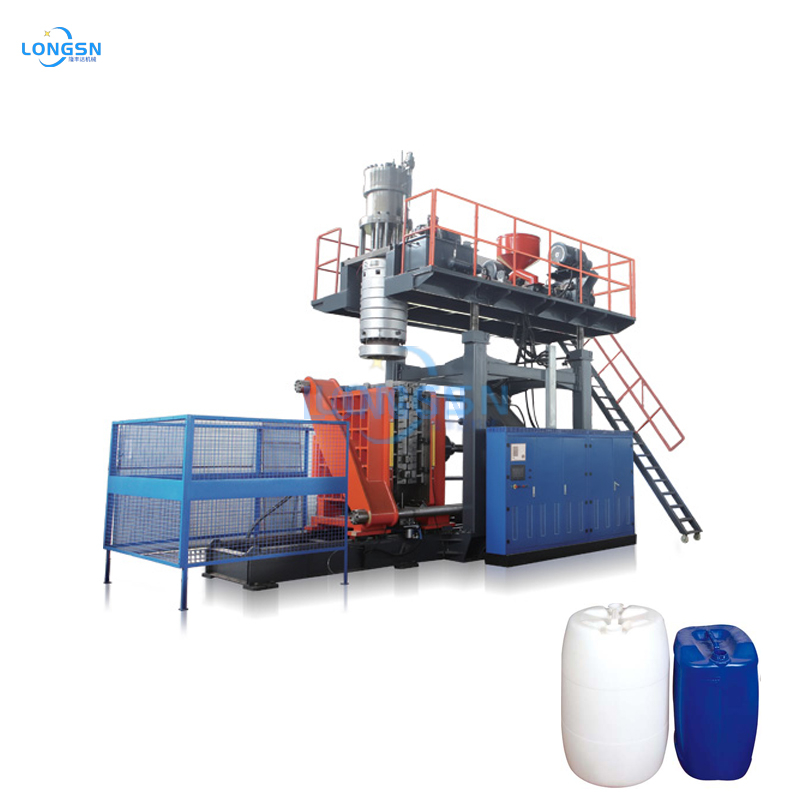
Accumulator head machines serve large, heavy industrial parts. Extruding a massive parison for a 55-gallon drum takes time. If extruded continuously, gravity would cause the hot plastic to stretch and thin out. Accumulator heads store a large volume of melted resin. They use a hydraulic ram to push the entire shot out in seconds. This prevents parison sag.
Control Systems
Modern machine controllers dictate your material efficiency. You must evaluate the multi-point parison programming capabilities. A standard system might offer 100 control points. As the parison descends, the die gap opens and closes slightly. This changes the tube's wall thickness vertically.
This technology ensures structural integrity. It pushes thicker plastic to corners that will stretch heavily during blowing. It thins the plastic in narrow sections. Mastering this control system reduces overall resin usage dramatically. It ensures the final container passes impact testing.
Footprint and Auxiliaries
An EBM cell requires substantial floor space. You must factor in the footprint for the machine itself. You must also map out space for essential downstream equipment. Flash management requires automated de-flashing units and granulators. The granulator crushes the scrap and blows it back to the blender. You also need inline leak testers. Every bottle must pass pressure testing before palletizing. Failing to plan this footprint creates severe workflow bottlenecks.
Implementation Risks
You must acknowledge the operational learning curve. EBM presents unique implementation risks. Operators must manage parison sag continuously. They must regulate melt temperatures perfectly. A temperature shift of just a few degrees alters the material's viscosity. This changes how the plastic inflates. Die swell—where the plastic expands upon exiting the die—requires constant monitoring. Investing in comprehensive operator training mitigates these startup risks.
Strategic Shortlisting: Making Your Final Decision
Moving from technical research to procurement requires a structured approach. You must strip away assumptions and focus on hard design data. Follow these strategic steps to finalize your process selection.
Step 1: Audit Part Design Constraints
Begin by auditing your CAD files. Review the fundamental geometry. If the part features an integrated handle, default immediately to EBM. If the container exceeds 2 liters in capacity, default to EBM. If the design demands a heavy wall profile for a 50ml jar, route it toward IBM. Let the physical constraints narrow your options before evaluating anything else.
Step 2: Define Quality Thresholds
Assess your end-user requirements thoroughly. Will a visible pinch-off scar at the base violate aesthetic standards? Luxury brands often reject EBM for this reason alone. Does the product require a hermetic seal to prevent gas leakage? If the neck tolerance is non-negotiable, you must choose IBM. Define what failure looks like for your product. Map those failure points against the capabilities of each process.
Step 3: Establish Clear Implementation Timelines
Your launch schedule dictates your tooling path. If you need marketable prototypes within six weeks, EBM provides the agility required. Aluminum tooling cuts rapidly. If your launch timeline allows for a 16-week tooling phase and demands millions of identical units, IBM becomes the logical choice. Engage with tooling engineers or machinery OEMs immediately. Request a specific cycle-time and mold-flow analysis before committing capital.
Conclusion
The choice between EBM and IBM is rarely subjective. Part geometry, volume requirements, and neck tolerance limits dictate the correct path. Trying to force a large-handled jug into an injection process fails immediately. Expecting absolute medical precision from a standard extrusion machine leads to excessive scrap.
Extrusion blow moulding offers superior flexibility. It provides lower entry costs and accommodates massive industrial formats. Injection blow moulding remains unmatched for high-volume, flash-free precision. Assess your product portfolio rigorously. We encourage you to request a technical consultation or a part-feasibility review from equipment manufacturers. Aligning machine capability with your production goals ensures long-term manufacturing dominance.
FAQ
Q: Can an extrusion blow moulding machine produce clear PET bottles?
A: While possible with specific EBM configurations, PET is overwhelmingly processed using Stretch Blow Moulding (SBM) or IBM. These alternative processes orient the polymer chains, delivering optimal optical clarity and superior biaxial strength. EBM typically runs olefins like HDPE and PP.
Q: Why does extrusion blow moulding create a pinch-off scar?
A: The scar results from the mechanical action of the mold. The two mold halves clamp down on the soft, hollow parison to seal the bottom. This action squeezes out excess material, which is later trimmed, leaving a visible weld line where the plastic fused.
Q: Is injection blow moulding faster than extrusion blow moulding?
A: IBM cycle times are highly efficient because parts require no secondary trimming. However, EBM machines utilizing multi-cavity molds or high-speed rotary wheel configurations can achieve massively higher output rates for specific bottle types like milk jugs.
Q: Can I run different materials on the same blow moulding machine?
A: You face strict limitations. Screw designs and extruder profiles are optimized for specific resin families. Running polycarbonate on a screw designed for HDPE causes poor mixing or material degradation. You typically need hardware swaps for major material changes.

 English