Investing in industrial packaging infrastructure dictates your production bottlenecks. It determines your energy overhead and packaging quality. A primary driver of these outcomes is your stretch-blowing equipment. You need a reliable PET Bottle Blow Moulding Machine to form preforms into finished containers efficiently. This machinery physically shapes your entire packaging strategy. Poor equipment choices lead to high scrap rates. They also cause massive energy waste.
We move beyond basic definitions in this guide. You will find a pragmatic, vendor-neutral evaluation framework here. It serves operations managers and procurement teams alike. We cover everything from mechanical architecture to hidden infrastructure readiness. You can use this guide to align your equipment investment directly to your actual production needs. This ensures your capital works efficiently for your facility.
Key Takeaways
- Production Volume Dictates Architecture: Linear machines suit mid-range output (up to 12,000 BPH), while rotary machines are necessary for high-speed, high-volume lines.
- Process Selection Impacts TCO: Two-stage production offers high scalability for standard bottles, whereas single-stage provides blemish-free finishes for cosmetics and specialty shapes.
- Energy Overhead is the Hidden Cost: High-pressure air compressors and heating systems account for the majority of ongoing operating expenses; air-recovery features are non-negotiable for ROI.
- Infrastructure Preparedness: Equipment footprint, chiller integration, and CE/UL compliance dictate the true timeline from purchase to operational status.
The Mechanics of a PET Bottle Blow Moulding Machine
Industrial bottle manufacturing relies on a precise sequence of events. The stretch blow moulding process consists of three main phases. First, operators or automated hoppers load preforms into a reheating module. Infrared ovens heat the plastic slowly. They bring the material to an optimal malleable state. Next, a mechanical stretch rod descends directly into the preform. It physically elongates the hot plastic down to the bottom of the mold cavity. Finally, the system injects high-pressure blowing air. This blast of air forces the soft plastic against the chilled mold walls.
The relationship between precise thermal profiling and material distribution is critical. Infrared heating ovens must apply heat evenly across the preform. Uneven heating always causes inconsistent wall thickness. You lose structural integrity if the bottle walls become too thin. Some sections might cool too quickly. This prevents the plastic from stretching properly. Operators must adjust the lamp intensity precisely for different bottle shapes.
Mechanical reliability during the stretching phase directly impacts your scrap rates. A jerky or misaligned stretch rod produces defective containers. It ruins the material and wastes expensive raw resin. You must prioritize equipment offering smooth, servo-driven stretching mechanics. Servo motors provide exact control over the rod speed. Pneumatic cylinders often fluctuate based on air pressure. Consistent stretching ensures uniform quality across every production run. It drastically minimizes your daily raw material waste.
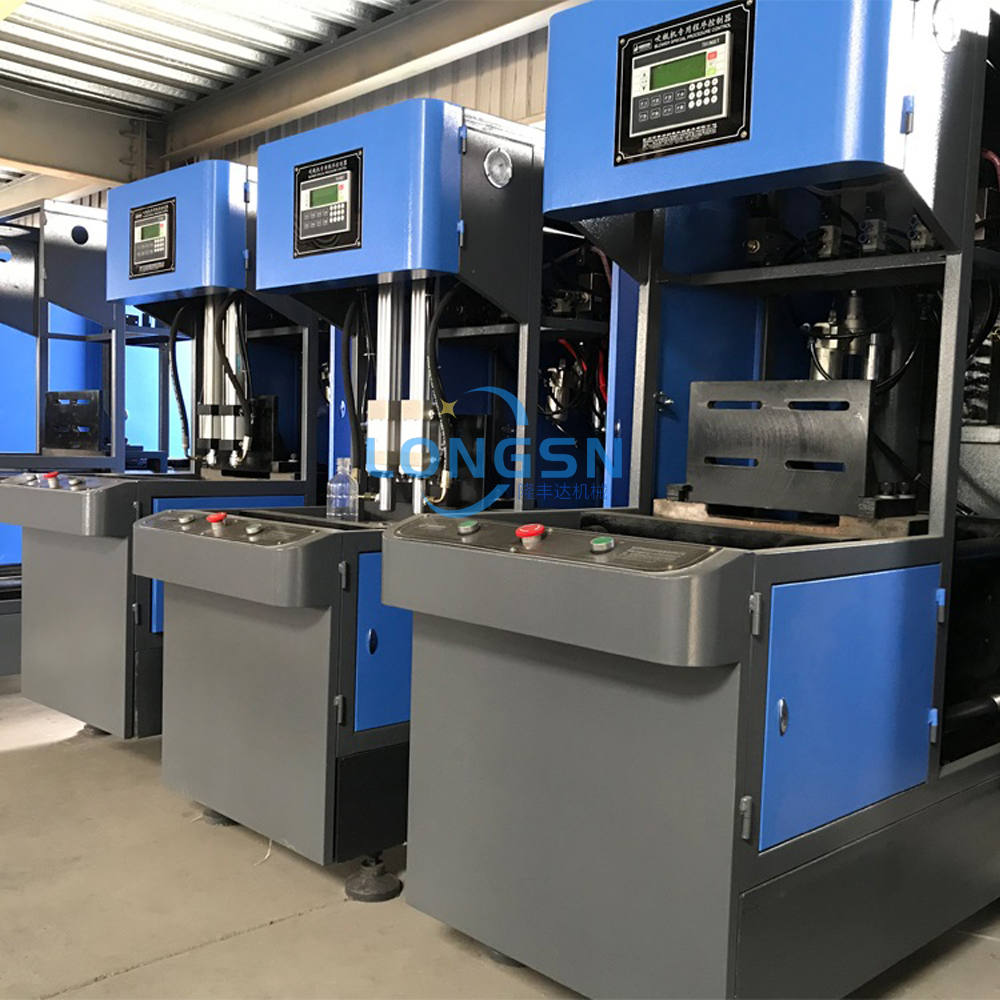
Single-Stage vs. Two-Stage PET Blow Moulding Machines
You must choose the right process architecture for your facility. Manufacturers divide equipment into single-stage and two-stage categories. Each serves entirely different production goals.
Single-Stage (Injection Stretch Blow Moulding - ISBM)
This architecture combines preform injection and bottle blowing. It operates as one continuous process. The machine melts raw PET resin first. It injects this molten plastic into a preform mold. The system then immediately blows it into a final bottle.
It is best for custom designs and cosmetics. Pharmaceuticals also rely heavily on this method. Single-stage processing minimizes handling between steps. The preforms never tumble into storage bins. This guarantees a blemish-free finish. You avoid the surface scratches common in bulk preform storage.
There are notable trade-offs to consider. You will experience much slower cycle times compared to other systems. Tooling costs are considerably higher. You must purchase both injection molds and blow molds for every new bottle shape.
Two-Stage (Reheat Stretch Blow Moulding - RSBM)
This method uses pre-manufactured preforms. You buy these preforms externally from a supplier. Alternatively, you can inject them on a completely separate line. The PET Bottle Blow Moulding Machine only reheats and blows the plastic.
It is best for high-volume water and carbonated soft drinks (CSD). Edible oil lines also utilize this architecture. Two-stage systems achieve massive throughput speeds. They separate the slow injection phase from the fast blowing phase.
The trade-offs primarily involve supply chain logistics. You need robust management to handle preform inventory. Your facility requires extra footprint space. You must install preform unscramblers and bulk hoppers to feed the machine.
| Feature | Single-Stage (ISBM) | Two-Stage (RSBM) |
| Process Flow | Raw Resin to Finished Bottle | Cold Preform to Finished Bottle |
| Surface Quality | Excellent (Scratch-free finish) | Standard (Minor scuffing possible) |
| Output Speed | Low to Medium throughput | Extremely High throughput |
| Tooling Investment | High (Injection + Blow Molds) | Low (Blow Molds Only) |
| Footprint | Compact all-in-one cell | Requires unscramblers and hoppers |
Linear vs. Rotary Equipment: Evaluating Speed and CapEx
Equipment layout heavily influences your initial capital expenditure. It also determines your maximum daily output. You typically choose between linear and rotary configurations based on your target bottles per hour (BPH).
Linear Blow Moulding Machines
Linear models advance preforms in a straight line. The preforms travel through the oven and directly into the clamping unit. These machines generally require lower initial capital expenditure. Maintenance teams appreciate the easy access to core components. You can reach heating lamps and mold clamps easily. Mechanics do not have to navigate around a massive central carousel.
Linear technology is ideal for co-packers or regional brands. These operations often face frequent bottle changeovers. They usually have moderate volume requirements. Most linear units maximize their output around 12,000 BPH. They offer a highly flexible solution. Facilities running multiple container sizes benefit greatly from linear systems.
Rotary Blow Moulding Machines
Rotary systems utilize a continuous rotating carousel. They manage heating and blowing while the molds spin. Engineers design them specifically for continuous, high-speed output. Top-tier rotary machines easily exceed 80,000 BPH. Manufacturers often integrate them into "Combi-blocks." A Combi-block merges blowing, filling, and capping into one seamless enclosure. This eliminates the need for air conveyors between machines.
You must evaluate this option carefully. A rotary system is an enormous investment. It is only justifiable if your downstream equipment matches the throughput. Your liquid filling and secondary packaging machines must handle the extreme volume. Otherwise, you create a massive bottleneck. A slow filler will constantly force the rotary blower to stop. This ruins your mechanical efficiency and wastes your capital investment.
Core Evaluation Criteria for Decision Makers
Procurement teams must look past basic equipment specifications. You should evaluate machinery based on operational resilience. Resource efficiency is equally important. We recommend examining four core criteria before making a purchase.
- Energy Efficiency and Air Recovery: High-pressure blowing consumes massive amounts of electricity. A standard production run might require up to 40 bar of air pressure. You must assess air recycling systems carefully. Good air recovery routes spent high-pressure air back into the system. It powers the low-pressure pneumatic cylinders. This drastically reduces the continuous load on your factory compressors. It lowers your monthly utility bills significantly.
- Material Flexibility (rPET): Sustainability mandates now drive the use of recycled PET (rPET). Recycled resin absorbs heat differently than virgin plastic. You need to verify the thermal control capabilities of your machine. Advanced infrared profiling is strictly necessary. It allows you to handle varying grades of rPET effectively. It also prevents ultra-lightweight preforms from melting unevenly in the oven.
- Changeover Agility: Fast format changes keep your production lines profitable. Facilities running multiple SKU profiles cannot afford day-long changeovers. You should evaluate machines featuring quick-release mold mechanisms. These allow operators to swap bottle shapes without heavy tools. Automated recipe recall via the PLC interface is also vital. It speeds up heating adjustments instantly when you change preform weights.
- OEE (Overall Equipment Effectiveness): Theoretical maximum speeds rarely reflect daily manufacturing reality. You must look far beyond simple BPH claims. Evaluate the guaranteed mechanical efficiency instead. Ask vendors to state their mean time between failures (MTBF). A slightly slower machine with higher reliability always wins. It outperforms a fast machine that jams every hour. Micro-stops ruin your shift output. Prioritize proven mechanical uptime over theoretical speed records.
Implementation Risks and Hidden Infrastructure Costs
Deploying industrial blow moulding equipment involves complex planning. It requires more than simply uncrating a machine. Many buyers severely underestimate the surrounding infrastructure. You need strong support systems for continuous production.
- Peripheral Equipment: The blow moulder is only one part of the manufacturing cell. You must budget for expensive auxiliary systems. A high-pressure air compressor is absolutely mandatory. You also need dedicated water chillers to cool the molds rapidly. Stable electrical drops are critical. Voltage drops cause heating inconsistencies and ruin your bottle quality.
- Tooling Lead Times: Custom bottle shapes require precision-machined molds. Manufacturers cut these from solid aluminum or steel. Do not ignore the associated delays. You must factor in the time for container design and 3D prototyping. Final CNC machining takes several weeks. Tooling delivery often dictates your actual go-live date.
- Operator Capability: Moving from semi-automatic to fully automated PLC-driven machinery is a large technical leap. Your operational staff requires specialized training. Operators must understand how to maintain complex thermal profiles. They also need the mechanical skills to troubleshoot intricate pneumatic valves quickly. Inexperienced operators will cause high scrap rates initially.
- Compliance: Safety and hygiene standards vary drastically by region. You must ensure localized electrical certifications are met. CE and UL marks indicate rigorous safety testing. Without them, you may face insurance liabilities. Furthermore, ensure your pneumatic setup meets food-grade filtering standards. Oil contamination in the blowing air will ruin entire beverage batches.
Shortlisting Logic: How to Vet a Machinery Supplier
Choosing the right supplier dictates your long-term success. It is as important as choosing the mechanical architecture itself. You need a structured vetting process. This ensures maximum long-term reliability.
Factory Acceptance Testing (FAT)
Never accept shipment based on a basic video demonstration. You must demand a rigorous Factory Acceptance Test. Require the vendor to conduct a dry-run first. Then, mandate a simulated production run. They must use your specific preforms and actual mold tooling. This identifies hidden heating issues immediately. It exposes mechanical jams before the machine ever crosses the ocean. You avoid troubleshooting a defective machine on your own factory floor.
Spare Parts Accessibility
Maintenance downtime completely destroys profitability. You must evaluate the component sourcing of your vendor. Do they use cheap, proprietary pneumatic and electronic parts? This traps you into buying expensive replacements directly from them. Look for machines built with internationally recognized, off-the-shelf brands. Components from companies like Festo, SMC, or Siemens are ideal. They ensure you can source replacement parts locally and quickly.
Service Level Agreements (SLAs)
Industrial hardware breaks down eventually. Your vendor's response time determines the length of your downtime. Compare local technician availability across different suppliers carefully. Relying strictly on remote support across multiple time zones is highly risky. Video calls cannot fix a seized servo motor. You need a solid Service Level Agreement. It must guarantee prompt on-site assistance when major PLC or mechanical failures occur.
Conclusion
Selecting the correct manufacturing equipment requires careful balance. You must weigh immediate capital constraints against long-term operational realities. A highly reliable PET Bottle Blow Moulding Machine dictates your daily energy consumption. It controls your scrap rates for decades. You must prioritize cost-saving features like air recovery. Insist on servo-driven stretching mechanics to protect your profit margins.
We strongly encourage buyers to define their precise BPH requirements early. Document your exact container specifications clearly. Include your expected rPET usage and specific neck finishes. You should establish all these parameters before requesting any vendor quotes. This disciplined approach prevents costly over-specification. Focus deeply on Overall Equipment Effectiveness during your evaluations. Verify your peripheral infrastructure readiness long before delivery. Always demand rigorous factory testing using your own preforms. Careful planning ensures your investment scales perfectly. It matches your production demands without creating unforeseen bottlenecks.
FAQ
Q: What is the average lifespan of an industrial PET blow moulding machine?
A: An industrial machine typically lasts 10 to 15 years under standard operational hours. Consistent preventative maintenance significantly extends this lifespan. Regularly replacing pneumatic seals and monitoring servo health prevents catastrophic failures. However, obsolescence of electronic components often forces upgrades. You might need to retrofit older PLC units or touchscreens before the mechanical steel frame actually wears out.
Q: How much air pressure does a PET bottle blowing machine require?
A: These machines utilize two distinct air systems. Low-pressure working air operates the mechanical cylinders and valves, typically requiring 8 to 10 bar. High-pressure blowing air actually forms the bottle shape. This high-pressure requirement generally ranges from 25 to 40 bar. Thick-walled containers and complex shapes demand pressure closer to the maximum 40-bar limit for proper formation.
Q: Can a PET blow moulding machine use 100% recycled PET (rPET)?
A: Yes, modern equipment easily processes 100% rPET preforms. However, rPET presents unique thermal processing challenges. It absorbs heat much faster and darker than virgin resin. You must use machinery equipped with advanced infrared oven profiling. This allows operators to fine-tune the heating lamps precisely. It prevents the recycled plastic from crystallizing or burning during the stretching phase.
Q: What is the general price range for commercial PET blow molding equipment?
A: Costs vary drastically based on machine architecture and output speed. Entry-level linear machines require a moderate investment suitable for regional facilities. Enterprise-grade rotary combi-systems demand significant capital due to high-speed, integrated automation. You must also remember base machine costs exclude essential additions. Custom mold tooling, high-pressure air compressors, and water chillers significantly increase the final total investment.

 English