Transitioning from manual or semi-automated packaging to fully automated end-of-line systems is a critical CapEx milestone. Manufacturers face immense pressure to meet shipping quotas daily without compromising container integrity. Upstream equipment like fillers and labelers dictate primary production speed. However, downstream phases often trigger severe line bottlenecks if they lack proper synchronization. Understanding exactly how this machinery operates is essential to specify the right equipment and avoid unexpected line stoppages. You need a system built to match your operational reality. This guide clearly breaks down mechanical workflows, component quality indicators, and integration risks. You will discover a practical decision framework for evaluating systems based on exact production requirements. We detail everything from collation techniques to discharge protocols to help you choose the best configuration.
Key Takeaways
- A bottle packing machine automates the final stage of production by collating, loading, and securing bottles into secondary packaging (cases, cartons, or trays).
- The fundamental workflow relies on four synchronized phases: infeed, collation, payload transfer, and discharge.
- Evaluating a machine requires looking beyond rated speed (BPM) to assess changeover times, format flexibility, and footprint constraints.
- Choosing between drop packers, robotic pick-and-place, and wrap-around systems depends entirely on container fragility (e.g., glass vs. PET) and required throughput.
The Role of a Bottle Packing Machine in the Production Line
A commercial packaging line relies on seamless transitions between complex mechanical stages. You define the Bottle Packing Machine as the vital bridge connecting individual unit processing to final pallet preparation. It serves as the ultimate consolidation point for your entire facility.
Upstream equipment operates on a single-file unit basis. Fillers dispense liquid into individual containers. Cappers seal them. Labelers apply branding. These machines output a continuous, high-speed stream of loose bottles. Downstream integration takes this chaotic flow and organizes it. The packing system receives individual units, groups them into specific formats, and secures them inside secondary packaging. This prepares the bulk product for palletization and eventual distribution.
Deploying this asset successfully requires measurable outcomes. You should look for several distinct success criteria:
- Sustained Overall Equipment Effectiveness (OEE): The system must operate consistently near its target efficiency without frequent micro-stops.
- Minimal Product Damage: Soft-handling features must prevent scuffing, denting, or shattering during the transfer phase.
- Reduced Labor Dependency: Automation should completely replace manual lifting, sorting, and casing tasks.
- Consistent Case Integrity: Every finished carton must exit the machine perfectly square and securely packed to survive warehouse stacking.
Core Components: The Anatomy of a High-Performance System
Evaluating component quality helps you predict long-term reliability. High-performance systems use industrial-grade parts designed for continuous duty. Buyers must scrutinize these elements closely during the procurement phase.
Infeed conveyors and lane dividers dictate the initial flow. They regulate incoming bottle pressure to prevent destructive jamming. High-quality dividers use servo-driven guides instead of pneumatic pushers. This creates a smoother, continuous division of bottles into distinct lanes.
Sensors and vision systems act as the safety net. Photo-eyes and proximity sensors ensure accurate bottle counts in every lane. Advanced vision systems detect fallen, missing, or defective bottles before they reach the packing head. Rejecting a single bad bottle prevents a complete system jam.
The loading mechanism handles the actual physical transfer. Machine builders offer several options based on product fragility. Mechanical grid heads work well for durable containers. Servo-driven robotic arms provide gentle handling for delicate items. Vacuum grippers lift items securely from the top. You must evaluate these mechanisms against your specific container material.
Programmable Logic Controllers (PLC) and Human-Machine Interfaces (HMI) serve as the brain of the operation. Intuitive, non-proprietary PLC systems reduce long-term maintenance risks. Brands like Allen-Bradley or Siemens offer widespread support. Proprietary controllers often lock you into expensive, single-source service contracts.
| Component | Primary Function | Buyer Evaluation Lens |
| Infeed Conveyors | Regulates bottle back-pressure. | Look for low-friction modular belts to prevent scuffing. |
| Sensors & Vision | Counts units and detects fallen bottles. | Ensure sensors resist dust and moisture interference. |
| Loading Mechanism | Transfers payload into the case. | Match the gripper type to container fragility. |
| PLC & HMI | Controls all synchronized movements. | Demand open-architecture logic platforms. |
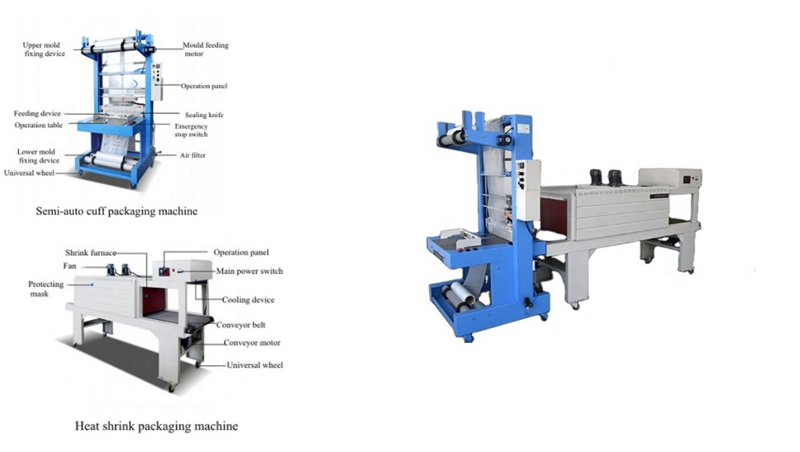
Step-by-Step: How a Bottle Packing Machine Actually Works
Understanding the mechanical workflow sequentially helps you identify potential bottlenecks. Buyers must scrutinize these specific transitions during vendor demonstrations.
- Step 1: Infeed and Accumulation. Bottles enter the machine via a continuous conveyor. The system manages back-pressure mechanically to ensure a steady, jam-free flow. Insufficient accumulation space here often causes immediate upstream filler shutdowns.
- Step 2: Collation and Staging. Lane dividers physically group the continuous stream into specific formats. The machine arranges bottles into the exact matrix required for the case. Common formats include 3x4 or 4x6 patterns. The system holds these groups in a staging area.
- Step 3: Case Erecting and Positioning. Fully integrated machines handle the secondary packaging simultaneously. The system pulls blank corrugated cases from a magazine. It forms them, folds the bottom flaps, and indexes them precisely beneath or beside the collated bottles.
- Step 4: Payload Transfer (The Pack). The machine executes the mechanical action of moving bottles into the case. Drop packers release the bottles through a guided grid. Robotic systems lift the entire matrix and lower it gently. Soft-handling robotics prevent damage, especially for glass packaging.
- Step 5: Discharge and Verification. The successfully packed case exits the machine. It moves downstream for final sealing and taping. Sensors scan the exiting case to verify successful packing. They immediately reject incomplete cases holding missing bottles.
Micro-stops typically occur during Step 2 and Step 4. You must ask vendors how their equipment clears a jam during collation. Quick recovery protocols keep your OEE high.
Solution Categories: Matching the Machine Type to Production Scale
Manufacturers design distinct approaches to solve specific business use cases. You cannot apply a universal solution to every packaging challenge. The right choice depends heavily on your product parameters.
Drop Packers (Case Packers)
Drop packers utilize a gravity-fed drop mechanism through a customized grid. Bottles collate above the empty case. Once positioned, the grid opens, and the payload falls simultaneously into the carton. Mechanical fingers guide each unit to prevent clashing.
This category works best for high-speed lines handling durable containers. PET bottles and aluminum cans survive the drop impact easily. Drop packers excel when you use standardized case sizes and require maximum throughput over gentle handling.
Robotic Pick-and-Place Packers
Robotic packers use multi-axis servo-driven arms. These arms descend over the collated matrix, grip the bottles securely, lift them, and lower them into the waiting case. Gripper styles vary from pneumatic bladders to vacuum cups.
This method provides the ultimate solution for fragile glass bottles. It handles complex shapes effortlessly. Pick-and-place systems offer high flexibility for mixed-pack configurations. If your marketing team frequently changes packaging designs, a robotic system adapts much faster than mechanical grids.
Wrap-Around Packers
Wrap-around systems eliminate pre-glued cases entirely. The machine forms flat cardboard blanks directly around the collated bottles. It folds the sides up, wraps the top over, and applies hot-melt glue to seal the package tightly.
This approach maximizes material savings by using less corrugated board per unit. It excels at creating retail-ready packaging suitable for direct store display. Furthermore, wrap-around machines typically require smaller warehouse footprints compared to separate erector and packer combinations.
Key Evaluation Dimensions for Shortlisting Vendors
Moving from technical understanding to vendor selection requires a strict, objective decision matrix. You must evaluate proposals based on production reality rather than marketing claims.
Maximum rated speed, often listed as Bottles Per Minute (BPM), matters less than sustained operational speed. A machine rated for 500 BPM means nothing if it faults every ten minutes. You must evaluate the recovery time from micro-stops. Real-world throughput accounts for routine sensor faults, fallen bottles, and minor jams. Ask vendors for guaranteed OEE metrics, not just peak mechanical speeds.
Changeover efficiency dictates your daily flexibility. Assess exactly how long it takes operators to switch between a 12-pack of 500ml bottles and a 24-pack of 1L bottles. Traditional machines require manual unbolting of guide rails and grid heads. Prioritize modern machines featuring tool-less changeovers. Servo-driven adjustments reduce a two-hour mechanical swap to a five-minute recipe selection on the HMI.
Footprint and layout constraints often eliminate certain vendors immediately. You must evaluate machine dimensions against your existing floor space. Consider the turning radii of your forklifts. Check your facility for adequate utility drops. Pneumatic machines require massive volumes of clean compressed air. All-servo machines demand higher electrical capacities. Verify these limits before finalizing any layout.
Compliance and safety standards protect your workforce and your investment. Check proposals for CE marks and UL-listed control panels. If you package beverages, demand FDA-compliant food-grade contact materials for all belts and grippers. Require fully interlocked safety guarding. Opening any access door must immediately halt all hazardous motion.
Best Practices for Vendor Evaluation
- Request a Factory Acceptance Test (FAT) using your actual bottle samples and case blanks.
- Demand an itemized list of recommended spare parts for the first year of operation.
- Verify local service technician availability to avoid costly international travel fees during emergencies.
Implementation Realities and Adoption Risks
Purchasing the equipment represents only the first hurdle. Successful implementation demands careful planning for what happens after the machine arrives on your factory floor.
Integrating a new Bottle Packing Machine with legacy equipment carries significant risks. Older fillers or conveyors operate with less predictable speeds. Syncing a highly precise, servo-driven packer with an inconsistent upstream feed causes constant faults. The new machine will frequently starve for bottles or suffer from aggressive back-pressure. You may need to upgrade upstream lane controls to match the new packer's capabilities.
Your workforce will face a substantial training burden. The required skill set shifts dramatically. Manual packers rely on physical stamina and speed. Operating an automated system requires technical troubleshooting skills. Your staff must learn to navigate HMI screens, clear faults safely, and adjust servo parameters. Maintenance technicians must understand PLC logic and pneumatic valving. Plan for intensive, multi-week training programs.
Maintaining baseline efficiency requires a strict preventive maintenance cadence. Real-world maintenance schedules look demanding. Technicians must perform daily sensor wipe-downs and weekly lubrication of moving joints. They must recalibrate vision systems routinely. Wear parts like vacuum cups, gripper bladders, and drive belts require scheduled replacement before they fail. Neglecting this cadence guarantees a drop in OEE and shortens the lifespan of your investment.
Conclusion
Understanding how this equipment functions serves as the vital first step toward writing a precise Request for Proposal (RFP). You cannot automate effectively without defining your exact parameters.
- Evaluate your core components rigorously, prioritizing open-architecture PLCs and robust sensor arrays.
- Match your machine category directly to your container fragility. Use robotic pick-and-place for glass and drop packers for durable PET.
- Look beyond theoretical maximum speeds and demand vendor guarantees for sustained, real-world throughput.
- Prepare your workforce for the transition from manual labor to technical machine operation.
Take time to audit your current line speeds, bottle materials, and case formats thoroughly before engaging vendors. We highly encourage you to consult with an end-of-line packaging specialist or request a comprehensive site audit. This professional assessment will determine the exact integration strategy needed to eliminate your packaging bottlenecks.
FAQ
Q: Can one bottle packing machine handle both glass and plastic bottles?
A: Yes, highly flexible machines manage both materials. However, it requires specific change parts. You must swap out the gripping mechanisms. Glass requires gentle, servo-driven handling or soft vacuum cups to prevent shattering. Plastic bottles can handle faster mechanical drop grids. You also must program distinct handling profiles into the PLC to manage the differing weights and compression limits.
Q: What is the difference between a case packer and a shrink wrapper?
A: The difference lies in the secondary packaging material. A case packer groups bottles and loads them into rigid corrugated cardboard boxes. This provides high structural protection for shipping. A shrink wrapper groups bottles and encases them tightly in flexible LDPE film bundles. Film bundling reduces material costs significantly but offers less stacking strength than corrugated cases.
Q: How long does it take to install and commission a new packing machine?
A: Installation timelines vary based on system complexity. After completing a successful Factory Acceptance Test (FAT) at the vendor's site, onsite commissioning typically takes one to three weeks. This period includes mechanical anchoring, utility connections, syncing with upstream conveyors, and conducting Site Acceptance Testing (SAT) under real production conditions.
Q: Do I need compressed air to run an automated bottle packer?
A: It depends on the machine's specific drive technology. Traditional pneumatic machines rely heavily on compressed air for lane dividers, flap folders, and gripping bladders. They require clean, dry air lines. Modern, all-electric servo machines eliminate pneumatics entirely. They use electric motors for every movement, which lowers utility constraints and provides more precise positioning control.

 English