Upgrading your packaging line carries high stakes for any manufacturing facility. An under-specified machine creates severe production bottlenecks. Conversely, an over-specified unit severely degrades your return on investment. Transitioning from manual or semi-automatic processes to fully automated systems represents a strategic capability upgrade. It is never just a simple hardware purchase. Achieving true operational efficiency demands careful planning and precise equipment selection. You must translate technical machine specifications directly into tangible production outcomes.
Every facility faces unique layout constraints, product variations, and throughput requirements. Buying off-the-shelf equipment rarely delivers optimal results. We will explore how to interpret critical parameters effectively. You will learn how to match equipment capabilities to your specific operational constraints. This ensures a seamless integration process. By understanding these technical nuances, you protect your capital investment. Ultimately, you guarantee higher production yields and consistent product presentation.
Key Takeaways
- Speed vs. Reality: Nameplate speed (Containers Per Minute) must align with actual line throughput and container variations.
- Accuracy Tolerances: Label placement accuracy (e.g., ±1mm) dictates brand presentation and compliance.
- Changeover Efficiency: Tool-less changeovers and memory presets are critical specifications for multi-SKU facilities.
- Integration Capabilities: Successful deployment relies on PLC compatibility and seamless upstream/downstream integration.
The Business Case: How Precise Specifications Drive Efficiency and ROI
You must tie machine specifications directly to labor cost reductions. High-performing equipment minimizes manual intervention. It also maximizes line uptime. An optimally configured automatic labeling machine significantly reduces operator dependency. Operators can transition from performing repetitive tasks to managing overall line quality. This shift immediately improves your labor utilization rates.
Mismatched specifications introduce severe hidden costs into your operation. A machine struggling to handle your specific container shapes will suffer frequent jams. Skewed labels destroy your brand presentation on retail shelves. They also cause non-compliance issues in highly regulated industries. Every misaligned label represents wasted material. Unplanned downtime destroys your daily throughput targets. These hidden costs quickly erode your profit margins.
Focusing on long-term operational efficiency changes how you evaluate equipment. Upfront capital expenditure represents only a fraction of the financial equation. Routine maintenance needs and energy consumption rates dictate long-term profitability. High-quality components require less frequent replacement. Efficient motors consume less power during continuous operation. Prioritizing these operational metrics ensures sustainable profitability and robust ROI over the equipment's entire lifecycle.
Core Automatic Labeling Machine Specifications to Scrutinize
Understanding throughput capacity requires separating theoretical limits from practical reality. Manufacturers often advertise a maximum mechanical speed. This number represents the machine running under perfect laboratory conditions. Sustainable operational speed is usually 15% to 20% lower. You must factor in container spacing requirements. The dispensing speed of the labeling head also limits actual throughput. Bottlenecks often occur when upstream conveyors cannot feed containers fast enough.
Label placement accuracy directly impacts product quality. Acceptable tolerance ranges typically fall between ±0.5mm and ±2mm. Tighter tolerances are necessary for small pharmaceutical vials. Looser tolerances may suffice for large industrial pails. Motor selection plays a crucial role in maintaining this precision. Stepper motors lose torque at high speeds. Servo motors maintain closed-loop feedback, guaranteeing exact label placement during rapid dispensing.
Motor Type Comparison for Labeling Precision | Motor Type | Speed Capacity | Accuracy Tolerance | Ideal Application |
| Stepper Motor | Low to Medium (Up to 150 CPM) | ±1mm to ±2mm | Standard bottles, budget-conscious lines |
| Servo Motor | High (150+ CPM) | ±0.5mm or better | Pharma, cosmetics, high-speed lines |
Container and label compatibility dictate machine versatility. You must specify acceptable web widths before purchasing. Verify the maximum label roll outside diameter (OD). Standardize your core sizes to prevent roll slippage. Sensor selection is another critical compatibility factor. Standard photoelectric sensors handle opaque labels perfectly. However, they fail when processing clear labels. Clear labels require specialized ultrasonic sensors to detect the gap accurately.
Spatial requirements often dictate final equipment selection. Facilities rarely have unlimited floor space. You must address the physical footprint of the proposed machine. Measure your available clearance carefully. Adjustable leveling pads are mandatory for integration. Factory floors are rarely perfectly flat. Leveling pads ensure proper alignment between the labeling conveyor and your existing production lines.

Matching Machine Configurations to Packaging Formats
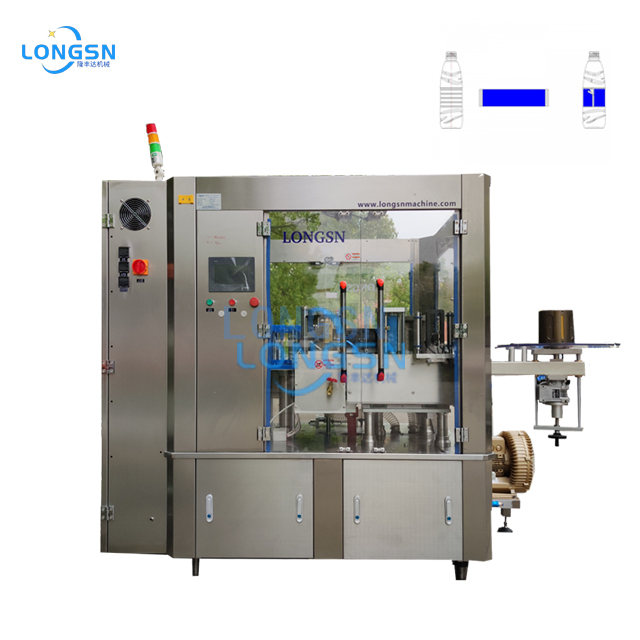
Different packaging formats require specialized labeling configurations. Using the wrong system guarantees poor application quality. Wrap-around systems dominate cylindrical container applications. However, not all wrap-around mechanisms are equal. Roller mechanisms work best for rigid glass bottles. Wrapping belts accommodate slight variations in plastic container diameters. You must evaluate these mechanisms based on your specific material rigidity.
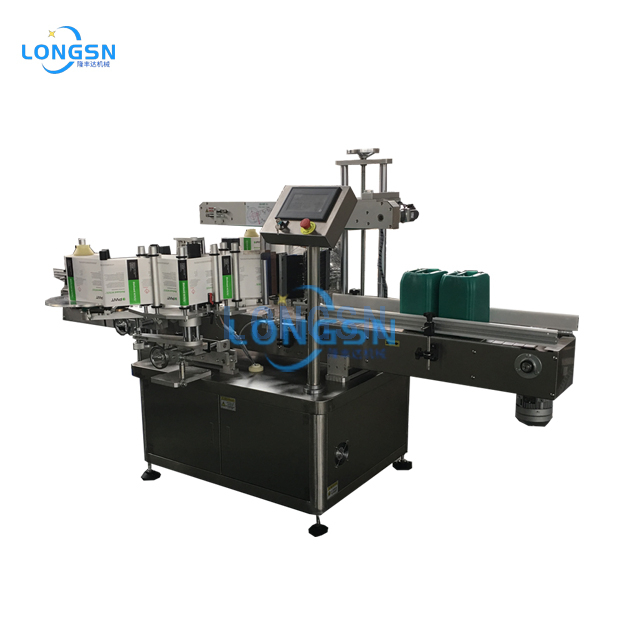
Front and back systems handle flat, oval, or rectangular bottles. These dual-side systems require precise alignment synchronization. If the bottle rotates slightly on the conveyor, both labels apply crookedly. Look for machines offering top-hold stabilization belts. These belts press down on the container cap. This prevents any rotational movement while the dual heads dispense the labels simultaneously.
Top and bottom systems serve entirely different packaging formats. These systems label clamshells, flat cartons, and food trays. The critical specification here involves conveyor gap transfers. The bottom label must dispense across a split conveyor section. If the gap is too wide, small products will jam. If the gap is too narrow, the label cannot dispense smoothly. Adjustable gap transfers provide the most operational flexibility.
Facilities anticipating future packaging redesigns should consider modular systems. Custom or multi-function systems utilize independent labeling heads. You can reposition these heads as product designs evolve. A machine might run wrap-around bottles today. Next year, you could reconfigure it for top-labeling boxes. Modular designs prevent premature equipment obsolescence. They offer the highest degree of future-proofing for rapidly growing brands.
Implementation Realities: Integration, Changeovers, and Compliance
Control systems define the daily user experience. Operators need intuitive interfaces to prevent costly errors. Assess the necessity of PLC-driven touchscreens. Human Machine Interfaces (HMI) should offer recipe memory functions. This allows supervisors to save specific parameters for different SKUs. Operators simply select a product code from the screen. The machine automatically adjusts its electronic settings, eliminating manual guesswork.
Changeover times heavily influence overall equipment effectiveness (OEE). Frame changeover speed as a critical specification. Every minute spent adjusting rails is a minute of lost production. Prioritize machines featuring scaled adjustments. Rulers and numbered dials allow repeatable settings. Furthermore, demand tool-less calibration. Operators should adjust guide rails and sensor positions using hand cranks and quick-release levers.
Best Practices for Rapid Changeovers
- Document all mechanical dial settings for every SKU in a master log.
- Utilize digital recipe memory for all electronic parameters (speed, delay, sensitivity).
- Train operators to perform color-coded, tool-less adjustments.
- Stage the next label roll at the machine before the current run ends.
Upstream and downstream integration determines continuous line flow. Standalone machines rarely operate in isolation. Address handshake signals between connected equipment. The labeling machine must signal the upstream filler to pause if a jam occurs. Variable speed conveyors allow precise speed matching. You may also require accumulation tables. These tables buffer products temporarily, preventing line stoppages during minor label roll changes.
Industry compliance dictates construction materials and hygiene standards. Food and pharmaceutical sectors mandate strict regulatory adherence. Specify construction materials carefully. SUS304 stainless steel handles basic moisture and wipe-downs. SUS316 stainless steel resists harsh chemical washdowns and prevents corrosion. Verify that the equipment meets GMP, FDA, or CE compliance standards. Smooth welds and enclosed motors prevent bacterial buildup in sensitive environments.
The Evaluation Framework: Shortlisting Your Equipment Partner
Never authorize final payment without conducting a Factory Acceptance Test (FAT). Advise your procurement team to mandate this process. The manufacturer must run the machine using your actual products. Send your production-grade label rolls for testing. A FAT proves the equipment meets specified throughput and accuracy metrics. It uncovers mechanical flaws before the machine leaves the vendor's facility.
After-sales support defines the long-term success of your installation. Evaluate the manufacturer’s Service Level Agreement (SLA). Determine their guaranteed response time for troubleshooting. Ask about technician dispatch times for catastrophic failures. Standard spare parts (like universal bearings or generic PLC units) are preferable. Proprietary spare parts force you to rely exclusively on the manufacturer. This often results in longer shipping delays and higher costs.
Before requesting a formal quote, buyers must compile specific data points. Approaching a vendor without this data guarantees inaccurate pricing. You need a structured approach to RFQs (Requests for Quote). Compile the following checklist points to ensure accurate machine specification.
- Minimum and maximum container dimensions (height, width, diameter).
- Label specifications (material, web width, roll OD, clear vs. opaque).
- Desired operational CPM (Containers Per Minute).
- Facility power supply specifications (voltage, phase, hertz).
- Specific industry compliance requirements (GMP, ATEX, FDA).
Conclusion
Selecting the ideal automated equipment requires rigorous attention to technical details. The best machinery perfectly mirrors your facility's specific operational constraints. It must align with your current floor space and your future growth targets. Overlooking minor specifications like sensor types or motor configurations causes major production headaches down the line. Careful evaluation upfront prevents these costly integration failures.
Take proactive steps before signing any purchase orders. Compile your exact container dimensions and label roll specifications. We encourage you to consult with an engineering specialist. You can also request a custom line-evaluation from a reputable manufacturer. They will help match precise machine capabilities to your unique production environment. Act now to secure a system that drives genuine operational excellence.
FAQ
Q: What is the standard tolerance for an automatic labeling machine?
A: Standard tolerances typically range from ±0.5mm to ±2mm. Machines using stepper motors usually achieve ±1mm to ±2mm accuracy. Systems equipped with high-end servo motors can achieve tighter tolerances of ±0.5mm. Your required tolerance depends on your specific industry standards and packaging design.
Q: How do I calculate the actual throughput I need for my labeling machine?
A: Calculate your required throughput by dividing your daily production target by your actual operational hours. Then, factor in your Overall Equipment Effectiveness (OEE). For example, if you need 20,000 bottles over an 8-hour shift at 80% OEE, your machine must sustainably run at roughly 52 containers per minute.
Q: Can one automatic labeling machine handle both cylindrical and flat bottles?
A: Yes, multi-purpose modular machines handle both formats. They utilize wrap-around belts for cylindrical bottles and dual-side heads for flat containers. However, the trade-off is often a larger footprint and slightly longer changeover times compared to dedicated, single-format machines.
Q: What is the typical lead time for manufacturing and installing an automatic labeling system?
A: Standard off-the-shelf labeling machines generally require 4 to 6 weeks for delivery. Highly customized systems requiring specialized integration or custom modular heads take 10 to 16 weeks. Installation and commissioning usually add another one to two weeks on-site.

 English