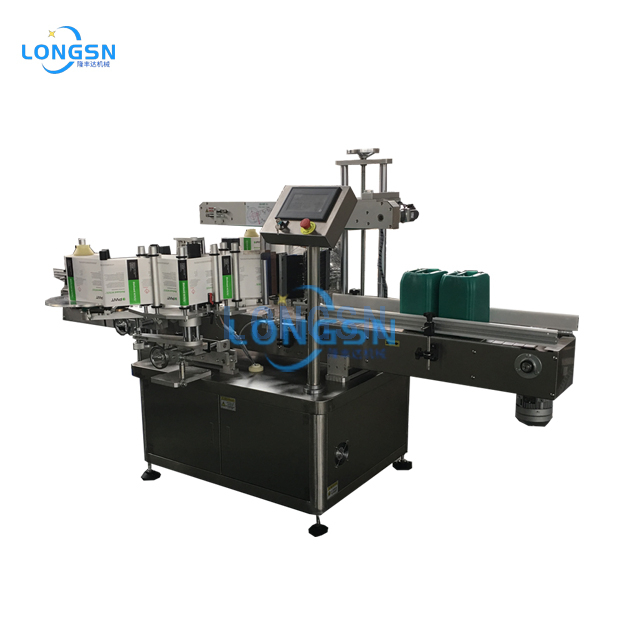
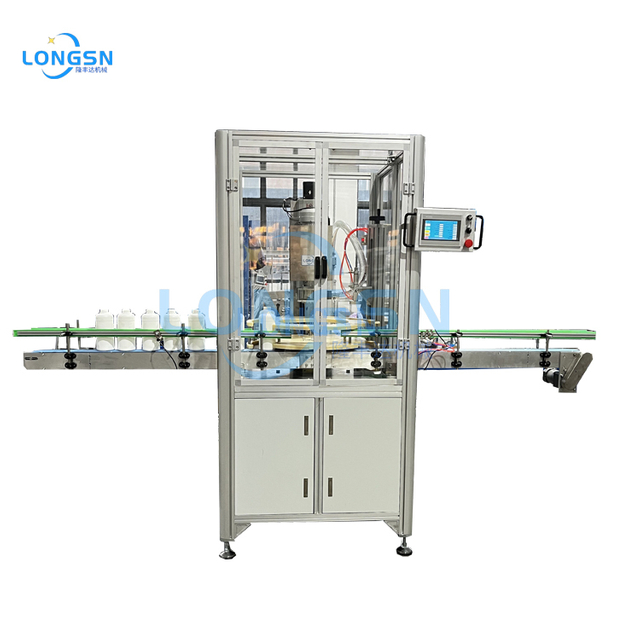
Purchasing a bottle labeling machine represents a critical capital expenditure for growing manufacturing facilities. Business owners make this investment to eliminate severe production bottlenecks, drastically reduce manual application errors, and scale output efficiently. However, selecting the wrong equipment frequently creates compounding operational headaches. You risk dealing with wrinkled labels, constant maintenance downtime, and heavily bottlenecked packaging lines. These hidden inefficiencies silently erode your profit margins and frustrate operators on the floor.
This comprehensive guide provides a vendor-neutral, feature-based evaluation framework. We will help you assess equipment based on actual production realities rather than flashy spec-sheet promises. You will learn how to match specific machine capabilities directly to your unique facility requirements. Ultimately, you will gain the knowledge needed to make a confident, data-driven purchasing decision.
Key Takeaways
- Scale Dictates Automation: The choice between tabletop, semi-automatic, and fully automatic machines must align with current output and 24-month growth projections.
- Sensor Accuracy is Critical: Photoelectric or ultrasonic sensors are non-negotiable features, especially for operations using transparent labels or distinct bottle contours.
- Changeover Efficiency Drives ROI: Tool-less adjustment mechanisms and programmable memory (PLC) separate high-efficiency machines from high-maintenance ones.
- Integration Matters: A standalone label applicator must seamlessly integrate with existing conveyors, filling machines, and capping lines.
How to Define Your Baseline Production Requirements
You must establish firm operational baselines before speaking to vendors. Skipping this step often results in purchasing mismatched equipment. You should audit your facility across several key metrics to build an accurate profile of your needs.
Audit Current vs. Target Throughput
Calculate your required Bottles Per Minute (BPM) accurately. You should measure your current output and project your needs for the next two years. High BPM requirements quickly filter out underpowered tabletop units. Conversely, a low BPM means you can avoid unnecessarily expensive rotary systems. Always pad your target BPM by about twenty percent to handle unexpected production surges.
Container and Label Material Variability
Document every container and material type you process. Bottle shapes dictate the type of applicator you need. You must list whether your bottles are cylindrical, square, or tapered. Tapered bottles often cause labels to wrinkle if the machine cannot angle the dispensing head. Likewise, document your label materials. Paper, BOPP, and transparent films all interact differently with dispensing components.
Footprint and Facility Constraints
Assess your physical production environment before shortlisting any bottle labeling machine. Measure your available floor space carefully. Check your power supply variations. Some industrial machines require 220V/3-phase power, while smaller units run on standard 110V. If you plan to use tamp-blow applicators, verify your facility has reliable pneumatic air availability.
Shortlisting Logic
Use a strict elimination process to narrow down your choices. Follow these sequential steps to filter out incompatible vendors:
- Eliminate machine categories incapable of matching your fastest upstream filling speed.
- Remove any machine unable to physically accommodate your widest or tallest bottle.
- Discard options requiring utility upgrades you cannot currently afford or accommodate.
- Filter out systems lacking native support for your specific label materials.

Evaluating Automation Levels: Tabletop vs. Inline Systems
Matching the automation level to your scale ensures a smooth operational flow. Over-automating wastes capital, while under-automating creates immediate bottlenecks. You must choose between tabletop models and fully inline systems based on your specific production context.
Tabletop / Semi-Automatic Machines
These compact units are highly popular in specific niches. They usually process under 30 to 50 bottles per minute.
- Target scenario: Small businesses (SMBs), craft breweries, or low-volume boutique manufacturing operations.
- Pros: They demand low initial capital and occupy a very small footprint. Operator training takes only minutes.
- Implementation risks: They require continuous manual loading and unloading. Inconsistent operator pacing easily stalls downstream processes. Operator fatigue directly impacts your daily output.
Fully Automatic Inline Systems
Inline systems handle rigorous, non-stop production schedules. They process anywhere from 50 to over 300 bottles per minute seamlessly.
- Target scenario: Medium to enterprise-level facilities requiring continuous, synchronized operation.
- Pros: They feature complete conveyor integration. They require minimal human intervention and deliver highly repeatable precision at high speeds.
- Implementation risks: They demand a much larger footprint. They require complex synchronization with upstream fillers. They also incur higher downtime costs during mechanical changeovers.
Core Features That Drive Labeling Accuracy and Speed
The mechanical and electronic components inside the equipment determine its reliability. You need to understand how drive systems, sensors, and application methods affect your final product. A reliable bottle labeling machine relies on these core technologies to maintain precision.
Drive Systems (Stepper vs. Servo Motors)
The motor pulling your label web dictates application consistency. You should evaluate stepper motors for standard operations. They provide consistent, reliable speeds for most moderate production runs. However, you should look for servo motors in high-speed applications. Servo motors feature a continuous feedback loop. This allows rapid acceleration and micro-precision label placement, which prevents drifting on fast-moving conveyors.
Advanced Sensor Technology
Sensors tell the machine exactly when to release the label. Using the wrong sensor guarantees crooked or entirely missed placements. Standard optical sensors work perfectly for opaque labels. They easily detect the gap between the label and the backing paper.
However, optical sensors fail when processing transparent labels. You need ultrasonic (capacitive) sensors for clear-on-clear labels. These sensors measure thickness rather than light transmission. Always check if the machine for sale includes ultrasonic sensors natively. Some vendors hide them as an expensive aftermarket add-on.
Sensor Technology Comparison
| Sensor Type | Best Label Material | Detection Method | Cost Impact |
| Standard Optical (Photoelectric) | Paper, Opaque Film, Foil | Light transmission/blocking | Standard (included) |
| Ultrasonic (Capacitive) | Transparent (Clear-on-Clear) | Material density/thickness | Often a premium upgrade |
Wrap-Around Belts and Tamp-Pads
The application method must match your container geometry perfectly. Assess wrap-around stations carefully for cylindrical bottles. A quality wrap-around belt ensures full 360-degree adhesion without bubbling or skewing. Alternatively, evaluate dual-side applicators for flat or oval containers. Shampoo bottles and specialized spirit bottles typically require front and back tamp-pads to ensure labels lay perfectly flat against complex curves.
Versatility and Changeover Efficiency (The Hidden Cost)
Changeover time is the silent killer of factory efficiency. A machine running at high speeds means nothing if it takes two hours to adjust between product runs. You need equipment designed for rapid, intuitive transitions.
PLC / Touchscreen Interface
Modern equipment relies on programmable logic controllers (PLCs). You should look for HMI (Human-Machine Interface) screens that store multiple product "recipes." This feature acts as a digital memory bank. It allows operators to switch between SKUs simply by pressing a button. You avoid manually recalibrating label tension, speed, and timing for every single shift.
Tool-Less Adjustments
Your maintenance team should not need a box of wrenches to change a bottle size. Prioritize machines featuring hand-wheel adjustments. They should include clearly marked scales or rulers for guide rails and applicator heads. Tool-less systems allow operators to make precise, repeatable mechanical tweaks in minutes. This drastically reduces your downtime during multi-product shifts.
Modularity
Production needs change rapidly as businesses grow. Evaluate if the equipment can accept future modules. You might eventually need a secondary label head for promotional neck bands. You may also need to integrate a date-coding printer or hot stamp directly onto the application head. Modular frames prevent you from needing entirely new machinery when marketing updates a packaging design.
Implementation Realities: Maintenance, Support, and Next Steps
Buying the machine is only the first step. You must also live with it, maintain it, and rely on the vendor when things go wrong. Focus heavily on ongoing support and structural design before signing a contract.
Component Accessibility
Complicated designs lead to skipped maintenance. Open-frame designs are highly preferable. Your maintenance teams must be able to reach drive belts, rollers, and electronics easily. They should never have to disassemble the entire chassis just to replace a standard wear part. Clear access keeps preventative maintenance schedules on track.
Vendor Support and Parts Availability
Assess the specific hardware the manufacturer utilizes. You must verify whether they use proprietary parts or standard off-the-shelf industrial components. Proprietary parts force you to buy directly from the manufacturer at a high markup. Standard components are much faster and cheaper to replace through local industrial suppliers. This distinction heavily impacts your uptime during a mechanical failure.
The "Sample Test" Rule
Never purchase a unit based purely on brochures. You must mandate a sample test. Send your specific bottles and labels directly to the manufacturer. Ask them for a continuous, recorded test run. This proves the equipment actually handles your specific container geometries and label materials without wrinkling or flagging.
Next-Step Action
You should compile your gathered data immediately. Combine your BPM requirements, precise bottle dimensions, and label material specs into a standardized document. Use this data to create a formal RFP (Request for Proposal). Send this detailed RFP to your shortlisted vendors to ensure they quote machines capable of handling your exact reality.
Conclusion
The best machinery for your facility is the one aligning perfectly with your actual operational constraints. You must match equipment capabilities to your specific container geometries, throughput needs, and operator skill levels. Avoid the temptation to buy a massive system if your production volume does not justify it.
Remember that overpaying for unused speed is a common mistake. However, underpaying for a machine plagued by slow changeovers will quietly destroy your operational efficiency over time. Focus on tool-less adjustments, reliable sensor technology, and open-frame maintenance. Use these criteria to evaluate vendors critically, demand recorded sample tests, and secure a system built to scale alongside your business.
FAQ
Q: What is the difference between a label dispenser and a bottle labeling machine?
A: A label dispenser simply peels the label away from its backing paper. It presents the label for a human operator to grab and apply by hand. In contrast, an applicator or labeling machine mechanically applies the label directly to the container. It fully automates the placement, pressure, and adhesion process without manual human intervention.
Q: Can one machine label both cylindrical and square bottles?
A: Yes, but it requires specific design features. Some modular systems accommodate both, but they typically require distinct mechanical attachments. You often need wrap-around belts for cylinders and side-tamp modules for square bottles. Switching between these shapes usually requires significant changeover time and mechanical reconfiguration.
Q: Why is my machine struggling with clear labels?
A: This is a very common technical oversight. Standard photoelectric sensors rely on light. They cannot "see" the physical gap between transparent labels and a transparent backing liner. To fix this, you require an ultrasonic or capacitive sensor upgrade. These sensors measure material thickness rather than light, allowing them to detect clear labels perfectly.

 English