Food packaging presents a constant operational tension on the plant floor. Production lines demand high throughput to maintain margins, yet quality control dictates zero tolerance for compromised seal integrity, tamper evidence, or food safety. Deploying the wrong packaging equipment leads directly to measurable product losses. Micro-leaks cause premature spoilage and oxidation. Improper heat application damages temperature-sensitive perishable goods during the sealing process, rendering them unsellable. Inefficient end-of-line packaging creates bottlenecks that force upstream equipment to slow down, crippling the entire facility's output.
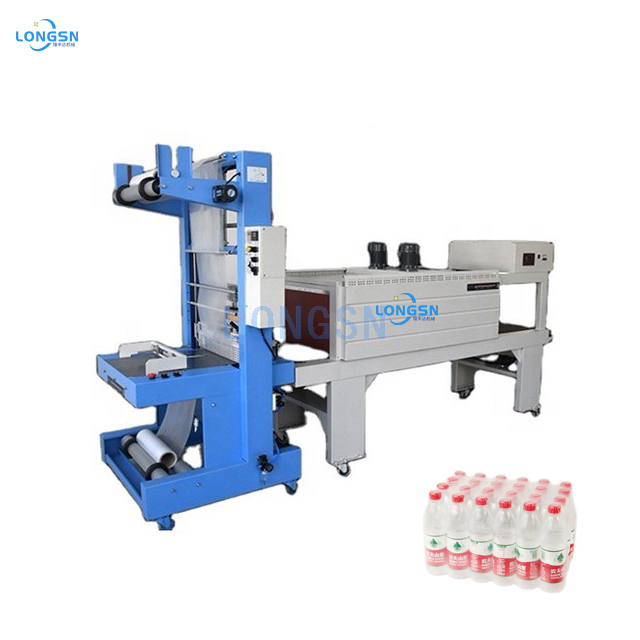
This guide moves beyond generic equipment specifications to solve these floor-level problems. It evaluates five distinct classes of a Shrink Wrapping Machine based on their viability for specific food production environments. Whether you operate an artisan bakery or manage high-volume industrial processing, selecting the correct hardware requires aligning machine capabilities with specific product requirements, facility constraints, and sanitation standards.
- Film Compatibility Dictates Hardware: Food-safe polyolefin (POF) films require precise temperature controls compared to standard PVC; the chosen machine must feature highly calibrated heat tunnels to prevent burn-through.
- Throughput vs. Footprint Trade-offs: Upgrading from manual L-bar sealers to fully automatic continuous motion systems increases packages per minute (PPM) from 10 to 100+, but requires significantly more floor space and three-phase power.
- Washdown Ratings are Non-Negotiable for Raw Foods: Facilities handling raw meat, dairy, or produce must prioritize machines with IP65+ washdown ratings and stainless-steel construction to meet sanitation compliance.
Navigating Food-Grade Packaging Requirements
Sanitary Design and Compliance
Facilities requiring aggressive washdown protocols must prioritize sanitary design from the ground up. Stainless steel construction, specifically 304 or 316 grade, is mandatory to prevent corrosion from harsh cleaning chemicals and foaming agents. The machine architecture must minimize catch-points, flat horizontal surfaces, and exposed threads where food debris and moisture can accumulate. IP65 or higher rated electrical enclosures protect sensitive PLCs, relays, and motors from high-pressure water jets during daily sanitation cycles. Without these specific engineering controls, a machine becomes a bacterial harborage point and a massive liability during food safety audits.
Thermal Sensitivity of Perishables
Shrinking film around heat-sensitive foods like artisan chocolates, frosted baked goods, or fresh produce presents a significant engineering challenge. The goal is to achieve a tight, wrinkle-free shrink without altering the core temperature of the product or melting its surface. Machines designed for perishables incorporate rapid-cooling discharge conveyors and highly directed, adjustable airflow within the heat tunnel. These features ensure the film shrinks instantly while the product remains unaffected by the brief exposure to ambient heat. Operators must have granular control over conveyor speed and tunnel temperature to dial in the exact thermal recipe for each specific food item.
Tamper-Evidence and Shelf-Life Extension
A packaging system serves as a critical control point for extending shelf life and ensuring consumer safety. A hermetic seal protects food from external contaminants, moisture ingress, and oxygen exposure, which directly delays spoilage. Furthermore, the tight film provides immediate visual tamper evidence. Any breach in the package is instantly recognizable, assuring consumers and retailers that the product remains secure from the factory floor to the retail shelf. This level of security is mandatory for retail compliance and brand protection.
Structural Integrity and Cold-Chain Durability
The choice of equipment directly impacts package survival during transit and storage. Products destined for low-temperature storage and cold-chain logistics require robust, flawless seals. Proper sealing prevents punctures, scuffing, and seal failures when the film inevitably becomes brittle in freezing temperatures. Consistent heat application and uniform pressure during the sealing phase are vital for maintaining structural integrity. If the seal wire temperature fluctuates, the resulting weak seams will split open during palletization or freezer storage, leading to rejected shipments.
Core Evaluation Dimensions for Packaging Hardware
Production Volume and Scalability (PPM)
Understanding operational thresholds dictates the level of automation required. Manual systems typically handle 5 to 10 packages per minute (PPM), relying entirely on operator speed and stamina. Semi-automatic systems increase output to 15 to 25 PPM by automating the jaw descent and sealing cycle. Fully automatic systems scale from 30 to over 150 PPM, integrating directly into continuous production lines via pacing conveyors for maximum efficiency.
| Automation Level | Average PPM | Operator Involvement | Best Application |
| Manual L-Bar | 5 - 10 | High (Manual loading, sealing, and moving) | Startups, low-volume bakeries |
| Semi-Automatic | 15 - 25 | Medium (Manual loading, auto sealing) | Mid-sized regional food brands |
| Fully Automatic | 30 - 70 | Low (Supervision and film roll changes) | High-mix, variable length products |
| Continuous Motion | 75 - 150+ | Minimal (System monitoring) | Industrial frozen food, beverage trays |
Seal Dimensions and Product Variability
Evaluate the maximum seal area, defined by length, width, and height, to ensure it accommodates your largest physical SKU. Assess the machine's ability to handle rapid changeovers between different products. Systems that allow operators to switch SKUs using hand-cranks and saved PLC recipes, without requiring wrenches or extensive mechanical adjustments, minimize downtime and keep the line running.
Sealing Technology
Sealing technology impacts both maintenance schedules and seal quality. Traditional wire sealing and impulse sealing are common in entry-level machines. However, hot knife sealing systems offer superior longevity and cleaner seals. Hot knife technology utilizes a solid, coated blade that maintains a constant temperature. This requires less maintenance, eliminates the frequent snapping of seal wires, and performs reliably in high-volume food applications where downtime is unacceptable.
Single-Product Wrapping vs. Multipack Bundling
Machinery requirements differ significantly based on the packaging format. Wrapping individual items, such as single baked goods, requires precise control for a retail-ready, high-clarity finish. Heavy-duty bundling systems designed to collation-wrap canned goods, glass jars, or beverage trays require robust film tensioning, thicker polyethylene films, and larger heat tunnels to handle the increased mass and dimensions of the multipack.
The 6 Critical Qualification Questions for Food Packers
- What is the physical state of the product (fresh, frozen, dry, raw, or cooked)?
- What are the exact dimensions (length, width, height) of the smallest and largest SKUs?
- What is the target production speed measured in Packages Per Minute (PPM) both today and in 3 years?
- What are the facility's power constraints (110V single-phase vs. 220V/480V three-phase)?
- Does the packaging line require inline integration with upstream equipment (fillers, depositors, cartoners)?
- Does the production environment require daily chemical washdowns or sanitation audits?
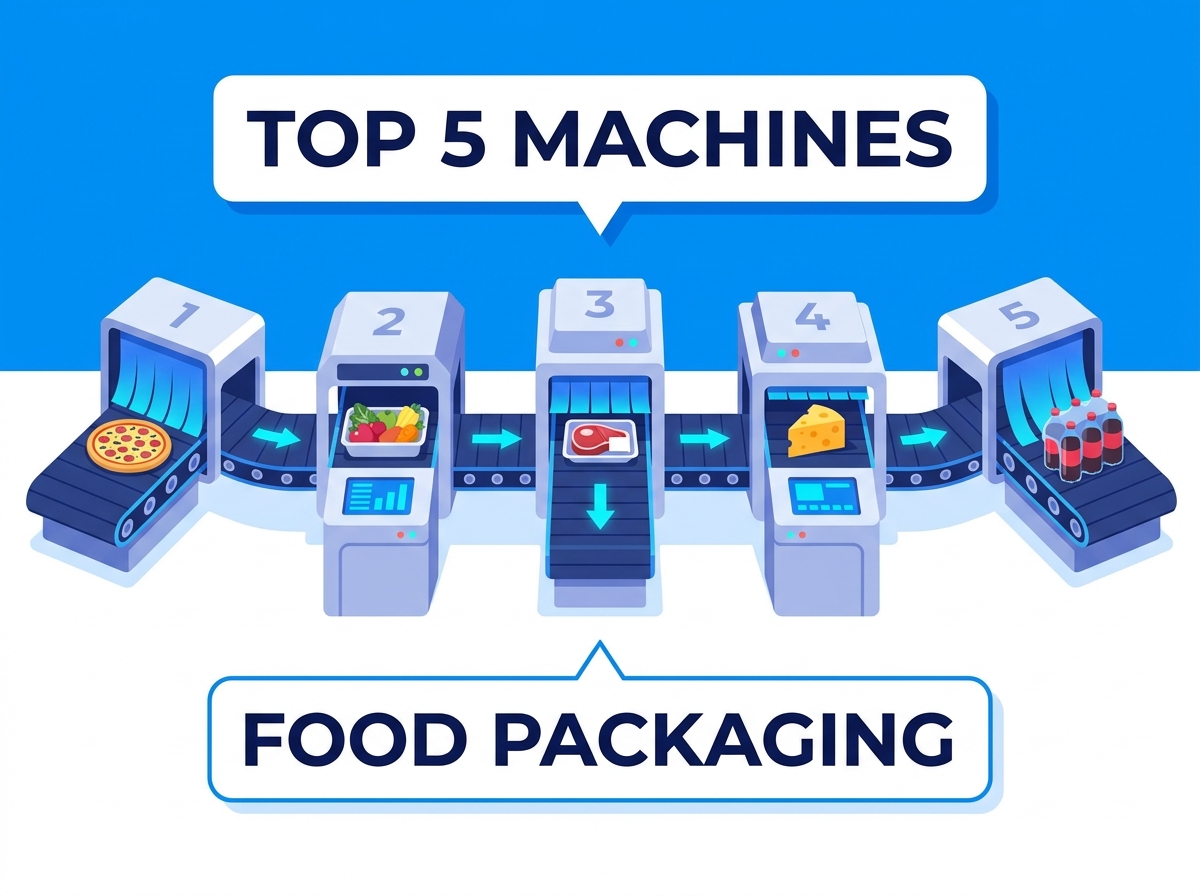
The Top 5 Machines for Food Operations
1. Best Entry-Level System for Artisan and Small-Batch Foods
Manual L-Bar Sealers or Starter Impulse I-Bar Kits with attached heat guns or compact tunnels serve bakeries, small confectioneries, and low-volume specialty foods. Starter impulse I-bar systems utilize pre-made shrink bags, offering a low barrier to entry. Manual L-bar sealers use centerfold rolls, providing more flexibility for different product sizes. Both systems rely heavily on operator skill to maintain consistent seal quality and prevent film burn, making them suitable only for low-throughput environments where labor is flexible.
- Max PPM: 5-10
- Max Product Dimensions: Varies by model, typically up to 16" x 20"
- Power Requirements: 110V Single-Phase
2. Best Semi-Automatic Machine for Mid-Sized Production
Semi-Automatic L-Bar Sealers with integrated shrink tunnels are ideal for growing food brands needing 15 to 20 PPM. These machines provide consistent, machine-controlled seal pressure via pneumatic or electromagnetic jaws. Features like magnetic hold-downs, motorized discharge conveyors, and automatic cycle timers significantly reduce operator fatigue. The operator simply inserts the product into the film web and moves it to the seal area; the machine handles the rest, improving packaging consistency compared to manual alternatives.
- Max PPM: 15-20
- Max Product Dimensions: Typically up to 20" x 24"
- Power Requirements: 220V Single or Three-Phase
3. Best Fully Automatic Side Sealer for Variable Length Products
Automatic Side Seal Shrink Wrappers excel in facilities packaging long or variable-length items like baguettes, bulk produce, or assorted multi-packs. The primary advantage is continuous side sealing, which imposes no length restrictions on the product. These systems integrate seamlessly with upstream feeding conveyors, automating the entire wrapping process. Photo-eye sensors detect product length on the fly, adjusting the cross-seal timing automatically for high-mix production lines.
- Max PPM: 30-70
- Max Product Dimensions: Infinite length, width typically up to 24"
- Power Requirements: 220V/480V Three-Phase
4. Best High-Speed Continuous Motion Wrapper for Industrial Output
Continuous Motion Shrink Wrapping Machines target high-volume frozen foods, beverage trays, and contract packaging lines requiring over 75 PPM. The sealing head moves horizontally in tandem with the product, eliminating the stop-and-go bottlenecks found in standard automatic sealers. While they offer massive throughput and smooth product handling, they require significant floor space and involve complex maintenance procedures requiring trained technicians.
- Max PPM: 75-150+
- Max Product Dimensions: Customizable based on frame size
- Power Requirements: 480V Three-Phase
5. Best Washdown-Ready System for Meat and Dairy
Stainless Steel, IP-Rated Shrink Wrappers are mandatory for raw protein processing, dairy packaging, and environments requiring daily chemical washdowns. Specific engineering details, such as sloped surfaces to prevent water pooling, hermetically sealed motors, and stainless-steel bearings, prevent bacterial harborage. These sanitary design features ensure compliance with strict food safety regulations and withstand the harsh realities of industrial sanitation crews.
- Max PPM: 40-100+
- Max Product Dimensions: Customizable
- Power Requirements: 220V/480V Three-Phase
Operational Trade-Offs and Implementation
Energy Consumption
Continuous heat tunnels draw significant electrical power to maintain target temperatures. Analyzing energy consumption is necessary for long-term operational planning. Standard tunnels consume more power, while energy-efficient models featuring variable frequency drives (VFDs) on the blower motors and superior dual-wall insulation reduce overall electrical draw. This lowers utility expenses over the machine's lifespan and reduces the ambient heat rejected into the packaging room.
Consumables and Film Waste
Automated systems incorporate precise film tensioning and motorized scrap-rewind systems. These mechanisms reduce polyolefin waste compared to manual systems where operators often pull excess film. Minimizing film scrap directly impacts long-term operational costs. A machine that reduces film waste by just a few inches per package yields massive material savings over a year of high-volume production.
Labor Reallocation
Upgrading to an automatic system reduces the need for manual labor at the packaging station. Instead of having three operators manually bagging and sealing, one operator can manage the automated line and load film rolls. This allows facilities to reallocate personnel to higher-value tasks, such as quality control inspections, palletizing, or logistics management, improving overall plant efficiency.
Implementation Risks and Mitigation Strategies
Integration with Existing Conveyors
Mismatched infeed and outfeed speeds cause immediate bottlenecks. If the new machine cannot sync with existing line speeds, products will jam, and production slows down. Conduct pre-purchase line audits to ensure the new equipment integrates smoothly with upstream fillers and downstream case packers. Utilize variable speed pacing conveyors to create proper product spacing before entering the wrapper.
Operator Training and Changeover Downtime
Complex SKU changeovers introduce hidden downtime costs. Prioritize machines equipped with programmable logic controllers (PLCs), toolless adjustments, and recipe-saving capabilities. These features simplify changeovers. Operators can select a pre-programmed recipe on the HMI, and the machine automatically adjusts conveyor speeds and tunnel temperatures, reducing the training burden and minimizing human error.
Maintenance of Wear Parts
Teflon tape, sealing wires, cutting blades, and conveyor belts require regular replacement. Evaluate OEM parts availability, factory service contracts, and local technician support before purchasing. Reliable access to wear parts prevents extended downtime during routine maintenance.
| Component | Maintenance Action | Typical Frequency |
| Teflon Tape / Covers | Inspect for burns or tears; replace if damaged. | Weekly |
| Seal Wires / Blades | Clean carbon buildup; check for uniform heating. | Daily / Weekly |
| Conveyor Belts | Check tracking and tension; inspect for fraying. | Monthly |
| Pneumatic Filters | Drain moisture traps; check air pressure. | Weekly |
Conclusion
- Audit your current production line speeds and calculate your required packages per minute (PPM) to determine the necessary level of automation.
- Request a sample film test from the equipment manufacturer using your specific food product to verify seal integrity and thermal compatibility.
- Verify your facility's electrical infrastructure, specifically checking for available three-phase power if upgrading to continuous motion or high-speed systems.
- Establish a preventative maintenance schedule for wear parts like Teflon tape and seal blades before the machine is installed on the floor.
FAQ
Q: What is the best shrink wrap film for food packaging?
A: Polyolefin (POF) is the standard for food packaging. It is FDA-approved for direct food contact, offers excellent clarity, and shrinks uniformly without emitting harmful odors during the sealing process.
Q: Can I use PVC film for packaging food?
A: No. PVC film releases toxic fumes when heated and becomes brittle in cold storage. It is not suitable for direct food contact and should be avoided in food production environments.
Q: How often do sealing blades need replacement?
A: Replacement frequency depends on production volume and sealing technology. Wire seals may need weekly replacement in high-volume settings, while solid hot knife blades can last months with proper cleaning and maintenance.
Q: Do these machines require special ventilation?
A: While POF films do not release toxic fumes, heat tunnels generate significant ambient heat. Proper facility ventilation is recommended to maintain a comfortable working environment for operators near the packaging line.
Q: Can one machine handle both individual items and multi-packs?
A: Yes, semi-automatic and automatic machines with adjustable seal jaws and programmable settings can handle both. However, extreme size differences may require separate machines for optimal efficiency.
Q: What is an IP65 washdown rating?
A: An IP65 rating means the machine's electrical enclosures are completely dust-tight and protected against low-pressure water jets from any direction, making it suitable for standard food facility washdown procedures.

 English