Upgrading end-of-line packaging raises the stakes for your entire facility. Bottlenecks at the labeling station directly impact Overall Equipment Effectiveness (OEE). They slow down downstream operations and frustrate operators. Manufacturer brochures often highlight maximum application speeds. However, they rarely address real-world integration constraints. Choosing the wrong equipment leads to constant jams. It causes skewed placements and missed daily production targets.
We will evaluate the most common equipment architectures based on production line realities. You will move past marketing claims to understand specific integration constraints. You will learn how product geometry, line speed, and facility footprint dictate your choices. The best automatic labeling machine depends entirely on your unique operational environment. Let us explore how to match industrial labeling solutions to your exact manufacturing requirements.
Key Takeaways
- Speed claims in brochures often assume ideal conditions; real-world throughput is dictated by product spacing and changeover efficiency.
- The top five industrial architectures—Wrap-Around, Front/Back, Top/Bottom, Print & Apply, and Rotary—solve distinctly different container challenges.
- Hidden costs in automatic labeling stem from custom tooling for new container shapes and PLC (Programmable Logic Controller) integration, not just the capital expenditure.
- Never finalize a purchase without a rigorous Factory Acceptance Test (FAT) using your actual containers and label stock.
Core Evaluation Criteria for Automatic Labeling Machines
Evaluating industrial equipment requires looking beyond surface-level specifications. You must analyze how each component behaves under continuous daily stress. Several core criteria determine whether a system will enhance or hinder your production line.
Throughput vs. Conveyor Synchronization
Brochures frequently advertise theoretical maximum speeds. True throughput depends heavily on conveyor synchronization. The dispensing speed of the applicator head must match your existing conveyor speed exactly. A mismatch causes immediate problems. Labels will stretch, tear, or apply unevenly. If the web dispenses faster than the product moves, the label bubbles. If it dispenses slower, it skews. Advanced systems use encoder feedback to automatically match dispensing speed to conveyor fluctuations. This prevents product jamming and ensures consistent placement.
Placement Tolerance & Precision
Strict compliance matters immensely in pharmaceutical and cosmetic applications. Many of these industries require ±0.5mm placement accuracy. You must evaluate the drive system controlling the applicator head. Standard systems use stepper motors. Steppers operate blindly. They can lose steps during high-speed runs. Premium models use servomotor-driven heads. Servos incorporate closed-loop feedback. They constantly verify their position. This guarantees precision even during rapid acceleration or deceleration phases.
Table: Applicator Motor Technology Comparison
| Motor Type | Feedback Mechanism | Best For | Precision Level |
| Stepper Motor | Open-loop (None) | Standard food & beverage | ± 1.0mm to ± 2.0mm |
| Servomotor | Closed-loop (Encoder) | Pharma & cosmetics | ± 0.5mm or better |
Format Changeover Time
Production environments rarely run a single product forever. Quick format changeovers keep OEE scores high. You must assess how operators adjust the machine for different sizes. Some systems require custom star-wheels and dedicated guide rails. These take significant time to swap. They also require mechanical tools. Modern architectures favor tool-less adjustments. They use hand-cranks and digital scales. Operators record specific settings for each bottle. They can replicate these settings instantly during the next run.
Material Compatibility
Labels come in countless varieties. Transparent labels, metallic films, and varying web liners affect optical sensor requirements. Standard photoelectric sensors work perfectly for opaque paper labels. They detect the physical gap between labels. However, they fail completely on clear-on-clear materials. The light passes through both the label and the liner. You must specify ultrasonic or capacitive sensors for transparent stock. Ultrasonic sensors measure material thickness rather than light transmission. They detect the minute thickness difference between the liner alone and the liner holding a label.

Top 5 Automatic Labeling Machine Architectures Compared
We evaluate these systems by application category. This provides a vendor-neutral, architecture-focused decision framework. Selecting the correct base architecture prevents fundamental compatibility issues down the road.
1. Inline Wrap-Around Labelers (Best for Cylindrical Containers)
Ideal Application: Craft breweries, chemical drums, pharmaceutical vials, and beverage bottling rely heavily on this design. It excels wherever products feature a perfect cylindrical shape.
Performance Reality: These machines prove highly efficient for continuous straight-line production. The system typically utilizes a motorized wrap belt. The bottle enters the station. A dispensing head applies the leading edge of the label. The wrap belt immediately spins the bottle against a stationary backing pad. This smooths the label entirely around the circumference. The continuous motion allows for excellent medium-speed throughput.
Primary Limitation: The architecture struggles significantly with tapered bottles. It also fails on uniquely shaped containers. The conveyor must remain perfectly leveled. If the belt sits slightly off-axis, the label will spiral upward or downward during application. Common mistakes include trying to run slightly oval bottles on a strict wrap-around system.
2. Front and Back Labelers (Best for Flat or Oval Products)
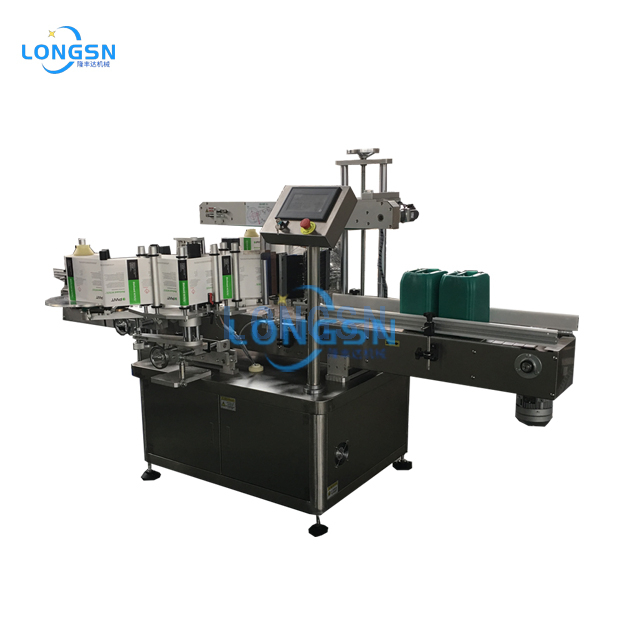
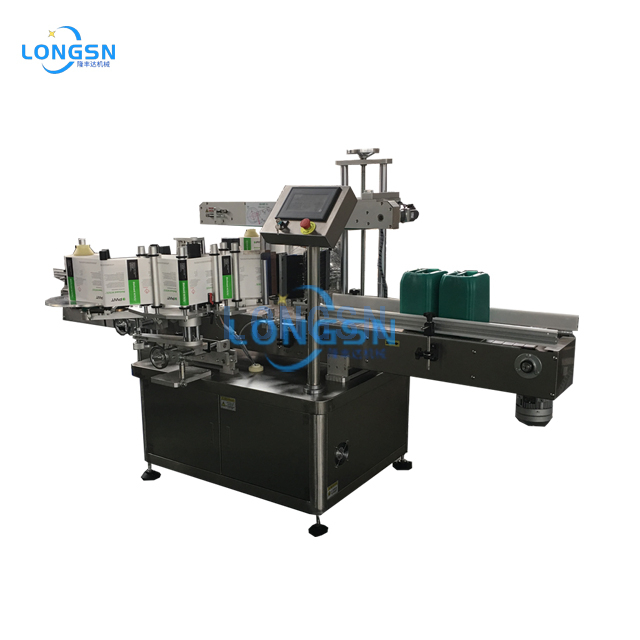
Ideal Application: Shampoos, motor oil, detergent jugs, and dual-paneled food packaging require two-sided branding. This architecture handles these complex shapes seamlessly.
Performance Reality: Flat and oval bottles naturally rotate or wobble on standard conveyors. This system uses specialized alignment belts. These belts compress the sides of the product to square it perfectly before it reaches the applicator. The machine then applies labels simultaneously from two distinct applicator heads. Spring-loaded wipe-down rollers ensure the edges adhere securely across contoured plastic.
Primary Limitation: This equipment demands a much larger physical footprint. The dual heads and alignment chains add significant maintenance complexity. Operators must calibrate the alignment belts precisely during every changeover. If the pressure is too tight, the bottle deforms. If it is too loose, the bottle twists during application.
3. Top and Bottom Labelers (Best for Boxes and Clamshells)
Ideal Application: Baked goods, cosmetics packaging, clamshell containers, and secondary carton packaging benefit from this design. It is perfect for applying branding on top and barcodes underneath.
Performance Reality: Applying a label to the bottom of a moving product presents a unique physics challenge. This architecture features a split-conveyor or hugging-belt system. A gap exists between two conveyor sections. The bottom dispensing head fires the label up through this exact gap. Meanwhile, a top head dispenses downward. Side-hugging belts keep the product stable as it crosses the open space.
Primary Limitation: The system remains highly sensitive to weight distribution. Extremely lightweight products may shift or flutter during the transfer over the bottom dispensing head. You must carefully control ambient airflow and conveyor vibration to maintain accuracy.
4. Print & Apply Systems (Best for Logistics and Traceability)
Ideal Application: E-commerce fulfillment, pallet tagging, and serializing outer cases require on-demand data. These environments cannot rely on pre-printed stock.
Performance Reality: This system merges a thermal transfer printer directly with an applicator arm. It prints dynamic data dynamically. You can print unique barcodes, expiration dates, and lot numbers seconds before application. The machine uses a tamp, blow, or wipe mechanism. A tamp pad holds the printed label using a vacuum. A pneumatic cylinder then extends to press the label onto the passing box.
Primary Limitation: The physical printing process results in lower throughput compared to pre-printed labelers. Moving parts in pneumatic tampers require strict preventative maintenance. Dust from corrugated boxes frequently clogs the vacuum pads. You must clean the printheads regularly to prevent dead pixels in barcodes.
5. Rotary Labeling Machines (Best for High-Speed & Complex Applications)
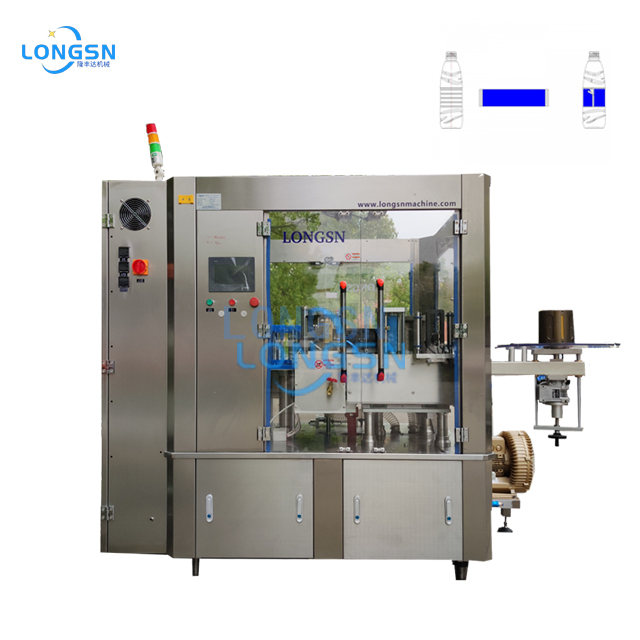
Ideal Application: High-volume beverage facilities, water lines, and premium spirits utilize these massive machines. They excel when products require precise orientation, like aligning labels exactly between glass seams.
Performance Reality: The architecture abandons straight-line conveyors. It uses central carousels and spinning bottle plates. A star wheel feeds bottles onto individual rotating pedestals. Mechanical cams or independent servomotors spin each bottle into perfect position. The machine can apply multiple labels (front, back, neck, and tamper-evident) simultaneously. They routinely hit speeds exceeding 500 bottles per minute.
Primary Limitation: These systems represent the highest capital expenditure. They also require expensive, custom-machined handling parts. You must purchase dedicated star wheels and infeed screws for every unique bottle shape. Changeovers take considerably longer and often require a dedicated mechanic.
Implementation Realities: Mitigating Risks When Upgrading
Purchasing the hardware only solves half the puzzle. Integrating it into your existing ecosystem presents distinct challenges. You must proactively address spatial, digital, and human factors.
Footprint & Layout Constraints
Adding a new station changes the spatial realities of your floor. High-speed systems often require accumulation tables beforehand. Accumulation prevents minor upstream stoppages from starving the labeler. You must measure exactly how the machine fits into existing straight or U-shaped production lines. An applicator head hanging off the side might block a critical forklift aisle. Map the entire operational envelope, including the space operators need to open the guarding doors and load massive label rolls.
Data Integration (Industry 4.0)
Modern production tracking requires constant communication between machines. Integrating the machine's PLC with overarching ERP or MES systems poses a technical hurdle. You need real-time reject tracking. If a bottle passes without a label, a vision sensor should trigger a downstream pneumatic reject arm. The PLC must record this event and send the data to the central dashboard. Work closely with your IT department to ensure the new equipment supports open communication protocols like OPC UA.
Operator Skill Gaps
The human element often causes the most friction during upgrades. The transition from semi-automatic pedal-pushing to managing complex automation requires specific upskilling. Operators must learn to navigate detailed HMI (Human-Machine Interface) screens. They need to understand tension clutches and web break sensors. A common mistake is neglecting structured training. Operators left untrained will frequently bypass safety sensors or tweak mechanical settings incorrectly to resolve minor faults.
Maintenance Assumptions and Operational Reliability
Keeping an industrial machine running requires realistic expectations regarding wear and tear. You must plan for ongoing physical maintenance to prevent catastrophic downtime.
Consumables and Wear Parts
Every mechanical system features components destined to degrade. You must factor in the specific replacement cycles for critical wear parts. Wrap belts lose their grippy texture over time. Drive rollers dry out and crack. Applicator pads collect adhesive residue and lose their vacuum seal. Maintain an on-site inventory of these specific items. Waiting three days for a replacement polyurethane belt destroys your production schedule.
Tooling Requirements for Future Products
Marketing departments constantly update packaging designs. You must evaluate the engineering requirements for these inevitable changes. Introducing a new bottle design often means engineering new feed screws. You might need new top-hold down belts or uniquely shaped tamp pads. Assess how long the OEM takes to manufacture and ship custom format parts. Systems utilizing modular, tool-less guides offer significantly more flexibility when container shapes change rapidly.
Downtime & OEM Support
Machine reliability relies heavily on external technical support. You must evaluate Service Level Agreements (SLAs) rigorously. localized technical support proves far more valuable than cheap initial hardware. Overseas models lacking regional technicians leave you vulnerable. If a proprietary servo drive fails, you need a technician on-site within hours, not weeks. Always prioritize vendors who offer guaranteed response times and readily available domestic spare parts.
Next Steps: Structuring Your Shortlist and Factory Acceptance Test (FAT)
Do not sign a purchase order based on a theoretical conversation. You must structure a highly analytical evaluation process to guarantee the equipment performs as promised.
Define Success Criteria
Vague goals lead to failed implementations. You must document specific, measurable yield requirements. Define your allowable scrap rates explicitly. Set hard time limits for format changeovers. For example, state that a single operator must complete a changeover between a 500ml and 1L bottle in under ten minutes without hand tools. Put these exact criteria into the vendor contract.
The Materials Test
Vendors love demonstrating machines using thick paper labels and perfectly rigid square boxes. Real life is rarely so forgiving. You must send your absolute worst-case scenario materials to the OEM for a proof of concept. Send the thinnest, most easily torn liners. Send the most complex, asymmetrical container shapes you run. If the machine handles your most difficult product smoothly, it will easily process your standard runs.
FAT Protocol
The Factory Acceptance Test represents your final safeguard. We advise buyers to physically attend the FAT at the manufacturer's facility. If travel is impossible, request an unedited, continuous video run. The machine must operate at the maximum stated speed using your actual products and labels. Watch for micro-stoppages. Pay attention to how the machine handles roll splices. Do not sign off on the shipment until the machine meets every defined success criterion flawlessly.
Conclusion
- Evaluating automated equipment is less about maximizing peak speed and more about minimizing changeover friction.
- Select an architecture that directly matches your primary container geometry to avoid constant leveling and alignment battles.
- Plan for the digital and human elements of integration, ensuring your operators receive adequate HMI and mechanical training.
- Demand a rigorous FAT using your most difficult materials to expose any sensor or material handling weaknesses early.
- Prioritize OEMs offering transparent integration consulting and verifiable local support over those competing purely on initial hardware price.
FAQ
Q: At what production volume should we transition from a semi-automatic to an automatic labeling machine?
A: You should consider transitioning when throughput requirements consistently exceed 30–40 products per minute. Semi-automatic machines struggle beyond this rate, leading to operator fatigue. Furthermore, when labor costs rise and manual placement errors begin eroding your profit margins, automating the process becomes operationally necessary to maintain quality control.
Q: Can one automatic labeling machine handle both cylindrical and flat bottles?
A: Yes, hybrid systems exist. They combine wrap belts and alignment chains. However, they often require significant tooling changes between runs. Operators must physically remove or bypass certain modules. These hybrid systems typically compromise top-end speeds and precision compared to dedicated, single-architecture machines built specifically for one shape.
Q: What is the difference between tamp-blow and wipe-on automatic label applicators?
A: A wipe-on applicator dispenses the web continuously, matching the conveyor speed perfectly. This remains ideal for smooth primary packaging. A tamp-blow system uses a pneumatic cylinder to press the printed label onto the product. This method works best for variable-distance boxes, recessed areas, or fragile items requiring a non-contact burst of air.
Q: How do clear labels affect automatic labeling machine sensors?
A: Standard photo-electric sensors cannot detect the gap between clear labels on a clear liner. They rely on blocking light, which transparent materials fail to do. If you use clear stock, upgrades to ultrasonic or capacitive sensors are strictly required. These advanced sensors measure density or capacitance changes to locate the label gap accurately.

 English