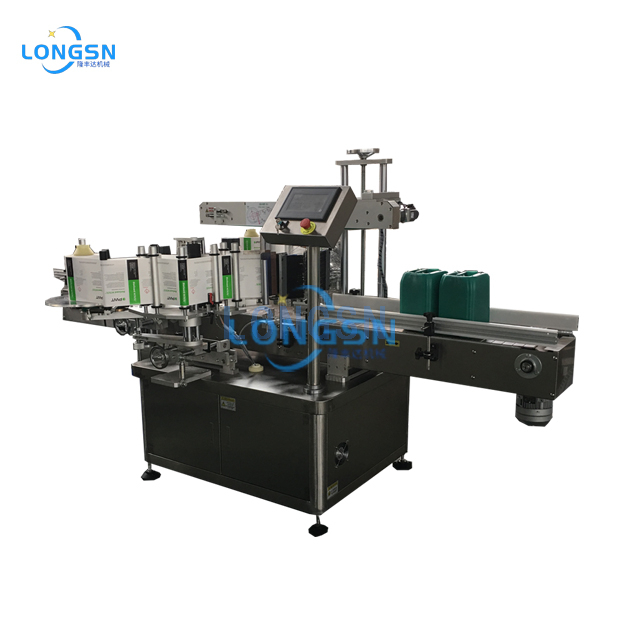
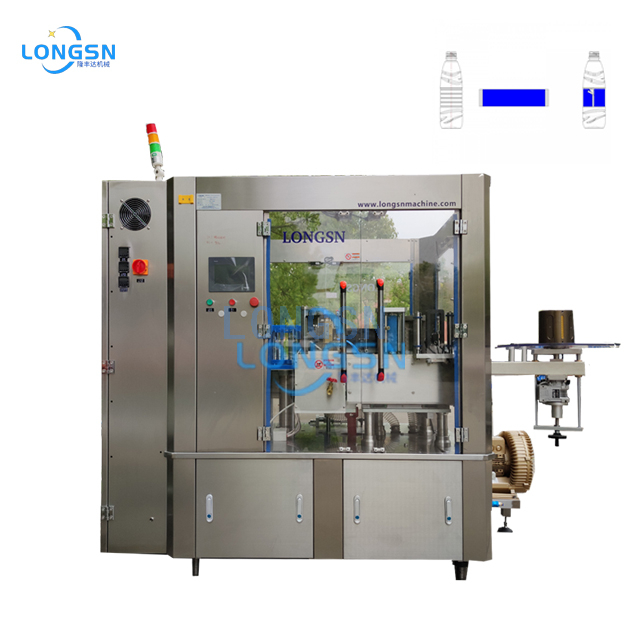
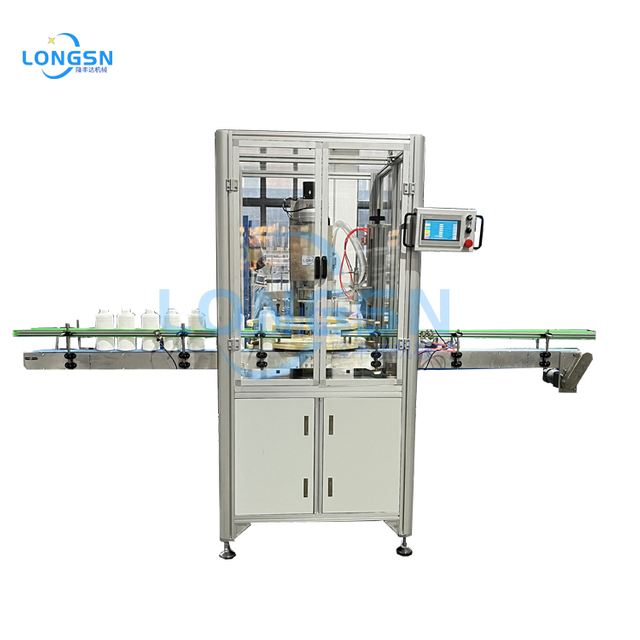
Small businesses eventually face a critical production bottleneck. Manual and semi-automatic labeling processes cannot scale endlessly. Moving to a fully automated system becomes necessary for growth. However, you must manage this transition carefully. Avoid overextending your capital budget. This article outlines how to evaluate packaging equipment effectively. We focus on physical footprint, changeover efficiency, and realistic return on investment. These factors matter deeply for small-to-medium batch sizes.
We maintain a skeptical, evidence-based stance throughout this guide. Faster production is not always better. A high-speed system loses value quickly if it requires constant recalibration. It also fails if it cannot handle diverse container shapes. We will help you navigate these common pitfalls. You will learn exactly what specifications matter most. We also cover hidden setup risks. Ultimately, you will discover how to select equipment ensuring consistent quality.
Key Takeaways
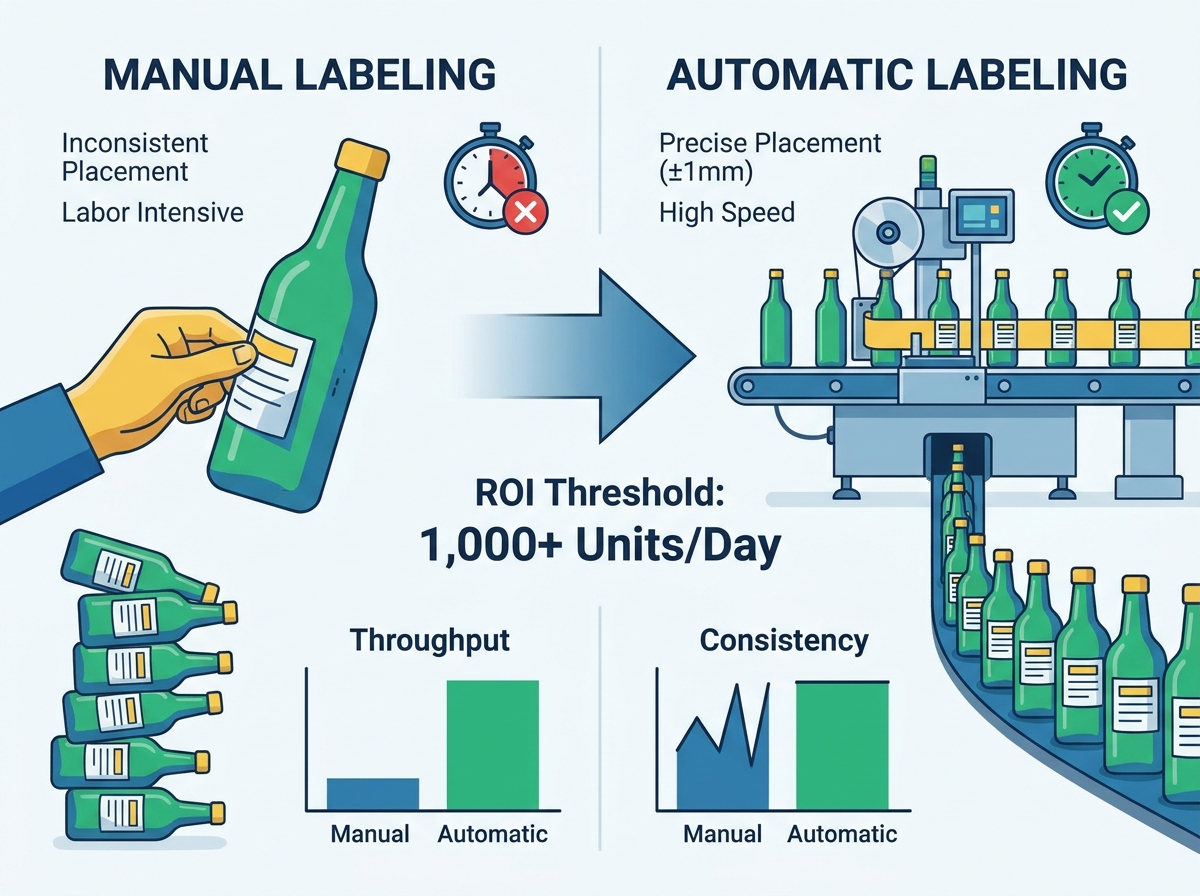
- Upgrading to an automatic bottle labeling machine typically yields positive ROI at production volumes exceeding 1,000 units per day.
- Versatility and changeover times are more critical metrics for small businesses than maximum theoretical labeling speed.
- Hidden implementation costs—such as compressed air requirements, custom jigs, and specialized sensors for clear labels—must be factored into the initial budget.
- The best equipment choices prioritize domestic or highly responsive technical support and accessible replacement parts.
Framing the Business Problem: When to Automate
The Cost of Manual Inconsistency
Manual application creates hidden expenses daily. Skewed labels damage brand perception on retail shelves. Crooked stickers look highly unprofessional. They lead directly to product rework. Workers must peel off bad labels. Then they apply new ones by hand. This wastes expensive materials. It also drains valuable time. Your retail partners notice poor packaging. Consistent presentation drives customer trust.
Labor Reallocation
Automation offers much more than a speed upgrade. It frees up valuable operator hours. Your team can stop tedious sticker application. They can focus heavily on quality control instead. They can manage final packing tasks. This shift improves overall facility productivity. Employee satisfaction often rises. Repetitive strain injuries drop significantly. You maximize your current payroll efficiency.
Success Criteria
Defining a successful upgrade prevents buyer's remorse. A good system ensures consistent placement tolerance. It should keep labels within ±1mm of the target zone. The equipment must integrate smoothly. It should fit into your existing filling and capping workflows. It must operate reliably during every single shift. Unplanned downtime destroys automation ROI.
Key Evaluation Criteria for Small Batch Production
Floor Space vs. Capability
Small businesses often lack extra floor space. You must weigh trade-offs carefully. Compact desktop labelers save precious room. However, they process fewer units per minute. Full inline conveyor systems offer higher throughput. They demand significant floor space. You must measure your facility before purchasing. Consider your future expansion plans too.
Container Versatility
Assess how easily the equipment adapts. Can it handle round, square, oval, or tapered shapes? Glass and PET containers behave differently. They slide differently along conveyors. Versatile systems accommodate multiple shapes quickly. Some systems use wrap-around belts. Others use tamp-and-blow mechanisms. Choose the mechanism matching your core product lines.
Label Sensor Technologies
Standard sensors struggle to detect transparent materials. They cannot see clear plastic stickers. You might need ultrasonic sensors for clear labels. Photoelectric sensors work perfectly for opaque paper. Verify component compliance regarding industry standards. Look for FDA-grade contact materials. Demand CE certification for electrical safety. Proper sensors eliminate missed applications completely.
Top 5 Automatic Bottle Labeling Machines Evaluated
Labeling Machine Comparison Chart
| Model Name | Best Application | Estimated Footprint | Max Speed (BPM) |
| Herma 500 Base | High-Mix, Low-Volume | 4' x 4' | 150 |
| Pack Leader ELF-50 | Compact/Desktop | 3' x 2' | 60 |
| CVC 3000 | Round & Wrap-Around | 6' x 3' | 200 |
| Universal L1500 | Front & Back | 8' x 4' | 120 |
| Accutek APS Series | Entry-Level Inline | 5' x 3' | 100 |
Herma 500 Base System - Best for High-Mix, Low-Volume Runs
- Core Specifications: This system requires roughly 4 by 4 feet of space. Labeling speed hits up to 150 BPM. It supports container diameters ranging from 1 inch to 4 inches.
- Standout Features: It suits small businesses perfectly. You get tool-less adjustments across the board. The intuitive PLC touchscreen reduces operator errors. You can save specific product recipes directly into the digital memory.
- Verified Limitations: We must look transparently at its struggles. It cannot handle wrap-around labels on highly tapered bottles easily. Setup requires precision alignment initially.
Pack Leader USA ELF-50 - Best Compact/Desktop Automatic Option
- Core Specifications: The footprint is exceptionally small. It measures about 3 by 2 feet. Speeds reach 60 BPM comfortably. It accepts standard round bottles seamlessly.
- Standout Features: Space-saving design defines this unit. It offers true plug-and-play setup. You can move it easily between different production rooms. It runs on standard 110V power.
- Verified Limitations: It imposes maximum roll diameter constraints. Throughput remains limited compared to larger inline systems. You cannot upgrade it for front-and-back applications later.
CVC Technologies CVC3000 - Best for Round & Wrap-Around Applications
- Core Specifications: It occupies a 6 by 3 foot area. Speeds can exceed 200 BPM. It handles cylindrical containers flawlessly.
- Standout Features: The roller configuration ensures 360-degree application. It guarantees minimal wrinkling. The system uses self-adjusting sensor technology. This reduces manual calibration time significantly.
- Verified Limitations: It remains strictly incompatible with flat-sided containers. It requires a highly steady conveyor feed. Any bottle spacing issues cause application errors.
Universal Labeling L1500 - Best Front & Back Labeling System
- Core Specifications: This large inline unit needs 8 by 4 feet. Speeds range from 80 to 120 BPM. It accommodates complex square and oval shapes.
- Standout Features: Dual-head application drives its value. Alignment chains ensure precise centering. You can apply two distinct stickers simultaneously. It synchronizes perfectly with upstream liquid fillers.
- Verified Limitations: You face a much higher upfront cost. Changeover times between bottle sizes take longer. Operators need more advanced mechanical training.
Accutek APS Series - Best Value/Entry-Level Inline Machine
- Core Specifications: It takes up about 5 by 3 feet. Speeds hit roughly 100 BPM. It works well with basic round formats.
- Standout Features: It boasts a strong price-to-performance ratio. You can easily integrate an Automatic Bottle labeling machine like this into existing entry-level lines. It uses standard, readily available replacement components.
- Verified Limitations: The chassis feels less robust than premium models. The software interface remains very basic. It may lack advanced error-detection capabilities.
Implementation Risks and Setup Realities
The Changeover Bottleneck
Switching production lines always takes time. Moving from a 2oz tincture to a 16oz beverage causes downtime. Poorly designed systems require complex tool adjustments. Fast changeovers keep production schedules on track. Dedicated guide rails speed up this process. You should measure changeovers in minutes, not hours. High-mix environments suffer greatly if changeovers are slow. Evaluate this metric rigorously before buying.
Environment and Infrastructure
Buyers often miss crucial facility requirements. Your new equipment might need stable pneumatic air supply. It also requires dedicated power circuits. Voltage drops cause unpredictable sensor behavior. Climate control prevents label adhesive failure during summer months. High humidity warps paper backing rolls quickly. Review your warehouse environment thoroughly. Address these infrastructure gaps early.
Operator Training
Automation introduces a steep learning curve. Operators must adjust peeling plates correctly. They need to monitor web tension constantly. Sensor sensitivity requires daily fine-tuning. Comprehensive training prevents daily operational headaches. Create standard operating procedures immediately. Document every single adjustment setting. Post these guides clearly near the machine. Good training transforms average workers into expert technicians.
How to Shortlist and Request a Quote
Sample Testing Mandate
Never purchase equipment blindly. Send physical bottle and label roll samples to the manufacturer. Demand a video-documented test run. This proves the system works for your specific products. Watch how the machine handles your most difficult container. Look closely at the final placement accuracy. Reject any vendor refusing a custom sample test.
Evaluating the Warranty and Support
Vet your vendors thoroughly. Check their response time SLAs. Ask about the availability of localized technicians. Review the clarity of their English manuals. Poorly translated manuals cause massive frustration. Good support prevents disastrous production downtime. Ensure they stock common spare parts domestically. Waiting weeks for an imported belt halts your entire business.
Defining the Request for Quote (RFQ)
Provide exact data points to get accurate pricing. Vagueness leads to incorrect equipment recommendations. Follow these specific steps when contacting manufacturers:
- List your precise bottle dimensions, including taper angles.
- Specify your exact label material types and roll sizes.
- State your target units per minute clearly.
- Include your factory layout constraints and conveyor heights.
Detailed RFQs demonstrate your professionalism. They help vendors quote the right Automatic Bottle labeling machine for your unique floor plan.
Conclusion
We can summarize this decision-making framework easily. Prioritize versatility, reliable support, and accurate placement over raw speed. Do not buy a machine solely for its maximum BPM rating. Speed matters little if labels apply crookedly. Remember automation acts as a long-term infrastructure investment. It should scale smoothly alongside your next three to five years of business growth. Plan your next logical step carefully. Audit your current daily production volume today. This determines your exact throughput requirements. You can then confidently enter the market for automation.
FAQ
Q: What is the difference between semi-automatic and automatic labeling machines?
A: The main difference lies in operator dependency. Automatic machines feed and label continuously via a motorized conveyor system. They run largely unattended. Semi-automatic machines require an operator to manually place each bottle into a jig and press a foot pedal or button for every single label application.
Q: How much should a small business expect to spend on an automatic bottle labeling machine?
A: Small businesses should expect varying price brackets based on capability. Entry-level desktop automatic systems often start around $5,000 to $10,000. Full inline conveyor models handling diverse shapes typically range from $15,000 to $35,000. These standard industry brackets usually exclude shipping, crating, and on-site installation costs.
Q: Can one machine apply both front and back labels simultaneously?
A: Yes, but this requires a specific configuration. You need a multi-head or dual-dispenser machine. These units feature two separate labeling heads on opposite sides of the conveyor. They apply both labels as the bottle passes through. This advanced capability causes a significant jump in upfront equipment cost.
Q: Why do transparent/clear labels require different equipment?
A: Standard photoelectric sensors detect labels by sensing the gap between them. They rely on opacity. Transparent materials trick these standard sensors, causing the machine to dispense continuously. Clear labels require ultrasonic or capacitive sensors. These advanced sensors detect changes in material thickness rather than relying on light blockage.
Q: How long does routine maintenance take on these machines?
A: Routine maintenance usually requires minimal time if performed regularly. Daily tasks take about 10 minutes, involving basic wipe-downs and cleaning adhesive buildup off peeling plates. Weekly tasks take 20 minutes to check belt tension and sensor lenses. Monthly greasing of moving parts keeps the system running smoothly.

 English