Food manufacturers inevitably reach a critical tipping point in production. You watch manual or semi-automated labeling processes trigger severe production bottlenecks. You also see increased rejection rates and frustrating retailer compliance issues pile up on the dispatch floor. Transitioning to a fully automated system solves more than just speed deficiencies. It ensures seamless line integration, rigorous hygiene compliance, and minimal changeover downtime between product runs. This guide provides a realistic, vendor-neutral framework. We will help you evaluate, shortlist, and purchase the right equipment for your specific facility. You will learn how to match machine types to packaging formats. You will also discover how to navigate the complex implementation realities of modern packaging lines.
Key Takeaways
- Speed vs. Accuracy: Throughput metrics (PPM) mean nothing if application tolerance fails retail compliance standards.
- Food-Grade Compliance: True food-industry machines require specific IP-rated washdown capabilities and corrosion-resistant construction.
- Format Flexibility: The right machine must handle current container types (clamshells, jars, pouches) while accommodating future packaging shifts.
- Total Cost of Ownership (TCO): Purchase price represents only a fraction of the cost; vendor support, parts availability, and changeover times dictate long-term ROI.
Why Food Production Facilities Scale to an Automatic Labeling Machine
Business Problem Framing
Labor shortages force food producers to reconsider manual packaging processes. High error rates during manual application often cause expensive retail chargebacks. Retailers reject entire pallets if barcodes scan poorly or misalign. Product perishability also demands faster throughput to maximize shelf life. You cannot rely on human operators to maintain perfectly consistent placement over an eight-hour shift. Upgrading to an automatic labeling machine eliminates these exact bottlenecks. It removes human fatigue from the equation. This capital expenditure directly protects your brand reputation and retailer relationships.
Success Criteria
You must define what a successful equipment implementation looks like before buying. We measure success through Overall Equipment Effectiveness (OEE). High OEE means the equipment runs fast, avoids downtime, and yields zero defects. A successful setup significantly reduces label waste. It also guarantees seamless integration into your existing upstream and downstream conveyors. You should expect the machine to catch its own errors. Modern systems use vision inspection cameras to reject bad products automatically.
The Scalability Factor
Semi-automatic setups rely heavily on operator pacing. An operator must place a bottle, pull a lever, and remove the bottle. This limits production to roughly 15 to 30 containers per minute. Continuous-motion reliability defines fully automatic systems. They handle hundreds of products per minute without operator intervention. They scale effortlessly as your business grows. You simply adjust conveyor speeds and feeder mechanisms to match higher production demands.
Categorizing the Equipment: Matching Machine Types to Food Packaging
Different packaging shapes require specific technical approaches. You must match the equipment geometry to your container type. Using the wrong applicator style causes wrinkles, bubbles, and skewed placements.
Labeling Machine Type Comparison
| Machine Type | Best Suited For | Key Evaluation Note |
| Wrap-Around Labelers | Sauce bottles, canned goods, PET beverages | Compare continuous trunnion versus standard belt methods. |
| Top and Bottom Labelers | Clamshells, bakery boxes, produce trays | Must synchronize perfectly with conveyor speed. |
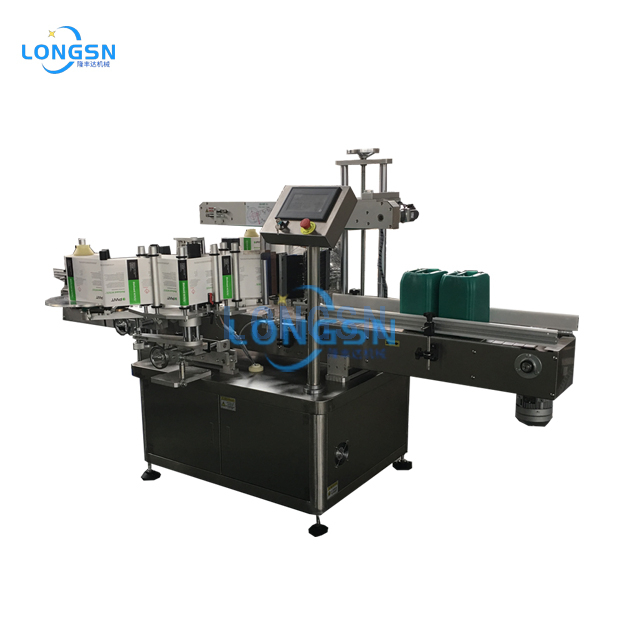
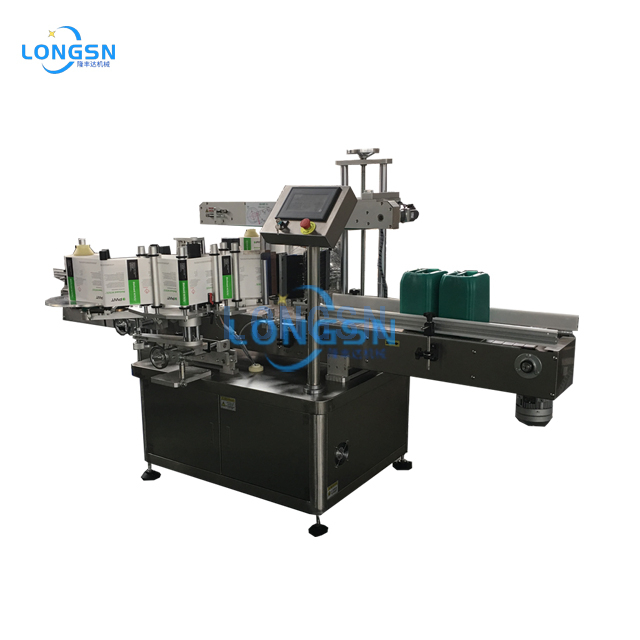
| Front and Back Labelers | Oval or flat bottles (olive oils, dressings) | Requires advanced product alignment modules. |
| Print and Apply (PA) | Case packing, palletizing, dynamic data | Integrates directly with line-level ERP systems. |
Wrap-Around Labelers
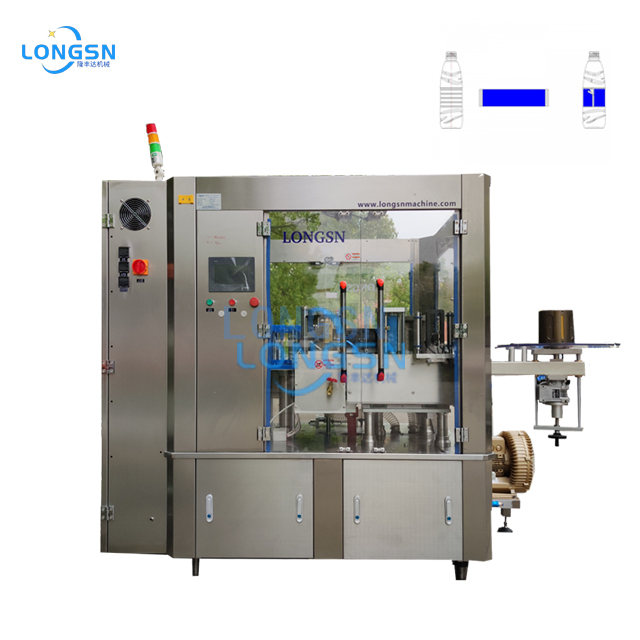
Cylindrical food containers require wrap-around technology. These systems work perfectly for sauce bottles, canned goods, and beverage PET bottles. When evaluating these machines, you must check the spinning mechanism. Continuous trunnion rollers offer better stability than standard side-belt methods. Trunnion systems cradle the bottle securely. This prevents label skew on tapered or slippery glass containers.
Top and Bottom Labelers
Fresh produce trays, bakery boxes, and clamshells need dual application. Top and bottom labelers apply branding above and nutritional data below simultaneously. The applicator speeds must synchronize perfectly with the conveyor speed. Poor synchronization causes product crushing. It also leads to dual-label misalignment. We recommend testing your thinnest clamshells to ensure the applicator pressure does not dent the plastic.
Front and Back Labelers
Oval or flat bottles require specialized handling. Olive oils and salad dressings typically use this format. You cannot spin an oval bottle like a round one. Therefore, the machine requires advanced product alignment modules. Dual side-belts squeeze the product to square it up before application. This ensures perfectly parallel labels on the front and back panels.
Print and Apply (PA) Systems
Secondary packaging relies on Print and Apply systems. These are best for case packing and palletizing operations. They add dynamic nutritional data, batch codes, and shipping barcodes directly on the line. These systems bridge the gap between production and logistics. They ensure shipping compliance for major distributors.
Core Evaluation Dimensions for Food-Grade Labeling Systems
Hygiene and Environmental Compliance
Food environments mandate strict sanitation rules. You cannot place a standard mild-steel machine in a washdown area. True food-grade equipment requires 304 or 316 stainless steel construction. These specific alloys resist corrosion from harsh cleaning chemicals and food acids. You also need appropriate ingress protection. IP65 or IP69K washdown ratings are mandatory for environments handling raw foods, liquids, or sticky substances. An IP69K rating ensures the machine withstands high-pressure, high-temperature water jets during daily sanitation.
Integration with Coding and Marking
Regulatory agencies require clear tracking data on food products. Your chosen machine must seamlessly integrate coding devices. It should provide robust mounting brackets for thermal transfer overprinters (TTO) or continuous inkjet (CIJ) systems. These printers apply mandatory "Best By" dates and lot codes directly onto the label web. The integration must happen before the label peels off the backing paper. This guarantees crisp, legible text.
Label Material and Adhesive Compatibility
Food packaging endures extreme temperature shifts. Labels must survive these conditions without peeling or flagging. You must evaluate adhesive performance in your specific food environment. Cold room condensation destroys standard adhesives. Freezer-grade adhesives require special applicators to prevent gumming. Hot-fill lines require heat-resistant label materials. Always test your exact label stock on the prospective machine under actual factory temperatures.
Changeover Efficiency
Facilities running multiple SKUs live and die by changeover times. Lengthy physical adjustments destroy your daily throughput. You must prioritize equipment designed for fast transitions.
- Tool-Less Adjustments: Operators should adjust rails and sensor positions using hand-turn knobs, not wrenches.
- Digital Scale Readouts: Every adjustment point should feature numeric indicators. This allows operators to document exact positions for specific bottle sizes.
- Programmable Memory Presets: The touch panel must save settings for different products. Selecting "SKU A" should automatically adjust motor speeds and label dispense timing.
Sizing Your Solution: Small Operations vs. High-Volume Enterprise
For Small-to-Midsize Businesses (SMBs)
Small and midsize operations face unique facility constraints. You likely deal with limited floor space and a diverse product mix. Your focus should rest on footprint limitations and flexibility across varying container shapes. Modular designs serve SMBs well. A modular system allows you to add coding printers or inspection cameras later as budgets permit.
Avoid the common mistake of over-specifying speed. Do not buy a 300-bottle-per-minute machine if your filler only outputs 40 bottles per minute. Prioritize reliability and ease of use. Your everyday operators will likely perform setups and troubleshooting. The system must feature intuitive controls that do not require dedicated maintenance engineers.
For High-Volume and Enterprise Facilities
Enterprise facilities demand entirely different specifications. You must focus on high-speed continuous operation, often exceeding 200 products per minute. At these speeds, stopping the line to change a label roll causes massive disruption. Redundancy systems become critical.
You should specify zero-downtime splicers. These mechanisms automatically switch to a fresh label roll while the machine continues running. Furthermore, enterprise machines require deep network connectivity. They must integrate seamlessly with plant-wide SCADA and ERP systems. This integration provides real-time performance analytics and automated batch reporting.
Implementation Realities: Hidden Costs and Integration Risks
Conveyor and Line Handoff Failures
Installing an automated system requires perfect product handoffs. Many facilities buy an excellent labeling unit but fail to manage upstream product flow. Improper product spacing causes immediate jams at the applicator station. Bottles arriving back-to-back will confuse the product sensor. You must address this risk through physical line control.
Infeed timing screws (feed worms) separate bottles precisely. They create exact gaps between containers before they reach the sensor. Star wheels provide similar pacing for high-speed lines. Failing to quote these handling components upfront leads to unexpected integration costs later.
Operator Adoption and Training
Moving from manual mechanical setups to automated digital systems causes friction. The transition to Human-Machine Interface (HMI) touchscreens confuses veteran operators used to manual dials. Complex software menus often cause higher downtime than mechanical faults.
Operators might accidentally delete saved parameters or enter incorrect delay values. You must require vendor-led training sessions. Ensure the interface offers different security levels. Password-protect the deep engineering settings. Give line operators access only to basic run menus and pre-saved SKU recipes.
Factory Acceptance Testing (FAT)
Never authorize final payment before conducting a rigorous Factory Acceptance Test (FAT). Standard vendor videos showing perfect bottles mean nothing. You must demand an FAT using your actual labels, your exact containers, and your specific food environment parameters.
Send your most difficult, worst-case-scenario packaging to the vendor facility. If your bottles vary slightly in diameter due to cheap molding, the FAT will reveal if the machine handles those tolerances. The FAT acts as your final insurance policy against integration failure.
Conclusion
Evaluating an automated packaging line requires looking far beyond the glossy specification sheet. You must focus heavily on line integration realities and hygiene compliance. Success relies on matching the mechanical applicator perfectly to your container geometry. High-speed specs hold no value if your operators cannot master the HMI touchscreens during quick changeovers.
We highly recommend starting the vendor conversation with a detailed User Requirement Specification (URS). Never just ask for a generic price list. A clear URS defines your exact environmental conditions, container variations, and required washdown ratings. This forces vendors to engineer a precise solution rather than selling an off-the-shelf compromise.
Take immediate action on your shortlisting process. Gather your most difficult sample products and an entire roll of production labels. Send these materials directly to your potential vendors. Demand a continuous, video-documented proof-of-concept run before you ever sign a purchase order.
FAQ
Q: How much does an industrial automatic labeling machine typically cost?
A: Entry-level modular systems for small businesses typically range from $10,000 to $25,000. These handle basic wraparound or top applications. High-speed, custom-engineered washdown systems for enterprise food facilities can cost between $40,000 and $100,000+. The price increases with IP69K stainless construction, zero-downtime splicers, and vision inspection modules.
Q: Can one machine handle both cylindrical bottles and flat boxes?
A: Technically yes, through modular attachments, but it creates compromises. A machine designed for dual-purpose use often requires extensive mechanical changeovers between formats. This severely impacts line speed and daily accuracy. Food facilities generally achieve better OEE by deploying dedicated machines for cylindrical lines and flat box lines.
Q: What is the standard lead time for a custom food-grade labeler?
A: Standard modular systems usually require 4 to 8 weeks. Custom food-grade machines with specific IP69K ratings and integrated coding devices average 12 to 16 weeks. This timeline accounts for supply chain realities, specialized stainless steel fabrication, and the mandatory Factory Acceptance Testing (FAT) phases.
Q: How do cold chain and frozen food environments affect machine performance?
A: Cold environments drastically reduce standard adhesive tack limits, causing labels to flag or fall off entirely. Furthermore, extreme cold creates condensation inside pneumatic systems. You must specify freezer-grade adhesives, heated applicator pads, and moisture traps on your air lines to maintain continuous performance in frozen food sectors.

 English