When production volume outpaces packaging capacity, the end-of-line process quickly becomes a severe operational bottleneck. Facilities often start with manual wrapping because the barrier to entry is low. A heat gun and a basic sealer require minimal upfront investment and almost zero facility modifications. However, as order volumes scale, the hidden costs of this manual approach begin to compound. Labor expenses rise, material waste accumulates from inconsistent film cutting, and the aesthetic quality of the final product varies wildly from one operator to the next.
Relying on manual labor for high-volume packaging creates a tension between immediate convenience and long-term profitability. Operators experience fatigue, leading to slower throughput and an increased risk of poor seals or burn-throughs. To solve this, operations managers must evaluate their current workflow to find the exact threshold where upgrading from hand tools to automated equipment becomes a logistical necessity. This guide provides a structured evaluation framework to help you determine when transitioning to a dedicated Shrink Wrapping Machine makes financial and operational sense.
- Volume dictates viability: Manual wrapping is cost-effective for low-volume or highly irregular items, but operational drag becomes mathematically unsustainable past specific units-per-hour (UPH) thresholds.
- Material efficiency drives ROI: A shrink wrapping machine standardizes film usage, significantly reducing the scrap rates and over-wrapping common in manual applications.
- Labor reallocation: Upgrading to machine-assisted wrapping shifts human capital from repetitive, ergonomically taxing tasks to higher-value operational roles.
- Tiered automation: The decision is rarely binary; operations must choose between manual, semi-automatic, and fully automatic systems based on footprint, budget, and throughput goals.
Defining the Baseline: The Realities of Manual Shrink Wrapping
Clarifying the Terminology: Shrink Wrap vs. Stretch Wrap
Facility managers often conflate stretch wrapping and shrink wrapping, but the mechanics and applications differ entirely. Stretch wrap relies on the elastic recovery of thick, tear-resistant linear low-density polyethylene (LLDPE). Operators or machines stretch this cold film tightly around heavy pallet loads to secure them for transit. It requires no heat and focuses entirely on load containment. You see this on loading docks securing boxes to wooden pallets.
Shrink wrap utilizes heat-sensitive thermoplastic films, typically polyolefin (POF) or polyvinyl chloride (PVC). When exposed to a heat source, the molecular structure of the film contracts, shrinking tightly around individual products or small bundles. This creates a secure, tamper-evident, and retail-ready presentation. Understanding this distinction matters when evaluating packaging line upgrades, as the equipment, ventilation, and facility electrical requirements for heat applications are unique.
Mechanics and Equipment Profile
The standard manual shrink wrapping setup is rudimentary. It generally consists of an unspooled roll of centerfold film resting on a metal rack, a manual I-bar or L-bar sealer, and a hand-held industrial heat gun pulling 1500 watts or more. The operator pulls the film over the product, depresses the sealing bar to cut and fuse the plastic, and then manually waves the heat gun over the package to shrink the film.
This entire sequence is highly operator-dependent. The worker must gauge the correct amount of film to pull, apply consistent downward pressure to the sealing wire for the exact right amount of time, and manage the distance and motion of the heat gun. Variations in any of these steps result in inconsistent packaging, blown-out seams, or melted product.
Optimal Use Cases for Manual Wrapping
Manual processes serve specific operational phases well. Manual wrapping remains the superior choice for prototyping new package designs or handling ultra-low volume production runs where equipment setup and changeover time would exceed the actual packaging time. It is also necessary for highly fragile items that require custom, localized heat application to prevent product damage.
Exceptionally long, oversized, or irregularly shaped products that cannot physically fit through the aperture of a standard shrink tunnel must be wrapped manually. Think of custom architectural millwork, large extruded metal parts, or odd-shaped promotional bundles. In these edge cases, the flexibility of a hand-held heat gun outweighs the speed of a conveyor-fed system.
Operational Limitations and Hidden Costs
The primary limitation of manual wrapping is human fatigue. Repetitive motion from pulling film, pressing sealing bars, and wielding heavy heat guns introduces significant ergonomic risks. As operators tire throughout a shift, throughput drops and error rates climb. Carpal tunnel and minor burns are common complaints on manual packaging lines.
Seal integrity and aesthetic presentation suffer under manual conditions. You will often see "dog ears" (excess film protruding at the corners), uneven shrinkage, or cloudy spots where the heat was applied inconsistently. Manual wrapping generates a massive amount of invisible material waste. Operators naturally pull excess film to ensure they have enough room to make a seal without burning their fingers, leading to higher scrap rates and unnecessary material consumption.
The Upgrade Path: Anatomy of a Shrink Wrapping Machine
Core Components and Mechanics
Transitioning away from manual hand tools introduces a mechanized approach to film dispensing, sealing, and shrinking. A standard machine setup begins with a film delivery system that uses rollers to maintain proper tension, preventing the film from bunching or tearing. Many systems include pinwheel perforators that punch microscopic holes in the film, allowing trapped air to escape during the shrink process so the package does not balloon.
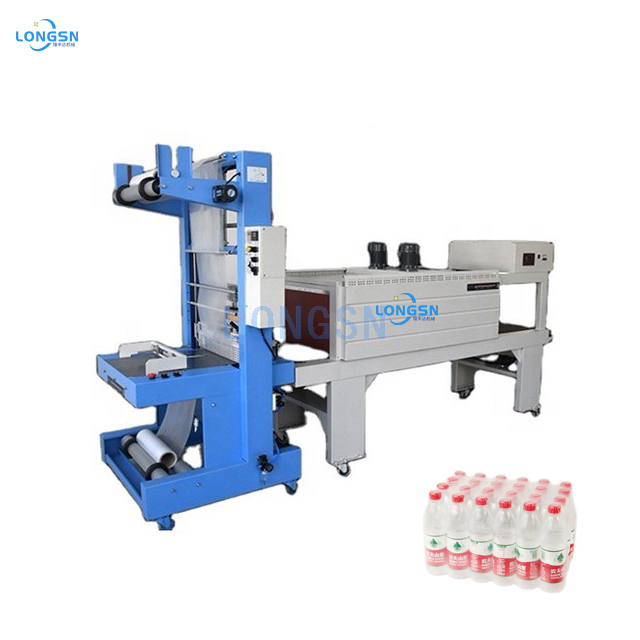
The product moves into the sealing area, which utilizes automated or semi-automated L-bar sealers equipped with temperature-controlled blades or nichrome wires to create a clean, consistent cut and seal. The most significant upgrade is the conveyor-fed shrink tunnel. Instead of a worker waving a heat gun, the sealed package travels on a PTFE-coated fiberglass or steel mesh conveyor through an insulated chamber. Inside, blower motors circulate thermostatically controlled ambient heat, ensuring uniform 360-degree shrinkage. This controlled environment eliminates localized hot spots and guarantees a professional finish.
Semi-Automatic vs. Fully Automatic Systems
Semi-automatic systems bridge the gap between manual labor and full automation. The operator's role is reduced to loading the product into the film web and initiating the sealing sequence, often via a push-button, foot pedal, or magnetic hold-down arm. A conveyor then automatically transports the item into the shrink tunnel. These machines require a moderate footprint and feature simple setup routines, making them ideal for mid-tier scaling where flexibility is still required for multiple product sizes.
Fully automatic systems remove the operator from the immediate packaging cycle entirely. These units integrate directly into upstream manufacturing conveyors. They utilize optical photo-eye sensors to detect product length, automatically space the items, execute the seal using continuous motion side sealers, and feed the tunnel without human intervention. While they offer massive throughput, they require complex setup procedures, precise calibration, and rapid changeover mechanisms to handle different product sizes on continuous, high-speed lines.

Shrink Wrapping Machine vs. Manual Wrapping: Head-to-Head Evaluation
Throughput and Production Speed
The starkest contrast between manual and mechanized wrapping is the sheer volume of output. Manual wrapping typically yields between 2 to 5 Units Per Minute (UPM), heavily dependent on the operator's stamina and the complexity of the product. The hand-held heat gun is the primary bottleneck here, as shrinking the film takes significantly longer than sealing it.
A semi-automatic machine easily pushes throughput to 10 to 20 UPM by overlapping tasks. While one product is shrinking in the tunnel, the operator is already sealing the next. Fully automatic lines operate at 30 to over 100 UPM, limited only by conveyor speeds, the thermal capacity of the shrink tunnel, and how fast upstream equipment can feed the line.
Labor Utilization and Ergonomics
Manual wrapping relies on direct labor costs. You pay an employee specifically for the time spent wrapping each individual item. This creates a linear relationship between production volume and labor hours. It also exposes workers to repetitive strain injuries and potential burns from exposed heating elements.
Introducing a machine shifts the labor dynamic to indirect efficiency. Operators transition from performing the physical wrapping to managing machine output, loading film rolls, clearing scrap winders, or performing quality control inspections. This reallocation reduces workplace injury risks and allows facility managers to deploy human capital to more complex, higher-value tasks within the warehouse, like order picking or forklift operation.
Material Efficiency and Film Waste Reduction
Film waste is a silent drain on packaging budgets. Manual processes inherently waste film because operators lack the precision to measure exact cut-offs. Machines utilize mechanical tensioning and calibrated sealing jaws to minimize the amount of film used per package, drastically reducing the scrap matrix. Automatic machines feature motorized scrap winders that collect the excess film neatly for recycling.
Automated equipment is compatible with advanced, thinner gauge films, such as high-performance cross-linked polyolefin. These high-yield films are notoriously difficult to shrink evenly by hand without tearing or burning. A calibrated shrink tunnel handles them flawlessly, lowering the overall material cost per unit by allowing you to buy thinner, longer rolls of film.
Seal Quality, Consistency, and Retail Presentation
Retail environments demand pristine packaging. Manual wrapping often results in variable finishes, including unsightly dog ears, burn marks, and weak seals that split during transit. A machine-driven process guarantees a uniform, retail-ready finish every single time.
Beyond aesthetics, seal integrity is vital for product protection. A consistent machine seal provides reliable tamper evidence, prevents dust ingress, and maintains the puncture resistance of the film. When products look professional and arrive intact, it directly impacts brand perception and reduces return rates from damaged goods.
| Operational Metric | Manual Wrapping | Semi-Automatic Machine | Fully Automatic Machine |
| Throughput (UPM) | 2 - 5 UPM | 10 - 20 UPM | 30 - 100+ UPM |
| Labor Requirement | High (Continuous physical effort) | Medium (Loading and initiating seal) | Low (Monitoring and film changes) |
| Material Waste | High (Operator dependent) | Low (Mechanically controlled) | Minimal (Sensor optimized) |
| Consistency | Variable | High | Perfectly Uniform |
| Footprint | Minimal (Tabletop) | Moderate (6-10 linear feet) | Large (15-30+ linear feet) |
Financial Framework: Cost vs. ROI Analysis
Initial Capital Expenditure (CapEx)
Procuring packaging equipment requires a clear understanding of the initial capital outlay. Entry-level semi-automatic machines represent a moderate investment, accessible to most growing operations. High-speed fully automatic lines require a substantial CapEx commitment, often justified only by massive daily volumes and continuous multi-shift operations.
Decision-makers must account for ancillary installation costs. Industrial shrink tunnels draw significant amperage, frequently requiring heavy-duty power drops or three-phase electrical upgrades. Fully automated systems may require compressed air lines for pneumatic sealing jaws and facility modifications to accommodate new in-feed and out-feed conveyor layouts.
Operational Expenditure (OpEx) Shifts
Upgrading to machinery fundamentally alters your operational expenditures. While direct labor and material waste costs decrease, new OpEx factors emerge. Electricity consumption will rise noticeably, as shrink tunnels must maintain high temperatures (often between 300°F and 400°F) throughout a shift.
Maintenance costs enter the equation. Facilities must budget for consumable replacement parts, including PTFE tape for sealing bars, replacement nichrome cutting wires, silicone conveyor rollers, and specialized lubricants for conveyor chains. Implementing a strict preventive maintenance schedule protects the equipment investment and prevents mid-shift breakdowns.
Calculating the Break-Even Point
Determining the ROI of a machine requires a straightforward formulaic approach. Calculate your monthly savings by taking your current manual labor costs plus material waste costs, and subtracting the new machine OpEx plus the reduced labor costs.
In typical industrial packaging environments, the payback period for a semi-automatic system ranges from six to fourteen months, depending on throughput and local labor rates. Once the break-even point is surpassed, the reduction in per-unit packaging costs directly increases operational profit margins.
Implementation Realities and Adoption Risks
Facility Footprint and Utility Requirements
Space is a premium in any warehouse. A standard semi-automatic L-bar sealer paired with a shrink tunnel requires a dedicated linear footprint, plus additional space for in-feed staging and out-feed accumulation conveyors. Operators need safe clearance to move around the equipment for film roll changes, clearing jams, and routine maintenance.
Electrical infrastructure is a common hurdle. Standard 110V wall outlets are insufficient for commercial shrink tunnels. Facilities usually need to install dedicated 220V single-phase or 3-phase power circuits. Failing to audit electrical capacity before equipment delivery will cause severe installation delays and unexpected contractor bills.
Operator Training and Safety Protocols
Transitioning staff from simple hand tools to mechanized equipment involves a learning curve. Operators must be trained on digital control panels, learning how to calibrate tunnel temperatures, adjust conveyor speeds, and manage dwell times for different film gauges. The relationship between conveyor speed and tunnel temperature dictates the quality of the shrink.
Safety protocols must be updated immediately. Machines introduce moving parts, pinch points on conveyors, and high-temperature zones inside the tunnel. Proper lockout/tagout procedures and emergency stop training are mandatory to maintain a safe working environment and comply with industrial safety regulations.
Maintenance Schedules and Downtime Mitigation
Relying on a single machine creates a single-point-of-failure bottleneck. If the shrink tunnel goes down, the entire packaging line halts. Mitigating this risk requires proactive maintenance and strict inventory management of consumables.
Facilities should keep critical spare parts on hand at all times. Stocking replacement heating elements, PTFE tape, sealing blades, and conveyor belt links ensures that minor mechanical failures can be repaired in minutes rather than waiting days for a technician or parts shipment. Daily wipe-downs of the sealing blades with a soft brush prevent carbon buildup, which is the leading cause of poor seals.
Decision Matrix: Which Approach is Right for Your Operation?
The Self-Diagnostic Questionnaire: 6 Questions to Ask Before Choosing Your Setup
Before committing to an equipment upgrade, audit your current operations by answering these specific questions:
- What are the physical dimensions, shape, and weight of your product?
- What is your current and projected daily throughput (Units Per Day)?
- What is the primary goal of the packaging (retail aesthetics, dust protection, or tamper evidence)?
- What are your facility's spatial and electrical limitations?
- How many product size variations require changeovers during a shift?
- What is your available CapEx budget versus expected payback period?
When to Stick with Manual Wrapping
Maintain manual wrapping processes if your operation processes under 100 units per day. It is the correct choice if you handle highly variable or ultra-long product dimensions that defy standard tunnel apertures. Strict capital limitations or a complete lack of dedicated floor space also necessitate sticking with hand tools.
When to Invest in a Semi-Automatic Shrink Wrapping Machine
A semi-automatic system is ideal for operations processing between 100 and 2,000 units per day. It is the logical step when you need to improve retail presentation consistency and desire to reallocate one or two headcount from the packaging line to order fulfillment or inventory management.
When to Scale to Fully Automatic Systems
Fully automatic systems are engineered for facilities exceeding 2,000 units per day. They are necessary when integrating packaging directly with upstream automated manufacturing lines. This tier is best suited for standardized product sizes and high-volume contract packaging requirements where maximum throughput is the primary objective.
Conclusion
- Conduct a time-study on your current manual packaging processes to establish a baseline UPM and identify exact labor hours spent on wrapping.
- Request film sample tests from equipment manufacturers to verify compatibility with your product dimensions and desired aesthetic finish.
- Schedule a facility footprint and electrical audit with your maintenance team to confirm you have the necessary voltage and floor space.
- Calculate your projected ROI based on labor reallocation, reduced film waste, and increased daily throughput.
FAQ
Q: What is the production threshold to justify a shrink wrapping machine?
A: Typically, operations processing more than 100-150 units per day begin seeing ROI on entry-level semi-automatic machines due to labor savings.
Q: Does a shrink wrapping machine use different film than manual wrapping?
A: While both can use PVC or Polyolefin, machines are optimized for centerfold roll films and can handle thinner, high-yield gauges that are difficult to shrink evenly by hand.
Q: How much space does an industrial shrink wrap machine require?
A: A standard semi-automatic L-bar sealer and shrink tunnel combo requires approximately 6 to 10 feet of linear floor space, plus room for operators and staging.
Q: Can a shrink wrapping machine handle irregular or fragile items?
A: Yes, but with limitations. Highly irregular items may require custom tunnel settings or specific film types, while extremely fragile items might still require manual heat gun application to prevent damage.
Q: What is the difference between a shrink tunnel and a heat gun?
A: A heat gun applies localized, variable heat dependent on the operator's movement, whereas a shrink tunnel provides 360-degree, thermostatically controlled ambient heat for a uniform shrink.
Q: How long does it take to train an operator on a semi-automatic machine?
A: Basic operation can be taught in a few hours, but mastering temperature calibration, conveyor speed adjustments, and basic troubleshooting typically requires a few days of supervised operation.

 English