Upgrading or installing new bottle production equipment requires massive capital expenditure. Facility leaders cannot afford poor equipment selection. Today, manufacturers face immense pressure from multiple directions. They find themselves squeezed between rising power expenses and relentless demands for higher throughput. Strict sustainability mandates add another layer of complexity to daily operations. Processing recycled PET (rPET) safely requires highly capable technology. We aim to move past manufacturer spec-sheet promises. You will discover a pragmatic, lifecycle-based evaluation framework for modern bottle production equipment. We will explore core architectures, realistic yield metrics, and critical maintenance integrations. By evaluating these dimensions thoroughly, you can maximize operational profitability. Understanding these nuances protects your facility from frequent downtime. It empowers your production team to operate efficiently in a highly competitive manufacturing landscape. You can align your machinery investments with actual production realities on the factory floor.
Key Takeaways
- Process matching is critical: Selecting between Extrusion (EBM), Injection (IBM), and Injection Stretch (ISBM) dictates 80% of your production capabilities and limitations.
- Throughput vs. Yield: Theoretical high-speed outputs (e.g., 45,000 bottles/hour) rarely reflect actual operational yield without precise tooling and automated downstream handling.
- Energy drives TCO: Modern servo-driven electric machines offer up to 40% energy savings over legacy hydraulic systems, significantly accelerating ROI.
- Maintenance dictates profitability: Tooling changeover times and predictive maintenance integrations are the primary differentiators between tier-one and budget machinery.
Assessing the Business Case: When to Upgrade Your Blow Moulding Machine
Aging equipment secretly drains facility profitability every single shift. Legacy systems often rely on outdated hydraulic drives and inefficient pumps. These older units consume excessive power during operation. We often see baseline metrics of 0.8 to 1.2 kW/kg for aging hydraulic systems. Modern electric or hybrid alternatives typically run closer to 0.3 to 0.5 kW/kg. This massive energy inefficiency rapidly erodes operational margins. Upgrading to a modern Blow Moulding Machine becomes essential when utility bills outpace your production gains. You must monitor these baseline metrics carefully to justify capital upgrades.
Throughput ceilings also force modernization across aging facilities. Older machinery struggles to scale production safely. They cannot adapt to modern lightweighting trends easily. Thinner container walls require faster, highly precise cooling profiles. Legacy controllers simply lack the rapid response times needed for such precision. This limits your overall output. It frustrates operators trying to optimize cycle times. Upgrading removes these artificial speed ceilings. It allows your plant to meet surging seasonal demand without risking product quality.
Material compliance pushes another significant boundary for manufacturers. Consumer demand heavily favors recycled plastics today. Processing rPET demands exact thermal stability. Legacy machines struggle to maintain uniform melt temperatures across the barrel. They cannot handle complex multi-layer barrier requirements. High-percentage recycled plastics will degrade rapidly without precise heat control. Imperfections and structural weaknesses emerge quickly. Upgrading solves these thermal limitations directly. Modern heating zones adapt to slight material variations instantly.
Comparing Core Machine Architectures for Bottle Production
Extrusion Blow Moulding (EBM)
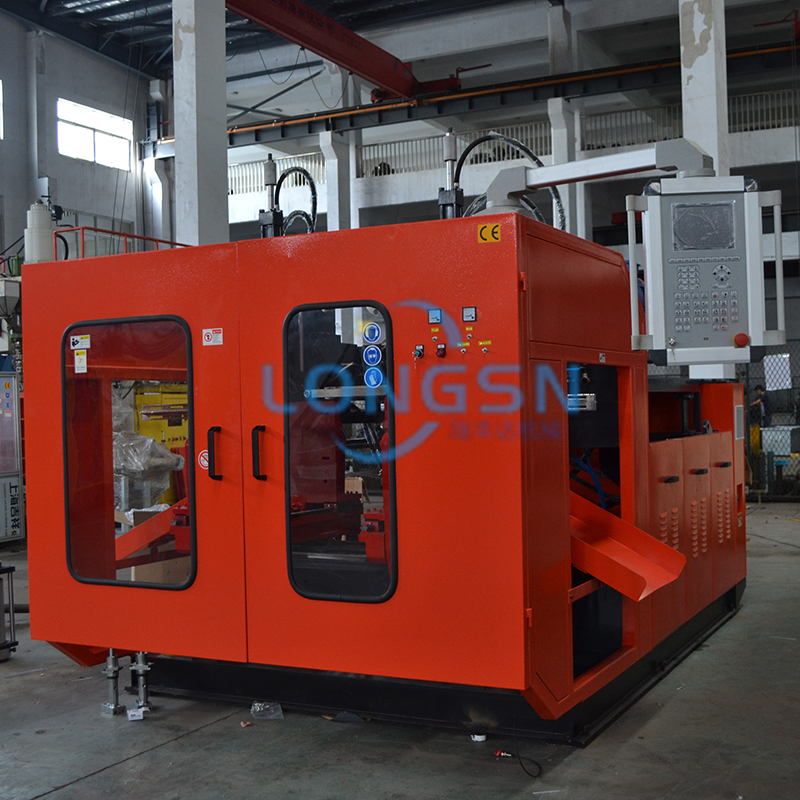
Extrusion platforms excel at versatility and rapid deployment. They represent the best choice for HDPE, PP, and PVC resins. You should use EBM for complex shapes. It easily produces bottles featuring integrated handles or highly asymmetrical profiles. When evaluating an EBM Blow Moulding Machine, focus closely on flash handling. Efficient deflashing mechanisms prevent downstream bottlenecks. Also, examine multi-layer co-extrusion capabilities. This ensures optimal shelf-life for chemical or agricultural containers. Finally, evaluate mold cost efficiency. EBM tooling generally requires less upfront investment compared to other methods.
Injection Blow Moulding (IBM)
Pharmaceutical and cosmetic industries demand absolute perfection. IBM delivers exact neck finish precision consistently. It produces containers featuring zero flash out of the mold. This eliminates secondary trimming operations entirely. When assessing IBM systems, evaluate tooling complexity carefully. IBM requires two separate sets of molds (injection and blow). This increases initial setup efforts and capital costs. Scrap reduction remains a massive advantage here. However, IBM struggles with larger containers. Carefully consider the inherent limitations in bottle size and weight ratios before committing.
Injection Stretch Blow Moulding (ISBM) / PET Stretch Blow
Beverage brands rely heavily on ISBM technology. This process shines for high-volume PET container manufacturing. It delivers high clarity and superior structural rigidity. You must choose between single-stage and two-stage machine configurations. Single-stage units handle preform injection and blowing within one compact frame. Two-stage systems separate these steps for massive volume scaling. During evaluation, inspect preform heating efficiency closely. Modern infrared ovens reduce power draw significantly. Furthermore, robust air recovery systems capture exhaust air. They route it back into the plant network for improved efficiency.
Comparison of Core Bottle Production Architectures | Process | Best For Materials | Ideal Applications | Primary Evaluation Focus |
| EBM | HDPE, PP, PVC | Handled bottles, asymmetrical shapes | Flash handling, co-extrusion, mold costs |
| IBM | PET, PP, HDPE | Pharma, cosmetics, precise necks | Tooling complexity, scrap reduction |
| ISBM | PET, rPET | High-volume beverages, clear bottles | Heating efficiency, air recovery, staging |
Key Evaluation Dimensions for Modern Blow Moulding Machinery
Theoretical specifications rarely match real-world factory floors. Manufacturers often advertise stunning maximum cycle speeds. However, sustainable operational speeds depend heavily on physics and resin properties. You must build a framework for evaluating cycle times accurately. Contrast those theoretical maximums with your specific bottle weight. Wall thickness strictly dictates mandatory cooling times. Pushing a Blow Moulding Machine beyond its thermal limits generates warped products. Focus on achievable yield rather than empty speed claims. Realistic yield directly dictates your daily shipping capacity.
Energy consumption severely impacts your operational bottom line. You must evaluate machines based on their high-pressure air management. Top-tier systems utilize advanced air recovery blocks. They recycle high-pressure blowing air into low-pressure service lines. Additionally, prioritize servo-electric drives over traditional hydraulics. Servo motors only draw power when actively moving. This minimizes the energy footprint tremendously.
- Common Mistake: Ignoring auxiliary power draw. Always factor in the energy consumed by chillers and compressors when calculating efficiency.
Precision directly influences your quality control outcomes. Integrated wall-thickness controllers (WTC) are non-negotiable for modern production. WTC systems dynamically adjust the parison profile during extrusion. This prevents thin spots and reduces raw material waste. Pair this technology with automated visual inspection systems. Cameras instantly detect neck defects or contamination. This integration drastically reduces scrap rates before packaging. It protects your brand reputation.
Finally, map out your factory footprint and plant integration. Advanced machinery requires substantial spatial planning. Consider the necessary auxiliary equipment carefully. Chillers, high-pressure compressors, and automated conveyors demand significant floor space. Ensure your layout allows safe maintenance access around the entire perimeter. Crowded layouts lead to prolonged maintenance events. They also increase the risk of workplace injuries.
Implementation Realities: Maintenance, Downtime, and Operator Risks
Machine downtime destroys production schedules instantly. Tooling changeover efficiency separates exceptional factories from average ones. Compare systems featuring quick-mold-change (QMC) technology against traditional setups. QMC drastically cuts the cost of changeover downtime. In high-mix production environments, saving two hours per switch yields massive annual gains. Evaluate clamping systems and manifold connections. Standard machines trap operators in lengthy, labor-intensive teardowns. Magnetic clamps and quick-connect water manifolds streamline this process entirely.
You must proactively address common mechanical failures. Standard troubleshooting realities plague every facility globally. Heater band failures disrupt thermal profiles instantly. Parison programming drift causes inconsistent wall thicknesses. Pneumatic valve wear leads to delayed blowing sequences. Modern Programmable Logic Controllers (PLCs) mitigate these issues effectively. Predictive maintenance algorithms monitor motor torque and valve response times. They alert technicians before catastrophic breakdowns occur.
- Best Practice: Keep critical spare parts like heater bands and specialized pneumatic valves in local stock. Never wait for overseas shipping during a shutdown.
Advanced machinery introduces severe operator skill dependency. The learning curve associated with modern HMI (Human-Machine Interface) panels requires attention. Intuitive touchscreens help tremendously. However, operators still need deep process knowledge. They must understand how digital inputs affect physical polymer behavior. Robust vendor training programs are absolutely vital. A sophisticated Blow Moulding Machine becomes useless if your team cannot program it correctly. Demand comprehensive, on-site education during the commissioning phase.
Vendor Shortlisting and Lifecycle Assessment Framework
Selecting the right partner requires strict defining criteria. Map out your upfront capital expenditure against projected operational savings. Calculate expected energy usage over a 7-to-10-year lifecycle accurately. Model the financial impact of scrap reduction clearly. Include projected maintenance intervals in your analysis. This comprehensive mapping prevents shortsighted purchases. You avoid buying equipment based solely on initial sticker prices. Lifecycle value always trumps cheap upfront costs.
The Factory Acceptance Testing (FAT) phase demands extreme rigor. Detail exactly what buyers must demand during the FAT phase. Never accept a simple dry run. Insist on running specific complex molds.
- Verify actual cycle times using your exact production resin.
- Test emergency stop and safety interlock recovery times.
- Monitor temperature stability over a continuous 8-hour shift.
- Inspect the final bottles for wall thickness consistency and flash removal.
Testing with generic polymers hides thermal and flow issues. Watch the machine perform under sustained operation to uncover hidden flaws.
Service Level Agreements (SLAs) safeguard your investment long-term. Emphasize the critical nature of local spare parts availability. Equipment halts immediately if proprietary components fail. Remote diagnostic support is equally important. Vendors must securely access the PLC to troubleshoot software glitches instantly. Strong SLAs guarantee swift interventions. They keep your production lines moving during critical peak seasons.
Conclusion
The optimal blow moulding machine is not the one with the highest theoretical speed. It is the one aligning perfectly with your specific material requirements, operator capabilities, and energy infrastructure. Evaluating beyond the spec sheet ensures long-term profitability. Upgrading legacy systems addresses critical efficiency drains directly.
- Avoid chasing theoretical maximum speeds; prioritize realistic yield and process stability.
- Match the exact machine architecture (EBM, IBM, ISBM) to your specific resin and container shape requirements.
- Invest in servo-electric drives and air recovery systems to secure long-term utility savings.
- Prioritize quick-mold-change (QMC) systems and intelligent PLCs to minimize changeover and maintenance downtime.
Initiate a formal performance audit on your current production lines immediately. Document your existing cycle times, scrap percentages, and energy bottlenecks. Use this hard data to build your technical specifications before requesting vendor RFQs.
FAQ
Q: What is the real-world difference in energy usage between hydraulic and all-electric blow moulding machines?
A: All-electric systems typically deliver a 30% to 50% reduction in power consumption compared to hydraulic models. Servo motors only draw energy when active. Furthermore, electric machines eliminate the need to continuously cool hydraulic oil. This further shrinks your utility footprint and lowers auxiliary chiller demands.
Q: How long should a tooling changeover take on a modern blow moulding machine?
A: Industry benchmarks show significant variation based on technology. Traditional machines often require 4 to 8 hours for a complete mold and tooling switch. Systems equipped with Quick-Mold-Change (QMC) interfaces and automated clamping can reduce this downtime to just 45 to 90 minutes.
Q: Can standard PET blow moulding machines handle 100% rPET?
A: Standard machines often struggle with 100% rPET. High recycled content demands specialized heating profiles and strict moisture control. Preform ovens need advanced infrared zoning to handle the darker, variable thermal absorption rates of rPET without crystallizing or burning the material.
Q: Which blow moulding process is best for multi-layer barrier bottles?
A: Co-extrusion Blow Moulding (EBM) is the premier choice. It easily combines distinct resin layers during the extrusion phase. This process perfectly traps barriers like EVOH between protective layers. It ensures maximum shelf-life and chemical resistance for food, agrochemicals, and sensitive pharmaceuticals.

 English