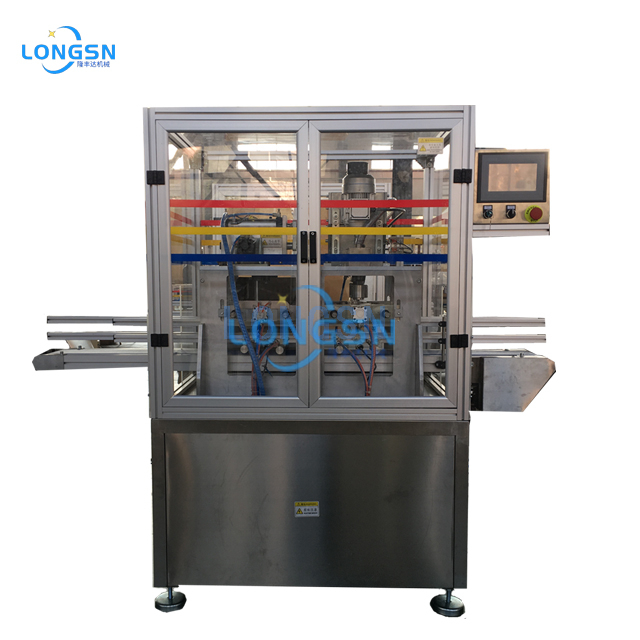
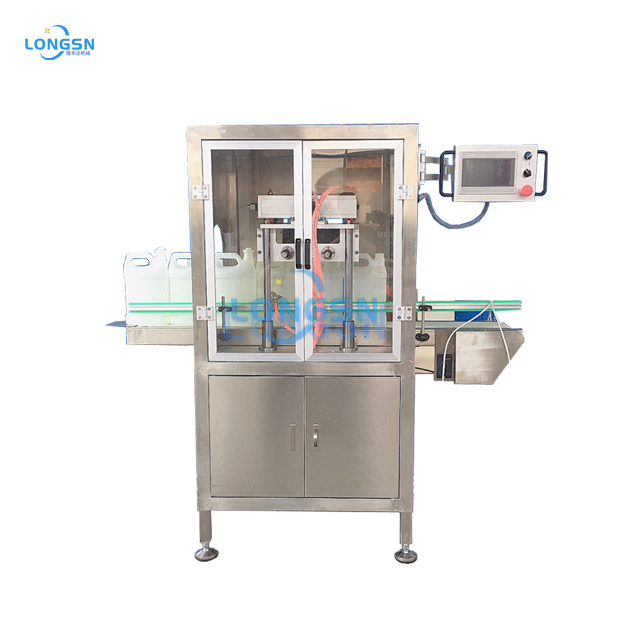
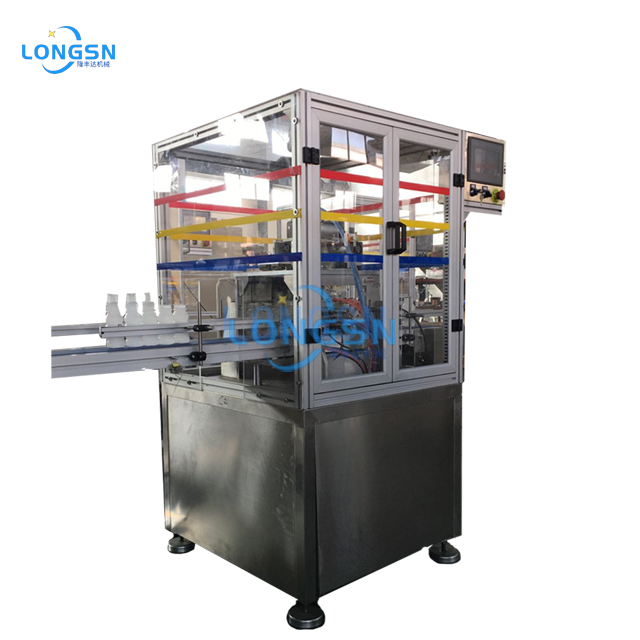
Processing PET and plastic bottles creates a severe operational bottleneck when facilities rely on outdated methods. Cutting techniques directly impact downstream quality across industrial laboratory testing, recycling lines, and high-volume upcycling operations. Manual cutting introduces heavy friction points on the shop floor. Operators face plastic deformation, inconsistent section weights during Quality Assurance (QA), high labor demands, and severe safety risks. Many facilities also confuse glass bottle cutting setups for plastic applications. Glass uses scoring and thermal shock. Plastic requires dedicated shearing and heating. We must compare manual handheld tools against a purpose-built plastic bottle cutting machine. Repurposed tile saws and craft kits fail to deliver scalability. Upgrading to specialized equipment ensures precision, protects workers, and standardizes your entire production output.
- Precision dictates the tool: Handheld cutters are sufficient for low-volume, low-stakes processing, but QA compliance (like PET section weight analysis) requires the zero-deformation precision of a machine.
- Throughput vs. Labor Costs: A dedicated plastic bottle cutting machine reduces per-unit processing time, offsetting its higher initial capital expenditure through labor savings in high-volume environments.
- Safety and Ergonomics: Manual cutting introduces significant repetitive strain and laceration risks, which are largely engineered out by enclosed machine alternatives.
- Repurposed tools fall short: While wet tile saws (such as Vitrex or Harbor Freight units) are commonly hacked for bottle cutting, they introduce water mess, require hazardous manual feeding, and lack the clamping mechanisms necessary for exact, repeatable plastic cuts.
Framing the Problem: Defining Success Criteria for Bottle Cutting
Quality Assurance and Section Weight Analysis
Industrial PET bottle manufacturing requires perfectly horizontal, non-deformed cuts. Technicians must accurately measure top, cylinder, and bottom weights to ensure material distribution meets exact specifications. When you use manual shears or utility knives, the blade applies uneven physical stress to the polymer structure. This stress skews QA data by stretching or warping the plastic edge before the cut even finishes. A deformed edge ruins the dimensional integrity of the sample, making caliper measurements useless. Accurate section weight analysis demands zero material distortion. Handheld tools simply cannot guarantee this level of precision across hundreds of samples. You need a clean, sheer drop-off at the cut line. If the plastic bends inward or flares outward, the section weight data becomes compromised. Bad data leads to bad molding adjustments, which ultimately causes massive production defects down the line.
Volume Thresholds and Throughput Demands
Manual processing becomes a measurable operational bottleneck very quickly on a busy shop floor. Processing hundreds of units per shift overwhelms manual operators. Fatigue sets in within the first two hours, causing cut quality to drop rapidly. You must define the exact volume threshold where manual labor fails your production schedule. For most facilities, exceeding fifty precise cuts per day signals the immediate need for automation. High throughput demands consistent cycle times. Manual tools introduce unpredictable delays into the workflow. One operator might take thirty seconds per bottle, while another takes two minutes trying to get a perfectly straight line. This variance destroys shift predictability. When the QA lab backs up because technicians cannot cut samples fast enough, the entire blow-molding line sits waiting for approval.
Operator Safety and Compliance
Workplace safety regulations heavily scrutinize exposed blades and repetitive manual tasks. Repetitive motion injuries plague manual cutting operations. Handling sharp plastic edges leads to frequent lacerations, requiring first aid and causing downtime. OSHA compliance requires minimizing these direct hazards wherever feasible. Handheld cutters force operators to apply awkward physical force, often pulling blades toward their own bodies. Slip-and-cut accidents happen frequently when cutting tough PET bases. Enclosed automated systems engineer these risks out entirely. Protecting your workforce ensures uninterrupted operations and maintains strict safety compliance. You eliminate the need for cut-resistant gloves that hinder dexterity. You also remove the liability of having open utility blades scattered across the QA workbench.
Handheld and Manual Cutters: Capabilities and Limitations
Typical Use Cases and Viability
Manual tools still make sense in specific, isolated scenarios. Prototyping new bottle shapes often requires quick, rough cuts just to check general wall thickness. Low-volume craft upcycling projects rely on simple hand tools because speed does not matter. Highly irregular custom cuts sometimes demand manual dexterity that a fixed machine cannot provide. Hobbyists benefit from the low barrier to entry of a simple utility knife or heavy-duty shears. However, these use cases remain strictly low-stakes. They do not require the rigorous standardization of an industrial environment. If a cut goes wrong in a craft project, you grab another bottle. If a cut goes wrong in a QA lab, you might approve a faulty batch of ten thousand preforms.
The Multi-Step Manual Process
Manual cutting forces a tedious multi-step reality that drains productivity. Operators must execute a series of slow, deliberate actions to get a usable sample:
- Measure and mark the exact cut line using a height gauge and a permanent marker.
- Puncture the initial hole in the PET wall without crushing the cylinder.
- Execute the physical cut using shears, fighting the curvature of the bottle the entire time.
- Deburr and sand the rough plastic edge to make it safe for handling and accurate for weighing.
This process wastes valuable time. A dedicated machine executes the cut in a single step. Single-step execution eliminates secondary finishing tasks entirely. When you multiply that saved time across five hundred bottles a week, the manual multi-step process reveals itself as a massive drain on facility resources.
The Repurposed Tool Approach
Many facilities attempt a common industry workaround to avoid buying specialized equipment. They use compact wet tile saws or rotary tools for plastic bottles. These 14x14 table models seem convenient initially. However, they introduce critical drawbacks that ruin samples. High-friction diamond blades melt the plastic edges, creating a thick burr that throws off section weights. The water reservoir creates a massive mess on the workbench, mixing plastic dust with dirty water. Most importantly, these saws lack standardized bottle-holding jigs. Operators must feed the bottles manually into a spinning blade, increasing the risk of severe injury. The bottle often catches on the blade, shattering the plastic and sending shrapnel across the room.
The Glass vs. Plastic Tooling Mismatch
Hobbyist kits designed for glass fail miserably on plastic. Brands like Ephrem's or Creator's bottle cutters use scoring wheels. They rely on scoring a shallow line and applying thermal shock to break the glass along the stress fracture. Plastic features fundamentally different cutting physics. Resilient polymers require slicing, shearing, or localized melting. You cannot score and snap a PET bottle. The material simply bends. Using glass tools on plastic ruins the material completely and frustrates operators. You must match the tooling to the material properties.
Hidden Costs of Manual Processing
Human error introduces massive hidden costs that rarely show up on a standard spreadsheet. Operators waste materials through inconsistent cut lines. Slow, careful manual processing drains labor hours that could be spent on actual data analysis. Every ruined sample requires a complete restart, meaning someone has to walk back to the line, pull another bottle, and start over. These inefficiencies compound over a standard shift. Efficiency drops while material waste climbs steadily. You also pay for the constant replacement of utility blades, heavy-duty shears, and the first aid supplies used when operators inevitably slip.

The Plastic Bottle Cutting Machine: Engineering and Performance
Core Mechanics of Purpose-Built Machines
A professional plastic bottle cutting machine features specialized anatomy designed specifically for polymers. Adjustable clamping mechanisms hold the bottle perfectly rigid, accommodating various diameters from small pharmaceutical bottles to large beverage containers. Heated wires or specialized rotary blades slice through the polymer with exact precision. Hot wire models excel at cutting thin-walled water bottles, while rotary blades handle thick-walled carbonated soft drink (CSD) bottles effortlessly. Automated rotation ensures a perfectly level cut around the circumference. Industrial designs focus entirely on standardized section-weight inspection. These machines remove human physical force from the equation completely. The operator simply loads the bottle and lets the machine dictate the feed rate and cutting pressure.
Achieving Zero-Deformation Cuts
Machines secure the bottle's neck and base simultaneously. This prevents squeezing or structural compromise during the cut. When you cut a bottle by hand, your grip naturally deforms the cylinder. The machine's blade applies localized pressure without distorting the surrounding plastic. Exact dimensional integrity remains intact for QA testing. Zero-deformation cuts guarantee accurate weight distribution analysis. You eliminate the warping caused by manual shears or dull utility knives. The cut edge looks polished and feels smooth, requiring zero post-cut deburring. This level of physical integrity allows QA technicians to trust their measurements implicitly.
Scalability and Workflow Integration
Automated feeding mechanisms integrate smoothly into larger recycling lines or high-volume testing labs. Semi-automated models fit perfectly into QA laboratory workflows without taking up excessive bench space. Operators load the bottle, press a button, and retrieve the separated sections in seconds. This scalability allows facilities to handle thousands of units daily without adding headcount. Workflow integration reduces bottlenecks between the molding line and the testing lab. Production moves faster when testing keeps pace. You can network some advanced machines to log cut counts and cycle times, giving plant managers direct visibility into lab throughput.
Head-to-Head Evaluation: Machine vs. Manual
Accuracy and Repeatability
Cut accuracy varies wildly between methods. Handheld tools rely entirely on operator steadiness. Fatigue degrades this steadiness over time, meaning a cut made at 8 AM looks vastly different from a cut made at 4 PM. Machines rely on fixed, calibrated guides. Every cut matches the previous one exactly, down to the millimeter. Repeatability ensures your QA data remains valid across different production batches.
| Performance Metric | Handheld Cutters | Plastic Bottle Cutting Machine |
| Cut Precision | Low to Moderate (Operator Dependent) | Extremely High (Mechanically Fixed) |
| Deformation Risk | High (Squeezing/Warping during grip) | Zero (Clamped Securely at Neck/Base) |
| Operator Safety | High Risk of Laceration and RSI | Enclosed, Low Risk |
| Throughput Speed | Slow, Multi-step process | Fast, Single-step execution |
| Edge Quality | Rough, requires deburring | Smooth, ready for weighing |
Operational Speed and Efficiency
The time-per-cut ratio heavily favors automated equipment. Manual cutting requires slow, deliberate movements to avoid injury and maintain a somewhat straight line. Machines execute perfect cuts in seconds. This speed allows operators to multitask efficiently. They can process batches continuously without stopping for hand cramps or blade changes. Efficiency skyrockets when you remove manual labor constraints. A technician can load a bottle, start the cut cycle, and record data from the previous bottle simultaneously.
Workflow Integration and Output Consistency
Integrating a dedicated machine standardizes your entire output. Manual cutting creates a bottleneck where the speed of your QA lab depends entirely on the physical endurance of your staff. A machine normalizes this process. You get the exact same output speed regardless of who operates the equipment. This consistency allows plant managers to schedule QA checks with mathematical precision. You no longer have to guess how long a batch test will take. The machine dictates the pace, and the pace remains constant shift after shift.
Implementation Realities and Adoption Risks
Space, Power, and Setup Requirements
Industrial cutting machines require a dedicated physical footprint. They need stable benchtops and reliable electrical connections, often requiring standard 110V or 220V outlets depending on the model. Handheld tools easily store in a drawer. Compact 14x14 benchtop tile saws take up minimal space but create a wet mess. You must allocate proper workflow space for a dedicated machine, ensuring clearance for loading and unloading. Ensure your facility meets the specific voltage requirements of the equipment before installation. Proper grounding is also necessary, especially for hot-wire models that draw significant current.
Maintenance and Consumables
Machines require a strict maintenance schedule to maintain their precision. You must sharpen or replace rotary blades regularly based on cut volume. Hot-wire models need heating element replacements when the wire degrades from thermal cycling. Motor servicing keeps the automated rotation smooth and prevents jerky movements that could ruin a cut. Calibration ensures cuts meet strict QA standards. Handheld tools only require occasional blade swaps. However, machine maintenance guarantees long-term precision. You should keep a log of all blade changes and wire replacements to predict consumable usage accurately.
Operator Training and Change Management
Introducing new equipment involves a learning curve for the shop floor. Machines are objectively safer, but operators must understand how to use them correctly. Training must cover calibration procedures, safety lockouts, and proper loading techniques. Workers need to know how to troubleshoot minor jams without damaging the equipment. Change management ensures the team abandons old, dangerous manual habits. Some veteran technicians might resist giving up their trusted hand shears. Proper training demonstrates the speed and accuracy of the new equipment, maximizing the lifespan of your investment and securing team buy-in.
Conclusion
- Evaluate your current daily processing volume to determine if manual labor is causing bottlenecks in the QA lab.
- Audit your rejection rates specifically related to deformed or unevenly cut bottle samples.
- Review technical specifications of automated machines to ensure they match your specific bottle dimensions and polymer types.
- Calculate the labor hours currently wasted on multi-step manual cutting and deburring tasks.
- Request a technical demonstration from a manufacturer to see zero-deformation cutting in action on your own bottle samples.
FAQ
Q: What is a PET bottle cutter used for in manufacturing?
A: Manufacturers use it primarily for section weight analysis. It cuts the bottle into top, cylinder, and bottom sections. This ensures uniform material distribution without deforming the plastic during the cut. Accurate sectioning allows QA teams to verify that the blow-molding process distributes the polymer evenly across the entire bottle structure.
Q: Can I use a wet tile saw to cut plastic bottles?
A: It is a common workaround, but highly discouraged. Tile saws cause melted edges due to high blade friction. They require hazardous manual feeding, create a significant water mess on the workbench, and lack the necessary precision clamping to ensure a perfectly straight, repeatable cut.
Q: How does a plastic bottle cutting machine prevent deformation?
A: It uses specialized neck-and-base clamping mechanisms. These clamps hold the bottle completely rigid. The blade or heated element then applies localized, precise pressure without squeezing the bottle. This mechanical isolation ensures the structural integrity of the sample remains perfectly intact for accurate weighing.
Q: Can I use glass bottle cutting kits on plastic bottles?
A: No. Glass cutters rely on scoring a line to create a stress fracture, followed by thermal shock. This physics does not work on flexible polymers like PET. Plastic requires shearing blades or thermal cutting to separate the material cleanly without tearing or bending.
Q: Are manual plastic bottle cutters safe for high-volume use?
A: They are not safe for high volume. Manual cutters introduce severe ergonomic risks. Operators face repetitive strain injuries and high laceration hazards during continuous shifts. The physical force required to cut thick PET bases manually leads to rapid fatigue and frequent slip-and-cut accidents.

 English