Investing in packaging goes far beyond picking a simple container. You make a critical capital expenditure (CAPEX) decision here. This choice directly dictates your production efficiency, product integrity, and industry compliance. Mismatched containers and equipment introduce severe operational risks to your facility. You might face frustrating bottlenecks on the line. You could experience massive product waste. Excessively high changeover times also kill daily throughput. These issues erode profit margins rapidly over time. Therefore, a reliable packaging solution requires careful alignment. You must harmonize your container material, specific product characteristics, and equipment capabilities. This strategic alignment ensures maximum long-term return on investment. We will guide you through this complex process. You will learn how to define your container specifications accurately. We will explore how to evaluate machine throughput based on reality. You will also discover how to vet equipment manufacturers effectively before making a purchase.
Key Takeaways
- Container selection (PET, HDPE, PP) must be dictated by liquid characteristics (viscosity, acidity, shelf-life requirements).
- Choosing the right packaging equipment relies on accurately projecting necessary Bottles Per Minute (BPM) and required changeover frequency.
- Total Cost of Ownership (TCO)—including maintenance, downtime, and labor—is a more accurate metric than upfront equipment costs.
- A verifiable Factory Acceptance Test (FAT) is non-negotiable when evaluating an equipment vendor.
Defining Your Container Specifications First
You must evaluate the physical container before looking at machinery. Plastic choice relies entirely on product characteristics. We match industrial chemicals to High-Density Polyethylene (HDPE). It offers superior chemical resistance for harsh liquids. Conversely, beverage manufacturers prefer Polyethylene Terephthalate (PET). PET provides glass-like clarity for consumer appeal. You might need Polypropylene (PP) for hot-fill applications. We recommend barrier resins if your liquid reacts to UV light or oxygen. Overlooking material compatibility often leads to product degradation.
Here are several best practices for material selection:
- Analyze liquid acidity and alkalinity before selecting plastics.
- Test bottle samples under actual warehouse temperature conditions.
- Request material specification sheets from your container supplier to verify FDA compliance.
Next, examine structural considerations carefully. Bottle design impacts downstream handling significantly. Neck size dictates your filling nozzles. The container shape determines how easily bottles travel down conveyors. Irregular shapes often require custom pucks or guide rails. Thin wall thickness causes a major problem. It can lead to bottle collapse during aggressive filling. You must calculate top-load strength accurately. Industry standards recommend robust top-load testing. This ensures bottles withstand capping pressure without buckling.
Finally, evaluate the sustainability variable. Many brands now use lightweight plastics. Others adopt recycled PET (rPET) to meet eco-friendly goals. These sustainable choices change container rigidity noticeably. Downstream equipment must be calibrated for these physical changes. Otherwise, you risk crushing or jamming bottles on the production line. Precision handling becomes mandatory when using rPET. Sensors must detect clear, lightweight bottles reliably to prevent misfeeds.

Selecting the Right Plastic Bottle Packaging Machine for Your Line
Finding the ideal plastic bottle packaging machine requires a deep understanding of liquid flow behavior. Viscosity drives your primary filling technology choice. We must match the machinery directly to fluid dynamics to prevent splashing and foaming.
Let us break down filling technology by viscosity:
- Overflow fillers: Best suited for thin, free-flowing liquids. They provide highly consistent fill-levels. This consistency improves retail shelf appeal significantly.
- Piston fillers: Necessary for thick, high-viscosity products. They easily handle particulate-heavy liquids. You need these for salsa, lotions, or industrial scrubs.
- Net weight fillers: Ideal for high-value products. They deliver precise dosing. Strict compliance regulations often require this exact weight measurement.
Table 1: Viscosity and Filler Matching Chart
| Product Type | Viscosity Level | Recommended Filler | Primary Benefit |
| Bottled Water | Very Low | Overflow Filler | Visual fill level consistency |
| Motor Oil | Medium to High | Pump Filler | Continuous accurate flow |
| Peanut Butter | Extremely High | Piston Filler | Forces thick product smoothly |
| Pharmaceuticals | Variable | Net Weight Filler | Precise regulatory compliance |
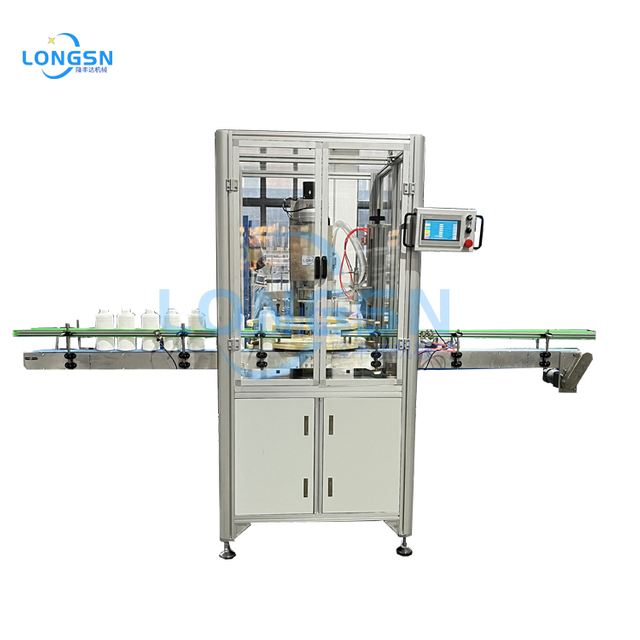
Next, ensure proper capping and sealing alignment. You must match the capping mechanism to your specific thread type. Spindle cappers work well for continuous threads on standard bottles. Chuck cappers offer precise torque control for specialized closures. Snap cappers press fit closures securely onto the bottle neck. Accurate torque requirements prevent unexpected leaks. They also stop product spoilage during transit.
Finally, compare automation levels. Semi-automatic machines suit low-volume runs perfectly. Startup operations benefit from their lower complexity. Fully automatic inline or rotary systems work best for high-speed production. Base this decision strictly on your required daily output. We measure this output in Bottles Per Minute (BPM).
Evaluating Throughput and Changeovers
Manufacturers often evaluate equipment based on maximum theoretical speeds. We strongly advise against this optimistic approach. You should focus entirely on sustained operational speeds instead. Overall Equipment Effectiveness (OEE) provides a highly realistic picture. OEE accounts for minor stops, daily cleaning, and routine maintenance. Your facility will rarely run at peak theoretical speed continuously.
A common mistake involves buying a 200 BPM machine for a strict 200 BPM target. You will inevitably fall short due to natural line inefficiencies. We always advise purchasing excess capacity to absorb micro-stoppages smoothly.
Consider the operational reality of changeovers. How frequently does your facility run different bottle sizes? How often do you switch liquid products? High variation demands extreme machinery flexibility. We recommend prioritizing machines equipped to handle tool-less changeovers. Operators should not need wrenches to adjust guide rails or swap star wheels.
Recipe-saving Programmable Logic Controllers (PLCs) also reduce downtime massively. Operators simply push a digital button to adjust machine parameters. The machine automatically recalls the saved bottle dimensions. This versatility keeps your production lines moving smoothly. It minimizes human error during shift changes and accelerates daily startup routines.
Chart 1: OEE Impact Analysis
| Production Metric | Theoretical Expectation | Realistic OEE (80%) |
| Rated Machine Speed | 100 BPM | 80 BPM (Effective) |
| Daily Operating Hours | 8 Hours | 6.4 Hours (Effective) |
| Total Daily Output | 48,000 Bottles | 30,720 Bottles |
Navigating Quality, Safety, and Compliance Standards
You cannot compromise on safety and compliance. Industry-specific compliance dictates machine design heavily. Food, beverage, and pharmaceutical applications require strict cGMP compliance. You must mandate sanitary welds on all pipework. FDA-approved contact materials remain absolutely non-negotiable under Title 21 CFR regulations. These design elements prevent dangerous bacteria accumulation. They protect your brand reputation from devastating recalls.
Evaluate the equipment's Clean-in-Place (CIP) capabilities closely. Strong CIP protocols prevent dangerous cross-contamination. This becomes critical in environments handling common allergens. It also matters greatly when processing harsh industrial chemicals. Operators should not need to disassemble major components for daily cleaning. Automated cleaning cycles utilize integrated spray balls and high flow rates. They save immense amounts of labor time.
Discuss the ease of integrating quality control systems. Your core packaging line needs seamless inline inspection integration.
- Checkweighers: They verify accurate filling amounts instantly. They reject underfilled bottles automatically before capping.
- Cap Torque Monitors: They ensure proper sealing tension. They prevent loose caps from reaching consumers.
- Leak Detectors: They catch micro-punctures. They remove defective bottles before they reach shipping cartons.
Unified data collection from these devices helps trace production batches accurately. It empowers quality managers to spot trends before they become massive defects.
Implementation Realities: Vetting Your Equipment Manufacturer
The best machinery fails without proper manufacturer support. You must execute a rigorous Factory Acceptance Testing (FAT) protocol. Buyers must mandate this testing before any equipment ships. Use your actual bottles, caps, and liquid product during the FAT. Perform both dry runs and full-speed wet runs. This proves the machine performs exactly as promised under real conditions. Never accept surrogate testing materials.
Next, assess their system integration capabilities thoroughly. Determine if the vendor operates as an Original Equipment Manufacturer (OEM). An OEM can integrate filling, capping, and labeling into one unified system smoothly. Relying on third-party integration introduces significant operational risk. Software handshakes between mismatched machines often fail. Mechanical transfers between different conveyor brands cause unexpected bottlenecks.
Finally, evaluate their post-sale infrastructure carefully. You need verifiable metrics to prove vendor trustworthiness. Demand guaranteed response times for technical support. Ensure they maintain a robust inventory of domestic spare parts. Ask about remote diagnostic capabilities extensively. Modern equipment should allow technicians to troubleshoot PLC software remotely. This remote access resolves minor software glitches in minutes. It eliminates the need for expensive technician travel.
Conclusion
Selecting the right solution bridges the physical gap. It connects your plastic container directly to the machinery moving it. You mitigate operational risks by taking a structured approach to line design. Follow these actionable steps to ensure a highly successful deployment:
- Prepare a detailed specification sheet including product viscosity, desired BPM, and bottle samples.
- Prioritize modular equipment designs to easily accommodate future bottle sizes.
- Partner with vendors offering proven, domestic post-sale support to minimize downtime.
- Request a customized equipment consultation based on sustained OEE rather than theoretical speeds.
Do not leave your production efficiency to chance. Start gathering your liquid and container specifications today. This proactive approach secures a robust packaging future for your facility.
FAQ
Q: How do I determine the right filling speed (BPM) for my operations?
A: Calculate your total daily production targets and divide them by your actual operating hours. Always factor in a 15-20% time buffer. This buffer accounts for standard daily maintenance, employee breaks, and unexpected changeover downtime.
Q: Can a single packaging machine handle multiple sizes of plastic bottles?
A: Yes, it can. However, the machine requires modular components like adjustable guide rails and interchangeable star wheels. Keep in mind that extreme size differences usually demand completely dedicated production lines.
Q: What is the typical lead time for a custom plastic bottle packaging line?
A: Most manufacturers require 12 to 24 weeks for delivery. This timeline depends heavily on your specific customization needs and current global supply chain factors. Always plan your facility rollout well in advance.
Q: How does using recycled plastic (rPET) affect my packaging machinery?
A: Recycled plastics often exhibit slight variances in wall thickness or overall rigidity. You will need highly precise torque control on cappers. Your conveyors also require gentle handling features to prevent bottle crushing or damage.

 English