Procuring capital equipment presents significant stakes for any manufacturing facility. Purchasing a plastic blow molding machine demands a careful balance. You must weigh immediate budget limits against long-term production viability. Misaligning machine capabilities with product design easily disrupts daily operations. If equipment fails to match specific material requirements or aggressive output goals, you face compromised cycle times. You also risk excessive scrap rates and a diluted return on investment. Too often, buyers focus entirely on the initial purchase price. They overlook the operational reality of running complex polymers at high speeds. This article provides a rigorous, vendor-neutral evaluation framework. We will help procurement teams and plant managers match machine specifications directly to facility realities. You will learn how to make a defensible capital expenditure decision. This guidance ensures your chosen equipment supports sustainable, profitable growth for years to come.
Key Takeaways
- Process determines technology: Your product’s geometry, neck finish, and volume dictate whether you need Extrusion, Injection, or Stretch blow molding.
- TCO outweighs upfront cost: Energy consumption and maintenance downtime typically eclipse the initial purchase price over a 5-to-10-year lifecycle.
- Automation is a spectrum: Fully automatic systems reduce labor but require higher upfront investment and stricter maintenance protocols compared to semi-automatic alternatives.
- Supplier vetting is critical: A successful deployment relies heavily on rigorous Factory Acceptance Testing (FAT) and reliable aftermarket support.
1. Aligning Plastic Blow Molding Machine Types with Product Specifications
Matching your container design to the correct molding process forms the absolute foundation of manufacturing success. Selecting the right technology prevents quality defects later. It also guarantees consistent cycle times across different production shifts.
Extrusion Blow Molding (EBM)
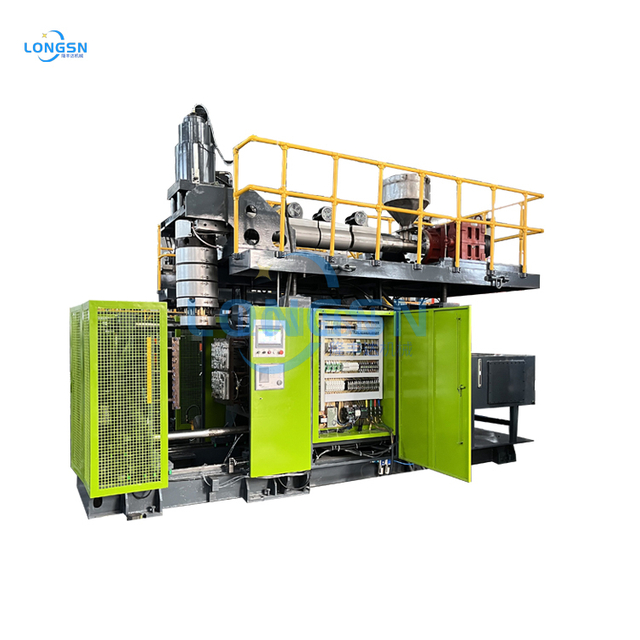
Extrusion blow molding serves as the workhorse for hollow, complex shapes. Manufacturers use it extensively for containers featuring asymmetric handles. It excels at producing large-volume items like jerrycans, automotive ducts, and heavy industrial drums. During this process, the machine extrudes a hollow tube of molten plastic called a parison. The mold closes around this parison, and compressed air forces the plastic against the mold walls.
When evaluating an EBM system, you must assess die-head configurations carefully. You must choose between continuous and accumulator heads based on your part weight and resin type. Heavy industrial containers typically require accumulator heads. These specialized heads store molten resin before pushing it rapidly into the mold. This rapid push prevents parison sag, where gravity stretches the molten tube unevenly. Conversely, continuous heads work better for lighter containers running in high-volume, continuous loops.
Injection Blow Molding (IBM)
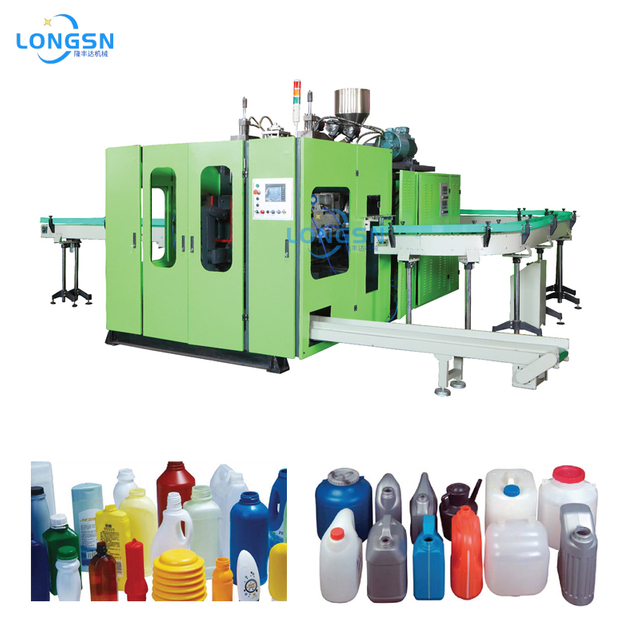
Injection blow molding delivers unmatched precision for small containers. It works perfectly for products requiring exceptionally tight neck tolerances. Pharmaceutical bottles, cosmetic jars, and small roll-on deodorant bottles rely heavily on this process. IBM creates a precise, injection-molded preform over a core rod before transferring it to the blow station. This two-step internal process eliminates scrap at the bottom and the neck. You get a finished product requiring no secondary trimming.
When reviewing IBM options, verify the clamping force requirements accurately. You must also check mold cavitation limits against your target output. High-cavity molds demand substantial clamping force to prevent flashing. If the clamping force falls short, plastic escapes the mold parting line. This creates unacceptable defects and wastes expensive medical-grade resins.
Injection Stretch Blow Molding (ISBM)
Manufacturers utilize ISBM to create high-clarity, biaxially oriented containers. You see this technology used everywhere for PET water bottles, carbonated soft drinks, and premium cosmetics. The process mechanically stretches the preform both vertically using a stretch rod and horizontally using high-pressure air. This biaxial orientation dramatically enhances structural rigidity and visual clarity.
You can choose between 1-step and 2-step systems based on your supply chain. A 1-step machine integrates injection and blowing on a single frame. It suits specialized runs, non-standard shapes, and compact facility layouts. It utilizes residual heat from the injection phase, saving reheating energy. A 2-step system separates preform manufacturing from the blowing process. It involves rapid preform reheating in an oven prior to blowing. This 2-step method dominates high-volume commodity production, allowing you to stockpile preforms or purchase them from third-party suppliers.
Table 1: Quick Comparison of Common Blow Molding Technologies
| Technology | Best Used For | Primary Advantage | Typical Resin Used |
| Extrusion (EBM) | Jerrycans, drums, handled bottles | Handles complex shapes and large volumes | HDPE, PP, PVC |
| Injection (IBM) | Pharmaceuticals, cosmetics | Scrap-free production, tight neck tolerances | HDPE, LDPE, PP |
| Stretch (ISBM) | Water bottles, premium packaging | High clarity, superior mechanical strength | PET, PP |
2. Calculating Production Capacity and Automation Requirements
Procurement teams often overestimate capacity based on theoretical numbers presented in brochures. You must calculate true production requirements to avoid buying an oversized or undersized plastic blow molding machine. Accurate capacity planning prevents unexpected production bottlenecks.
Defining Target Output (BPH)
Always calculate your required Bottles Per Hour (BPH) using Overall Equipment Effectiveness (OEE). Never rely solely on a machine's theoretical maximum dry-cycle speed. Real-world operations face inevitable, daily interruptions. You must account for realistic downtime, routine maintenance stops, and scheduled mold changeovers. A highly rated machine running at a poor OEE yields fewer bottles than a slower machine running efficiently. Plan your baseline BPH requirements around a 75% to 85% OEE standard. This realistic buffer ensures you meet customer delivery commitments even during challenging production weeks.
Cavitation and Cycle Times
The number of mold cavities directly impacts your cycle efficiency. More cavities mean exponentially higher output per cycle. However, they introduce specific engineering demands you must evaluate:
- Cooling constraints: More cavities require longer cooling times unless you heavily upgrade the plant's chilling system. Inadequate cooling causes warped bottles.
- Clamping force: Multi-cavity molds need significantly higher clamping pressure to keep the mold halves shut during the high-pressure blowing phase.
- Resin distribution: You must ensure even material flow across all cavities. Poor distribution creates inconsistent wall thickness from one bottle to the next.
- Air consumption: High cavitation demands a robust supply of clean, high-pressure blowing air. Undersized compressors will lengthen cycle times.
Evaluate these factors carefully during the design phase. A robust chilling and air compression system prevents frustrating bottlenecks during high-cavitation runs.
Fully Automatic vs. Semi-Automatic
Automation exists on a spectrum. Your choice depends heavily on local labor costs, budget constraints, and production volume.
- Fully Automatic: These systems shine during continuous, high-volume runs. They eliminate manual handling completely. They require integrated deflashing units, robotic part takeout, and sophisticated downstream automation. While upfront costs run higher, they deliver superior consistency. They also reduce contamination risks since human hands never touch the finished product.
- Semi-Automatic: These machines work well for low-volume or highly customized runs. They fit perfectly in regions benefiting from lower labor costs. However, they introduce human-error variability. Operators must manually transfer parts, remove flash, or load preforms. This manual intervention limits maximum speed and can impact overall quality control.
3. Assessing Return on Investment (ROI) and Operational Efficiency
A smart procurement strategy looks far beyond the initial sticker price. You must evaluate how the machine performs daily on the factory floor. Energy use, scrap reduction, and maintenance routines dictate your long-term profitability. These factors determine whether your investment generates a fast payback.
Energy Efficiency
Energy consumption represents a massive ongoing expense for plastic manufacturers. Traditional hydraulic systems consume significant power. They run pumps continuously, generating heat and wasting energy even during idle cycle phases. You must compare these traditional models against all-electric or servo-hydraulic hybrid machines. Servo motors only draw power when actively moving a machine component. They can reduce energy consumption by 30% to 50% compared to standard hydraulics. This reduction significantly improves your ROI over a multi-year lifecycle. Furthermore, electric systems run much quieter and require far less ambient cooling.
Scrap Rates and Material Recovery
Material waste quickly erodes profit margins. Resin often represents the highest variable cost in container manufacturing. Evaluate a machine's precision regarding parison programming. This technology controls the wall thickness dynamically as the molten plastic tube drops. Better control prevents overly thick walls in low-stress areas. It reduces overall resin usage through strategic lightweighting. It also minimizes flash, which is the excess plastic pinched off at the top and bottom. When you produce less scrap, you spend less energy and labor recycling material. Precise parison control ensures every gram of resin adds structural value to the final container.
Maintenance and Spare Parts
Unplanned downtime cripples production schedules and ruins profit margins. Assess the physical accessibility of critical wear parts before purchasing. Extruder screws, hydraulic directional valves, and heating bands need regular attention. Technicians should access these components without dismantling half the machine. Prioritize equipment utilizing non-proprietary, globally available components. Systems built with standard PLC brands like Siemens, Allen-Bradley, or Beckhoff reduce downtime risks. If a sensor or drive fails, you want to source a replacement from a local distributor immediately. Proprietary control systems force you to wait for expensive overseas shipments.
4. Industry-Specific Material and Compliance Standards
Different manufacturing sectors demand highly specialized machine configurations. A standard configuration might fail strict regulatory audits. You must verify compliance capabilities upfront during the specification phase.
Cosmetics and Pharmaceuticals
These industries require machines capable of handling PET or specialized high-clarity resins. Cosmetic packaging must look visually flawless to appeal to consumers. Furthermore, pharmaceutical production often occurs in certified cleanroom environments. Look for cleanroom-compatible machine designs. All-electric machines eliminate hydraulic oil completely. This removes the risk of airborne micro-contaminations settling on the container surface. Electric actuation ensures compliance with strict medical packaging standards like ISO Class 7 or Class 8 cleanroom requirements.
Food and Beverage
Food and beverage applications demand strict food-grade compliance globally. Many perishable products require multi-layer co-extrusion capabilities. Multi-layer technology embeds oxygen and UV barriers, like EVOH, within the bottle walls. These microscopic barriers extend product shelf life dramatically, protecting sensitive contents like juices or dairy. Evaluate the machine's ability to extrude multiple distinct layers evenly without delamination. Ensure all wetted components and extrusion dies meet FDA or equivalent global food safety standards.
Industrial and Chemical Packaging
Chemical drums and agricultural jerrycans face harsh physical environments. They require robust extruders capable of processing fractional-melt High-Density Polyethylene (HDPE). Modern sustainability goals also push for the extensive use of Post-Consumer Recycled (PCR) resins. Processing PCR materials presents unique operational challenges. The machine must handle melt-flow variations and microscopic impurities without compromising structural integrity. Ensure the extruder design incorporates specialized mixing screws and screen changers optimized specifically for recycled materials.
5. Supplier Evaluation, FAT, and Post-Sale Integration
Buying the equipment represents only half the battle. Successful deployment depends on rigorous testing and building strong supplier partnerships. You need a vendor capable of supporting your facility for a decade or more.
Downstream Integration
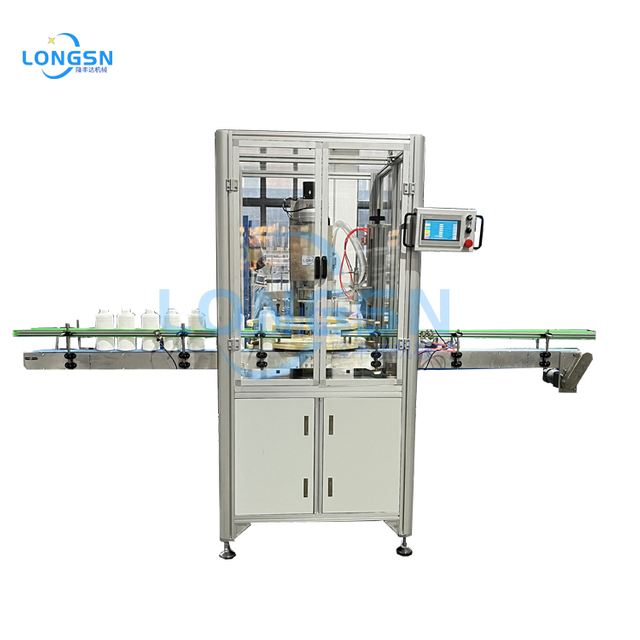
Your new equipment does not operate in a vacuum. It must communicate seamlessly with downstream automation to form an efficient cell. Verify mechanical and software compatibility with existing leak testers, auto-packers, labeling machines, and palletizers. Freshly blown bottles need time to cool and shrink before leak testing. Ensure your layout includes proper accumulation conveyors. The machine's control system should support standard industrial communication protocols like OPC-UA or PROFINET. This ensures smooth, automated handoffs between the blow molder and the downstream packaging line. A sudden bottleneck downstream will instantly negate a fast molding cycle.
Factory Acceptance Testing (FAT)
Never finalize procurement without executing a documented FAT at the vendor's facility. This testing phase proves the machine performs exactly as promised under real conditions. Define clear, uncompromising success criteria upfront. Require sustained cycle times over an 8-hour continuous run. Demand acceptable scrap percentages below your defined threshold. Most importantly, verify the dimensional accuracy and drop-test performance of the final product. You must conduct this test using your specific production molds and exact resin grades. Do not accept tests run with generic materials or lightweight dummy molds.
Aftermarket Support and Training
Even the best engineered equipment requires occasional troubleshooting. Evaluate the vendor’s Service Level Agreements (SLAs) carefully before signing. Assess their ability to provide local, rapid-response technician support. Modern machinery should offer remote troubleshooting via secure IoT diagnostics. This allows factory engineers in another country to identify software faults instantly. Comprehensive operator training is equally vital to your success. Your local team must thoroughly understand how to adjust parison profiles. They must learn how to perform preventative maintenance safely to maximize uptime.
Conclusion
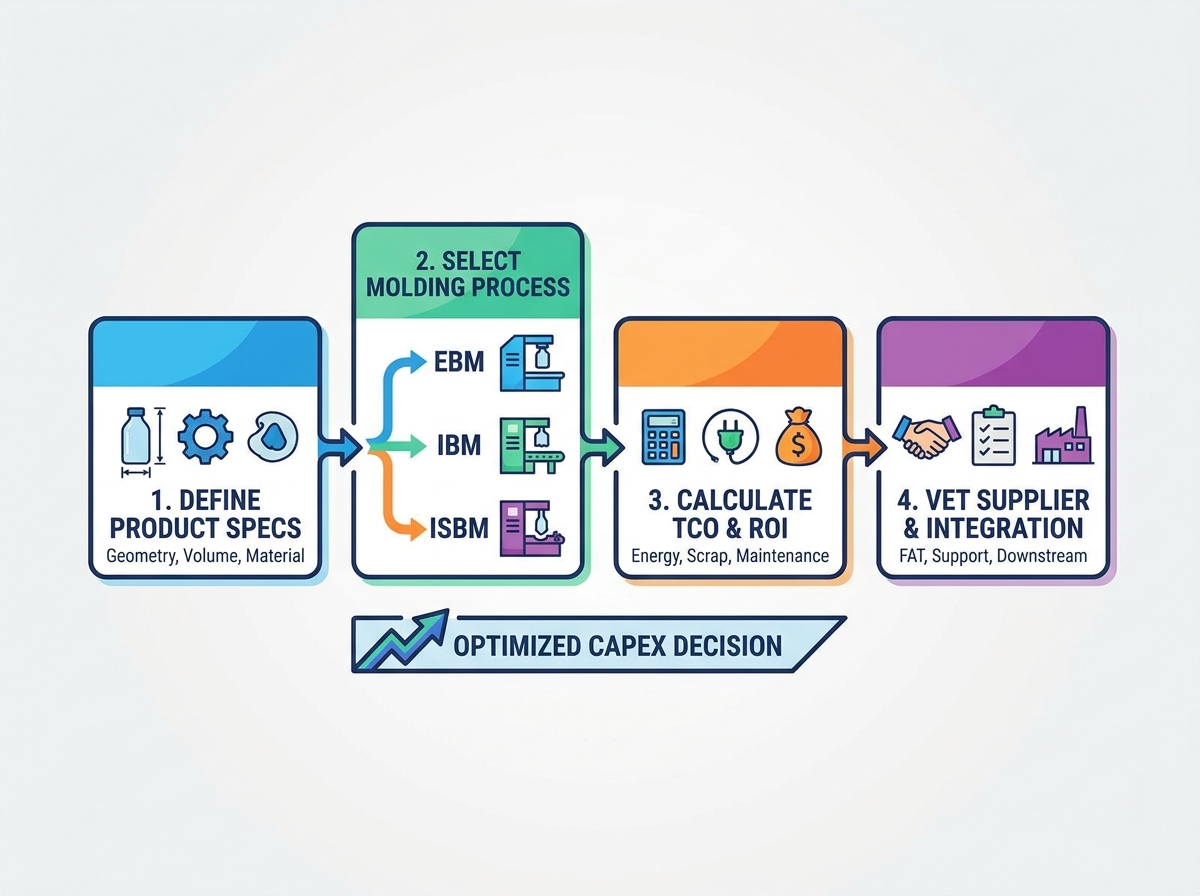
Selecting the proper equipment requires a highly methodical approach. First, define the product geometry, resin type, and volume requirements. Next, select the corresponding molding process that guarantees quality. Then, calculate realistic production metrics and evaluate ROI based on energy and material savings. Finally, vet the supplier through rigorous factory testing. The ideal equipment beautifully balances operational capability, energy efficiency, and long-term mechanical reliability. Do not let upfront pricing blind you to daily operational costs. We strongly encourage you to reach out for a technical consultation. Request a detailed ROI calculator from prospective vendors. You can also download an RFP template to structure your vendor conversations effectively.
FAQ
Q: What is the typical lead time for a custom machine?
A: Lead times generally range from 3 to 6 months. This timeline depends heavily on machine complexity, custom mold fabrication, and FAT scheduling. Standardized, single-layer models ship faster. However, highly automated, multi-layer co-extrusion systems require extensive engineering, extending the delivery schedule significantly.
Q: Can an existing machine be retrofitted for multi-layer co-extrusion?
A: While some modular machines allow for retrofitting, it is often highly capital-intensive. Upgrading requires changing the complex die head and adding auxiliary extruders. It is generally much more cost-effective to specify multi-layer capabilities during the initial purchase if you anticipate future barrier-packaging needs.
Q: How does parison control impact production costs?
A: Parison programming optimizes the wall thickness of the molten plastic tube precisely as it extrudes. This precision reduces raw material usage through strategic lightweighting. It maintains container strength exactly where needed. By minimizing expensive resin waste and reducing flash, parison control directly improves the profit margin on every unit.

 English