Capital equipment purchases carry incredibly high stakes for manufacturing facilities. Making the wrong choice leads to bottlenecked production lines. It also causes wasted materials and stressful compliance failures. Operators frequently buy equipment based on theoretical maximum speeds rather than sustainable daily throughput. This dangerous disconnect often ruins operational efficiency and hurts profit margins. You need a reliable framework to cut through exaggerated marketing claims. We created this straightforward, vendor-neutral guide to help you evaluate technical specifications accurately. You will learn how to match automation levels directly to your actual throughput goals. We will also show you how to sidestep costly implementation delays. Choosing the right machinery does not have to be a stressful guessing game. By the end of this guide, you will know exactly what features to look for before signing a final purchase order.
Key Takeaways
- Production volume dictates automation: Match your current and projected units-per-minute (UPM) to semi-automatic, inline, or rotary labeling systems.
- Geometry is the primary constraint: The shape of your containers (round, square, oval, or tapered) determines the specific labeling application required.
- Changeover speed is a hidden cost: Machines with tool-less adjustments provide higher ROI for facilities running multiple product lines.
- Test before investing: Always require a Factory Acceptance Test (FAT) using your exact bottles and labels to verify accuracy and sensor reliability.
Assessing Your Production Volume and Automation Needs
Start by examining the common disconnect between rated machine speeds and production reality. Equipment manufacturers often advertise an impressive "maximum rated speed" for their machinery. However, this theoretical number rarely reflects your facility's sustainable daily throughput. Unavoidable maintenance pauses, operator shift changes, and raw material reloads constantly interrupt operations. You must base your equipment decisions on realistic units-per-minute (UPM) targets. If you buy a machine strictly based on maximum speed, you will likely overspend.
Machine Automation Level Comparison
| Machine Type | Best Application | Typical Speed (UPM) | Operator Requirement |
| Semi-Automatic | Small batch, seasonal runs | 10 - 50 | Dedicated manual feeding |
| Fully Automatic Inline | Growing mid-size facilities | 50 - 200+ | Monitoring and material reload |
| High-Speed Rotary | Enterprise pharmaceutical/beverage | 300 - 800+ | Advanced technical oversight |
Semi-Automatic Labeling Systems
Small businesses often find semi-automatic systems completely ideal for their operations. They work perfectly for seasonal production runs and small custom batch manufacturing. Typically, these systems process fewer than 50 bottles per minute comfortably. Choosing this entry-level tier keeps your initial capital expenditure remarkably low. It also offers excellent flexibility for frequent product type changes. However, these systems demand dedicated manual operators. A worker must physically place each individual container into the machine cradle. They then press a foot pedal or push a button to apply the sticker. This heavy reliance on human labor limits your overall scaling potential.
Fully Automatic Inline Bottle Labeling Machines
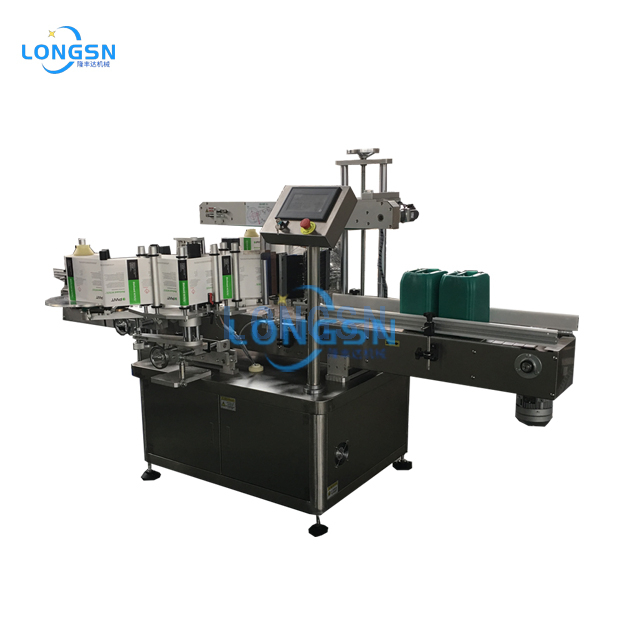
Growing facilities eventually require highly consistent, continuous throughput. When your daily demand reaches 50 to 200+ bottles per minute, you need an upgrade. Fully automatic inline systems provide the perfect middle ground for scaling businesses. Integrating an automated bottle labeling machine completely eliminates manual feeding bottlenecks. These powerful units slide seamlessly into your existing motorized conveyor lines. They automatically space out, orient, and label containers as they speed by. This smart automation drastically reduces labor dependency while stabilizing your output rates. You can reassign manual workers to quality control or packaging stations instead.
High-Speed Rotary Systems
Enterprise-scale beverage and pharmaceutical operations face extreme output demands daily. They routinely process well over 300 bottles per minute without stopping. High-speed rotary systems serve this exact demanding market tier perfectly. They grip each container individually using specialized top-holds and spinning base plates. This absolute mechanical control guarantees maximum placement precision at blistering speeds. Even at 600 bottles per minute, labels apply without a millimeter of drift. However, you will need a massive floor footprint to accommodate these giants. They also demand significant upfront capital investment and specialized maintenance personnel.
Matching Machine Types to Bottle Shapes and Applications
Container geometry always represents your primary physical application constraint. A round cylinder naturally requires different handling mechanics than a flat-sided square. You must perfectly match the applicator style to your packaging design.
Wrap-Around Labelers for Round Bottles
The beverage, chemical, and sauce industries rely heavily on wrap-around configurations. These mechanisms apply a single long decal around the entire cylinder circumference. You must carefully evaluate the difference between roller mechanisms and timing belts. Three-point rollers trap the bottle against a backing pad to spin it smoothly. Timing belts use synchronized continuous motion to roll the container along a pressure pad. Belts often provide better traction control to prevent skewing on slippery glass or plastic. Proper mechanical orientation prevents frustrating spiraling defects on your final product.
Front and Back Labelers for Oval and Square Bottles
Cosmetics, household cleaners, and specialty foods frequently use premium non-round packaging. Oval and square containers strictly require front and back labelers. Perfect physical orientation dictates the success of these complex applications. You must look for robust alignment modules in the machine design. Dual chains or specialized belts physically force the bottle into a perfectly straight line. The machine must hold this orientation firmly before application begins. Any slight accidental rotation causes crooked placement, ruining the brand aesthetic.
Top, Bottom, and Tamper-Evident Labeling
Secondary labeling requirements often go far beyond primary frontal branding. Many regulated industries mandate security seals directly over the cap. Compliance barcodes often need precise placement on the bottom of containers. Top and bottom labelers integrate directly over or under the main conveyor path. Tamper-evident modules apply complex L-shaped or U-shaped seals over bottle closures. These specialized add-ons ensure product integrity before shipping to retail stores. They provide consumers with visible proof of safety.

Core Evaluation Criteria for Your Next Bottle Labeling Machine
You must evaluate internal technical components incredibly critically. Small specification differences cause massive downstream impacts on your production floor. Do not gloss over the mechanical details during your evaluation.
Sensor Precision and Label Material Compatibility
Your chosen substrate material directly influences specific sensor selection. Standard photoelectric sensors work beautifully for traditional opaque paper materials. They accurately detect the physical gap between each sticker on the web liner. However, photoelectric light beams pass straight through clear transparent plastic. If you use clear "no-label look" aesthetics, you must specify specialized sensors. Ultrasonic sensors measure material thickness differences rather than light transmission. Capacitive sensors detect subtle changes in the dielectric field. Mixing the wrong sensor technology with transparent materials causes continuous misfires and wasted rolls.
Changeover Efficiency and Flexibility
Facilities running multiple product lines face constant frustrating changeover delays. You must aggressively protect your valuable active production time. Look for programmable logic controllers (PLCs) featuring robust recipe memory capabilities. This digital feature allows operators to save tension and speed settings for different sizes. Instant digital recall completely eliminates hours of frustrating trial and error. Additionally, prioritize physical mechanics designed for rapid physical adjustments. Hand-wheel adjustments and clearly etched scale indicators speed up realignment significantly. Avoid any systems requiring hand tools or wrenches for basic width or height changes.
Industry-Specific Compliance Standards
Different manufacturing sectors demand incredibly stringent operational and sanitary standards. Food, beverage, and pharmaceutical operations require specific structural machine designs. You should look for sanitary configurations avoiding flat horizontal surfaces where liquids pool. Insist on washdown-rated electrical enclosures like NEMA 4X or IP65. High-grade stainless-steel construction prevents severe corrosion from harsh daily cleaning chemicals. Traceability also plays a massive role in modern compliance tracking. Ensure the system offers easy digital integration capabilities for secondary hardware. You might need thermal inkjet (TIJ) printers or vision inspection cameras mounted directly on the chassis.
Implementation Realities and Hidden Risks
Buying the physical equipment represents only the first step of the journey. Physical line integration often reveals highly frustrating hidden operational challenges.
Existing Line Integration
You cannot just drop new equipment onto an active line blindly. You must verify exact conveyor height compatibility beforehand. If the new chassis sits two inches lower than your fluid filler, production stops. Line speed synchronization also demands very careful technical attention. Ensure the new system uses active encoder tracking. This allows the applicator to match the primary conveyor speed dynamically as it fluctuates. Finally, measure your available floor space down to the bare inch. Footprint constraints often force facilities to reconfigure entire packaging halls expensively.
Operator Training and Usability
Your floor staff will interact with this new equipment every single day. Overly complex HMIs (Human-Machine Interfaces) inevitably lead to higher operator error rates. Confusing digital menus frustrate workers and needlessly prolong simple troubleshooting tasks. Evaluate the software interface for strict user intuitiveness during the buying process. A clean touchscreen interface with clear visual diagnostics saves countless hours of downtime. Well-designed menus help operators clear mechanical faults and restart production rapidly. Excellent usability reduces your reliance on highly paid engineers for basic fixes.
Maintenance, Spare Parts, and Vendor Support
Industrial machinery will eventually break down under continuous heavy use. Your recovery speed depends entirely on the vendor support infrastructure. Assess the availability of local field technicians in your region before buying. Ask hard questions about the domestic supply chain for standard wear parts. You will regularly need to replace drive belts, peel plates, and rubber rollers. Prioritize systems utilizing off-the-shelf components readily available from local industrial suppliers. Avoid proprietary custom parts heavily. Waiting weeks for a custom manufactured roller from overseas causes devastating and prolonged downtime.
Shortlisting Vendors and Requesting Proof of Concept
Never rely entirely on glossy sales brochures or slick video demonstrations. You must force prospective vendors to prove their technical claims physically before you buy a bottle labeling machine.
Start by defining your technical payload precisely before reaching out. Compile a comprehensive specification sheet detailing every operational requirement. Include these critical details:
- Exact bottle dimensions, including maximum heights and widest diameters.
- All label sizes, roll diameters, and core substrate materials.
- Target units-per-minute (UPM) for every individual SKU.
- Specific environmental conditions like cold rooms or washdown zones.
Handing this standardized document to multiple vendors ensures you receive perfectly comparable quotes.
Next, require a rigorous sample run known as a Factory Acceptance Test (FAT). Never buy any automated packaging machinery without sending your physical products first. Follow these steps for a successful FAT:
- Ship your exact empty containers to the manufacturer's testing facility.
- Send actual production-grade label rolls, not cheap printed samples.
- Demand a continuous, recorded test run hitting your target UPM speed.
- Verify placement accuracy, sensor reliability, and error-handling capabilities.
This real-world test physically verifies application accuracy on your exact products. It also confirms critical sensor reliability and smooth material tracking. If a vendor refuses to conduct a FAT, walk away immediately.
Conclusion
Selecting the perfect packaging equipment demands highly structured evaluation. You must always balance your daily throughput needs against unique container geometries. Your changeover frequency will heavily influence your required automation level and budget. Do not let theoretical maximum speeds blind you to sustainable, practical output realities. Focus intently on sensor compatibility, sanitary construction standards, and robust vendor support networks.
Start your purchasing journey right on the active factory floor today. Audit your current production line bottlenecks immediately to identify exact pain points. Document every single container dimension and material specification you currently use. Compile this hard data into a standardized specification sheet before contacting any manufacturers. Taking these deliberate, calculated steps guarantees a seamless and highly profitable equipment integration.
FAQ
Q: How much does a commercial bottle labeling machine typically cost?
A: Costs vary drastically based on automation levels and speed. Semi-automatic models for small businesses range from $1,500 to $5,000. Fully automatic inline systems typically cost between $15,000 and $40,000. High-speed rotary units for enterprise production easily exceed $100,000. Always budget an additional 10-15% for installation, freight, and operator training.
Q: Can one labeling machine handle both round and square bottles?
A: Yes, many flexible hybrid machines exist today. They combine wrap-around belts for cylinders with dual-side applicators for squares. However, the operational trade-off is often much longer changeover times. Switching between shapes requires mechanical realignment and sensor recalibration, which eats into active production hours.
Q: What is the difference between a stepper motor and a servo motor in label applicators?
A: Stepper motors provide highly reliable, cost-effective dispensing for low to medium speeds. Servo motors offer continuous closed-feedback loops, ensuring exact material positioning. Servos accelerate and decelerate faster, making them absolutely essential for high-volume runs requiring extreme precision without web drift.
Q: How do I prevent bubbles and wrinkles when applying clear labels to glass bottles?
A: Bubbles occur when ambient air gets trapped under non-porous materials. You must ensure proper web tension before the substrate leaves the peel plate. Additionally, utilize strong secondary wipe-down mechanisms. Spring-loaded rollers or specialized soft brushes smooth the material instantly, pushing trapped air outward for a flawless finish.

 English