Deciding to upgrade or replace your current labeling equipment marks a critical growth phase. You usually face production bottlenecks, aggressive scaling requirements, or unmanageable labor inefficiencies. The packaging industry evolves rapidly today. Modern consumer demands require unprecedented speed. Agility matters more than ever before.
Choosing the wrong hardware brings disastrous consequences to your facility. Misapplied labels, constant recalibration, and damaged products will quickly disrupt your downstream packaging lines. Poor integration ultimately drains your budget. It ruins your daily output targets. You simply cannot afford unpredictable downtime.
This guide provides a rigorous, engineering-grounded framework to solve these challenges. We will help you evaluate, shortlist, and procure the exact automated system for your specific operational constraints. You will master throughput calculations, sensor compatibility, and vendor verification. These crucial steps eliminate guesswork entirely. You can confidently match mechanical capabilities to your immediate business goals. This ensures an informed, highly profitable choice.
Key Takeaways
- Real-world throughput (PPM) is dictated by your line’s feeding mechanism and container stability, not just the labeler's maximum theoretical speed.
- Container geometry and label material dictate the machine category (e.g., wrap-around, top/bottom, front/back) and sensor requirements (e.g., ultrasonic sensors for clear labels).
- Vendor evaluation must prioritize integration support, availability of local spare parts, and machine compliance (e.g., GMP/FDA standards for food and pharma).
Evaluating Your Production Baseline and Throughput Requirements
Define Real-World Speed Requirements
Manufacturers often advertise maximum theoretical machine speeds. Real-world applications rarely reach these perfect limits. Actual line yield depends on several interconnected variables. You must evaluate upstream feeding rates constantly. Accumulation tables also impact your final throughput. Downstream capping and packing speeds often create unexpected bottlenecks. A fast applicator cannot overcome slow downstream packers. You must calculate the entire system's operating rhythm. Match your new equipment to this realistic baseline.
Many buyers make a critical error here. They match the applicator speed directly to their filler machine perfectly. They ignore the natural micro-stoppages occurring downstream. You should always factor in Overall Equipment Effectiveness (OEE). Calculate the realistic output over a full eight-hour shift. This accounts for operator breaks. It accounts for material roll replacements. True yield planning prevents frustrating bottlenecks.
Assess Capacity Scalability
Your business will likely grow over the next five years. Buying equipment based solely on current volumes guarantees early obsolescence. You should choose machinery capable of handling extra volume seamlessly. Aim for twenty to thirty percent more capacity. This buffer prevents unexpected production caps during seasonal sales spikes.
Scaling too high wastes your initial capital. Scaling too low forces premature equipment replacement. A moderate capacity buffer balances immediate budget constraints against future expansion effectively.
Calculate ROI vs. Labor
Manual application drains your operational resources daily. Semi-automatic methods still require constant operator supervision. You need to compare these continuous expenses against automation. An automatic labeling machine delivers highly predictable hourly yields. It drastically reduces expensive placement error rates.
Calculate the exact wages saved by redeploying staff elsewhere. Consider the hidden expenses linked to manual labor. Repetitive strain injuries cost companies thousands annually. Ergonomic issues disappear entirely upon automation. Factor in the reduced scrap material. Automated consistency minimizes wasted packaging. This calculation clearly justifies the initial capital expenditure.
Matching Equipment Architecture to Container and Label Geometry
Container Shape Constraints
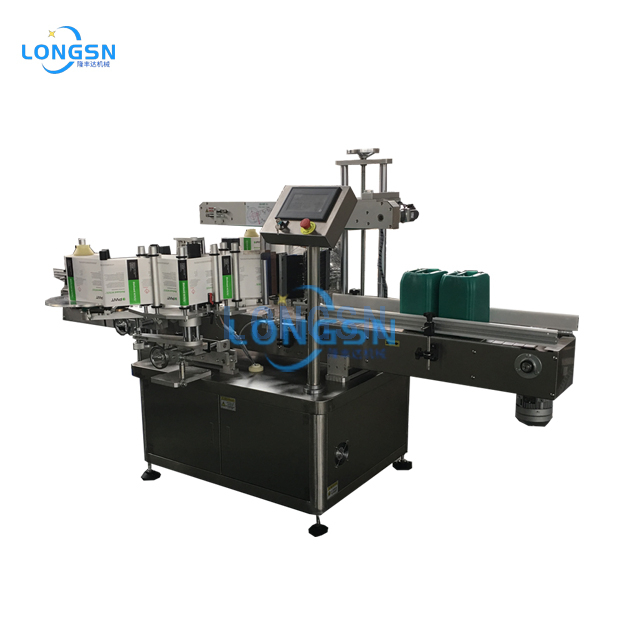
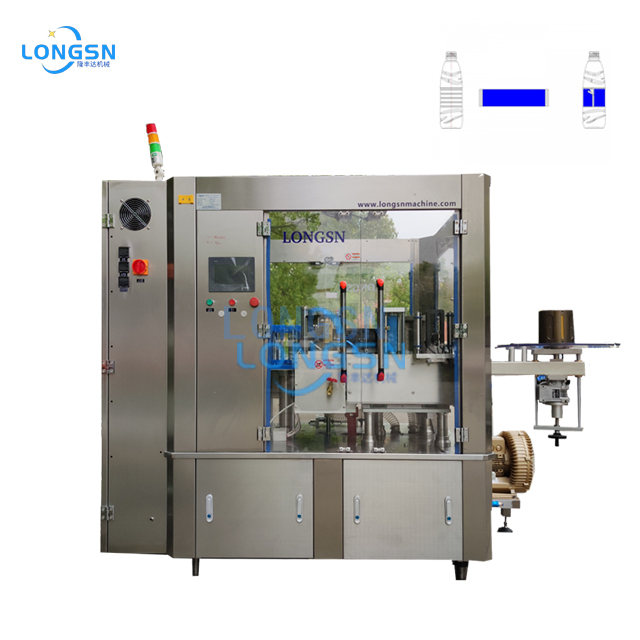
Your container's shape directly dictates the required equipment architecture. Cylindrical bottles and vials need specialized handling. They require wrap-around systems utilizing trunnion rollers. Multi-roller setups ensure completely skew-free application. Flat, oval, or rectangular containers demand different mechanics. They require sophisticated front and back applicators. Tubs, lids, and cartons follow a simpler path. They usually require top or bottom applicators.
Follow these geometric rules for successful deployment:
- Cylindrical items need continuous rotation during application.
- Flat containers require rigid side-guiding rails for stabilization.
- Cartons need flat horizontal conveyor belts to prevent shifting.
Table: Container Geometry and Recommended Applicator Systems
| Container Shape | Applicator Type | Stabilization Method |
| Cylindrical (Bottles, Vials) | Wrap-around Labeler | Trunnion rollers, Multi-roller belt |
| Flat / Oval / Rectangular | Front/Back Labeler | Alignment chains, Dual-belt guides |
| Tubs / Lids / Cartons | Top or Bottom Labeler | Horizontal conveyors, Overhead hold-down |
Label Material and Sensor Compatibility
Label material heavily influences your electronic sensor selection. Standard photoelectric sensors work exceptionally well for opaque paper labels. They easily detect the contrast between the sticker and the backing liner. However, these standard sensors fail completely on transparent materials.
Clear-on-clear applications confuse photoelectric beams. The transparent backing liner blends into the transparent sticker. The applicator misses the registration mark completely. You must specify capacitive or ultrasonic sensors for clear materials. Ultrasonic waves detect minute material thickness changes. This guarantees precise edge detection regardless of visual transparency.
Tolerances and Accuracy
Every packaging operation defines its acceptable placement variance. Most standard industries accept a variance around plus or minus one millimeter. Pharmaceutical or cosmetic lines often demand tighter tolerances. High-precision requirements necessitate advanced internal components. Standard stepper motors sometimes drift over long production runs. They miss tiny steps gradually.
Servo-driven applicator heads maintain strict accuracy. They utilize closed-loop feedback systems constantly. They monitor their exact rotational position. They correct positional errors dynamically in real-time. You should invest in servo motors for zero-defect product runs.

Essential Features and Integration Capabilities
Line Integration (Standalone vs. In-Line)
You must determine the deployment strategy for your new equipment. Standalone island configurations offer distinct operational advantages. They run completely independently from the main line. Operators load them manually in designated batches. This prevents upstream stoppages from halting the labeling process.
In-line systems drop directly into existing conveyor arrays. They require seamless mechanical synchronization. Check the Programmable Logic Controller (PLC) compatibility carefully. The new equipment must communicate flawlessly across the entire packaging suite. Integrating an automatic labeling machine into your main line requires meticulous network planning.
Changeover Efficiency
Modern facilities rarely run a single SKU indefinitely. Fast format changeovers keep your daily uptime high. Downtime simply destroys profit margins. You should evaluate tool-less changeover features rigorously.
Some older machines require custom star-wheels for every new bottle size. Complex format parts drastically reduce your active production hours. Look for adjustable guide rails instead. Seek out modular wipe-down mechanisms. Demand clearly marked numerical scales on all guide rails. Quick-release handles save hours of mechanical adjustments every week.
Print and Apply Readiness
Many industries require variable data printed on every product. You might need batch numbers, expiry dates, or custom barcodes. Assess your current regulatory coding requirements thoroughly.
Thermal Transfer Overprinters (TTO) handle flexible web materials exceptionally well. Continuous Inkjet (CIJ) printers offer versatile, non-contact coding options. Ensure the equipment frame physically accommodates these secondary devices. It must provide secure, vibration-free mounting brackets. Proper mechanical integration prevents machine vibration from blurring your printed text.
Implementation Realities: Hidden Costs and Operational Risks
Spatial Constraints (Footprint)
You must measure your available floor space accurately. Simply fitting the machine onto the floor is never enough. You must factor in necessary ergonomic clearance zones. Operators need safe physical access to the control panels. They require adequate space to execute frequent label roll changes safely.
Maintenance personnel need room to reach internal drive belts easily. Crowded installations invite dangerous workplace injuries. Tight spaces also extend the duration of routine servicing tasks significantly. Always map the machine's footprint alongside human traffic flows.
Air and Power Requirements
You should audit your existing facility utilities immediately. Many buyers overlook their pneumatic infrastructure completely. Pneumatic wrap-around modules demand specific air pressures continually. Tamp-blow systems rely heavily on consistent airflow to shoot the sticker.
Check the required Cubic Feet per Minute (CFM) ratings. If your facility's air compressor fluctuates, the application pressure drops. Electrical supplies also need careful auditing. Industrial hardware often requires specific high-voltage drops. Dedicated circuits prevent unexpected power surges from resetting your PLC systems.
Operator Training and UX
Complex digital interfaces confuse new operators frequently. Confusing Human-Machine Interfaces (HMIs) lead directly to costly user errors. You should heavily favor equipment featuring intuitive touchscreen controls.
Recipe-driven menus improve daily operations significantly. These smart systems save specific parameters for distinct SKUs. Operators simply select the product name directly on the screen. The machine adjusts tension and conveyor speed automatically. This eliminates guesswork. It reduces training time for new floor staff dramatically.
Shortlisting Logic: Vendor Support and Compliance Verification
Test Runs with Actual Product
You should never buy machinery based purely on a glossy brochure. Brochures showcase ideal factory conditions. Real facilities present unique, messy challenges. Require prospective vendors to perform rigorous Factory Acceptance Tests (FAT).
They must use your exact containers for this test. They must use your actual production label rolls. Include slightly warped bottles in your test batch. Send rolls containing slight die-cut errors. This physical test proves out their advertised speed claims. Demand uncut video evidence if you cannot attend the FAT in person.
Spare Parts and Support
Proprietary parts create massive downtime risks. You should prioritize manufacturers utilizing standard, non-proprietary components. Off-the-shelf electronics provide incredible operational safety. Look for recognized brands like Allen-Bradley, Siemens, or Omron.
Local industrial distributors stock these common items globally. This simple choice prevents frustrating vendor lock-in. It minimizes lead times when vital parts fail unexpectedly. Fast local replacements keep your production line moving smoothly around the clock.
Industry-Specific Compliance
Regulated sectors demand strict mechanical compliance constantly. Food, beverage, cosmetics, and pharmaceutical companies face rigorous external audits. You must verify specific construction standards before purchasing.
Ensure the machine meets required sanitary washdown specifications. Look closely for NEMA 4X or IP65 electrical enclosure ratings. These ratings guarantee protection during aggressive chemical cleanings. Verify the exclusive use of FDA-approved contact materials. High-grade stainless steel frames prevent hidden contamination risks effectively.
Conclusion
Selecting the ideal machinery requires methodical, emotionless evaluation. You must finalize requirements based strictly on specific technical criteria. Container geometry dictates your optimal applicator style. Target line speed determines your necessary motor types. Changeover frequency highlights the absolute need for tool-less mechanical adjustments. Proven vendor reliability ensures your long-term operational success.
Take these immediate, action-oriented next steps. First, audit your current production line bottlenecks thoroughly. Second, document your exact container dimensions and label formats clearly. Finally, contact a shortlisted manufacturer today. Request a comprehensive technical consultation immediately. Schedule a rigorous Factory Acceptance Test using your specific materials. Proactive testing secures your critical capital investment.
FAQ
Q: What is the difference between a semi-automatic and an automatic labeling machine?
A: A semi-automatic system requires an operator to manually load each item and trigger the application. This suits low-volume runs perfectly. An automatic labeling machine integrates seamlessly into a continuous conveyor line. It detects products via sensors and applies stickers without human intervention. This maximizes high-speed production yields.
Q: How much does an industrial automatic labeling machine cost?
A: Prices vary drastically based on mechanical complexity. Standard wrap-around models typically start around $10,000. High-speed rotary systems utilizing servo motors easily exceed $50,000. Specialized sensors for clear materials add to this baseline. Complex PLC integrations and secondary coding printers drive the final price higher.
Q: Can one machine handle multiple bottle shapes and label sizes?
A: Yes, versatile machines handle multiple formats easily. However, this flexibility requires adjustable applicator heads. You will need modular wipe-down mechanisms. Operators might need to swap out different format parts. High variability increases the initial equipment cost. It also extends the time required for routine format changeovers.
Q: How long does it take to install and commission an automatic labeling line?
A: Timelines vary by vendor and technical complexity. Standard lead times for manufacturing range from six to twelve weeks. The Factory Acceptance Test adds another week. On-site integration typically takes three to five days. You should set realistic expectations for localized production downtime during final installation.

 English