In blow molding lines, the neck trimming stage represents the ultimate bottleneck for quality control. A jagged cut guarantees immediate capping failures. Residual plastic chips cause slow product leaks and trigger incredibly costly recalls. You need flawless precision at this critical manufacturing stage. Upgrading or replacing your trimming equipment requires careful, objective evaluation. You must balance aggressive throughput expectations against strict physical realities. Rigid materials behave very differently than flexible polymers during high-speed cutting operations. You also face tight integration constraints on your existing factory floor. This guide gives you a practical, evidence-based framework for evaluating new equipment. We help you assess different machine architectures to match your specific production demands. You will learn how to accurately calculate true operational capacities. We also show you how to mitigate integration risks before installation begins. By following these structured steps, you can confidently select the exact system your facility needs.
Key Takeaways
- Match speed to architecture: High-volume lines (10,000+ BPH) demand rotary trimmers; versatile, multi-SKU lines often benefit from linear or indexing models.
- Scrap management is non-negotiable: Cut quality is irrelevant if the machine lacks robust moil (dome) extraction and anti-static vacuum systems to prevent plastic shavings from entering the bottle.
- Changeover time dictates true ROI: Prioritize machines with tool-less or quick-change adjustments if your facility runs multiple neck diameters.
Defining Your Baseline Production and Material Requirements
Every successful equipment purchase begins with a strict internal audit. You must define your exact production baseline before reviewing external machine specifications. Operating without clear internal metrics leads to buying underpowered or needlessly complex systems.
Throughput vs. Realistic Capacity
Start by calculating your necessary Bottles Per Hour (BPH) accurately. Do not rely solely on nominal machine speeds advertised by manufacturers. You must assess the sustainable operational speed under continuous, daily load. A system rated for 12,000 BPH might only sustain 10,500 BPH comfortably during real-world shifts. We recommend building a 15% to 20% capacity buffer into your calculations. This buffer accounts for minor jams, operator breaks, and routine maintenance pauses. Planning for real-world downtime prevents massive bottlenecks during peak production seasons.
Material Specifics
You must address how the equipment handles your specific polymer formulations. Different plastics require highly distinct processing parameters.
- HDPE: This material tends to create long strings during cutting. It requires sharp blades and fast motion.
- PP (Polypropylene): It acts more rigidly but can fracture. It often needs specific temperature controls.
- PET: This plastic proves incredibly tough. It requires distinct blade tensions and precise spin speeds.
Adjusting these parameters helps you avoid micro-cracking along the finished edge. Failing to account for resin behavior ruins the sealing surface.
Neck Diameter and Wall Thickness Ranges
Document your minimum and maximum neck sizes systematically. Note if your facility runs sizes from a narrow 30mm up to a wide 120mm. Record the exact wall thicknesses the unit must accommodate across all SKUs. Keeping accurate specifications prevents purchasing highly restrictive equipment. Thick-walled containers demand significantly more cutting torque than thin-walled bottles. If your system lacks sufficient torque, the blade will stall or skip. Skipping creates a dangerous, uneven lip.
Solution Categories: Linear vs. Rotary Trimming Architectures
Once you define your baseline metrics, you must choose a core machine architecture. The primary debate centers on linear indexing models versus continuous rotary systems.
Linear / Indexing Trimmers
Linear machines excel in mid-speed production environments. Contract packagers running frequent SKU changes rely heavily on these units. They fit perfectly inside facilities lacking expansive floor space.
The core advantage lies in lower capital expenditure. Tooling changeovers take much less time compared to larger systems. Operators can usually swap guide rails quickly. However, they inherently lack top-end speed capabilities. The stop-and-go motion of indexing creates an absolute ceiling on throughput.
Rotary (Continuous Motion) Trimmers
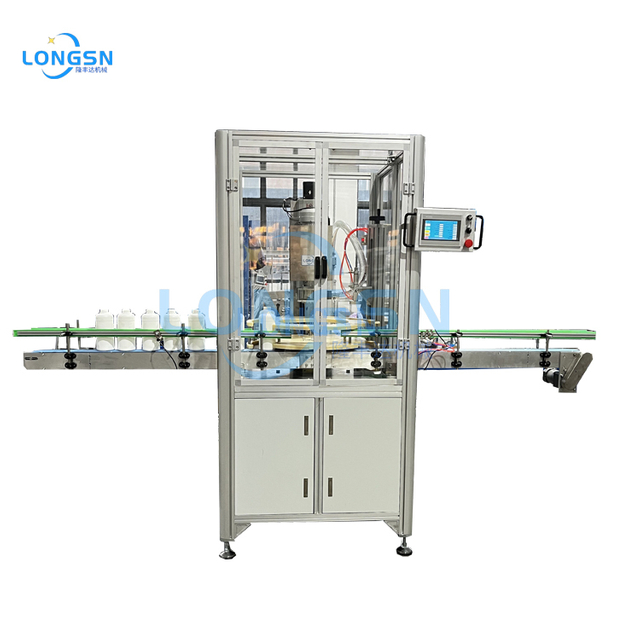
Continuous rotary systems dominate high-speed, dedicated production lines. They maximize daily output for dairy, water, or industrial chemical bottles. If you require massive volume without interruption, you need a high-quality bottle neck trimming machine built on a rotary frame.
These models offer exceptional throughput capabilities. Bottle handling remains incredibly smooth because the containers never stop moving. The continuous flow prevents liquid sloshing if trimming happens post-fill. However, they require a significantly larger footprint. Maintenance also requires more specialized mechanical training due to complex servo motors.
Fly-Knife vs. Spin Trimming
You must compare cutting mechanisms closely before making a final decision.
- Spin Trimmers: These systems rotate the bottle against a stationary blade. They typically yield flatter, cleaner finishes. You want this mechanism for wide-mouth jars and thick cosmetic containers.
- Fly-Knife Systems: A high-speed rotating blade strikes the stationary bottle neck. This impact-based method works well for thinner plastics.
Spin trimmers handle rigid containers far better than impact-based fly knives. Fly knives can occasionally cause stress fractures in brittle plastics.
Comparison of Core Architectures
| Feature | Linear / Indexing Trimmers | Rotary Trimmers |
| Target Production Speed | Low to Medium (up to 5,000 BPH) | High to Ultra-High (10,000+ BPH) |
| Changeover Complexity | Simple and fast | Complex and time-consuming |
| Floor Space Required | Minimal (Compact footprint) | Substantial (Large footprint) |
| Bottle Handling | Stop-and-go motion | Smooth, continuous motion |
Critical Evaluation Dimensions for Quality and Uptime
Machine architecture determines speed, but specific engineering details determine daily quality. You must evaluate these specific mechanisms to ensure consistent uptime.
Cut Precision and Chip-Free Guarantees
Look for precision-guided neck centering mechanisms immediately. High-quality mandrels or rigid guide rails prevent ovalization during the cut. If a warm bottle ovalizes slightly during trimming, the cut becomes angled. An angled cut guarantees a leaky seal later on. Perfect centering locks the bottle into a strict geometric circle. This guarantees a flush, perpendicular seal every single time.
Integrated Scrap Ejection Systems
Evaluate how the system handles the severed moil (dome). You must require mechanical ejection mechanisms. Pair this mechanical ejection with active vacuum extraction systems. A basic air blow-off is rarely sufficient for high-speed lines. Active vacuums remove fine plastic dust efficiently. They also pull static-charged chips completely out of the zone. Static electricity makes chips stick tightly to the bottle walls. Only strong vacuums can break this static cling.
Changeover and Tooling Efficiency
Examine the exact workflow required for swapping neck sizes. Look exclusively for color-coded, tool-less change parts. Your operators should not need wrenches to switch basic guide rails. Automated height adjustments via HMI (Human-Machine Interface) recipes save hours of labor. Operators simply select a new SKU on the touchscreen. The system automatically raises or lowers the cutting head. Fast, repeatable changeovers keep your production lines running profitably.
Blade Lifespan and Sharpening Intervals
Verify the exact metallurgical quality of the primary cutting blades. Hardened tool steel differs greatly from premium carbide. Hardened steel requires frequent sharpening. Carbide holds a microscopic edge much longer under intense friction. Understand the required sharpening frequency before you buy. Ask the vendor if sharpening can happen in-house. Relying on external sharpening services creates unacceptable downtime delays.

Implementation Risks: What Looks Good on Paper vs. The Factory Floor
A machine might look perfect in a brochure but fail miserably in reality. You must address physical integration risks before authorizing any delivery.
Upstream and Downstream Integration
Assess your conveyor handoffs carefully. The equipment must sync precisely with existing machinery. It must match the blow molder's exact output speed. It also needs to feed the downstream leak detector or filler seamlessly. Misaligned speeds cause massive bottle backups. Evaluate the PLC handshakes required to integrate the new unit. If the trimmer stops, the upstream blow molder must receive a pause signal immediately.
Space and Footprint Constraints
Account for physical dimensions very accurately. Measure the proposed machine footprint on your actual floor. Then, you must add necessary clearance for scrap removal conveyors. You also need dedicated space for local plastic granulators. Operators require at least three feet of clearance for safe maintenance access. Jamming a machine into a tight corner guarantees maintenance neglect.
Safety and Compliance Standards
Ensure the unit features complete safety enclosures. Interlocked guarding is absolutely mandatory today. These electronic interlocks automatically stop the system if any door opens. Do not accept machines with easily bypassed safety switches. Verify full compliance with regional safety codes like OSHA or CE directives. Heavy fines follow poor safety compliance. More importantly, inadequate guarding risks severe operator injury.
Vibration and Stability
Heavy-duty steel frames absorb intense operational vibration. Excessive vibration causes tiny micro-variations in the cutting head. These micro-variations alter the exact cut height. Uneven heights lead directly to downstream capping failures. If the frame looks thin or uses lightweight aluminum, reject it. You need massive structural rigidity to maintain cutting tolerances over millions of cycles.
Evaluating Vendor Reliability and Factory Acceptance Testing
The physical machine represents only half of your overall success. The vendor providing the equipment dictates your long-term operational stability.
Evaluating Vendor Reliability
Verify OEM (Original Equipment Manufacturer) parts availability immediately. Investigate whether the machine relies on highly proprietary wear parts. Do these parts ship slowly from overseas? Standardized, locally stocked components keep you running during sudden breakdowns. Ask about their local technical support network. A reliable vendor dispatches a trained technician within hours, not weeks. Check their reputation regarding warranty fulfillment.
Factory Acceptance Testing (FAT)
Demand a rigorous FAT process in the purchasing contract. Provide the vendor with your specific bottle molds. Ship them your exact resin blends. A proper FAT runs the machine continuously for several hours. Monitor the cut quality throughout this extended run. Measure the CPK (Process Capability Index) of the finished necks. Never authorize final shipment until you see flawless operation under your strict parameters.
Shortlisting Logic
Narrow your potential vendors using their proven track record. They must demonstrate deep experience with your specific bottle material. Ask for references from facilities running similar container geometries. They must also integrate their controls seamlessly. Their equipment needs to talk smoothly to your existing line PLC architecture. Mismatched control platforms cause endless communication errors.
Conclusion
Choosing the best trimming equipment requires a strict, evidence-based approach. You cannot rely on assumptions when capping integrity is at stake. The most effective unit aligns strictly with your specific daily volume. It handles your unique material resilience perfectly. It also accommodates your exact changeover frequency without frustrating delays.
Begin your procurement process today by mapping out your data. Compile your required BPH and gather physical sample bottles. Measure your exact floor plan dimensions. Present these detailed items to shortlisted OEMs immediately. Demand highly specific quoting and rigorous FAT proposals. By controlling the parameters early, you guarantee long-term production success.
FAQ
Q: What is the standard blade lifespan on a spin trimmer?
A: Blade lifespan varies heavily based on plastic density and throughput. High-volume PET processing dulls blades much faster than standard HDPE. High-quality carbide blades typically last several weeks under continuous use. Hardened tool steel may require weekly sharpening or replacement. Always monitor cut quality daily to determine your exact maintenance schedule.
Q: Can one machine handle both wide-mouth jars and narrow-neck bottles?
A: Yes, many machines accommodate diverse sizes using interchangeable tooling. However, extreme size differences require extensive changeover times. If you constantly switch between wide-mouth jars and narrow necks, swapping parts decreases your daily output. Dedicated machines per line often become more efficient for highly divergent container formats.
Q: How do you prevent plastic chips from falling into the trimmed bottle?
A: Modern systems prevent internal contamination using three key methods. First, inverted trimming drops gravity-fed chips away from the opening. Second, integrated blow-off nozzles blast residual dust outward. Finally, high-powered vacuum extraction systems pull static-charged shavings out of the cutting zone entirely before they enter the bottle.
Q: What is the typical lead time for custom bottle neck trimming equipment?
A: Standard manufacturing lead times usually range from 12 to 24 weeks. This timeframe depends heavily on your necessary customizations. Specialized HMI integrations, custom mandrels, or unique layout configurations extend manufacturing time. Always issue your purchase order well in advance of your planned production launch.

 English