Manual labeling quietly destroys your profit margins. Outdated equipment causes misaligned labels, drives up product waste, and triggers painful shipping delays. As your business scales, this bottleneck severely restricts throughput and damages your operational efficiency. We understand buying labeling equipment represents a major operational commitment. It is never just a simple hardware purchase. If you select the wrong machine, you face costly changeover delays and frustrating maintenance downtime.
You need equipment tailored exactly to your production reality. This article provides a zero-fluff, operational framework. We will help you evaluate, shortlist, and select the best system for your line. You will learn how to choose a reliable sticker labeling machine based on verifiable production metrics. By matching technical specifications to your actual container geometry and speed requirements, you ensure this investment directly multiplies your daily output.
Key Takeaways
- Container geometry and label material dictate the mechanical requirements of your machine—always test sample runs before purchasing.
- Semi-automatic machines suit sub-500 unit/hour runs, while fully automatic inline systems are required for scaling beyond 1,000+ units/hour.
- The true cost of a labeling machine includes changeover time, proprietary wear parts, and operator training, not just the upfront sticker price.
- ROI should be calculated based on labor hour reduction, minimized rework (waste), and increased line throughput.
1. The Pre-Purchase Diagnostic: Defining Your Production Baseline
You cannot buy the right equipment without mapping your current operational limits. Manufacturers often advertise impressive maximum speeds. However, your actual production floor operates differently. You must define a realistic baseline before comparing different models.
Current vs. Target Throughput (Speed)
Assess your required Products Per Minute (PPM). Do not rely on theoretical maximum machine speeds. Equipment builders often test using ideal conditions. Real-world applications involve varying operator skills and container inconsistencies. Calculate your average daily throughput. Then, factor in peak seasonal demand. If your holiday production spikes by forty percent, your machine must handle that surge without failing. Buying a machine capped at your current average speed guarantees future bottlenecks.
Container Geometry & Surface
Document every container variation in your product line. The physical shape of your product dictates the mechanical architecture of the machine. Even slight tapers dramatically alter how a label adheres.
- Cylindrical (Bottles, Jars, Tubes): Round containers require continuous rotation during application. Belts must wrap the label smoothly around the curvature to prevent bubbling.
- Flat/Square (Boxes, Cartons): Flat surfaces need straight-line wiping mechanisms. The machine presses the label flat against the rigid surface.
- Tapered/Irregular (Cosmetic containers, pouches): Irregular shapes present the highest difficulty. They often require custom molding pucks. These pucks hold the container perfectly vertical as it moves down the conveyor.
Label Specifications & Materials
Define your label dimensions precisely. Measure the core size and the outer diameter of your label rolls. Standard industrial machines accept 3-inch cores, but smaller tabletop models might use different sizes. You must also evaluate your backing materials.
Paper labels work seamlessly with standard photoelectric gap sensors. However, many modern brands prefer clear PET labels. Transparent labels look fantastic on glass bottles. Unfortunately, standard optical sensors cannot detect the gap between two clear labels. If you run transparent labels, you must upgrade to specialized ultrasonic or capacitive sensors. Failing to specify this upfront causes catastrophic misreads during production.
2. Types of Sticker Labeling Machines and Their Operational Fit
Every labeling system fits a specific volume tier. Matching your daily throughput to the correct machine category prevents overspending. It also protects you from buying underpowered equipment. Let's break down the primary configurations available today.
Semi-Automatic Label Applicators
Small businesses and craft producers heavily rely on semi-automatic applicators. They perfectly suit low-to-medium volume runs. You might use them for secondary product lines or limited-edition batches.
The implementation reality is entirely manual. An operator must load and unload every single unit. You benefit from a very low upfront capital cost. The footprint remains small, easily fitting on a workbench. However, human speed inherently caps your maximum throughput. Fatigue sets in during long shifts. Operator exhaustion eventually leads to slower cycle times and inconsistent placement. Consider this category only if your production stays below 500 units per hour.
Fully Automatic Inline Systems
High-volume operations demand fully automatic inline systems. These robust machines integrate directly with your existing filling and capping equipment. They pull products continuously down a synchronized conveyor belt.
This category requires significant capital expenditure. You must ensure precise conveyor synchronization between all your packaging machines. Despite the high initial cost, automatic systems yield the lowest per-unit labor cost. They run relentlessly without operator fatigue. Scaling beyond 1,000 units per hour requires this level of automation. Integrating an automated sticker labeling machine completely transforms your daily throughput capacity.
Configuration Styles (Wrap-Around vs. Front/Back vs. Top/Bottom)
You must match the machine architecture to your specific container. Buying a generic machine often results in poor label adherence.
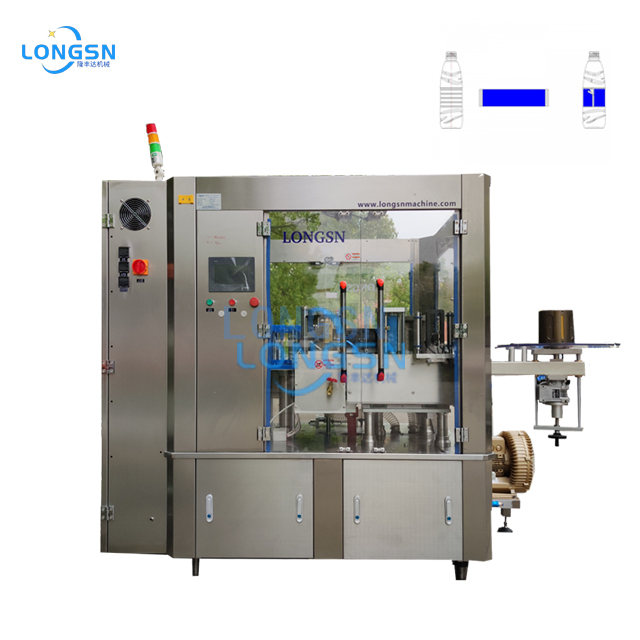
- Wrap-Around Systems: Mandatory for continuous bottle labeling. They spin the cylinder against a backing pad to apply the label 360 degrees.
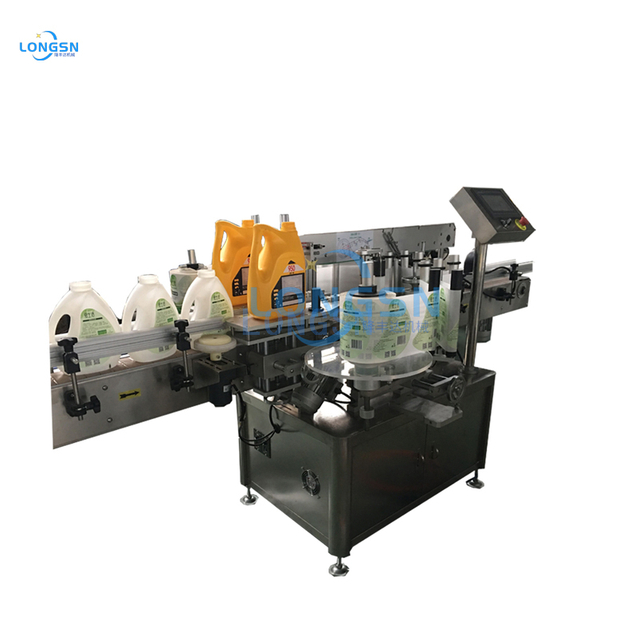
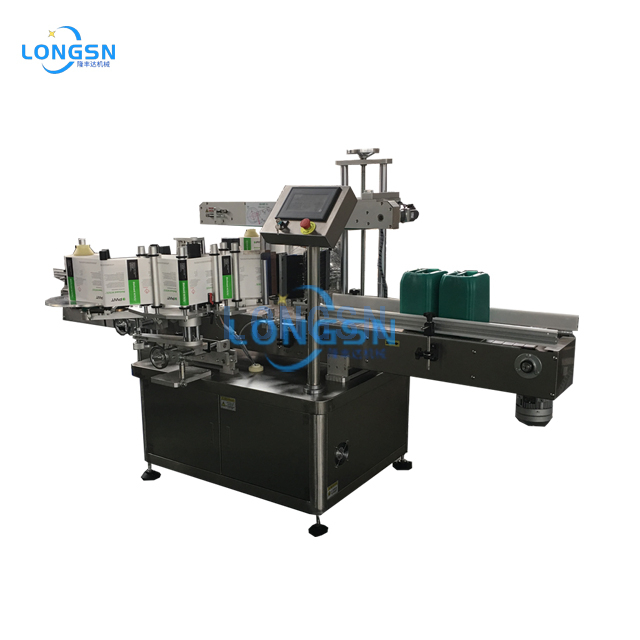
- Front/Back Systems: Ideal for oval shampoo bottles or square detergent jugs. They apply two distinct labels simultaneously using dual dispensing heads.
- Top/Bottom Labelers: Necessary for clamshell packaging, bakery boxes, or frozen food trays. They apply security seals or barcode stickers to the upper and lower flat surfaces.
Table 1: Operational Comparison of Labeling Machine Types
| Feature Category | Semi-Automatic Systems | Fully Automatic Inline Systems |
| Ideal Volume | Under 500 units/hour | 1,000+ units/hour |
| Operator Involvement | High (Loads every unit) | Low (Replenishes rolls only) |
| Capital Expenditure | Low to Moderate | High (Requires integration) |
| Footprint | Compact / Tabletop | Large / Floor-standing |
3. Core Evaluation Criteria: Features That Drive Business Outcomes
Evaluating hardware requires looking past marketing brochures. You must scrutinize the internal mechanics. The quality of internal components directly dictates your line efficiency and overall product presentation.
Placement Accuracy and Tolerance Limits
Crooked labels damage your brand perception. Demand verifiable tolerance specifications from the manufacturer. Industry-standard placement accuracy should sit around ± 1mm. Anything less precise leads to visible skewing on retail shelves.
You must understand the motor technology driving the dispensing head. Servo-driven dispensing motors provide superior accuracy compared to standard stepper motors. Servos use continuous feedback loops to monitor their exact position. This closed-loop system prevents label drift during rapid acceleration. Stepper motors lack this feedback mechanism. They frequently lose their position during high-speed applications. If your line runs fast, demand servo motors.
Changeover Time and Flexibility
Production lines rarely run just one product forever. Evaluate the mechanical complexity involved when switching between different SKUs. Ask the vendor how long it takes to switch from a small round bottle to a large square box.
Look for tool-less adjustments. Operators should never need wrenches to move guide rails. The best machines utilize digital memory settings via a Programmable Logic Controller (PLC). Operators use a touchscreen Human Machine Interface (HMI) to store recipe settings. When changing products, they simply select the correct recipe. Standardized ruler scales on guide rails also help. They allow operators to record exact physical positions for every container type, drastically reducing setup delays.
Component Quality and Sensor Technology
Verify the origin of all critical components. The PLC screens, motors, and photoelectric sensors determine machine lifespan. Many cheap machines use obscure, unbranded electronics.
Standardized, off-the-shelf parts protect your investment. Insist on components from globally recognized brands like Omron, Sick, or Allen-Bradley. Standard parts ensure you never get locked into expensive proprietary replacements. If a sensor fails on a Tuesday morning, you can buy a replacement locally. Obscure components require international shipping, shutting down your line for weeks.
4. Hidden Costs and Implementation Risks to Avoid
A poorly chosen machine drains your budget long after the initial invoice. You must proactively identify hidden maintenance traps and compliance failures before signing a purchase order.
The "Proprietary Parts" Trap
Some manufacturers sell machines at an aggressive discount. They recover their margins by forcing you to buy proprietary wear parts. Items like timing belts, peel plates, and specialized backing pads wear out regularly.
Avoid vendors requiring proprietary consumables. You will pay exorbitant markups for basic rubber belts. Ask for a comprehensive list of wear parts during the quoting phase. Confirm you can source these items independently from industrial supply catalogs.
Maintenance & Accessibility
Assess the machine footprint carefully. Look at the ease of access to the web path. The web path is the route the label backing paper travels through the rollers. Complicated label threading paths frustrate operators.
Threading a new roll should take seconds, not minutes. Complex routing increases downtime during every single roll change. Over a year, those extra minutes compound into days of lost production. Request a video showing an operator threading a fresh roll. If it looks difficult on video, it will perform terribly on your factory floor.
Compliance and Safety Standards
Regulatory compliance is non-negotiable for specific industries. Food, beverage, and pharmaceutical facilities operate under strict hygiene mandates. Paint chips and rusting steel introduce severe contamination risks.
Ensure the machine framework uses 304 or 316 stainless steel. Stainless steel resists harsh chemical washdowns. Verify the equipment meets local regulatory standards. Look for CE marks, UL certifications, and GMP compliance. Failing an external health audit because your labeler rusts will halt your entire operation.
Post-Sale Support
Hardware always fails eventually. How the vendor responds matters most. Vet potential partners based on their post-sale support infrastructure.
Check the availability of domestic technicians in your region. Ask if they offer remote video troubleshooting. A quick video call often solves minor calibration issues instantly. Finally, secure guaranteed parts shipping times in writing. A broken sensor shouldn't trigger a two-week delay while waiting for an overseas shipment.
5. Calculating ROI and Shortlisting Vendors
You must justify the equipment purchase using clear financial metrics. Build a robust business case based on operational savings and output gains. Do not evaluate the machine in isolation.
Quantifying the Business Case
Create a framework to calculate your expected payback period. Start with labor reallocation. Moving staff away from manual labeling frees them for higher-value tasks. You stop paying human beings to perform repetitive mechanical motions. They can shift to quality control or packing outbound shipments.
Next, calculate the reduction in label waste. Human error inevitably causes misaligned labels. Crooked labels force you to scrap the packaging or rework the product completely. Automated systems apply labels perfectly every time. Eliminating this daily rework saves expensive packaging materials and preserves product integrity.
The Vendor Proof-of-Concept
Never buy equipment based purely on a PDF spec sheet. Marketing materials always present the most optimistic scenarios. Mandate a Factory Acceptance Test (FAT) before authorizing final payment.
If you cannot visit the factory, demand a live video demonstration. Force the vendor to run your exact containers and your exact labels. Send them physical product samples. Watch the machine apply the labels continuously. If the vendor refuses to run a test with your physical samples, walk away immediately. Real-world testing is the only way to guarantee mechanical compatibility.
Conclusion
Transitioning from manual processes to automated labeling fundamentally transforms your production floor. Stop viewing labeling equipment as a frustrating expense. A properly specified machine acts as a powerful efficiency multiplier. It eliminates shipping delays, stops product waste, and redeploys your workforce to higher-value operations.
To move forward, define your container geometries and required throughput precisely. Gather exactly three competing quotes from reputable manufacturers. Finally, send physical product samples to your shortlisted vendors for live test runs. Witnessing your actual products running on their equipment remains the single best way to validate your investment.
FAQ
Q: Can one sticker labeling machine handle both round bottles and flat boxes?
A: Generally, no. Round bottles require wrap-around mechanisms to spin the container, while flat boxes need straight-line wiping. While some modular systems offer interchangeable heads, dedicated machines always perform better. Trying to use a multi-purpose machine often compromises placement accuracy on both shapes.
Q: What is the difference between a stepper motor and a servo motor in label applicators?
A: Servo motors use continuous closed-loop feedback to monitor their position. They offer superior accuracy and handle high-speed acceleration flawlessly. Stepper motors lack this feedback. They are cheaper but can lose their position during rapid runs, resulting in drifting or skewed labels.
Q: Do I need a special sensor for transparent/clear labels?
A: Yes. Standard photoelectric sensors rely on light passing through the gap between paper labels. Clear PET labels block no light, confusing standard sensors. You must specify ultrasonic or capacitive sensors, which detect changes in material thickness rather than light opacity.
Q: How long does a typical machine changeover take?
A: A well-designed machine with tool-less adjustments and digital PLC memory recipes takes 5 to 10 minutes to change over. Older or poorly designed systems requiring manual wrench adjustments and trial-and-error sensor calibration can take 30 to 45 minutes.

 English