Purchasing industrial packaging equipment carries incredibly high stakes for your business. Capital constraints restrict your budget. Integration risks threaten your overall efficiency. Production line bottlenecks mean you cannot afford any missteps. You need reliable systems to keep daily operations running smoothly. We focus exclusively here on industrial-grade equipment designed for reliability, high throughput, and accurate registration. You will learn how to evaluate these complex systems based on hard specifications rather than marketing hype. Our guide compares the top five machine configurations available on the market today. We provide a spec-driven framework to help you shortlist the exact equipment your production environment requires. By the end, you will confidently identify the perfect sticker labeling machine for your specific packaging needs.
Key Takeaways
- Capacity vs. Reality: A machine rated for 200 PPM (products per minute) often runs at 150 PPM in real-world scenarios due to web tension and changeover realities.
- Format Flexibility: Double-sided inline labelers offer the highest ROI for contract packagers, while wrap-around machines are purpose-built for cylindrical efficiency.
- Integration Readiness: Modern sticker labeling requires seamless PLC (Programmable Logic Controller) handshakes with existing upstream fillers and downstream cartoners.
Baseline Evaluation Criteria: How to Judge a Sticker Labeling Machine
You must evaluate potential equipment using strict baseline criteria. A poor choice directly impacts your overall equipment effectiveness (OEE). We recommend looking past glossy brochures. Focus entirely on mechanical performance and integration readiness. You need a system built for your exact production constraints.
Throughput and Speed Matching
Your labeling head must match upstream filling or capping speeds. You want to avoid causing micro-stoppages. Micro-stoppages degrade motor lifespan and cause label web tension issues. If your filler outputs 150 bottles per minute, your labeler needs a comfortable maximum rating of at least 200 bottles per minute. This buffer accounts for surge speeds. It ensures smooth transitions during operation. You should never run a machine at its absolute maximum capacity continuously.
Registration Accuracy
Registration accuracy determines where the label lands on your container. You must evaluate stepper versus servo motor labeling heads. Stepper motors are cost-effective for moderate speeds. However, they lack closed-loop feedback. They can miss steps at high speeds. Servo motors offer continuous encoder feedback. They guarantee placement precision within ±1mm. We highly recommend servo-driven heads for premium packaging lines. They prevent skewed labels and maintain brand integrity.
Changeover Complexity
Multi-SKU facilities face constant format changes. Changeover complexity dictates your daily downtime. You should demand tool-less adjustments. Look for digital position indicators on all mechanical crank handles. These indicators allow operators to record exact numerical settings for specific bottles. Memory recipes stored in the Human-Machine Interface (HMI) also reduce human error. Operators simply select a pre-programmed product profile. The system then automatically adjusts digital parameters.
Compliance and Material Tracking
Regulated industries require flawless material tracking. Pharmaceutical and food facilities rely heavily on traceability. You must ensure seamless integration between your labeler and external coding devices. Most modern systems use thermal inkjet (TIJ) coders. You also need vision inspection systems. Cameras verify lot codes and expiration dates instantly. If a code is missing, the system must trigger a pneumatic reject mechanism. This prevents defective units from reaching consumers.
Table 1: Evaluation Metrics Overview for Labeling Equipment
| Evaluation Metric | Standard Performance | High-Performance Standard | Primary Business Impact |
| Motor Technology | Stepper Motor | Servo Motor (Closed-Loop) | Placement Accuracy |
| Changeover Method | Manual Tooling | Tool-less / HMI Memory | Daily Uptime / OEE |
| Speed Buffer | Matches line speed exactly | 20-30% higher than line speed | Motor Lifespan / Tension |
| Compliance Tech | Basic Sensor | TIJ Coder + Vision System | Product Recall Prevention |

The Top 5 Sticker Labeling Machine Profiles Compared
Finding the right sticker labeling machine requires matching the machine profile to your container geometry. Different machines excel in entirely different environments. We structured this comparison using a strict review framework. You can use these profiles to eliminate incompatible equipment immediately.
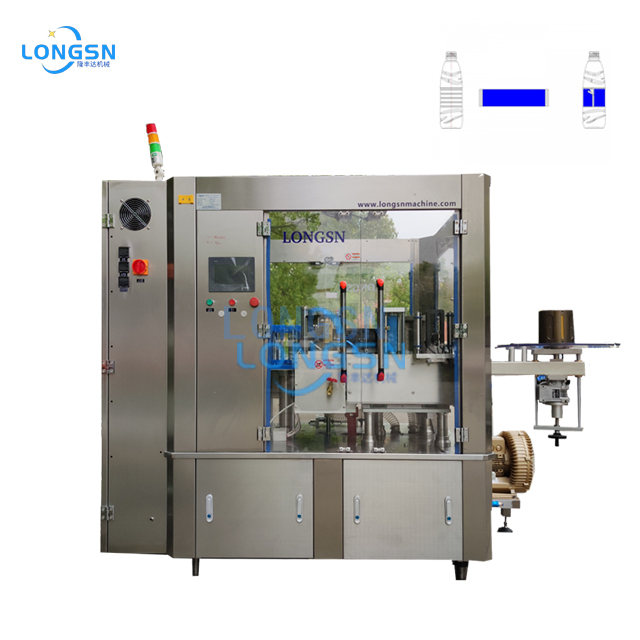
1. The High-Volume Rotary Labeling Machine
Rotary systems dominate massive production environments. They use a central carousel to transport bottles continuously. They manage extreme speeds effortlessly.
- Best For: Continuous, high-speed single-format production. They dominate breweries and mass beverage facilities.
- Pros: Unmatched speed capabilities. They often exceed 300 products per minute. They offer extreme precision due to positive container control throughout the carousel.
- Cons: High capital expenditure. They require complex, time-consuming changeovers for different bottle shapes. They also demand a massive factory footprint.
- Key Spec: Continuous motion servo-driven carousel.
Common Mistake: Buying a rotary system for a facility running twenty different bottle shapes. The constant changeover downtime will destroy your daily output metrics.
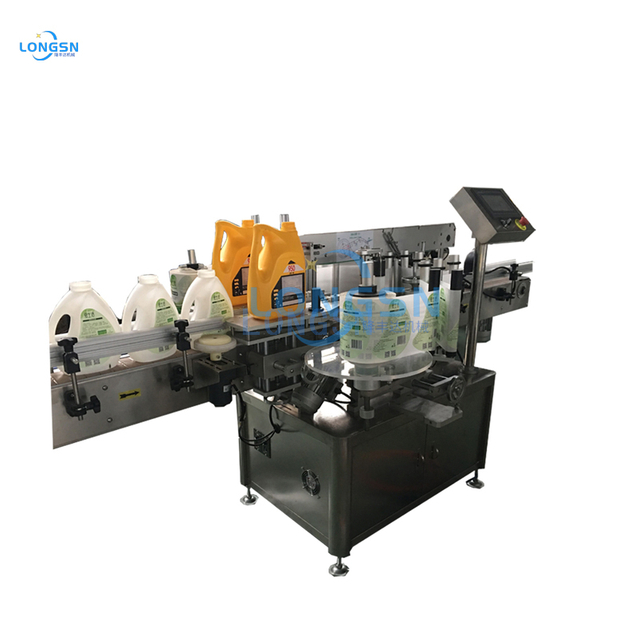
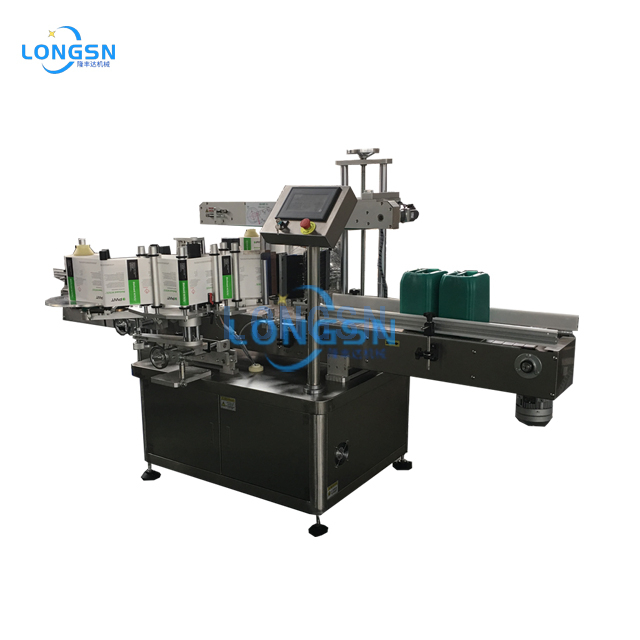
2. The Inline Double-Sided Sticker Labeling Machine
Inline double-sided labelers are the workhorses of the contract packaging industry. They utilize synchronized dual wipe-down stations to apply front and back labels simultaneously.
- Best For: Oval, flat, and rectangular containers. They handle cosmetics, motor oil, and household cleaners flawlessly.
- Pros: High versatility. You can often switch them to single-side mode easily. They offer much easier line integration than bulky rotary machines.
- Cons: They require precise container alignment. Top hold-down belts are mandatory. They remain highly susceptible to skewing on lightweight empty bottles.
- Key Spec: Synchronized dual wipe-down stations.
Best Practice: Always use a top hold-down belt. It stabilizes the container just before the label makes contact. This prevents micro-rotations on the conveyor belt.
3. The Automated Wrap-Around Labeler (Cylindrical Focus)
Wrap-around systems focus strictly on cylindrical efficiency. They spin round containers against a stationary or motorized belt to apply a continuous label.
- Best For: Vials, jars, and round bottles. They serve pharma, sauces, and supplement industries perfectly.
- Pros: Highly cost-effective for round formats. They feature exceptionally reliable motorized wrap-belts. They require minimal changeover parts.
- Cons: They are completely incompatible with non-cylindrical shapes. They struggle significantly with highly tapered containers without custom tooling.
- Key Spec: 3-point roller orientation for label alignment.
What to watch out for: Tapered bottles require angled peel plates. Standard vertical peel plates will cause severe label wrinkling on conical containers.
4. The Top and Bottom Labeling System
Top and bottom systems target flat-laying products. They utilize a split-conveyor design. This exposes the bottom of the product briefly for label application.
- Best For: Clamshells, trays, boxes, and flat pouches.
- Pros: Applies two labels simultaneously on flat surfaces. The clever split-belt design allows bottom access without flipping the product.
- Cons: Belt transitions can cause product jams. Irregular or unstable products often catch on the conveyor gap.
- Key Spec: Split-conveyor gap transfer system.
Best Practice: Ensure your product spans the conveyor gap comfortably. Products shorter than the gap width will fall through or jam the mechanism.
5. The Semi-Automatic Tabletop Labeler (High-Mix, Low-Volume)
Tabletop units strip away heavy automation. They rely on manual product placement. They excel in environments where flexibility outweighs raw speed.
- Best For: Pilot plants, boutique manufacturers, and contract packagers handling very short runs.
- Pros: Extremely low capital expenditure. They offer near-instant changeovers. They require minimal operator training and remain highly portable.
- Cons: Throughput is entirely operator-dependent. Speeds typically cap at 15 to 30 products per minute. They lack upstream and downstream automation capabilities.
- Key Spec: Foot-pedal or optical sensor actuation.
Common Mistake: Expecting a tabletop unit to scale into an automated line later. They operate as standalone islands and cannot interface with PLCs.
Implementation Realities: What Vendors Rarely Tell You
Equipment vendors often demonstrate machines under perfect laboratory conditions. Real-world factories present messy, unpredictable variables. You must understand these implementation realities before signing a purchase order. Preparing for these variables separates successful integrations from expensive failures.
The "Empty Bottle" Variable
Labeling empty, lightweight PET bottles is drastically different from labeling filled, rigid glass. Empty plastic bottles lack mass. Conveyor sway impacts them easily. They bounce or vibrate when transitioning between conveyor belts. This vibration directly impacts label skew. You must invest in motorized top hold-down belts. These belts pin the lightweight bottle to the conveyor. It stabilizes the container precisely at the application point. Vendors rarely emphasize this requirement during initial sales pitches.
Label Web Splicing
High-speed machines consume label rolls rapidly. A 300 PPM line can deplete a standard roll in minutes. Line stoppages occur every time an operator changes a roll. You lose valuable production time. High-speed operations require dual unwinds or zero-downtime splicers. These mechanisms automatically splice a new roll onto the depleting web without stopping the machine. They prevent massive line stoppages. You should prioritize automated splicers if your daily volume exceeds 50,000 units.
Static and Environment
Factory environments deeply affect label webs. Dust, humidity, and static electricity cause severe operational headaches. Dry environments generate intense static electricity on synthetic label webs. This static can cause the web to snap under tension. It also causes optical sensors to misfire randomly. You should invest in active static eliminators. Ionizing bars neutralize the static charge before the web reaches the labeling head. They stabilize the process and prevent mysterious sensor errors.
Procurement Next Steps: How to Shortlist and Request a Quote
You now understand the mechanical realities of industrial labelers. Your next step involves approaching vendors methodically. You must control the procurement process. Do not let sales representatives dictate the evaluation terms. Use a structured approach to validate equipment capabilities before committing capital.
Prepare a Product Matrix
Never contact a vendor without a comprehensive product matrix. You must document every container shape in your portfolio. List exact dimensions, material types, and target speeds for each item. Include your label dimensions and material types as well. Provide this matrix to the engineering team. It forces them to quote a machine capable of handling your entire range. It also exposes custom tooling requirements early in the negotiation process.
Demand a Factory Acceptance Test (FAT)
A Factory Acceptance Test is absolutely non-negotiable. Never buy an industrial sticker labeling machine without one. You must send physical samples of your containers and label rolls to the manufacturer. Demand a recorded video test of your actual products running on their machine. Better yet, fly out and witness the FAT in person. This test proves the machine handles your specific tolerances. It eliminates post-installation surprises.
Evaluate After-Sales Support
A machine is only as reliable as its support network. Mechanical parts eventually wear out. Sensors occasionally fail. You must evaluate the vendor's after-sales infrastructure. Check for a domestic spare parts inventory. Relying on international shipping for critical parts causes disastrous downtime. Demand remote PLC troubleshooting capabilities. Modern machines allow engineers to diagnose code errors securely via the internet. Finally, verify field service technician availability in your specific geographic region.
Conclusion
The "best" sticker labeling machine is entirely dependent on your specific production reality. Container geometry, line speed, and changeover frequency dictate your ideal equipment profile. A rotary machine shines in high-volume environments, while a double-sided inline system dominates high-mix contract packaging. You must match the hardware to your daily operational hurdles.
We strongly recommend prioritizing vendors who offer transparent Factory Acceptance Tests. You should also demand non-proprietary, off-the-shelf PLC and servo components. This strategy prevents vendor lock-in and simplifies future maintenance. Take action today by downloading a specification checklist. Contact your internal engineering team to audit your current line integration needs before requesting vendor quotes.
FAQ
Q: What is the difference between a stepper and servo motor in a sticker labeling machine?
A: The main differences are precision and speed capabilities. Servo motors offer continuous closed-loop feedback. They constantly verify their exact position, ensuring higher accuracy at high speeds. Stepper motors operate in an open loop. They are cost-effective for moderate speeds but can skip steps and cause label skew during rapid acceleration.
Q: Can a wrap-around labeler handle tapered bottles?
A: Standard wrap-around labelers struggle with tapered bottles. The conical shape causes the label to travel upwards, resulting in severe wrinkling. You need specialized modifications. The machine requires angled peel plates and custom conical rollers to match the bottle's exact taper and prevent wrinkling.
Q: How long should a standard machine changeover take?
A: You should set baseline expectations based on the machine type. Inline machines typically take 5 to 15 minutes for a changeover. This requires saved HMI recipes and tool-less adjustment cranks. Rotary machines require significantly more time, often exceeding 45 minutes due to complex custom handling parts.
Q: What type of sensor is required for clear sticker labels?
A: You must use either an ultrasonic or a capacitive sensor. Standard photoelectric sensors rely on light transmission. They cannot detect a transparent label sitting on a transparent backing web. Ultrasonic sensors use sound waves to detect the slight thickness change between the gap and the label.

 English