Understanding the mechanics of a PET Bottle Blow Moulding Machine goes far beyond simple daily operation. It forms the foundational step in mitigating capital expenditure risk. It also aligns production capacity directly alongside your organizational goals. Many plant managers misinterpret these highly technical processes. Misunderstanding the nuances of heating, stretching, and blowing phases creates severe problems. It often leads to over-specifying equipment for simple applications. You might face inflated energy costs month after month. It can also cause painful bottlenecks inside downstream packaging lines.
This guide breaks down the exact working principles of PET blow moulding. We examine the core thermal and mechanical phases in detail. We then translate those technical mechanics into concrete evaluation criteria. You can use these insights for shortlisting your next machine. Applying these principles ensures you optimize factory floor space, improve material yield, and reduce long-term operational risks.
Key Takeaways
- The core process relies on precise thermal management and biaxial orientation; slight deviations directly impact bottle strength and material yield.
- Single-stage machines are optimal for specialized, blemish-free cosmetic/pharma containers, while two-stage machines dominate high-volume beverage production.
- Energy consumption (specifically high-pressure compressed air and infrared heating) accounts for the largest ongoing operational expense, making efficiency ratings critical.
- Evaluating a machine requires balancing theoretical output (Bottles Per Hour - BPH) with realistic changeover times and maintenance downtime.
The Core Working Principle: The Stretch Blow Moulding Process
Mechanical precision dictates the final reject rate and material efficiency. Every fraction of a second matters during the moulding cycle. Precise movements reduce plastic waste. They also guarantee container stability for stacking and shipping. A typical PET Bottle Blow Moulding Machine executes three distinct operational phases. We will explore each phase below.
Phase 1: Preform Heating (Thermal Conditioning)
PET preforms must pass through specialized infrared (IR) heating ovens. The goal involves reaching the specific glass transition temperature. This temperature makes the rigid plastic pliable. Rotary dials or linear chains spin the preforms continuously. This rotation ensures the IR lamps heat the entire circumference evenly.
Zone-controlled heating ensures perfectly even wall thickness. Operators adjust individual lamp rows to target specific preform sections. Uneven heating leads to thin spots in the final container. These weak areas cause structural failures during transport. A common mistake involves ignoring ambient factory temperatures. Ambient heat fluctuations easily disrupt the carefully calibrated oven profiles.
Phase 2: Stretching and Pre-Blowing
Heated preforms enter the mechanical mould cavity. A precision stretch rod plunges downward to elongate the preform vertically. Simultaneously, the system injects a burst of low-pressure air. This pre-blow air expands the plastic slightly outward. The stretch rod ensures the material distributes evenly from neck to base.
This dual action creates "biaxial orientation" inside the plastic. It perfectly aligns the complex polymer chains. Biaxial orientation gives the finished PET bottle its final tensile strength. It also provides the signature crystal clarity you expect. If the stretch rod moves too slowly, the material pools at the bottom. This pooling wastes expensive resin and ruins bottle aesthetics.
Phase 3: High-Pressure Blowing and Cooling
The system immediately introduces high-pressure air into the cavity. This immense pressure forces the pliable PET aggressively against the chilled mould walls. The mould itself contains intricate internal water channels. Cold water circulates continuously through these pathways.
The hot plastic cools almost instantly upon contact. It immediately locks into its final rigid shape. Cycle time relies heavily on this specific cooling efficiency. Inadequate chilling extends cycle times significantly. It degrades your daily output metrics. Best practice requires utilizing dedicated industrial chillers specifically for the mould cooling circuit.
Single-Stage vs. Two-Stage Processes: Selecting the Right Architecture
Choosing your machine architecture represents the most critical decision stage. The right process depends entirely on your specific volume requirements. It also depends on how you source preforms and your final product application. You must understand the distinct differences before investing.
Single-Stage (Injection Stretch Blow Moulding - ISBM)
Single-stage systems handle the entire manufacturing process internally. The machine melts raw PET resin pellets first. It injects this molten plastic into a primary preform cavity. The machine then immediately moves this hot preform into the blowing station. It blows the final bottle within one continuous machine cycle.
This method proves best for non-standard shapes. It dominates the cosmetic and pharmaceutical packaging sectors. The continuous process eliminates the need for massive preform storage. It prevents surface scratches because preforms never tumble into bulk bins. You will face higher initial tooling costs for these machines. However, they deliver absolutely excellent quality control for premium products.
Two-Stage (Reheat Stretch Blow Moulding - RSBM)
Two-stage systems rely on pre-manufactured, cooled preforms. You purchase or inject these preforms separately. The machine strictly handles the reheating and blowing phases. Operators dump thousands of preforms into a hopper. The machine unscrambles them and feeds them into the heating oven.
This architecture remains the industry standard for high-volume beverage packaging. It dominates water, carbonated soft drinks, and edible oil production. It allows for massive scalability and much faster cycle times. You also benefit from lower machine-specific capital expenditure, assuming you source preforms externally.
Architectural Comparison Chart
| Feature | Single-Stage (ISBM) | Two-Stage (RSBM) |
| Raw Material | PET Resin Pellets | Pre-manufactured Preforms |
| Surface Finish | Flawless, scratch-free | May have minor transit scuffs |
| Ideal Output Volume | Low to Medium | Extremely High |
| Target Industries | Cosmetics, Pharma, Specialty | Water, Soda, Edible Oil |
Automation Levels: Balancing Throughput with Labor Costs
Automation levels dictate your daily staffing requirements. They also limit your maximum theoretical production capacity. You must weigh the initial equipment investment against long-term operational ease.
Fully Automatic Machines
These systems feature fully integrated preform unscramblers. They utilize automated robotic loaders and precise ejector mechanisms. The machine feeds, heats, blows, and ejects bottles continuously. Human intervention remains minimal during standard operation.
This level is absolutely necessary for outputs exceeding 2,000 bottles per hour. It drastically reduces shift labor dependencies. However, it requires highly skilled technicians for routine maintenance. You must keep sensors aligned and robotic arms calibrated. Neglecting preventative maintenance on automatic systems causes catastrophic downtime.
Semi-Automatic Machines
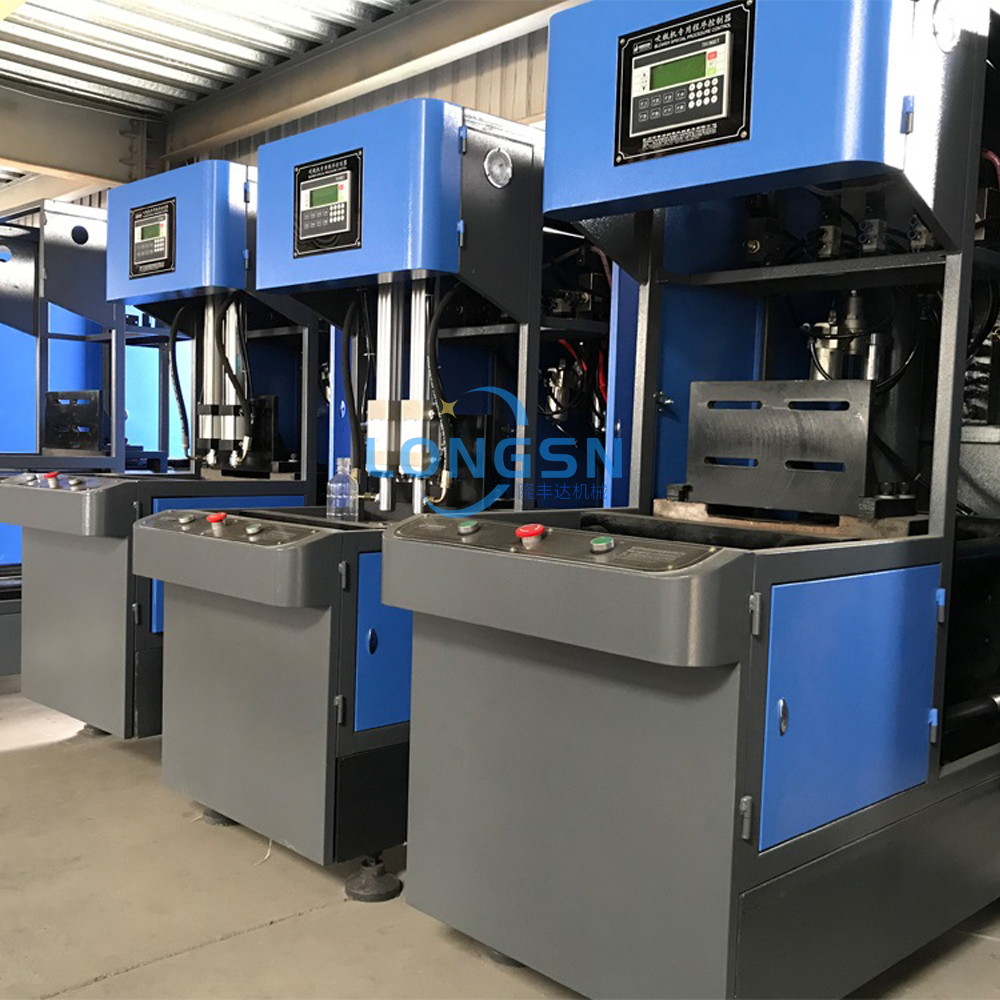
Semi-automatic models require continuous human interaction. Operators must manually load heated preforms into the open blow moulds. They then press dual safety buttons to initiate the blowing sequence. Finally, they manually remove the finished bottles.
These machines remain viable only for specific low-volume production scenarios. They suit early-stage startups well. They also work perfectly for highly specialized large-gallon containers, like 5-gallon water jugs. You will face high labor dependency. Expect variable cycle times based on operator fatigue.
Key Evaluation Dimensions for Shortlisting Equipment
Selecting the right PET Bottle Blow Moulding Machine requires looking past basic marketing specifications. You must analyze practical operational data. Focus on the following key dimensions during your vendor evaluations.
- Throughput vs. Realistic Yield: Never evaluate equipment solely on the stated bottles per hour (BPH). You must calculate realistic overall equipment effectiveness (OEE). Always assume a 10-15% buffer for routine maintenance and product changeovers.
- Energy and Air Consumption: High-pressure air compressors act as massive energy draws. They inflate utility bills rapidly. Look for machines featuring modern air recovery systems. These systems recycle blowing air for pre-blowing or pneumatic cylinder actuation.
- Mold Flexibility & Changeover Agility: Consider your product mix carefully. The time it takes to swap molds represents a direct operational cost. Evaluate quick-change mold mechanisms thoroughly. Co-packers and multi-SKU brands require rapid heating profile adjustments.
- Footprint & Integration: Assess the physical factory footprint meticulously. Determine how the machine’s ejection system integrates physically. It must align perfectly alongside existing air conveyors or filling blocks.
Implementation Realities and Adoption Risks
Integrating new blow moulding equipment exposes your facility to specific risks. Many organizations stumble during the initial commissioning phase. Understanding these implementation realities prevents costly installation delays.
Infrastructure Constraints
Many facilities vastly underestimate the required utility upgrades. Standard factory air compressors cannot support this process. The equipment requires specialized high-pressure air compressors. These typically run between 30 and 40 bar of pressure. You also need industrial-grade water chillers to manage mould temperatures. Failing to secure these utilities beforehand delays production by months.
Operator Expertise Gap
Transitioning from manual systems to fully automatic lines creates a knowledge gap. Operators must learn entirely new troubleshooting methods. Modern machines rely heavily on Programmable Logic Controllers (PLC). Your staff needs basic PLC troubleshooting skills to clear digital faults. Factor comprehensive vendor training programs into your initial deployment schedule.
Maintenance Realities
Blow moulding relies on consumable wear parts. Infrared heating lamps degrade slowly over time. Pneumatic directional valves wear out from rapid cycling. Evaluate the vendor's spare parts availability closely. Check if the machine uses non-proprietary, standard components. Machines utilizing standard Festo or SMC pneumatics ensure you can source replacements locally in emergencies.
Conclusion
A reliable PET Bottle Blow Moulding Machine stands as the absolute linchpin of a profitable liquid packaging line. The fundamental choice between single-stage and two-stage architectures dictates your market agility. Furthermore, your selected automation level directly controls your long-term cost per bottle. Careful planning around high-pressure air and chilled water utilities guarantees a smooth installation.
You must take deliberate next steps. Audit your facility's current utility capabilities immediately. Check your air pressure lines and chilled water capacity. Define your exact bottle SKU variations and neck sizes before requesting vendor quotes. Proper preparation prevents costly mid-project change orders.
Contact our dedicated engineering team today for a customized throughput analysis. We can help verify your utility requirements. You can also download our technical specification comparison sheet to benchmark your top choices.
FAQ
Q: What is the standard lifespan of a commercial PET blow moulding machine?
A: A commercial machine typically lasts between 10 to 15 years. This timeline assumes you follow strict preventative maintenance schedules. Routine replacement of pneumatic valves, seals, and heating lamps extends the usable life significantly. You can usually achieve full return on investment well before major mechanical overhauls become necessary.
Q: Can one machine blow different sizes of bottles?
A: Yes, one machine handles multiple bottle sizes. However, you face strict limitations regarding the neck finish size. The preform neck size must match the machine's transfer mandrels exactly. You are also constrained by the maximum physical dimensions of the internal mold cavity.
Q: How much compressed air does a fully automatic machine require?
A: Air requirements vary dramatically based on bottle size and production speed. High-volume automatic machines typically demand between 30 and 40 bar of high-pressure air. You should request a specific pneumatic consumption chart from the manufacturer. This data helps you calculate precise monthly utility costs accurately.
Q: Does the machine support recycled PET (rPET)?
A: Yes, modern machines actively support recycled PET. Processing rPET aligns with global sustainability trends and compliance mandates. However, rPET absorbs heat differently than virgin resin. You must adjust the infrared oven heating profiles specifically for recycled materials to prevent material degradation.

 English