Transitioning from manual labeling to automation requires capital expenditure. Upgrading legacy equipment also demands rigorous financial planning. Focusing solely on the initial price tag obscures the true financial impact. Procurement teams must look beyond the sticker price. The decision hinges on throughput efficiency. It also depends on integration readiness and long-term lifecycle expenses. We aim to provide a transparent, vendor-neutral breakdown. You will learn what a sticker labeling machine actually costs. This guide covers hidden operational expenses. It also details precise ROI calculation frameworks. We want to support a data-backed purchasing decision. You will gain actionable insights for your budget planning. This ensures your capital investment aligns seamlessly with production goals.
Key Takeaways
- Upfront costs vary widely: Prices range from under $1,000 for basic semi-automatic tabletop units to $50,000+ for high-speed, fully automated inline systems.
- Lifecycle costs matter more than initial price: Maintenance, operator training, format changeover parts, and consumable waste often exceed the machine's base cost over a 5-year lifecycle.
- ROI is measurable: Automation typically pays for itself within 6 to 14 months through direct labor savings and a reduction in mislabeled (rejected) products.
- Application dictates budget: Specialized requirements, such as high-precision placement for small containers (e.g., vials or cosmetics), require specific tooling that increases initial capital requirements.
Upfront Pricing Tiers for Sticker Labeling Machines
We need to establish realistic baseline expectations. You must allocate capital based on your distinct production scale. Prices differ drastically based on machine capabilities. We can divide these into three main pricing tiers. Each tier serves a specific operational volume.
Semi-Automatic/Tabletop Models ($500 – $3,000)
These units are best for startups. They also suit low-volume runs and seasonal batch production. They require manual loading and unloading. You can expect typical speeds of 15 to 40 containers per minute. However, they possess notable limitations. They have a high dependency on operator pacing. This leads to inconsistent throughput. Your daily output fluctuates based on worker fatigue.
Standalone Fully Automatic Machines ($5,000 – $15,000)
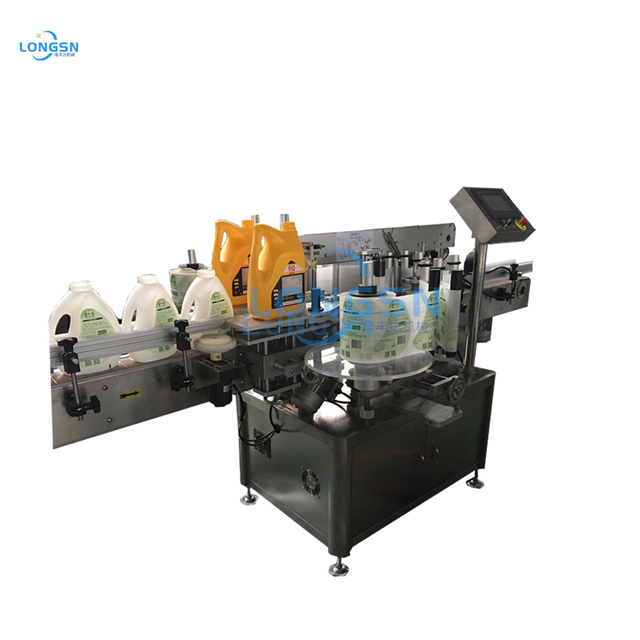
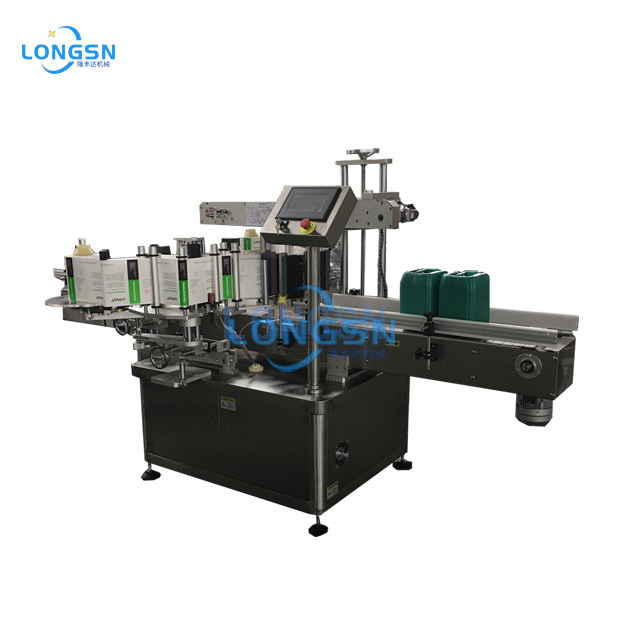
Mid-sized facilities scaling up production benefit most from this tier. They feature conveyor integration and automated sensors. Speeds range from 50 to 150 containers per minute. The primary value driver is consistency. It standardizes label placement accuracy. Furthermore, it frees up manual labor. You can reassign those workers to quality assurance or final packaging.
High-Speed Inline & Rotary Systems ($20,000 – $50,000+)
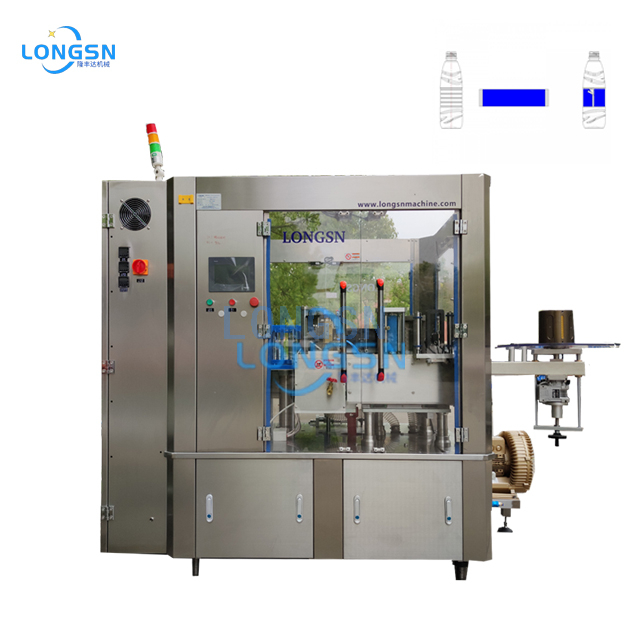
Enterprise manufacturing demands robust solutions. Continuous 24/7 operations and contract packagers need high-speed systems. Capabilities include speeds exceeding 200 containers per minute. They support multi-label applications, handling front, back, and neck placements simultaneously. They also execute complex wrap-arounds. The value driver here is near-zero downtime. They offer deep integration into your existing ERP and production lines.
Pricing and Capability Summary
| Machine Tier | Price Range | Target User | Speed (Containers/Min) | Key Advantage |
| Semi-Automatic | $500 – $3,000 | Startups, Seasonal | 15 – 40 | Low entry cost |
| Standalone Automatic | $5,000 – $15,000 | Mid-sized Facilities | 50 – 150 | Labor reallocation |
| High-Speed Inline | $20,000 – $50,000+ | Enterprise, 24/7 Ops | 200+ | Maximum throughput |

Hidden Expenses: What Isn't on the Price Tag
Operational experience reveals a crucial truth. Buyers frequently overlook significant budget items. We must highlight these hidden expenses. They drastically impact your long-term financial planning.
Format Changeover Parts (Tooling)
Switching between different bottle shapes incurs tooling costs. You might need custom star wheels. New timing screws are often necessary. Guide rails must match specific container sizes. These parts ensure precise handling. Buying a sticker labeling machine means budgeting for these modular components.
Installation, Integration, and Training
Freight and site commissioning fees add up quickly. You must also calculate the cost of downtime during installation. Your production line will temporarily halt. Furthermore, operators require training. Learning new HMI (Human-Machine Interface) systems takes dedicated labor hours. Do not ignore these onboarding expenses.
Maintenance and Wear Parts
Machines experience friction and wear over time. You should budget for routine replacements. Drive rollers degrade. Belts stretch and snap. Sensor upgrades become necessary. Manufacturers offer service-level agreements (SLAs). Extended warranties provide peace of mind but require upfront capital.
Material Quality Requirements
High-speed machines demand premium consumables. You need higher-quality backing paper. Cheap liners easily snap under high tension. This causes frustrating jams and costly downtime. Better liners prevent snapping but slightly increase your consumable costs. Upgrading your materials is non-negotiable for high-speed automated systems.
Best Practices for Budgeting
- Request a quote detailing all necessary changeover parts.
- Ask the manufacturer for an annual wear parts list.
- Factor in three days of operational downtime for initial commissioning.
Common Mistakes
- Assuming your current cheap labels will survive a high-speed applicator.
- Forgetting to calculate the hourly cost of operator training.
- Skipping routine maintenance to save short-term cash.
Calculating ROI: When Does a Sticker Labeling Machine Pay for Itself?
Financial justification requires a concrete framework. You must prove the investment makes sense. We measure ROI through two main pillars. These are labor cost reduction and waste reduction.
Labor Cost Reduction
Automation drastically cuts manual labor hours. We use a simple formula to calculate this. Take your manual labeling hours per week. Multiply them by the hourly wage. Subtract the machine operator hours per week multiplied by their hourly wage. The difference is your weekly labor savings. Highlight the reallocation of staff. Do not just focus on headcount reduction. Moving employees to higher-value tasks boosts overall facility profitability.
Waste Reduction and Yield Improvement
Manually misapplied labels drain your budget. Ruined labels cost money. Product rework time consumes labor. Scrapped packaging hurts your margins. We must quantify these losses. Machine accuracy typically hovers around ±1mm. This precision drastically reduces waste. Automated systems yield perfectly labeled products every time.
The Payback Period Formula
You can determine exactly when the machine pays for itself. Follow this straightforward payback formula:
- Calculate Total Machine Cost (Base Price + Setup + Training + Tooling).
- Calculate Monthly Labor Savings.
- Calculate Monthly Waste Reduction Savings.
- Add the two monthly savings metrics together.
- Divide Total Machine Cost by Total Monthly Savings.
The result equals the number of months to reach full ROI. Most businesses hit this milestone between 6 and 14 months.
Automation vs. Manual Labeling: The Budgetary Tipping Point
Buyers need help identifying the exact tipping point. When does it make financial sense to upgrade? We analyze specific operational thresholds. This clarifies the decision-making process.
The Volume Threshold
We look at production volume carefully. Passing 1,000 units per week is a common benchmark. At this volume, manual labor costs spike. The hidden cost of slow application outpaces equipment leasing. Purchasing automated equipment becomes mathematically favorable. You stop losing money to inefficiency.
The Consistency Mandate
Retail compliance forces many brands to upgrade. Distributors demand uniform packaging. Crooked labels lead to rejected shipments. Manual application cannot guarantee millimeter precision. Automated systems fulfill the consistency mandate. They ensure compliance regardless of your internal volume metrics. Market entry requires professional presentation.
Opportunity Cost of DIY
Manual labeling creates a massive bottleneck effect. It throttles the rest of the production line. Fast filling machines sit idle waiting for labelers. This bottleneck severely limits revenue growth. The opportunity cost is the revenue you lose by capping daily output. Automation removes this artificial ceiling. It allows your business to scale naturally.
Aligning Machine Specs with Your Product Matrix
Technical evaluation criteria connect directly to cost implications. You cannot buy a generic machine for complex containers. We must align specifications with your exact product matrix.
Small Container Challenges
Small items pose unique difficulties. Vials, ampoules, and lipsticks easily tip over. They require specialized handling. Wrapping modules keep them stable during application. These high-precision modules increase the baseline cost. However, they prevent jams and broken containers.
Surface Complexity
Container shapes dictate the required technology. Flat surfaces are the easiest and cheapest to label. Cylindrical bottles need wrap-around belts. Tapered containers introduce extreme complexity. Tapers require specialized optical sensors. They also need angled applicator heads to prevent wrinkling. These specialized components increase your initial capital requirements.
Future-Proofing Scalability
You face a crucial cost-benefit analysis. You can buy a modular machine now. Modular systems accept secondary applicator heads later. This accommodates future product line expansions. Alternatively, you can buy a cheaper, fixed-function machine today. However, you must entirely replace a fixed machine if your products change. Future-proofing requires more upfront cash but saves massive capital later.
Conclusion
A sticker labeling machine represents an investment in throughput. It ensures consistency across your entire product line. It is not just an equipment purchase. It transforms your operational capacity.
Buyers should follow a strict shortlisting logic. First, audit your current labor costs. Second, measure your existing scrap rates. Next, define your maximum container variance. Finally, request comprehensive vendor quotes. Ensure these quotes explicitly include shipping, training, and changeover parts.
Your next step requires expert consultation. Consult with an equipment engineer. Request a sample run using your physical products and labels. Evaluate the results rigorously before finalizing your capital expenditure request. Data-backed decisions guarantee successful automation.
FAQ
Q: Can I lease a sticker labeling machine instead of buying one outright?
A: Yes, many manufacturers and third-party financiers offer leasing or financing options. Leasing shifts the cost from a capital expenditure to an operational expenditure. This structure greatly improves your short-term cash flow while granting immediate access to automation.
Q: How much should I budget for annual maintenance?
A: A standard industry benchmark helps guide this budget. You should allocate 3% to 5% of the machine’s initial purchase price annually. This fund covers preventative maintenance schedules, wear parts replacement, and occasional technician visits.
Q: Will a cheaper machine work for all my container sizes?
A: Entry-level machines often have strict limits on container diameter and label height. Accommodating extreme variations, like a 10ml vial and a 1-gallon jug, is difficult. It usually requires a highly engineered, expensive system or two separate specialized machines.
Q: Do labeling machines require proprietary labels?
A: No, you do not need proprietary labels. However, they do require labels with proper web tension. They also need specific roll core sizes, usually 3-inch. Accurate gap spacing between stickers is mandatory for optical sensors to function correctly.

 English