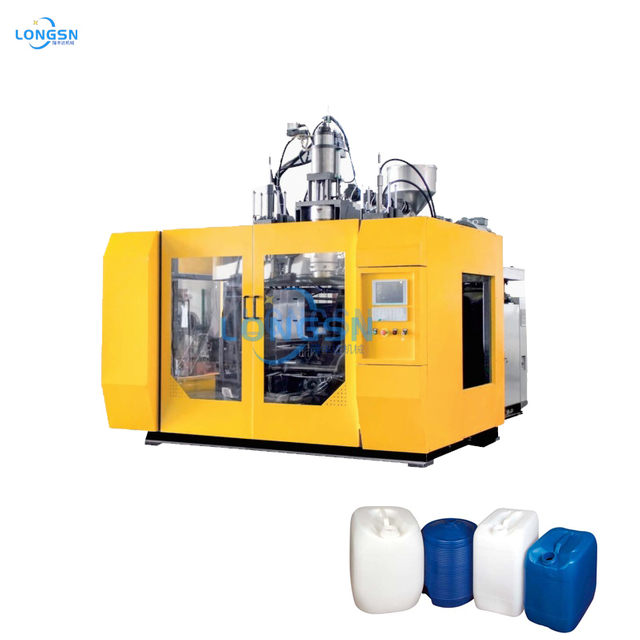
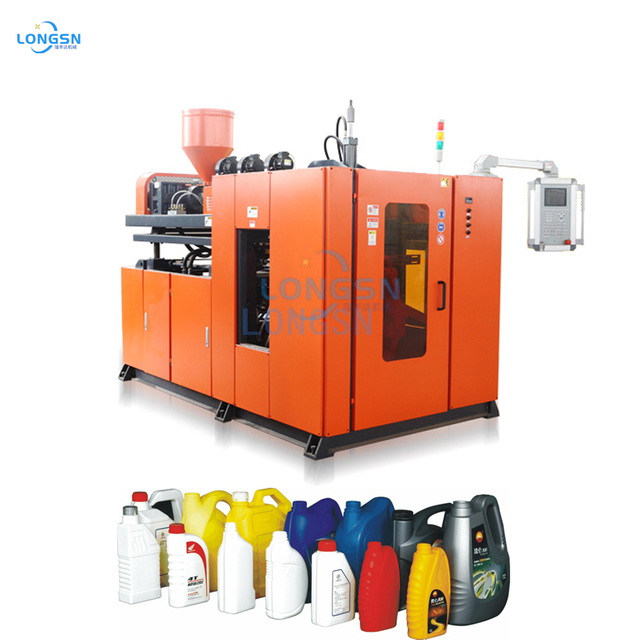
Purchasing industrial manufacturing equipment is intensely capital-heavy. Investing in an hdpe blowing machine demands significant financial resources. Manufacturers often feel immense pressure during this procurement process. Equipment choices directly influence long-term business survival. Do not view this as finding the objectively perfect model. Focus instead on discovering the correct configuration. Your specific production volumes matter significantly. Target container sizes strictly dictate your technological requirements. You must also account for rigid factory operational constraints. This guide bridges the gap between complex technical specifications and tangible business outcomes. We help you map capital decisions against daily operational realities. You will learn exactly how volume dictates architectural choices. We will demonstrate why container size determines extrusion methods. Finally, we uncover hidden operational factors impacting long-term profitability. By following these insights, you can confidently navigate the entire equipment selection process.
Key Takeaways
- Volume Dictates Architecture: Linear machines suit flexible, mid-volume production, while rotary systems are strictly for high-speed, dedicated runs.
- Size Determines Extrusion Type: Continuous extrusion is optimal for containers under 30L; accumulator head technology is mandatory for large industrial drums.
- Hidden Costs: True ROI is found in automated deflashing integration, precise wall thickness control (resin savings), and energy-efficient servo-drives, rather than just the initial sticker price.
- Future-Proofing: Tooling changeover times and local post-sales support are critical risk factors that can erode profitability.
Aligning Production Requirements with Equipment Specs
Manufacturers must align their factory capabilities with precise equipment specifications. You cannot rely on guesswork during this phase. Every production line operates under unique conditions. Evaluating these conditions prevents costly mismatches. You must establish strict benchmarks before contacting suppliers.
Defining Success Criteria
You must establish your target output accurately. Many buyers focus entirely on Bottles Per Hour (BPH). This metric only shows theoretical maximums in perfect conditions. You should evaluate Overall Equipment Effectiveness (OEE) instead. OEE accounts for maintenance downtime and daily scrap rates. It provides a realistic view of daily production. A machine promising 5,000 BPH might yield only 3,500 usable units. We recommend setting realistic OEE expectations upfront. This ensures you purchase adequate capacity for your fulfillment contracts.
Container Specifications
Map your machine capabilities to your exact container specifications. Small cosmetic bottles demand high mechanical precision. Large chemical drums require massive hydraulic clamping force. The neck size dictates the extrusion die diameter. The part weight determines the necessary extruder output. You must define these parameters clearly. Producing 100ml personal care bottles requires rapid cycle times. Manufacturing 200L chemical drums demands slow, deliberate cooling phases. You cannot easily swap production between such extreme sizes.
Material Behavior Profile
Note the unique material behavior profile of HDPE. High-Density Polyethylene behaves differently than PET or PP. HDPE possesses exceptionally high melt strength. It resists sagging better than many common plastics. However, it requires highly specific cooling times. You must configure the die head specifically for HDPE thermal characteristics. Heat distribution must remain perfectly uniform. Poor temperature control leads to weak container walls. You must ensure the equipment handles these specific thermal profiles.
Continuous Extrusion vs. Accumulator Head Systems
Selecting the correct extrusion method represents a critical engineering choice. Container size directly dictates this decision. You must understand the mechanical differences between these two primary technologies.
Continuous Extrusion Blow Molding (CEBM)
- Best for: Small to medium consumer packaging. Manufacturers use it extensively for dairy bottles. They also produce personal care containers and household chemicals.
- Mechanism: The extruder pushes plastic out constantly. It creates a continuous parison drop. Shuttle or rotary molds move into position repeatedly. They clamp around the falling plastic tube. A knife cuts the plastic. The mold moves away to inflate the container.
- Pros/Cons: CEBM offers significantly faster cycle times. You can produce small parts rapidly. The machinery design remains relatively straightforward. However, continuous dropping faces physics limitations. Heavy items cause the parison to sag. The plastic stretches unevenly under its own weight. This causes unacceptable wall thinning on large products.
Accumulator Head Blow Molding
- Best for: Large, heavy, or industrial parts. You would use this for jerrycans and IBC tanks. It also produces large automotive components and 50-gallon drums.
- Mechanism: The extruder melts the plastic slowly. The melt accumulates inside a specialized heated reservoir. A powerful hydraulic ram pushes the plastic out rapidly. This forms a massive parison almost instantly. The mold clamps around it immediately.
- Pros/Cons: This rapid drop prevents parison sag entirely. It allows you to mold heavy parts precisely. You achieve excellent wall thickness uniformity. The primary trade-off involves slower cycle times. The accumulation phase takes time. You also face much higher electrical energy demands.
Table 1: Comparison of Extrusion Technologies
| Feature | Continuous Extrusion (CEBM) | Accumulator Head System |
| Target Container Size | Under 30L | 30L to 200L+ |
| Extrusion Method | Constant plastic flow | Stored melt pushed by ram |
| Cycle Speed | Very Fast | Moderate to Slow |
| Parison Sag Risk | High on heavy parts | Eliminated |
| Typical Applications | Dairy, cosmetics, detergents | Industrial drums, auto parts |

Linear vs. Rotary HDPE Blowing Machines
Your production scale determines your machine architecture. You must choose between linear and rotary movements. Each design serves distinct business models. Selecting the wrong architecture ruins operational efficiency.
Linear (Shuttle) Machines
Operators commonly refer to these as shuttle machines. They provide exceptionally high manufacturing flexibility. They suit low-to-medium volume production environments perfectly. You should evaluate them through a specific lens. They offer much easier maintenance access. Technicians can reach vital components quickly. The upfront capital expenditure remains relatively low. You can justify the investment without massive production contracts.
Linear setups accommodate frequent mold changes easily. You can switch from shampoo bottles to detergent jugs in hours. They adapt seamlessly to complex geometric shapes. You can also integrate multi-layer co-extrusion technology smoothly. This flexibility makes them ideal for custom packaging manufacturers. They serve diverse client bases efficiently.
Rotary (Wheel) Machines
Rotary machines serve completely different industrial purposes. Manufacturers refer to them as wheel machines. They handle ultra-high volume production demands. You find them exclusively on dedicated production lines. A facility making millions of identical single-SKU dairy bottles uses them. The molds mount on a continuously spinning wheel.
You must evaluate them for maximum BPH potential. They deliver astonishing output speeds. They easily outpace linear configurations. However, they demand massive initial capital investments. Tooling changeovers are lengthy and incredibly expensive. Swapping molds on a 24-station wheel takes days. You can only justify rotary systems through guaranteed long-term contracts. They lack the agility needed for custom manufacturing.
Essential Evaluation Criteria: Looking Beyond the Spec Sheet
Basic specifications rarely tell the whole story. You must look beyond simple output numbers. Modern manufacturing requires advanced features. These features dictate your actual operating margins. Ignore them at your own peril.
- Wall Thickness Control (Parison Programming): You need advanced parison programming. Look for 100-point or higher controllers. They optimize material distribution perfectly. A servo-driven pin adjusts the die gap continuously. You can thin the walls safely in low-stress areas. You can thicken the corners for drop-test strength. This leads to massive raw HDPE resin savings annually. Resin often represents your highest ongoing expense.
- Drive Technologies (Hydraulic vs. Hybrid vs. All-Electric): You must compare different drive mechanisms carefully. Hydraulic machines offer reliable clamping force. They handle massive molds effortlessly. However, they consume significant power and leak oil. All-electric machines save up to 40% in energy usage. They operate silently and provide clean-room compatibility. Hybrid models balance these two extremes. They use hydraulics for clamping and servos for carriage movement.
- In-Line Automation & Deflashing: Assess the integrated automation capabilities thoroughly. Blow molding inherently creates scrap plastic called flash. The machine must feature integrated auto-deflashing. Deflashing removes this excess plastic automatically using punch tooling. Assess leak testing modules as well. Automated part removal reduces manual labor dependencies significantly. Conveyor integration moves finished goods straight to packaging.
- Co-Extrusion Capabilities: Evaluate multi-layer support carefully. Sustainability mandates change rapidly. Many regions now mandate recycled HDPE (PCR) usage. A 3-layer or 6-layer machine places PCR in the middle layer. It keeps virgin plastic on the interior and exterior contact surfaces. This protects the product while meeting environmental regulations. Multi-layer machines require sophisticated die head engineering.
Implementation Risks and Equipment Integration
Deploying heavy machinery involves substantial implementation risks. You must evaluate the operational realities of daily production. Buying the hardware represents only the first step. You must integrate it smoothly into your facility. Overlooking operational realities leads to extended downtime.
Tooling and Mold Compatibility
Clarify tooling and mold compatibility immediately. Ask if the machine accepts standardized molds. Some vendors lock you into proprietary tooling configurations. Proprietary molds force you to buy expensive replacements from the original manufacturer. Standardized molds give you open-market sourcing freedom. You must also assess average mold changeover times. Fast changeovers keep your OEE high. Complex machines might require specialized rigging equipment to swap molds safely.
Maintenance and Parts Availability
Evaluate maintenance requirements rigorously. Check the availability of Programmable Logic Controller (PLC) components. Industry-standard systems like Siemens or Beckhoff are highly preferable. They allow you to source replacement parts locally. Proprietary closed systems force you to rely entirely on the manufacturer. International shipping delays can halt your production for weeks. Regional technician support remains absolutely crucial. You need certified experts nearby when unexpected breakdowns occur.
Operator Training
Acknowledge the steep operator learning curve. An hdpe blowing machine requires skilled technicians. Optimizing the parison drop requires immense skill. Managing chilled water flow takes considerable practice. You must factor supplier training programs into your procurement strategy. Do not treat training as an optional add-on. Comprehensive training minimizes early scrap rates. It empowers your team to troubleshoot minor issues independently. Demand detailed training manuals and on-site commissioning support.
Conclusion
Selecting the right equipment requires systematic evaluation. You must summarize your shortlisting logic clearly. Prioritize part size first. This fundamental metric decides between continuous extrusion and accumulator head systems. Next, evaluate your production scale. This helps you choose between flexible linear shuttles and high-speed rotary configurations. Finally, assess specific efficiency features. You can then pick electric drives, automated deflashing, and multi-layer capabilities.
We highly recommend preparing precise 3D CAD files. Bring your heaviest or most complex container designs. Show them to potential vendors during negotiations. You can secure accurate cycle time guarantees this way. You will also get precise BPH commitments based on actual data rather than theoretical maximums.
Take action to secure your production future. Prompt your engineering team to request customized technical consultations. Base your calculations entirely on your specific product dimensions. Careful planning guarantees a highly successful equipment investment.
FAQ
Q: Can I use a PET blowing machine for HDPE?
A: No. Injection stretch blow molding creates PET bottles using pre-formed plastic tubes called preforms. Extrusion blow molding creates HDPE containers by melting raw plastic pellets into a continuously falling tube. HDPE possesses high melt strength and cannot be processed on PET preform machinery.
Q: What is the difference between a blow molding machine and a blown film machine?
A: Clarify the final outputs. Blow molding creates 3D hollow objects like bottles, jerrycans, and industrial drums. Blown film machines create continuous, thin plastic tubing. The machine flattens this tubing into plastic films, grocery bags, and agricultural sheeting.
Q: Are there small, household-scale HDPE blow molding machines?
A: Desktop or true household setups do not exist for commercial production. Small lab-scale machines exist for prototyping. However, commercial blow molding requires industrial-grade water chillers, massive air compressors, and three-phase power supplies. These requirements make household setups impossible.
Q: How much space is required for a standard HDPE blowing machine line?
A: A standard linear machine requires roughly 15 to 30 square meters. However, you must account for auxiliary equipment. Chillers, air compressors, plastic grinders for scrap, and exit conveyors often consume as much floor space as the primary machine itself.

 English