Investing in an Extrusion Blow Moulding Machine goes far beyond a simple equipment purchase. It represents a strategic capability upgrade dictated entirely by your product geometries, material requirements, and production volumes. Many manufacturers rush into these capital equipment investments prematurely. They often fail to match the hardware tightly to the specific application. Misaligning machine specifications with end-product requirements invariably leads to cascading production issues. You will face inefficient cycle times, excessive flash waste, and compromised structural integrity. These missteps erode operational efficiency and frustrate production teams daily. We built this guide to help you prevent those exact scenarios. We will provide procurement and production engineers a clear, actionable framework. You will discover how commercial product applications connect directly to specific machine configurations. You will learn to weigh alternative technologies objectively and manage the realities of modern implementation.
Key Takeaways
- Extrusion blow moulding (EBM) is the dominant process for hollow, lightweight plastics, specifically excelling in complex geometries (like integrated handles) where injection moulding falls short.
- Product scale dictates technology: Continuous extrusion suits high-volume packaging, while accumulator head EBM is mandatory for large-scale automotive and industrial components.
- Evaluating an extrusion blow moulding machine requires prioritizing parison control, co-extrusion capabilities for PCR (post-consumer recycled) integration, and automated deflashing efficiency.
- While tooling costs for EBM are generally lower than injection processes, facilities must account for the operational realities of flash management and material regrinding.
Core Product Categories and Industry Applications
Understanding the versatility of this process requires looking at specific commercial applications. Different industries leverage unique machine capabilities to solve distinct manufacturing challenges. We can trace every product category back to a specific business rationale for choosing this technology.
High-Volume Packaging (Bottles, Jerrycans, and Drums)
This category includes dairy containers, personal care bottles, and household chemical jugs. These products demand rapid production cycles and flawless aesthetic finishes. Household chemical jugs specifically require sturdy, integrated handles. High output speeds and low per-unit expenses drive this manufacturing sector entirely. A standard continuous Extrusion Blow Moulding Machine excels here. It moulds complex handles in a single, fluid step. The mold simply pinches the plastic tube around the handle insert area. You cannot achieve this easily using PET stretch blow moulding. This distinct advantage makes EBM the undisputed choice for handled liquid packaging.
Automotive and Aerospace Components
Under the hood, component space remains severely limited. Air intake ducts must curve awkwardly around engine blocks. Windshield washer fluid reservoirs nestle into highly asymmetrical structural cavities. Engineers intentionally design complex, asymmetrical 3D shapes to fit these cramped compartments. Lightweighting also remains a constant, critical priority in transportation sectors. Extrusion blow moulding creates these convoluted, hollow structures effortlessly. It adapts to stringent geometric requirements without sacrificing part strength. Automotive engineers rely heavily on this process to replace heavy metal components.
Industrial Containers and Consumer Goods
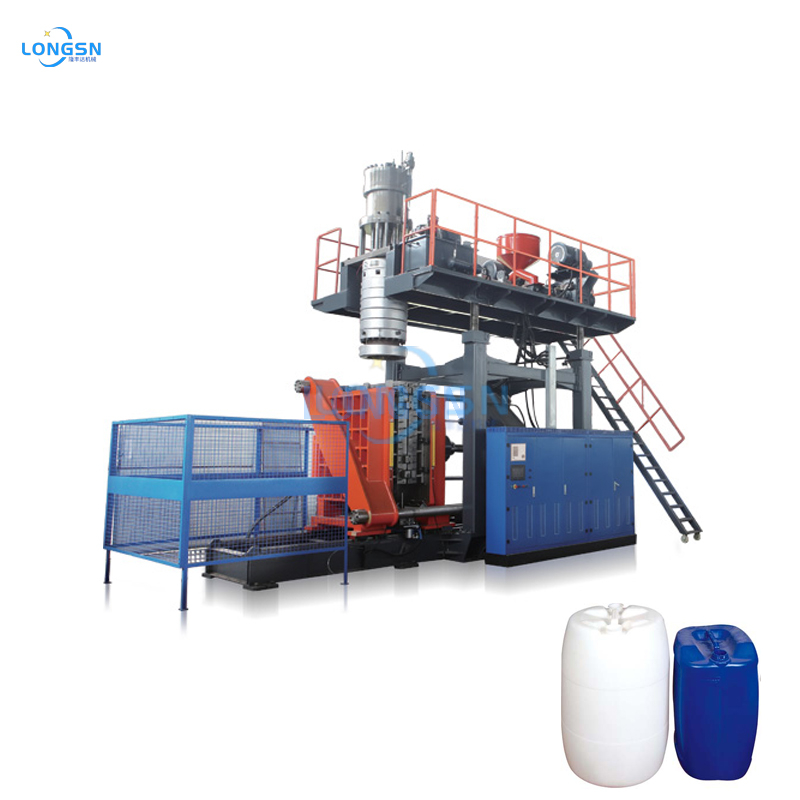
Industrial applications present a completely different set of structural demands. Intermediate Bulk Container (IBC) totes carry heavy, volatile chemical loads. Tool cases must endure harsh job site drops repeatedly. Coolers and outdoor playground equipment require immense structural rigidity. You cannot use continuous extrusion for these massive items. Manufacturers rely entirely on accumulator head machines for these applications. These heavy-duty machines store molten plastic internally. They then push it out rapidly as a massive parison. This rapid extrusion prevents the hot plastic from sagging under its own immense weight.
Medical and Specialty Containers
Medical manufacturing demands strict contamination control and precise material properties. Common applications include saline bottles, sterile fluid containers, and custom labware. Closed-loop manufacturing capabilities drive adoption in this sector. Manufacturers frequently employ Blow-Fill-Seal variations of this technology. Precise multi-layer barrier properties prevent external contamination completely. The high melt temperatures inherent in the extrusion process ensure initial sterility. The machine forms, fills, and seals the containers in one continuous, sterile motion.
Extrusion Blow Moulding vs. Injection Blow Moulding (Process Selection)
Buyers often struggle when weighing alternative production methods. You must evaluate process options based on specific product geometries, volume thresholds, and tooling budgets. The choice between these two primary technologies dictates your entire operational strategy.
Geometric Flexibility: Your product shape largely dictates your process choice. EBM accommodates highly asymmetrical shapes easily. It remains the only practical way to mass-produce hollow containers featuring integrated handles. Injection Blow Moulding (IBM) faces severe geometric limitations. It is typically restricted to perfectly symmetrical, handle-less containers like pharmaceutical pill bottles.
Tooling Cost & Lead Times: You must consider the transparent assumption surrounding mold fabrication. EBM molds operate at much lower internal clamping pressures. This lower pressure allows manufacturers to use cheaper, softer materials like aircraft-grade aluminum. Aluminum machines much faster than hardened steel. This significantly accelerates mold fabrication lead times. IBM requires high-pressure, hardened steel molds. These steel molds cost exponentially more and take months longer to produce.
Neck Finish Precision: Industry professionals often critique EBM for lower neck precision. IBM inherently creates perfect, injection-molded necks because the plastic fills a rigid steel cavity first. However, modern equipment designs mitigate this perceived EBM flaw effectively. Advanced EBM machines utilize highly calibrated neck tooling. Top-blow and bottom-blow mechanical pins strike and calibrate the neck finish during the cooling phase. This creates a highly reliable seal without requiring massive IBM capital investments.
Production Volume Thresholds: You must justify your capital expenditure against production volume. IBM requires significant upfront capital for both the machine and the complex hot-runner molds. Extremely high production volumes of identical, symmetrical parts justify this CapEx over time. EBM offers a far more versatile, lower-barrier entry point. You can swap aluminum molds faster. You can run smaller, diverse product batches profitably.
Technology Comparison Chart: EBM vs. IBM | Evaluation Criteria | Extrusion Blow Moulding (EBM) | Injection Blow Moulding (IBM) |
| Geometric Flexibility | Excellent for asymmetrical shapes and integrated handles. | Limited to symmetrical, handle-less parts. |
| Tooling Pressure & Material | Low pressure; primarily utilizes aluminum molds. | High pressure; requires hardened steel molds. |
| Tooling Cost & Lead Time | Significantly lower cost; faster fabrication. | High upfront cost; extended manufacturing lead times. |
| Neck Finish Calibration | Achieved via secondary blow pin calibration. | Inherently flawless via initial injection phase. |
| Volume Justification | Profitable for low-to-medium diverse batch runs. | Requires massive volume to offset high CapEx. |
Matching Product Requirements to EBM Machine Specifications
You must translate your commercial product applications into precise technical procurement criteria. Buying off-the-shelf equipment rarely yields optimal efficiency. The internal specifications of your machinery must align perfectly with your resin types and part designs.
Continuous Extrusion vs. Accumulator Head: The basic rule of thumb remains straightforward. You should use continuous extrusion for lightweight, fast-cooling parts. Bottles, small jugs, and cosmetic containers fit this category. The extruder continuously pushes a hot plastic tube downward. You must use accumulator head systems for heavy parts. Automotive ducts and large industrial containers require this specific technology. A heavy, continuous parison would simply stretch and tear under its own gravitational weight. The accumulator head stores molten resin internally. A hydraulic ram then drops the massive parison instantly, preventing severe material sagging.
Multi-Layer (Co-Extrusion) Capabilities: Sustainability mandates constantly push manufacturers toward using recycled materials. However, post-consumer recycled (PCR) plastic often lacks aesthetic appeal. It also routinely lacks essential food-grade safety ratings. Multi-layer co-extrusion heads solve this business problem brilliantly. You can hide a thick core layer of ugly, recycled PCR plastic entirely. You simply sandwich it between two thin layers of premium, virgin resin. This technique meets aggressive sustainability mandates perfectly. You sacrifice absolutely nothing in visual appeal, structural integrity, or regulatory compliance.
Parison Programming Control: Complex hollow parts rarely require uniform material distribution. A flat industrial jerrycan features wide panels and tight, sharp corners. The plastic stretches much thinner in those tight corners during the blow phase. You need advanced, 100+ point parison programming control to manage this. An internal servo or hydraulic actuator moves the die pin up and down continuously. This varies the thickness of the plastic tube as it drops. This dynamic programming ensures uniform wall thickness across highly complex final shapes. It actively prevents weak corners while eliminating excess material waste in the flat panel areas.
Implementation Risks and Production Realities
Deploying this technology involves hidden costs and specific operational realities. Building a trustworthy production environment requires acknowledging these challenges upfront. You must prepare your facility for the inherent demands of the process.
Scrap and Flash Management: Injection moulding typically produces finished parts instantly. EBM operates fundamentally differently. It inherently produces pinch-off waste known as flash. The mold physically pinches the top and bottom of the parison to seal it. You must plan for reliable automated deflashing equipment. You also absolutely need an integrated, inline regrind system. This equipment captures the dropped flash immediately. A granulator grinds the plastic scrap and feeds it directly back into the primary hopper. Without this closed-loop system, material costs will destroy your profit margins.
Cycle Time Variables: Cooling time entirely dominates the EBM cycle. The hot plastic must solidify sufficiently before the mold opens. Mold chilling systems dictate your overall production predictability. Inadequate chilling infrastructure slows down your entire line drastically. Room temperature fluctuations also impact these variables. Summer heat waves can ruin your cycle times if your chillers lack excess capacity. We recommend auditing your plant cooling infrastructure thoroughly before installing new machines. Turbulent water flow through the aluminum mold channels remains critical for fast heat extraction.
Operator Expertise vs. Automation: Running a sophisticated extrusion line requires specialized knowledge. Operators must dial in parison weights meticulously. They must balance screw speeds, heater band temperatures, and cooling rates. Industry veterans historically hold much of this tribal knowledge. You must mitigate this reliance on individual experts. Demand machines featuring advanced, highly intuitive Human-Machine Interface (HMI) systems. Modern HMIs store specific product recipes digitally. They reduce reliance on manual adjustments and eliminate dangerous operator guesswork during shift changes.
Strategic Shortlisting: How to Evaluate Machine Manufacturers
Moving from technical research to vendor selection requires a disciplined approach. You must guide your procurement team to vet machine manufacturers using rigid, objective criteria. Never rely solely on marketing brochures.
- Demand Proof of Concept (Sample Runs): You should never buy industrial equipment based on printed spec sheets alone. Demand physical factory tests before signing any purchase agreements. Require the vendor to use your exact resin grades for these trials. Supply your specific product molds to verify actual mechanical capability. Observe how the machine handles your most difficult parison programming profiles.
- Validate Output Claims: Manufacturers often quote impressive "dry cycle" times. Dry cycles measure machine movement without processing actual plastic. These numbers completely ignore the harsh reality of plastic cooling times. You must audit these claims rigorously. Ask for guaranteed, real-world production speeds with all cooling factored in. Compare these grounded numbers directly against your daily quota requirements.
- Enforce Rigorous FAT (Factory Acceptance Testing): Outline strict FAT protocols long before the equipment ships. Run the machine continuously for hours on the vendor's assembly floor. Measure part weight variation across hundreds of cycles. Check the automated deflashing consistency. Finally, establish the reality of localized aftermarket support. A brilliant machine becomes an expensive paperweight if you cannot source replacement hydraulic valves locally.
Conclusion
The extrusion blow moulding process remains the most versatile manufacturing method for hollow plastic goods. It handles everything from tiny 10ml medical vials to massive 1000L industrial chemical tanks. Achieving profitable production depends entirely on matching your exact machine configuration to your product's weight, geometry, and volume demands. The nuances of parison control, co-extrusion, and flash management dictate your operational success.
We advise buyers to finalize their product designs and material choices completely before engaging equipment vendors. Establish your absolute minimum target cycle times internally first. Use these finalized metrics as rigid, unyielding benchmarks during the entire RFP process. This disciplined approach ensures you acquire a highly capable production asset rather than a costly operational bottleneck.
FAQ
Q: Can an extrusion blow moulding machine make products other than plastic bottles?
A: Yes. While packaging bottles are common, this technology excels at producing complex non-packaging items. Manufacturers use it extensively for automotive air ducts, windshield washer fluid reservoirs, and stadium seating. It is also the standard process for creating heavy-duty, double-wall tool cases and large industrial containers.
Q: What materials are most commonly used in EBM machines?
A: The most frequent materials include High-Density Polyethylene (HDPE), Low-Density Polyethylene (LDPE), Polypropylene (PP), and PVC. We also see an increasing use of PETG for specialized applications. Standard PET is generally reserved for stretch blow moulding processes, rather than standard extrusion methods.
Q: How much material waste is typical in extrusion blow moulding?
A: EBM inherently produces pinch-off waste known as flash. Flash rates often range from 10% to 30% of the initial parison weight. However, modern production lines utilize inline regrind systems. These automated grinders capture the flash, process it, and immediately recycle nearly 100% of it back into production.

 English