Packaging bottlenecks ruin your productivity instantly. Crooked labels destroy your brand perception in competitive retail markets. You lose profit margins immediately when products stall on the factory floor. A reliable bottle labeling machine fixes these exact issues. Yet, buying the wrong equipment introduces costly new headaches. Over-purchasing drains your working capital for unnecessary features. Under-purchasing creates daily operational friction and painful delays. You need a proven method to evaluate your automation options. We will guide you through matching equipment to your specific production line safely. You will discover how different container types dictate your precise mechanical needs. We will also uncover hidden implementation risks and facility constraints. This guide gives you a clear path forward. You can finally eliminate packaging guesswork and scale your output.
Key Takeaways
- Match your machine choice to your exact Bottles Per Minute (BPM) requirements and future scalability, not just upfront cost.
- Container shape (round, tapered, square) and label type (wrap-around, front/back) dictate the mechanical requirements of the labeler.
- Total Cost of Ownership (TCO) extends beyond the purchase price to include changeover times, parts availability, and integration with existing filling lines.
- Never finalize a purchase without a Factory Acceptance Test (FAT) using your actual bottles and label rolls.
Establishing Your Production Baseline and Success Criteria
You cannot buy the right equipment without knowing your exact numbers. Guesswork leads directly to poor capital investments.
Defining Throughput (BPM)
Manufacturers often confuse peak seasonal demand with average daily production. You must calculate realistic speed requirements first. Start by measuring your target Bottles Per Minute (BPM). Do not just look at your busiest month. Look at your sustained daily averages. A machine rated for 50 BPM might struggle if you run it at maximum capacity endlessly. It causes premature wear and tear on motors. You should build in a 20% buffer for future growth. This ensures your equipment scales smoothly alongside your rising sales volume.
Labor vs. Automation ROI
Replacing manual labor requires a solid break-even calculation. Hand-labeling works fine for small artisanal batches. However, human operators get tired rapidly. They make costly alignment mistakes. You can follow these steps to calculate your ROI effectively:
- Calculate total monthly wages spent on your manual application staff.
- Add the cost of wasted materials and rejected bottles from human error.
- Estimate the profit gained by redeploying those workers to higher-value warehouse tasks.
- Divide the total machine cost by this combined monthly savings number.
This simple formula reveals your exact payback period. Most growing businesses see a full financial return within 12 to 18 months.
Space and Integration
You must assess your physical footprint constraints early. Many buyers forget to measure their factory floor accurately. Ask yourself how this unit fits your current workflow. Does it need to integrate into an existing conveyor system? It might sit snugly between a liquid filler and a capping station. Alternatively, it might operate as a standalone workstation entirely. Standalone units require dedicated operators to feed them manually. Inline systems run seamlessly but require precise conveyor alignment to prevent bottle jams.

Comparing Core Bottle Labeling Machine Categories
Before examining individual models, you must understand the primary tiers. We categorize these systems based on automation levels and output capacity.
Table 1: Machine Category Comparison
| Machine Category | Typical BPM | Best Suited For | Capital Cost Level |
| Manual / Semi-Auto | 15 - 40 | Craft makers, pilot runs | Low |
| Inline Automatic | 50 - 150+ | Scaling mid-cap operations | Medium |
| Rotary Labeling | 200 - 500+ | Enterprise high-volume | High |
Manual and Semi-Automatic Applicators
Small businesses and craft beverage makers love these compact units. They perfectly handle pilot production runs and seasonal batches. You typically see speeds between 15 and 40 BPM.
The pros are highly appealing for startups. They require very low capital investment upfront. They occupy a tiny physical footprint on a standard workbench. You can easily adapt them for short, diverse production runs.
However, you face distinct cons. These applicators rely entirely on operator speed. Your output drops significantly when workers fatigue after lunch. Human error creeps in during long shifts, causing crooked alignment and bubbling.
Inline Fully Automatic Labelers
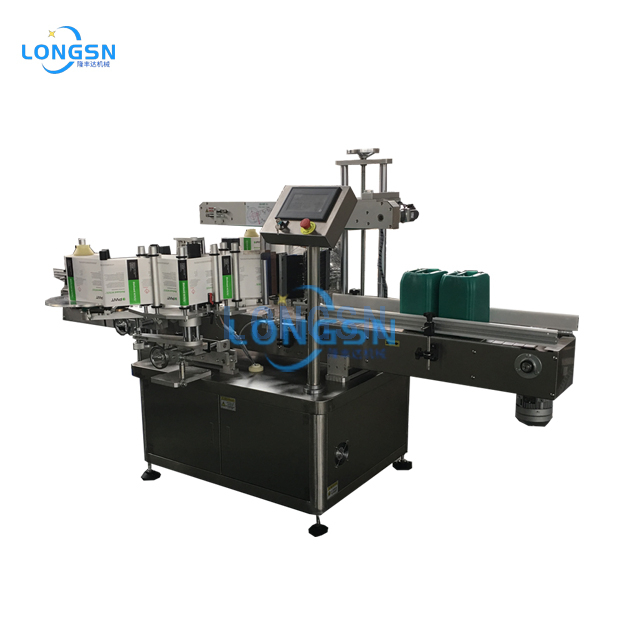
Scaling operations and mid-cap manufacturers need continuous throughput. These businesses typically target 50 to 150+ BPM. An inline bottle labeling machine becomes essential at this rapid stage.
They offer excellent pros for growing brands. You get incredibly consistent placement accuracy every single time. It integrates seamlessly into automated packaging lines. This integration dramatically reduces your per-unit labor costs.
You must also consider the cons closely. These units require precise initial setup and calibration. You will experience longer changeover times between different bottle sizes. Operators need basic technical training to adjust the sensors and rails correctly.
Rotary Labeling Systems
High-volume enterprise production facilities require extreme precision. They push speeds from 200 up to 500+ BPM. Rotary systems completely dominate this top tier.
Their pros easily justify the heavy investment for massive plants. They can apply multiple stickers simultaneously. You can add a neck tag, front display, back details, and tamper-evident seals all at once. They handle complex contoured bottle geometries flawlessly.
The cons are substantial for smaller players. They demand the highest capital expenditure in the industry. They require a massive factory footprint with heavy-duty flooring. Complex maintenance requires specialized, highly trained technicians.
Technical Evaluation: Matching Specs to Your Containers
You must match your mechanical hardware to your physical products. Ignoring container geometry leads to disastrous outcomes.
Container Geometry
Your container shape dictates the required stabilizing mechanisms on the line. Round, square, oval, or tapered bottles behave differently on a moving conveyor belt. Round bottles roll smoothly. Tapered wine bottles try to curve away from the applicator. Square olive oil bottles need aggressive side alignment to stay straight.
You might need top-hold belts to stabilize lightweight empty plastic containers. Trunnion rollers help spin round bottles evenly against the applicator pad. You must match these mechanisms to your exact geometry. Otherwise, stickers will spiral upward or wrinkle terribly.
Label Application Types
Evaluate the specific mechanisms for your graphic design needs. Wrap-around applications suit standard cylindrical bottles perfectly. Front-and-back setups require dual applicator heads acting simultaneously on both sides. Top-and-bottom applications need specialized split conveyors to allow bottom access.
You must define your design goals before buying anything. Do not purchase a single-head machine if you plan to introduce dual-sided designs next year. Modularity matters significantly. Some units allow you to bolt on a second applicator head in the future. Upgrading an existing chassis saves you thousands of dollars.
Sensor and Material Compatibility
Stickers come in various materials, creating unique sensing challenges. Standard photoelectric sensors handle opaque paper materials effortlessly. They detect the physical gap between each sticker perfectly.
Transparent labels require completely different technology. Photoelectric beams pass straight through clear films. This causes continuous feeding errors and massive material waste.
- Capacitive Sensors: These measure subtle thickness changes. They detect the slight physical bump of the sticker on the backing web.
- Ultrasonic Sensors: These use high-frequency sound waves. They sense density differences to find the gaps reliably.
You must specify your material type during the initial quoting process. Upgrading sensors later causes unnecessary downtime.
Hidden Costs and Implementation Risks
Buyers often fixate on the purchase price alone. You must look deeper to protect your ongoing profitability.
The Changeover Trap
Buyers routinely underestimate the downtime between product runs. Switching from a 12oz round bottle to a 750ml square bottle takes time. It can consume hours if the machine lacks modern design features.
Assess the availability of tool-less changeover features carefully. Operators should not need wrenches or hex keys to adjust rail widths. Look for intuitive hand cranks. Look for digital rulers and memory presets on the touchscreen. Fast, repeatable adjustments keep your lines running profitably.
Wear Parts and Maintenance
Machines vibrate, rub, and wear down daily. Identifying consumable components early prevents massive surprise invoices. You should monitor peel plates, drive belts, and smoothing rollers closely. These items touch the moving web constantly and lose friction over time.
Evaluate replacement costs before you sign the vendor contract. Ask the supplier how often belts typically snap. Track the expected downtime for swapping these specific parts. You should always keep a dedicated box of spare belts onsite. Waiting for a cheap belt can halt a massive production run.
Air and Power Requirements
Your facility infrastructure must support the new equipment properly. Many buyers forget to verify their pneumatic needs. Standard wipe-on applicators usually run on electricity alone. Tamp-blow mechanisms require a steady feed of clean, dry compressed air.
Verify electrical phasing compatibility carefully. A commercial bottle labeling machine often requires 220V three-phase power. Standard 110V wall outlets will not suffice. Upgrading your electrical panel adds weeks to your timeline and thousands to your budget.
Shortlisting Vendors: A Buyer's Checklist
Choosing the right partner matters as much as choosing the right steel. You must vet your suppliers rigorously.
Factory Acceptance Testing (FAT)
Never buy blindly from a glossy brochure. Factory Acceptance Testing remains absolutely critical for your success. You must send your specific bottles and label rolls directly to the manufacturer. Ask them to run a live video test. They must do this before shipping the unit to your facility.
This proves the machine handles your exact materials. It exposes sensor issues before the crate leaves their dock. It reveals if the smoothing pads are too stiff. You hold the vendor accountable for real-world performance.
After-Sales Support & Parts Availability
A broken machine paralyzes your entire business instantly. Prioritize manufacturers with domestic parts distribution networks. You cannot afford to wait three weeks for international shipping. Accessible technical support minimizes catastrophic downtime. Ensure they offer phone support during your exact operating hours. Ask if they provide video troubleshooting to resolve simple sensor faults quickly.
Compliance and Safety
Industrial equipment must meet local safety standards rigorously. You must ensure CE, UL, or OSHA compliance depending on your region. Proper physical guarding protects your workers from dangerous pinch points.
Sanitation requirements demand special attention in certain industries. Food and pharmaceutical companies need NEMA washdown ratings. These specific ratings ensure the sensitive electronics survive aggressive chemical cleaning daily.
Conclusion
The best packaging system balances your current budget constraints beautifully. It must also support a three-to-five-year production growth trajectory securely. You now understand how to match mechanics to your container shapes. You know how to spot hidden maintenance risks before they bite you. A well-chosen machine transforms your packaging line from a frustrating bottleneck into a reliable profit center. Audit your container dimensions today. Calculate your target average BPM precisely without guessing. Gather your physical bottle samples. Contact a qualified equipment specialist to arrange a custom sample test immediately. Seeing your products run flawlessly on video will validate your investment.
FAQ
Q: How much does a commercial bottle labeling machine cost?
A: Manual and semi-automatic units typically range from $500 to $2,000. Standard automatic inline machines generally cost between $5,000 and $20,000, depending on features and speed. High-speed rotary systems for enterprise facilities often start at $50,000 and can exceed hundreds of thousands of dollars. Always budget an extra 10% to 15% for shipping, installation, and initial spare parts.
Q: Can one machine handle both round and square bottles?
A: Yes, but it requires specific modularity. A machine handling both shapes usually needs a wrap-around belt for round bottles and aggressive side-alignment rails for square containers. Switching between them increases your setup time. You must manually swap orientation modules and adjust the conveyor rails. Invest in tool-less changeover features if you run both shapes frequently.
Q: What causes bubbling or wrinkling in automated labeling?
A: Bubbling and wrinkling stem from several common operational faults. Incorrect web tension on the backing paper is the primary culprit. Mismatched wiper pressure can also trap air beneath the sticker. Finally, poor container cleaning leaves dust, moisture, or oil on the bottle surface. Ensuring proper tension and keeping containers bone-dry will eliminate most application defects instantly.
Q: Do I need an air compressor for an automatic labeler?
A: It depends on your application mechanism. Standard wipe-on systems simply roll the sticker onto the bottle. They usually run entirely on electricity and do not need compressed air. However, tamp-blow or blow-on systems push the sticker across a physical gap using bursts of air. These specialized units require a steady feed of clean, dry compressed air.

 English