Scaling a bottling operation inevitably hits a friction point. Label application often becomes the primary bottleneck for both output and quality. You simply cannot push volume when manual hands restrict your line. Bottling facilities face a core dilemma. They must balance immediate labor costs against upfront capital expenditure. Relying on hand application keeps initial expenses low. However, automation drives down per-unit costs as your volume grows. This guide provides a strict, metrics-driven framework. We will help you determine exactly when your business should transition to automated equipment. You will learn how to evaluate throughput rates, placement accuracy, and line integration requirements.
Key Takeaways
- Manual labeling maxes out at roughly 10–15 bottles per minute (BPM) and suffers from placement fatigue, directly impacting brand presentation.
- An automatic labeling machine transitions operations from variable labor costs to fixed operational efficiency, typically viable when production exceeds 500-1,000 bottles per day.
- System integration matters: A labeler must sync with existing filling and capping speeds to prevent upstream or downstream bottlenecks.
The Breaking Point: When Manual Bottling Becomes a Liability
Identify the Success Criteria
Every bottling line needs a clear standard for quality. A successful labeling process demands consistency across every single unit. You must achieve zero-skew placement. Your labels need zero bubbling or wrinkling. Finally, you need sustained output speed throughout an entire shift. Hand application makes hitting these three targets simultaneously nearly impossible. Operators might start strong. However, human fatigue quickly degrades performance.
The Cost of Inconsistency
Manual application degrades noticeably over an eight-hour shift. An operator loses focus. They place labels slightly off-center. They trap air bubbles beneath the adhesive. These small errors create massive hidden expenses. You pay for rework when employees must peel off ruined labels. You lose money on wasted label stock. Most importantly, you compromise your retail presentation. Consumers judge beverage quality by external packaging. A skewed label signals a low-quality product. This damages your brand reputation on store shelves.
Labor Scalability
Hiring multiple operators seems like an easy fix. It rarely works long-term. Let us look at the math. A skilled worker might label 10 bottles per minute. They max out around 600 bottles per hour. Fatigue drops this output significantly by the afternoon. Adding three more workers triples your capacity. It also triples your labor expenses. You face a hard throughput ceiling. Physical space restricts how many people can stand around a bottling table. Your business simply cannot scale efficiently under these conditions.
Defining the Tiers: Manual, Semi-Automatic, and Automatic Labeling Machines
Manual Application
True manual labeling requires an operator to peel and stick every label by hand. Some facilities use manual crank-driven applicators. The operator turns a handle to dispense the label onto a bottle. These methods work well for prototyping. They suit hyper-niche batches. You should only use manual methods when daily volumes remain extremely low.
Semi-Automatic (The Middle Ground)
Semi-automatic systems act as a bridge. These tabletop machines require an operator. A worker places the bottle into a cradle. They press a foot pedal or push a button. The machine then rotates the bottle and applies the label. This tier offers better consistency than hand application. It usually handles 15 to 30 bottles per minute. It works well for growing businesses. However, it still ties an employee entirely to the labeling station.
Automatic Labeling Machine
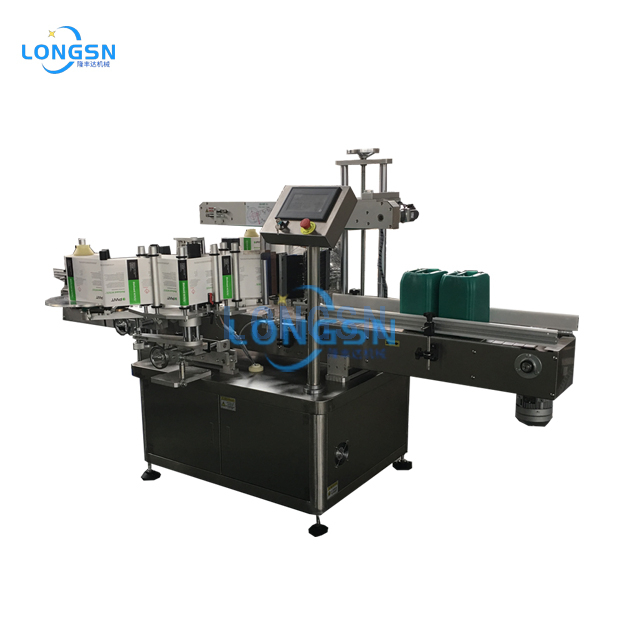
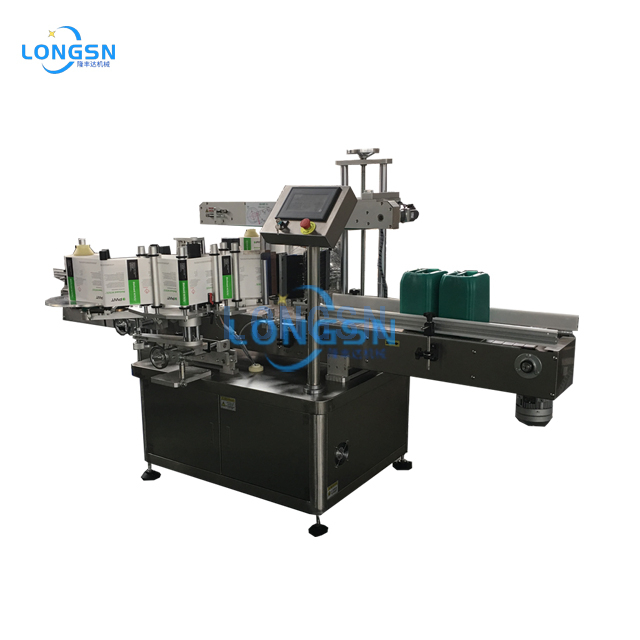
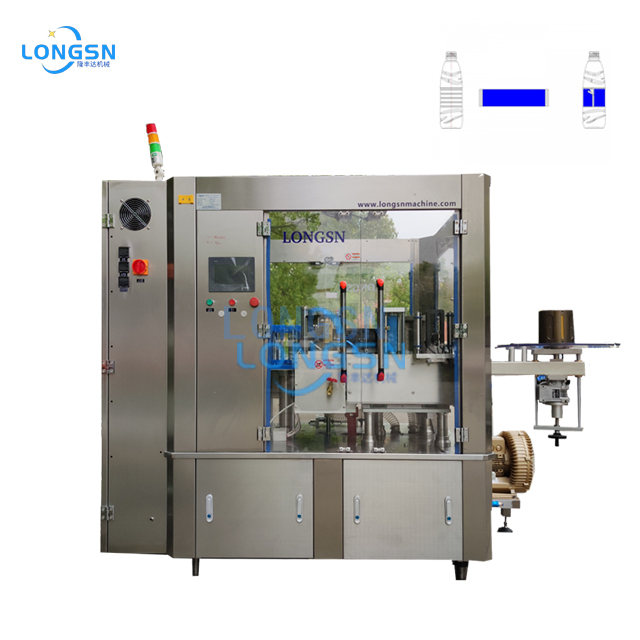
Fully automated systems remove human intervention per unit. These inline, conveyor-based units integrate directly into your production line. Bottles travel down a conveyor. Photoelectric sensors detect each approaching container. PLC controls trigger the dispensing mechanism at the precise millisecond. Motorized spacing wheels ensure proper gaps between bottles. If you want maximum efficiency, a automatic labeling machine guarantees high-speed, repeatable results. The machine handles the repetitive labor. Your employees can focus on quality control and line management.

Core Evaluation Criteria: Justifying the Automation Upgrade
Throughput and BPM (Bottles Per Minute)
Throughput acts as your primary decision metric. You must calculate your required Bottles Per Minute (BPM). Start by looking at your daily production quotas. Divide that quota by your single-shift hours. If you need 10,000 bottles per eight-hour shift, you need a sustained rate of roughly 21 BPM. Manual labor cannot sustain this. An automated system easily handles 50, 100, or even 300 BPM depending on the model. Always buy a machine capable of running 20% faster than your current target. This gives you room to grow.
Label Placement Accuracy and Reject Rates
Precision separates professional products from amateur batches. Automation achieves placement accuracy within +/- 1mm. The machine applies every label in the exact same spot. Contrast this against manual application. Human hands possess natural variance. Reject rates plummet when you automate. You stop throwing away expensive containers. You stop wasting premium custom labels.
Line Integration (Filling & Capping)
Your labeling equipment does not operate in isolation. It must sync flawlessly with existing machines. Your automatic system must match speeds with your liquid fillers. It must keep pace with your bottle cappers. If your filler runs at 60 BPM and your labeler runs at 40 BPM, you create an upstream bottleneck. Bottles will jam on the conveyor. You may need accumulation tables. These rotary tables gather bottles between stations. They prevent pile-ups and keep the line moving smoothly.
Bottle Geometry and Label Types
Machine complexity depends heavily on packaging design. Cylindrical bottles remain the easiest to label. They require simple wrap-around applicators. Square or tapered bottles demand specialized mechanisms. You might need dual-side applicators for front-and-back labels. Neck bands require dedicated shrink sleeve applicators. Always evaluate your entire product range. Your geometry dictates the specific technology you need.
Table 1: Application Methods Comparison
| Application Method | Average Speed (BPM) | Operator Requirement | Placement Accuracy | Best For |
| Manual Hand/Crank | 5 - 15 | 100% Dedicated | Low / Variable | Prototyping, <500/day |
| Semi-Automatic | 15 - 30 | 100% Dedicated | Medium / Consistent | Growing runs, <2000/day |
| Fully Automatic | 50 - 300+ | Supervision Only | High (+/- 1mm) | Mass production, 2000+/day |
Implementation Realities: Hidden Costs and Adoption Risks
Changeover Times
Switching between different bottle sizes carries inherent risks. Changing label rolls also halts production. You must factor in changeover downtime. Highly variable, short-run production schedules struggle here. A fully automated system requires mechanical adjustments. You must reposition guide rails. You must swap out peel plates. If you run five different bottle shapes in a single day, changeovers will kill your efficiency. You might lose more time adjusting the machine than you gain in labeling speed.
Best Practice: Standardize your bottle diameters across different product lines. This minimizes rail adjustments and keeps changeovers under five minutes.
Maintenance and Calibration
Industrial equipment requires strict upkeep. Sensor tuning demands precise calibration. Transparent labels require special capacitive sensors. Regular paper labels use standard photoelectric sensors. You will experience wear on drive rollers. The traction belts will eventually degrade. You must also maintain stable environmental conditions. Dust interferes with optical sensors. High moisture warps backing paper. You must keep your facility clean and climate-controlled.
Common Mistake: Neglecting daily web path cleaning. Adhesive buildup on the peel edge will eventually snap the label web during high-speed runs.
Operator Upskilling
Automation does not eliminate your workforce. It shifts their responsibilities. You no longer pay people to apply stickers. You now pay them to operate complex machinery. They must learn PLC troubleshooting. They must understand web tension adjustments. They need training to clear jams safely. You must invest time in operator upskilling. A highly trained operator keeps an automated line running at peak efficiency.
Decision Matrix: Matching the Machine to Your Business Stage
When to Stick with Manual or Semi-Auto
Certain scenarios make automation unnecessary. You should stick with manual or semi-automatic systems if you meet these conditions:
- Your volume stays under 500 bottles per day.
- You have high SKU variance with very short runs.
- You face severe space constraints in your facility.
- Your bottle shapes are highly custom or irregular.
When to Upgrade to Automated Solutions
You should transition to an automated system when specific growth markers appear. Upgrade your facility if you recognize these operational signals:
- Your volume exceeds several thousand bottles per day.
- You use standardized cylindrical or square bottle shapes.
- You face high retail-compliance requirements from major distributors.
- Your manual labor costs restrict your profitability.
Shortlisting Logic
Selecting the right OEM requires aggressive vetting. You must ask vendors specific operational questions. Never buy off a generic specification sheet. Always request a Factory Acceptance Test (FAT). Send your specific bottles and label rolls to the manufacturer. Ask them to film a video FAT using your actual products. Verify the machine handles your specific backing paper tension. Confirm it hits your required BPM without skewing.
Conclusion
The choice between manual labor and automation comes down to a strict math equation. You must weigh your target BPM against rising labor rates and scrap reduction. Manual processes work for startups. However, human fatigue ultimately throttles your growth. Automation locks in fixed operational efficiency. It protects your brand presentation. It removes the largest bottleneck on your bottling line.
Next Steps: Start by auditing your current labeling reject rate. Track how many labels and bottles you throw away daily. Next, calculate your target BPM based on next year's sales projections. Gather these numbers. You will need them to have productive conversations with equipment vendors.
FAQ
Q: What is the average ROI timeline for an automatic labeling machine?
A: The realistic ROI timeline ranges from 8 to 18 months. This depends heavily on your production volume and labor displacement. High-volume lines recoup costs faster by eliminating multiple manual shifts and significantly reducing scrap rates.
Q: Can one automatic labeler handle both round and square bottles?
A: Yes, but it requires a modular system rather than a specialized one. Universal machines utilize interchangeable applicators for different shapes. However, these universal systems cost more upfront and demand longer changeover times between runs.
Q: Do I need a specific type of label roll for automatic machines?
A: Yes. You must match the roll's core size and outer diameter limits to your machine's unwind spool. Additionally, the backing paper requires proper tensile strength. Weak backing paper will snap under the high tension of automated pull rollers.
Q: How much floor space does an inline labeling system require?
A: Standalone conveyors typically require 4 to 6 feet of linear space. Fully integrated lines with accumulation tables and wrap stations may need 10 to 12 feet. You must also leave at least 3 feet of clearance around the machine for operator access.

 English