Upgrading or integrating blow molding capabilities represents a capital-intensive decision. It dictates your production bottlenecks, unit economics, and compliance constraints. Business leaders must treat this as a strategic pillar rather than a simple hardware purchase. We shift focus from basic technology definitions to strategic alignment. You will learn how different sectors leverage blow molding effectively. We explore the operational realities of matching equipment to specific industry requirements. This article provides an evidence-based framework for evaluating a commercial plastic bottle blowing machine across major applications. You will discover how to optimize scalability and mitigate implementation risks. Market pressures demand peak efficiency today. Supply chain shifts require robust local production capabilities. By mastering these evaluation metrics, you protect your capital investments. You also ensure long-term manufacturing agility.
Key Takeaways
- Equipment selection must be reverse-engineered from industry-specific regulatory standards (e.g., FDA food-grade, ISO cleanroom compliance).
- The choice between Extrusion Blow Molding (EBM) and Stretch Blow Molding (SBM) dictates tooling costs, material flexibility, and cycle times.
- Energy consumption (specifically high-pressure compressed air) and mold changeover efficiency are the primary hidden drivers of long-term TCO.
- Scalability requires evaluating machine cavitation, automation integration, and vendor support networks before finalizing procurement.
Food & Beverage: High-Volume Output and Food-Safe Compliance
You face a difficult balancing act in food and beverage packaging. You must achieve extreme high-speed output constantly. At the same time, strict hygiene standards require unwavering attention. Lightweighting mandates also complicate daily production. They remain necessary to protect your tight profit margins.
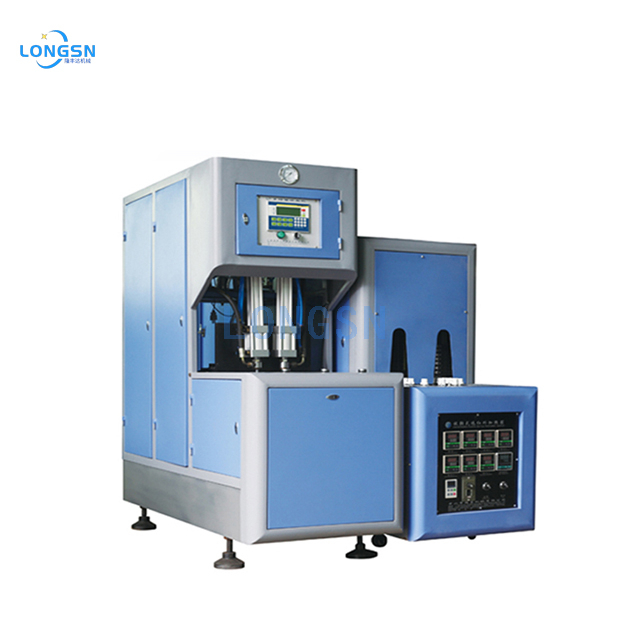
Fully automated PET stretch blow molding systems offer the best solution. They deliver the necessary speed and consistency. Infrared ovens heat the preforms first. The machine then stretches them mechanically. High-pressure air blows them into their final shape. This two-step process yields excellent clarity. It also maximizes the tensile strength of the container.
Core Evaluation Dimensions
- Speed vs. Stability: You must assess rotary versus linear machines. Base this decision on your required bottles per hour (BPH). Rotary systems handle massive volumes efficiently. Linear systems offer better flexibility for smaller batches.
- Lightweighting Capabilities: Equipment precision determines your success. You need ultra-thin wall distribution. However, you cannot compromise top-load strength. Weak bottles collapse during warehouse stacking.
- Compliance & Hygiene: Washdown-ready designs are absolutely essential. You should look for oil-free pneumatics. FDA and EFSA compliant contact surfaces ensure product safety.
Implementation carries specific operational risks. Your process remains highly sensitive to preform quality variations. Poor preforms lead to immediate blowouts. Ambient factory temperatures fluctuate daily. This alters how preforms absorb infrared heat. Advanced machines feature closed-loop temperature controls. They adjust oven output automatically. This prevents inconsistent bottle quality during seasonal changes.

Pharmaceuticals & Healthcare: Cleanroom Integration and Traceability
Medical packaging presents severe operational hurdles. You must achieve absolute sterility. Precise volumetric consistency is non-negotiable. Full traceability protects patients. It also shields your company from liability.
Cleanroom-compatible extrusion or injection blow molding (IBM) systems solve these problems. They provide the controlled environment necessary for medical devices.
Critical Success Factors
- Cleanroom Readiness: Compact footprints minimize expensive cleanroom floor space. HEPA filtration integration keeps the environment sterile. You should favor all-electric machines over hydraulic ones. They generate minimal airborne particulates.
- Material Precision: Your machine must process medical-grade resins perfectly. Materials like PP, PE, and COP require exact dimensional tolerances. Secure closures depend entirely on this precision.
- Process Validation: Machine software must handle rigorous data logging. It must support FDA 21 CFR Part 11 compliance. Batch traceability ensures you can track every single container.
Watch out for particulate contamination. Hydraulic oil leaks destroy cleanroom integrity immediately. Even minor misting contaminates the environment. All-electric machines eliminate this risk entirely. They utilize servo motors instead of fluid power. This ensures pristine manufacturing conditions.
Be prepared for significant implementation risks. Installation Qualification and Operational Qualification (IQ/OQ) processes take substantial time. Installation Qualification verifies proper equipment setup. Operational Qualification proves the machine meets design specifications. These phases require exhaustive documentation. You will spend weeks executing test protocols. You cannot begin production until they finish.
Cosmetics & Personal Care: Complex Geometries and Brand Aesthetics
Premium custom packaging designs help you stand out. You must differentiate your brand on crowded retail shelves. However, accommodating frequent product line changes is difficult. Shorter production runs constantly challenge your efficiency.
Flexible Extrusion Blow Molding (EBM) and single-stage SBM machines work best here. They adapt quickly to changing design trends.
Key Operational Metrics
- Mold Flexibility: Rapid changeover features save valuable hours. Affordable custom tooling supports diverse SKUs without breaking the budget.
- Aesthetic Capabilities: Multi-layer co-extrusion solves many aesthetic problems. You can extrude three distinct layers simultaneously. The inner layer protects the product formula. The middle layer incorporates cost-effective PCR plastic. The outer layer provides a premium, soft-touch finish. This approach satisfies sustainability goals. It also preserves your brand image.
- Deflashing Efficiency: Complex shapes require automated, high-precision deflashing. Manual deflashing wastes labor. It also introduces quality variations. Automated stations remove excess plastic precisely. They trim necks and bases seamlessly. Asymmetric bottles and built-in handles demand clean, reliable trimming.
Complex geometries introduce unique implementation risks. You will experience higher scrap rates during setup. Maintaining uniform wall thickness presents a major challenge. Extreme oval shapes and sharp-angled designs often warp if cooled improperly.
Watch out for colorant mixing issues. Switching resin colors takes time. Poor screw designs leave color streaks in subsequent batches. Look for self-cleaning screw geometries. They purge old colors rapidly. This reduces scrap during aesthetic changeovers.
Industrial & Chemical Packaging: Structural Integrity and Chemical Resistance
Large-format containers must survive harsh conditions. They hold aggressive chemicals and endure extreme temperatures. Passing strict UN certification drop tests is mandatory for legal transport.
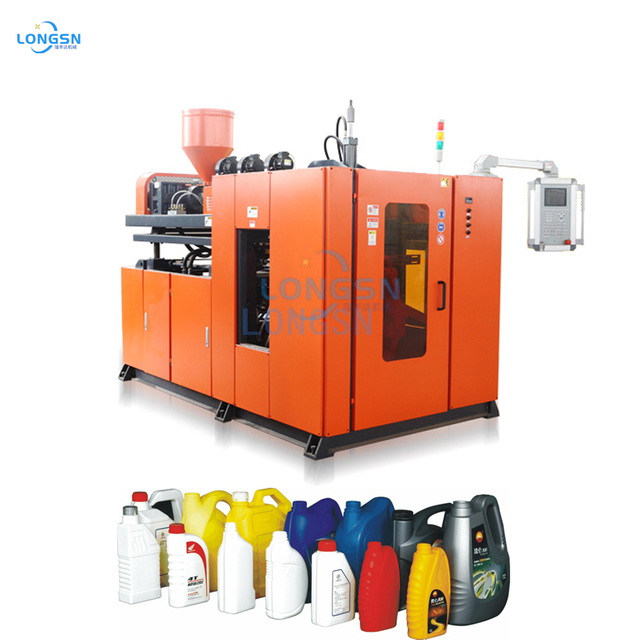
Heavy-duty accumulator head Extrusion Blow Molding machines handle this workload. Continuous extrusion fails on massive containers. The heavy plastic sags under its own weight. Accumulator head technology solves this issue. The machine extrudes resin into a storage cylinder. A hydraulic ram then pushes the material out rapidly. This fast drop prevents sagging. It ensures uniform wall thickness on heavy drums.
Machine Performance Requirements
- Material Handling: High-capacity processing is required. You must extrude High-Density Polyethylene (HDPE) flawlessly. Multi-layer barriers provide necessary chemical permeation resistance.
- Clamping Force: You need sufficient tonnage. Strong pinch-off welds prevent catastrophic leaks. Heavy, thick-walled containers ranging from 5L to over 200L rely on this force.
- Drop-Test Survivability: Industrial containers undergo brutal pressure and stack testing. Poor corner thickness leads to immediate failure. Advanced parison programming adjusts the plastic thickness dynamically. It thickens the corners and thins the side walls. This optimizes material usage while guaranteeing structural integrity.
Consider the production tradeoffs. Long cooling times slow down your overall cycle rates. You also need extensive floor space. Cooling stations and auxiliary equipment occupy significant room.
Industrial Blow Molding Container Applications
| Container Size | Recommended Technology | Key Application Focus |
| 5L - 20L | Continuous EBM | Agrochemicals, cleaning solvents |
| 20L - 50L | Accumulator Head EBM | Industrial lubricants, specialty chemicals |
| 50L - 220L | Heavy-Duty Accumulator EBM | Bulk transport, UN-rated drums |
Strategic Evaluation Framework: Procuring a Plastic Bottle Blowing Machine
Procurement requires careful navigation. You must avoid over-specifying equipment, which wastes capital. You must also avoid under-specifying, which creates production bottlenecks. A balanced approach ensures optimal returns on your investment.
Core Procurement Dimensions
- Financial Modeling: Model upfront capital expenditures against operational expenses. Electricity and compressed air account for massive ongoing costs. Maintenance demands also drain resources over time. High-pressure air compressors drain immense amounts of power. You must evaluate machines offering air recovery systems. These systems capture exhaust air. They recycle it for lower-pressure machine movements. This strategy significantly reduces your monthly utility bills.
- Drive Technology: Compare hydraulic and all-electric systems. Hydraulic machines offer higher force and lower initial costs. All-electric machines require higher initial investment. However, they yield major energy savings and demand lower maintenance.
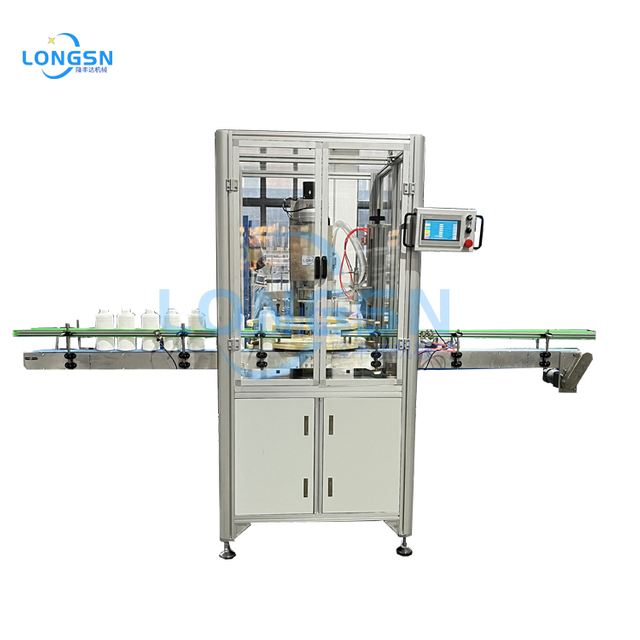
- Automation & Scalability: Integration capabilities define your future success. Your machine must communicate seamlessly. It should link to downstream filling, capping, and labeling equipment. Modular upgrades future-proof your investment.
Predictive maintenance software prevents catastrophic failures. Sensors monitor vibration and temperature variations. The software alerts you before a bearing fails. This prevents unplanned downtime. It keeps your production schedules intact.
Take concrete next-step actions before signing contracts. Request Factory Acceptance Tests (FAT). Use your actual production molds and specific resins during these tests. Verify localized spare parts availability. Ensure the vendor guarantees acceptable Service Level Agreement (SLA) response times.
Evaluating a plastic bottle blowing machine means looking past the spec sheet. You must test its real-world viability thoroughly.
Conclusion
Blow molding technology must match your exact operational reality. You cannot base decisions on product design alone. Regulatory standards and economic pressures dictate the right equipment choice.
Evaluating your options requires looking beyond top-line speed. You must assess energy efficiency diligently. Changeover agility impacts your daily operations heavily. Long-term lifecycle support keeps your lines running year after year.
Operational leaders must take immediate action. Build a comprehensive requirements matrix today. Base this on your specific three-to-five-year production volume forecasts. Analyze your expected SKU complexity. Complete this internal audit before you initiate vendor RFQs.
FAQ
Q: What is the typical ROI timeline for an all-electric plastic bottle blowing machine?
A: Energy savings reliably offset the higher initial capital expenditure. All-electric machines consume significantly less power than hydraulic alternatives. Most facilities experience a two-to-four-year payback period. Your exact timeline depends on local electricity rates and your operating shift structures. Continuous production schedules accelerate the return on investment.
Q: How does mold changeover time impact short-run production viability?
A: Lengthy changeovers destroy margins on short production runs. Modern equipment adopts single-minute exchange of dies (SMED) principles. Quick-change mold systems reduce downtime from hours to minutes. This agility makes producing smaller batches highly profitable. It allows you to respond rapidly to changing market demands without excessive inventory.
Q: Can standard blow molding machines process Post-Consumer Recycled (PCR) plastics?
A: Processing recycled resins introduces severe stability challenges. Standard machines struggle to maintain uniform extrusion. You generally need specialized screws designed to handle material inconsistencies. Multi-layer co-extrusion technology is often required. This allows you to sandwich the PCR layer between virgin plastic, ensuring structural integrity and a clean surface finish.

 English