Transitioning from outsourced packaging to in-house production requires highly strategic capital investment. Upgrading legacy manufacturing equipment also demands strict evaluation. Precision, output rates, and material compatibility ultimately dictate your long-term return on investment. A commercial-grade plastic bottle blow molding machine isn't a simple, one-size-fits-all purchase. Selecting the right architecture depends entirely on your specific resin choice. You must carefully evaluate PET, HDPE, or PP alongside complex container geometry. Furthermore, your target Bottles Per Hour (BPH) will steer this critical procurement decision. This guide breaks down the essential technical frameworks and operational risks. We will explore the core evaluation criteria necessary to optimize your facility. You will learn exactly how to confidently shortlist and procure the right blow molding equipment. We ensure your production line scales efficiently while maintaining rigorous quality standards.
Key Takeaways
- Material dictates the machine: PET beverage containers require Injection Stretch Blow Molding (ISBM), while heavy-duty HDPE containers rely on Extrusion Blow Molding (EBM).
- Look beyond initial price: Total Cost of Ownership (TCO) is heavily influenced by energy consumption, mold tooling flexibility, and auxiliary equipment requirements (chillers, compressors).
- Verify production claims: Vendor BPH (Bottles Per Hour) ratings represent optimal conditions; evaluate real-world yield, scrap rates, and cavitation limits.
- Prioritize aftermarket support: Machine downtime directly impacts revenue. Prioritize vendors offering transparent parts availability, localized support, and robust Factory Acceptance Testing (FAT).
Defining the Business Case: When to Invest in a Plastic Bottle Blow Molding Machine
Bringing bottle production in-house represents a massive operational shift. You must justify this capital expenditure through distinct business advantages. Most manufacturers cross the threshold into self-production when outsourcing limits their profitability or stifles growth.
Cost-per-Unit Reduction
Purchasing empty containers means you essentially pay to ship air. Freight costs eat into your profit margins quickly. By installing a plastic bottle blow molding machine, you eliminate these exorbitant transportation fees. You only pay to transport dense raw resin pellets or compact preforms. Over time, analyzing this cost threshold reveals exactly when in-house manufacturing neutralizes third-party packaging expenses.
Supply Chain Control
Relying on external suppliers introduces severe risks. Supply chain bottlenecks often lead to unexpected stockouts. Direct manufacturing mitigates these vulnerabilities completely. You gain absolute control over your production schedule. It also drastically reduces lead times for rolling out custom container designs.
Quality Assurance
Certain industries require uncompromising hygiene standards. Food, beverage, and pharmaceutical companies cannot risk cross-contamination. Direct oversight of the molding process ensures strict compliance. You monitor the precise melting temperatures, sterile air injection, and clean-room handling. This level of quality assurance is impossible to guarantee through third-party vendors.
Scalability Triggers
Manual or semi-automatic production setups eventually strangle volume growth. You might notice your current equipment maxing out during peak seasonal demands. Identifying these bottlenecks serves as a crucial scalability trigger. Upgrading to a fully automated commercial system unlocks the next tier of production capacity.
Common Mistake: Do not base your business case purely on maximum machine speed. You must calculate planned maintenance downtime and realistic shift schedules to determine actual ROI.
Solution Categories: Matching the Machine to Material and Application
Choosing the wrong machine architecture guarantees project failure. Different plastics possess unique thermal behaviors. Your resin selection dictates the mechanical process required to form it.
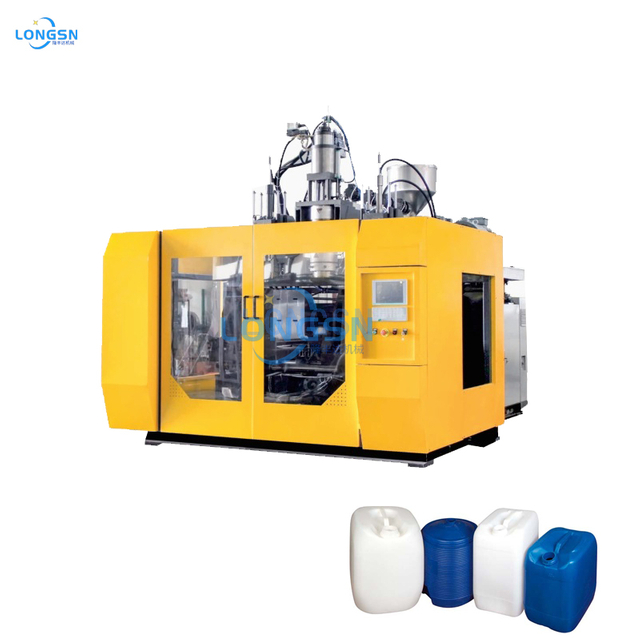
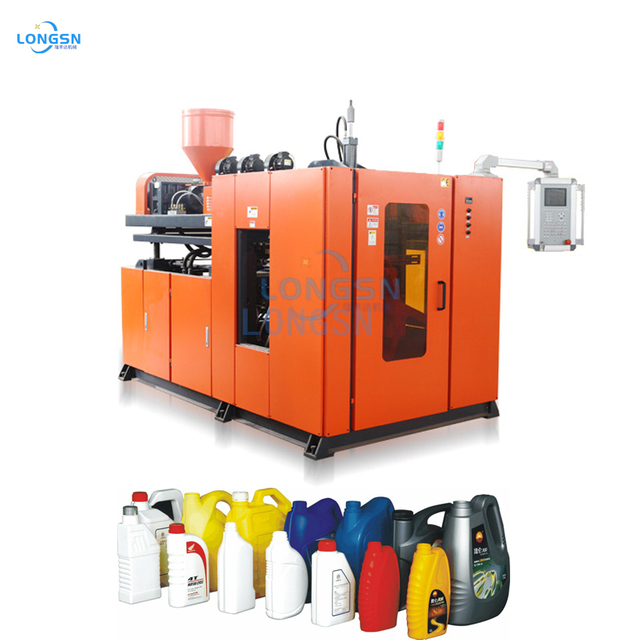
Extrusion Blow Molding (EBM)
Extrusion blow molding dominates the packaging industry for non-clear, heavy-duty applications.
- Best for: HDPE, PP, and PVC resins. These create opaque or semi-translucent products like milk jugs, detergent bottles, and industrial drums.
- Mechanism: The extruder melts raw plastic into a hollow tube called a parison. The mold clamps securely around this parison. High-pressure air then forces the plastic against the chilled mold walls.
- Pros & Cons: EBM excels at forming complex asymmetrical shapes. It effortlessly integrates structural handles into the bottle design. However, the clamping process leaves excess material, known as flash. This requires secondary mechanical trimming.
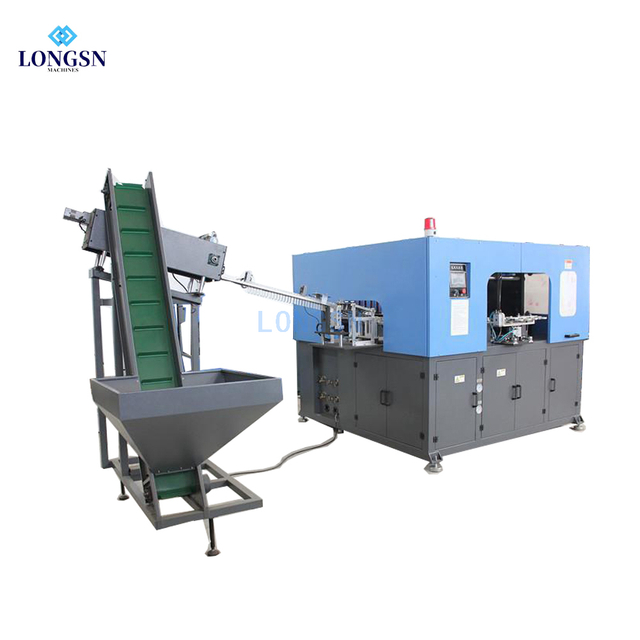
Injection Stretch Blow Molding (ISBM)
The beverage industry relies almost entirely on this precise stretching process.
- Best for: PET plastic. This creates crystal-clear water bottles, carbonated soft drink containers, and premium cosmetic jars.
- Mechanism: This process begins by injection molding a preform. The machine heats this preform to an exact temperature. A mechanical rod stretches it vertically, while high-pressure air blows it horizontally. Manufacturers use either a single-stage machine (forming and blowing in one unit) or a two-stage machine (separating the injection and blowing phases).
- Pros & Cons: ISBM delivers superior optical clarity and structural strength. It produces zero scrap or flash. Unfortunately, the initial tooling costs are significantly higher than EBM.
Injection Blow Molding (IBM)
When extreme precision matters more than sheer volume, manufacturers turn to injection blow molding.
- Best for: Small, high-precision bottles typically under 500ml. The medical and cosmetics sectors favor this method heavily.
- Mechanism: The machine injects molten resin over a core pin to create a preform. It transfers this pin directly into a blow cavity. The system injects air to form the final shape in one continuous, seamless cycle.
- Pros & Cons: IBM guarantees exceptional neck finish precision. It prevents leaks in pharmaceutical packaging. The main drawback is a considerably lower production speed compared to ISBM.
Summary Comparison of Blow Molding Technologies
| Technology | Primary Material | Typical Application | Key Advantage |
| Extrusion (EBM) | HDPE, PP, PVC | Milk jugs, chemical drums | Complex shapes and handles |
| Injection Stretch (ISBM) | PET | Water bottles, sodas | High clarity and strength |
| Injection (IBM) | PE, PP, PET | Medical vials, cosmetics | Precision neck finishes |

Key Evaluation Criteria for Procurement
Procuring industrial machinery requires methodical technical evaluation. You must scrutinize the mechanical specifications against your actual production needs.
Production Capacity (BPH) and Cavitation
Your target Bottles Per Hour (BPH) dictates the required machine cavitation. Cavitation refers to the number of individual bottle molds running simultaneously. Higher cavitation yields faster production rates. However, you must carefully evaluate the trade-off. More cavities mean longer changeover downtime when switching bottle designs. If your facility runs frequent small batches, lower cavitation provides better operational agility.
Automation and Labor Requirements
Deciding between fully automatic and semi-automatic configurations impacts daily operations. Fully automatic systems require minimal human intervention. They feature built-in robotic part removal. They handle automatic flash trimming and integrate seamlessly with downstream filling lines. Semi-automatic machines cost less initially but demand constant operator loading and unloading. They often bottleneck high-speed packaging operations.
Component Durability and Precision
The internal components of your equipment determine its lifespan. You must assess the manufacturing quality of extruders, die heads, and clamping units. Pneumatic blowing systems must withstand millions of high-pressure cycles. Modern systems incorporate servo-driven motors. Servos provide exact process repeatability. They also drastically reduce energy usage compared to older hydraulic systems.
Energy Consumption and Sustainability
Heating plastic and compressing air requires massive electrical loads. You must measure the precise electrical and compressed air requirements before purchase. Furthermore, modern consumers demand sustainable packaging. Evaluate the machine's ability to process post-consumer recycled (PCR) resins. PCR plastics possess different flow characteristics. The right equipment maintains steady cycle times without degrading bottle quality when using recycled materials.
Best Practice: Always verify that your factory electrical grid can handle the peak startup load of the machine's heating bands. This prevents unexpected facility power failures.
Tooling Considerations: Traditional Machining vs. 3D Printed Molds
Mold design and manufacturing profoundly impact your initial capital outlay. The tooling industry has experienced massive technological shifts recently. You must choose the right mold fabrication method for your specific run volumes.
Prototyping Speed
Additive manufacturing, commonly known as 3D printing, revolutionizes the prototyping phase. In the past, testing a new bottle design required cutting costly aluminum molds. This process took several weeks. Today, 3D printing shrinks mold design cycles from weeks to mere days. Engineers print durable resin molds to test structural integrity quickly. You can blow hundreds of test bottles before committing to final metal tooling.
Production Realities
Despite the speed of 3D printing, traditional CNC-machined molds remain the industry standard. Aluminum and stainless steel molds dominate high-volume, long-run production. Metal offers superior thermal conductivity. It pulls heat away from the blown plastic rapidly, shortening the cooling cycle. Metal molds also provide unmatched wear resistance. They withstand the immense clamping forces required for millions of continuous cycles.
Cost Implications
You must factor tooling flexibility into your initial capital expenditure. Brands with diverse product portfolios require frequent mold changeovers. Investing in quick-change mold mechanisms increases the upfront machine cost. However, it saves countless labor hours over the machine's lifetime. Balance your mold investment against your expected product variations.
- Use 3D printed molds for rapid shape validation and marketing mock-ups.
- Use aircraft-grade aluminum molds for standard, high-speed beverage production.
- Use hardened steel molds for highly abrasive materials or extreme longevity requirements.
Implementation Realities and Facility Integration
Many buyers underestimate the infrastructure required to support industrial molding equipment. The machine itself is only the central piece of a much larger operational ecosystem.
Auxiliary Equipment Footprint
A blow molding machine cannot function in isolation. You must account for the cost and physical space of massive auxiliary equipment. The system requires high-pressure air compressors to inflate the bottles. PET systems often require specialized compressors capable of 40-bar pressure. You also need industrial water chillers to cool the molds rapidly. Material handling silos, resin dryers, and vacuum loaders are mandatory for continuous feeding. Vendors frequently omit these vital components from baseline machine quotes. You must measure your factory floor to accommodate this entire footprint.
Operator Training and Safety
Modern equipment features intuitive touchscreen interfaces, but the physics of plastic molding remain complex. Operators face a steep learning curve. They must master optimizing wall thickness distribution. If the wall is too thin, the bottle collapses. If it is too thick, you waste expensive resin. Operators must carefully manage thermal parameters across different heating zones. Comprehensive training on routine troubleshooting prevents minor errors from escalating into major hazards. Safety interlocks and light curtains must remain strictly active to protect hands from high-tonnage clamping units.
Maintenance and Wear Parts
Continuous production slowly degrades mechanical components. You must establish a rigid preventative maintenance schedule. Regular inspection of pneumatic seals prevents costly air leaks. High-pressure valves require frequent lubrication. Extruder heating bands eventually burn out and demand immediate replacement. By stocking critical wear parts on-site, you prevent catastrophic downtime. A reactive approach to maintenance will inevitably halt your production line during peak demand.
Shortlisting Logic and Vendor Selection
Selecting the right equipment manufacturer is as important as selecting the right technology. A poorly supported machine becomes a massive liability. You must protect your investment through rigorous vendor vetting.
Factory Acceptance Testing (FAT)
Never accept a machine delivery based solely on technical drawings. You must demand a comprehensive Factory Acceptance Testing (FAT) protocol. A proper FAT involves a live, continuous run of your specific molds at the vendor's facility. You supply your exact resin formulation. The machine must hit the promised BPH target while maintaining acceptable scrap rates. Conduct this live trial before releasing your final payment installment. If the machine stumbles during the FAT, the vendor must correct the engineering flaws on their own floor.
Parts Availability and Service SLAs
Machine downtime immediately halts downstream filling and packaging. You cannot wait weeks for a replacement valve to ship overseas. Evaluate the vendor's supply chain for replacement parts carefully. Do they maintain a localized spare parts warehouse? You must also negotiate strict Service Level Agreements (SLAs). Demand guaranteed response times for technical support. If a servo motor fails at midnight, you need immediate remote diagnostic support.
Warranty and Performance Guarantees
Do not accept vague promises regarding machine performance. Look for concrete contractual commitments. The final procurement contract should explicitly state the guaranteed cycle times. It must define strict energy consumption limits. The vendor should outline scrap rate minimums. A comprehensive warranty covering core mechanical and electrical components for at least 12 to 24 months is non-negotiable.
Conclusion
Sourcing a commercial blow molding system requires highly methodical planning. You must align your material chemistry and target production volume with the correct mechanical architecture. Whether you choose EBM for heavy-duty containers or ISBM for clear beverage bottles, the underlying physics demand precise engineering.
Base your final procurement decision on verifiable implementation realities rather than the lowest initial quote. Reliable aftermarket support, energy-efficient servo technology, and successful FAT results will protect your investment. A well-supported machine minimizes downtime and stabilizes your daily output.
Your immediate next step is facility preparation. Consult with your internal manufacturing engineers to audit your building's infrastructure. Verify your electrical capacity, cooling water supply, and high-pressure air availability. Once you map your facility footprint, you can request formal RFQs from your shortlisted vendors with absolute confidence.
FAQ
Q: What is the difference between single-stage and two-stage PET blow molding machines?
A: Single-stage machines process raw resin into a preform and blow the bottle in one continuous cycle. This makes them ideal for custom, low-volume shapes. Two-stage machines require pre-made preforms. They focus entirely on reheating and blowing. This two-step process is ideal for ultra-high-volume, standard bottles.
Q: How do I calculate the real BPH (Bottles Per Hour) I need?
A: You must factor in your downstream filling capacity, planned maintenance downtime, and expected scrap rates. A reliable industry rule is to specify a molding machine capable of generating 15 to 20 percent higher output than your packaging line's maximum continuous speed.
Q: What is the expected lifespan of a commercial blow molding machine?
A: Industrial blow molding equipment is built for extreme endurance. With rigorous preventative maintenance and the timely replacement of wear parts, these machines typically operate efficiently for 15 to 20 years before requiring full mechanical overhauls.
Q: Can one machine produce both PET and HDPE bottles?
A: Generally, no. PET requires a specialized injection stretch blow molding process (ISBM). Conversely, HDPE utilizes extrusion blow molding (EBM). The heating profiles, mold designs, and fundamental physical mechanisms between these two methods are completely distinct.

 English