Selecting the right bottle material is never just a basic packaging decision. It directly dictates your equipment capital expenditure, daily production cycle times, and long-term defect rates. Packaging engineers and plant managers face immense pressure to optimize these operational variables. Misaligning material properties and equipment capabilities creates significant friction on the factory floor. It frequently leads to severe structural failures, rapid barrier degradation, and incredibly costly machine downtime. You risk losing entire production batches when specific polymers clash against improperly configured machinery. We will establish a clear, actionable evaluation framework in this guide. You will learn how to match specific polymers—such as PET, HDPE, and PP—perfectly to their ideal manufacturing technologies. We outline the appropriate processing methods to help you maximize production yield. By the end, you will know exactly how to ensure compliance and scale your operations successfully.
Key Takeaways
- Material selection directly dictates the type of molding technology required (e.g., stretch blow vs. extrusion blow).
- Thermal properties and melt flow indices of chosen plastics determine cooling times and overall production throughput.
- Investing in the correct plastic bottle blowing machine depends entirely on your material’s heating profile, barrier requirements, and targeted structural rigidity.
- Integrating Post-Consumer Resin (PCR) introduces processing variables that require specific equipment calibrations.
The Business Impact of Material Choice on Production
Defining Success Criteria
Moving beyond basic unit cost means evaluating holistic production economics. You must factor in energy consumption during the heating phase, ongoing scrap rates, and routine mold maintenance. Different polymers require vastly different thermal energy inputs to reach an optimal melt state. Higher processing temperatures naturally increase your daily electrical draw. Scrap rates also fluctuate based on material stability. Some resins degrade quickly if left idling, which generates unusable waste. Mold maintenance heavily depends on polymer abrasiveness and off-gassing. Acidic byproducts from certain plastics can corrode tooling over time. We recommend building an economic model tracking these specific operational variables. This approach reveals the true long-term financial impact of your material selection.
Barrier Properties vs. Shelf Life
Material porosity directly impacts product viability on retail shelves. Oxygen (O2) and carbon dioxide (CO2) transmission rates dictate how long contents remain fresh. If you package fresh juices, oxygen ingress causes rapid oxidation and spoilage. If you package carbonated beverages, carbon dioxide escapes through weak barriers, leaving drinks flat. You must evaluate whether a simple monolayer production suffices or if you need multi-layer processing. Multi-layer technologies inject a distinct barrier layer, like EVOH, between standard plastic layers. This drastically improves shelf life but requires complex co-extrusion machinery.
Common Mistake: Relying on thick monolayer walls to solve barrier issues. This wastes material and increases cooling times. Multi-layer processing offers better protection at lighter weights.
Weight Optimization (Lightweighting)
Lightweighting is a primary goal for modern packaging lines. However, reducing material usage requires a delicate balance. You must maintain sufficient top-load strength to preserve structural integrity during shipping and stacking. Removing too much plastic from the bottle's shoulder or base leads to catastrophic pallet collapses in transit. We analyze the material distribution carefully during the blowing phase. Advanced stretching techniques allow you to thin the bottle walls while actually increasing tensile strength. Achieving optimal weight reduction depends on precise temperature controls and accurate stretch-rod timing.
Core Packaging Materials: Processing Realities & Use Cases
Material Property Comparison Chart
| Polymer Type | Primary Benefit | Thermal Sensitivity | Ideal Application |
| PET | High clarity & strength | High (Requires drying) | Water, carbonated drinks |
| HDPE | Impact & moisture barrier | Low | Dairy, household chemicals |
| PP | High thermal resistance | Moderate (Shrinkage risks) | Hot-fill sauces, syrups |
PET (Polyethylene Terephthalate)
PET dominates the beverage industry due to its high clarity, excellent carbonation barrier, and high tensile strength. Consumers prefer it because it mimics the appearance of glass. The production reality, however, is highly demanding. PET requires precise moisture control prior to processing. You must use specialized desiccant dryers to remove ambient moisture from the raw resin pellets. If PET processes while damp, it undergoes hydrolysis, which destroys its molecular weight and ruins bottle strength. Furthermore, PET remains highly sensitive to temperature fluctuations. A deviation of just a few degrees in the preform heating oven causes improper material distribution and weak bottle bases.
HDPE (High-Density Polyethylene)
HDPE is a workhorse material known for high impact resistance and an excellent moisture barrier. It naturally appears opaque or translucent, making it ideal for dairy products or household chemicals sensitive to light. The production reality of HDPE favors efficiency. It features a lower melting point compared to PET. This makes it highly adaptable to continuous extrusion processes. You can push HDPE through an extruder smoothly to form a continuous parison. Its high melt strength easily supports complex bottle geometries, including asymmetrical shapes and integrated handles.
PP (Polypropylene)
PP stands out for its high thermal resistance and excellent chemical resistance. It easily handles hot-fill applications above 185°F without warping. This makes it perfect for syrups, hot sauces, and sports drinks. The production reality presents unique challenges regarding dimensional stability. PP remains prone to specific shrinkage rates post-molding. It crystallizes differently than other polymers as it cools. You must implement targeted cooling protocols directly into the tooling design. If the mold runs too warm or the cycle time ends prematurely, the bottle will shrink unpredictably after ejection.
Matching Materials to the Right Plastic Bottle Blowing Machine
Process-to-Material Alignment
You cannot universally swap materials on a single machine architecture without significant retrofitting. Attempting to run HDPE on equipment designed solely for PET often results in immediate mechanical failure. Each polymer demands a specific thermodynamic approach. We must match the resin's melt flow behavior to the correct stretching and blowing mechanics. Selecting a plastic bottle blowing machine requires analyzing your chosen material first, not the other way around. Proper alignment ensures low defect rates and consistent material thickness.
Injection Stretch Blow Molding (ISBM)
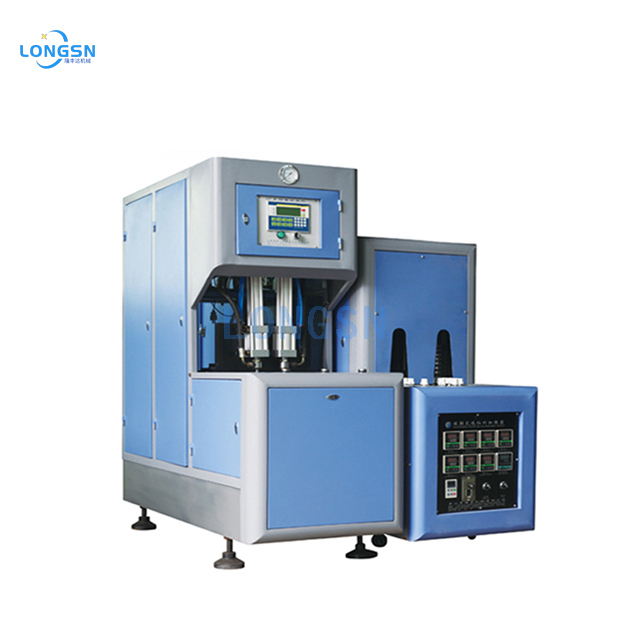
ISBM represents the industry standard for processing PET and PP. It functions through a two-stage or single-stage process. Both methods prioritize biaxial orientation. The machine mechanically stretches the preform vertically with a rod and simultaneously blows it horizontally with high-pressure air. This biaxial stretching aligns the polymer molecules, granting the final bottle exceptional clarity and burst strength. Two-stage systems use pre-made preforms, offering massive volume capabilities. Single-stage systems inject the preform and blow the bottle within the same machine, which minimizes scratch defects and handles unique cosmetic shapes perfectly.
Best Practice: Use single-stage ISBM for premium cosmetics requiring flawless surfaces, and two-stage ISBM for high-volume beverage output.
Extrusion Blow Molding (EBM)
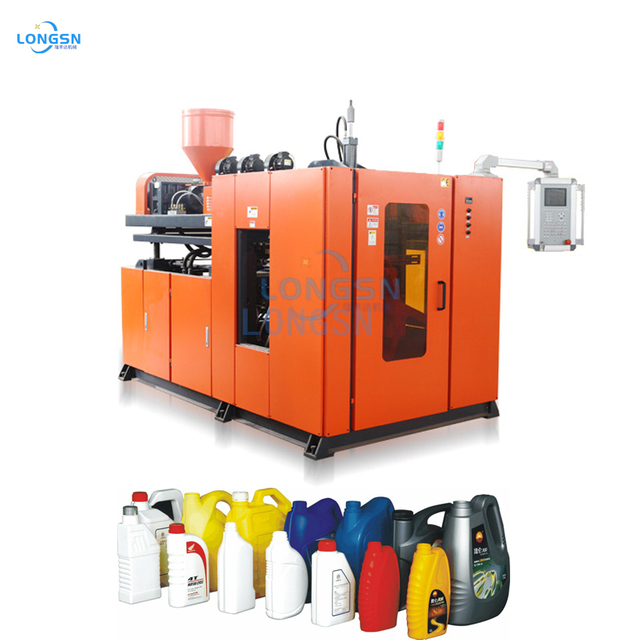
EBM serves as the ideal mechanism for HDPE, LDPE, and PP. It operates via continuous or accumulator head processes. The machine extrudes a hollow tube of molten plastic called a parison. The mold halves clamp shut on the parison, and an air pin blows it outward. EBM excels at handling the unique melt strength of olefins. It easily creates complex handle designs and off-center neck finishes. You simply cannot manufacture a standard milk jug with an integrated handle using ISBM; you must use EBM to capture that geometry.
Evaluating Equipment Flexibility
Modern production environments demand flexibility. You must assess whether a machine offers programmable heating profiles and modular mold clamping. Slight resin variations happen frequently. Switching from virgin PET to recycled PET (rPET) changes the material's thermal absorption rate. Darker rPET pellets absorb heat faster than clear virgin pellets. Your machinery needs independent heating zone controls to accommodate this shift without burning the polymer. Modular clamping allows you to swap neck finish inserts quickly, saving hours of downtime during product changeovers.
Performance & Compliance: The Evaluation Matrix
Regulatory Compliance
Navigating strict regulatory standards is non-negotiable. You must ensure materials meet FDA 21 CFR standards for direct food contact. Packaging for acidic juices or high-fat dairy requires specific polymer grades that will not leach chemicals into the product. Consumer demand also drives the necessity for BPA-free certifications across all plastic categories. If you serve the medical sector, materials must clear rigorous pharmaceutical grade (USP) requirements. This ensures the plastic remains chemically inert and does not compromise the drug efficacy over its intended shelf life.
Sustainable Integration (PCR)
Integrating Post-Consumer Resin (PCR) is a major sustainability initiative, but it introduces distinct engineering hurdles. The primary challenge stems from inconsistent melt flow indices. Recycled plastics come from varied sources, leading to a mixture of molecular weights. This inconsistency causes thin spots or weak bases during the blowing phase. The solution involves evaluating machine extruders carefully. You need advanced screw designs capable of homogenizing mixed-grade recycled materials. Barrier screws and specialized mixing sections melt the PCR evenly, ensuring a consistent bottle finish despite raw material variations.
Surface Finish & Decoration
Your material choice directly impacts secondary decoration operations. PET offers a smooth, high-energy surface. You can apply direct printing, adhesives, or shrink sleeves easily without pre-treatment. PP, conversely, features a low surface energy. Adhesives and inks struggle to bond to it. You must implement a flame treatment or corona treatment process before labeling PP bottles. These treatments temporarily oxidize the bottle surface, allowing inks to adhere permanently. Failing to account for these secondary steps leads to massive labeling failures downstream.
Implementation Risks: Tooling, Changeovers, and Scalability
Mold Shrinkage Calculations
Utilizing existing molds for a new material often results in disastrous dimensional failures. Every polymer has a distinct shrink rate as it cools from a molten state to a solid. Switching from HDPE to PP inside the exact same mold cavity alters the final bottle dimensions. PP shrinks differently than HDPE. This variance routinely results in out-of-spec bottle finishes. The neck threads will not align properly with standard closures, causing immediate cap-seal failures and product leakage. You must calculate accurate mold shrinkage values and cut new tooling when changing polymer families.
Thermal Degradation
Thermal degradation poses a serious risk during machine idling. If a production line pauses, molten plastic remains inside the extruder barrel. Heat-sensitive materials like PVC or specific PET blends degrade rapidly under sustained heat. The polymer begins burning, cross-linking, or severely yellowing. When the machine restarts, these degraded particles flush into the molds, creating black specks and brittle bottles. You must implement strict purging procedures. Operators need to lower barrel temperatures immediately during unexpected downtime to protect the resin integrity.
Shortlisting Logic & Next Steps
Transitioning from planning to execution requires a systematic approach. Follow these structured steps to mitigate capital risk:
- Audit current product formulations: Determine if your liquid requires hot-fill or cold-fill processes, and assess chemical acidity.
- Define expected annual volume: Calculate daily output needs to determine the exact cavitation requirements for your molds.
- Request pilot-run data: Demand physical proof from machinery OEMs. Have them run your specific resin formulation through their test machines before you finalize any capital expenditure.
- Analyze defect limits: Establish acceptable scrap thresholds for the pilot run to ensure the equipment meets your quality standards.
Conclusion
Optimal bottle production is achieved when material properties, product requirements, and machine capabilities are treated as a single integrated system. Ignoring one element compromises the entire production line. We demonstrated how thermal sensitivities, barrier needs, and shrinkage rates dictate your equipment choices. Final recommendation: prioritize machinery OEMs that offer transparent proof-of-concept testing with your chosen polymer grades. Do not rely solely on specification sheets. Actionable Next Step: initiate a tooling and cycle-time audit with prospective machine manufacturers based on your primary material selection today.
FAQ
Q: Can a single plastic bottle blowing machine run both PET and HDPE?
A: Generally, no. PET relies on Injection Stretch Blow Molding (ISBM) for biaxial orientation, while HDPE typically requires Extrusion Blow Molding (EBM) due to its melt strength.
Q: How does using recycled plastics (rPET/PCR) affect machine settings?
A: rPET absorbs heat differently and has variable flow characteristics. Operators must adjust preform heating profiles and potentially upgrade extruder screws to ensure consistent material distribution.
Q: What material is required if my product requires hot-filling?
A: Polypropylene (PP) or specifically heat-set PET. Standard PET will warp and deform under high temperatures, requiring specialized heat-resistant molds and blowing parameters.

 English