Investing in blow molding equipment represents a substantial capital expenditure. Operational friction quickly erodes any perceived savings from a lower initial purchase price. High scrap rates and unexpected downtime create massive financial bleed over time. Manufacturers often overlook the massive operational expenses of inefficient machinery. You must align equipment specifications directly with your daily production reality. We provide a strict, vendor-neutral framework to help you evaluate your options.
This guide shows you how to shortlist and select an industrial plastic bottle blowing machine based on verifiable production outputs. You will learn to assess actual capacity requirements accurately. We will help you match specific resin types to the correct mechanical architecture. Finally, you will discover how to demand strict vendor accountability. Proper evaluation ensures you deploy a highly profitable, sustainable production line.
Key Takeaways
- Capacity vs. Reality: Base machine sizing on actual operational output (accounting for maintenance and changeovers), not theoretical maximum Bottles Per Hour (BPH).
- Technology Alignment: The choice between Extrusion (EBM), Injection Stretch (ISBM), and Reheat Stretch (RSBM) dictates resin compatibility, bottle complexity, and tooling costs.
- Hidden OPEX: Auxiliary equipment (high-pressure compressors, chillers) and energy consumption often represent the largest long-term costs.
- Vendor Accountability: Never finalize procurement without a localized Factory Acceptance Test (FAT) and a transparent Service Level Agreement (SLA) for spare parts.
1. Defining Your Baseline Production & Material Requirements
You cannot select the right equipment without establishing a strict production baseline. Manufacturers often buy too much capacity or severely underestimate their operational needs. You must define your target output and material constraints early in the process.
Target Capacity & Scaling Assumptions
You must calculate your required Bottles Per Hour (BPH) accurately. Never rely entirely on theoretical maximum speeds. Micro-stops, planned maintenance, and mold changeovers eat into your daily yield. We recommend applying an Overall Equipment Effectiveness (OEE) multiplier. Aim for an 85% operational efficiency rate when calculating true BPH.
Assess your future scalability needs carefully. Single-cavity machines offer lower entry costs. Multi-cavity systems provide necessary volume flexibility as market demand grows. You must decide if future output increases will require an entirely new line or simply a mold upgrade.
Resin and Application Constraints
Your chosen material dictates the fundamental machine architecture. You cannot swap resins arbitrarily once you install the equipment.
- PET vs. HDPE/PP: Map your material choice directly to the machine technology. PET production strictly requires stretch blow molding. Conversely, HDPE and PP applications require extrusion blow molding to form properly.
- Bottle Specifications: Detail every geometric variable. Document neck sizes, final gram weights, and total volumetric capacities. Producing a 500ml water container requires vastly different mechanical force than a 5L edible oil jug. Extreme volumetric sizes demand specialized clamp tonnage to prevent mold blow-out.
Standardization Needs
Evaluate your required package designs. Standard cylindrical or square formats move smoothly through conventional machinery. Custom, asymmetrical designs introduce severe complexities. They often require specialized mold handling equipment. Determine if your line must accommodate these complex shapes before finalizing machine specifications.

2. Solution Categories: Selecting the Right Blow Molding Architecture
The industry categorizes blow molding into three primary architectures. Each format serves distinct market applications. Choosing the wrong category guarantees production failures and wasted capital.
Reheat Stretch Blow Molding (RSBM / 2-Step)
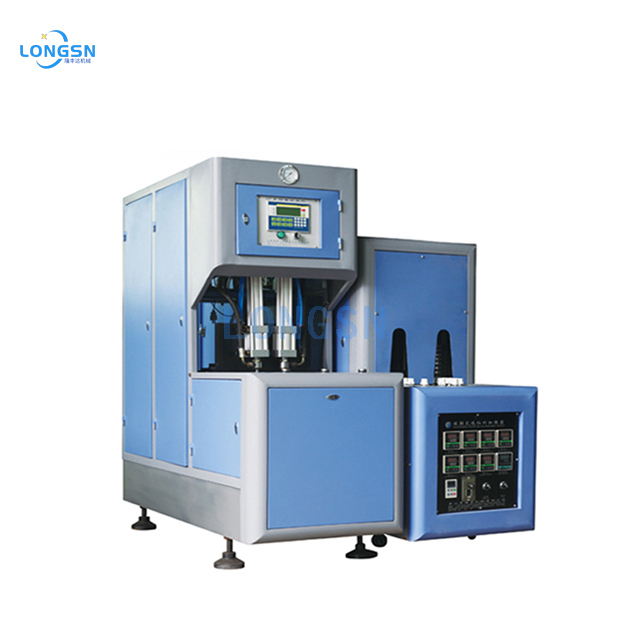
RSBM separates preform injection from the final blowing process. We see this architecture dominate high-volume consumer goods.
- Best for: High-volume PET production. It handles water bottles, carbonated beverages, and cosmetics perfectly.
- Evaluation criteria: Scrutinize the preform heating efficiency. Consistent infrared oven temperatures ensure uniform wall thickness. You must also evaluate stretch-rod precision to prevent off-center gates.
Extrusion Blow Molding (EBM)
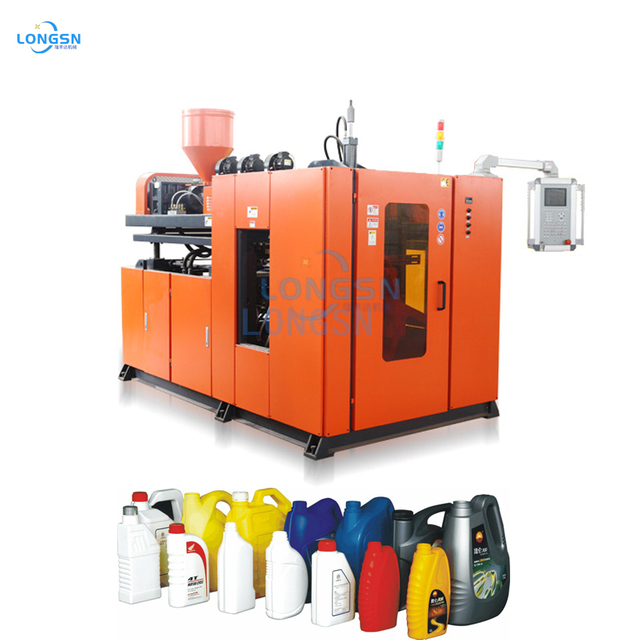
EBM extrudes a continuous plastic tube called a parison. The mold clamps around it before air forces the plastic against the cavity walls.
- Best for: HDPE and PP applications. It produces milk jugs, laundry detergents, and heavy industrial containers.
- Evaluation criteria: Demand high parison programming accuracy. This controls the wall thickness profile. You must also assess flash trimming integration and potential co-extrusion capabilities for multi-layer bottles.
Injection Stretch Blow Molding (ISBM / 1-Step)
ISBM combines preform injection and final blowing into a single machine footprint. It eliminates preform scratching during transport.
- Best for: High-clarity, low-defect pharmaceutical or premium cosmetic bottles.
- Evaluation criteria: Weigh the strict requirement for blemish-free production against the drawbacks. ISBM incurs higher initial tooling costs and delivers lower output speeds than 2-step RSBM.
Comparison of Blow Molding Architectures | Architecture | Ideal Resins | Primary Applications | Key Advantages |
| RSBM (2-Step) | PET | Water, Soda, Juices | Maximum BPH, highly scalable |
| EBM | HDPE, PP | Milk jugs, Detergents | Handles handles/asymmetry well |
| ISBM (1-Step) | PET, PP, PC | Pharma, Cosmetics | Zero preform scratches, high clarity |
3. Evaluating Machine Performance & Operational KPIs
Once you select an architecture, you must evaluate mechanical performance. Spec sheets often exaggerate capabilities. You need to focus on verifiable Key Performance Indicators (KPIs) to ensure long-term profitability.
Energy Consumption & Efficiency
Scrutinize the actual power draw under load. We strongly advise selecting servo-driven systems over traditional pneumatics. Servo-motors offer verifiable energy savings. They provide tighter motion control and only draw power during active movement.
Evaluate onboard air recovery systems carefully. High-pressure blowing consumes massive amounts of compressed air. Quality recycling mechanisms capture exhaust air and route it to low-pressure pneumatic circuits. This setup can save 15-30% in daily compressor operational expenses.
Automation Level & Labor Dependence
You must compare semi-automatic systems against fully automatic lines. Base this decision on regional labor costs and your acceptable error margins. Semi-automatic systems require manual preform loading. They introduce human error and contamination risks. Fully automatic machines eliminate these variables but require higher capital upfront.
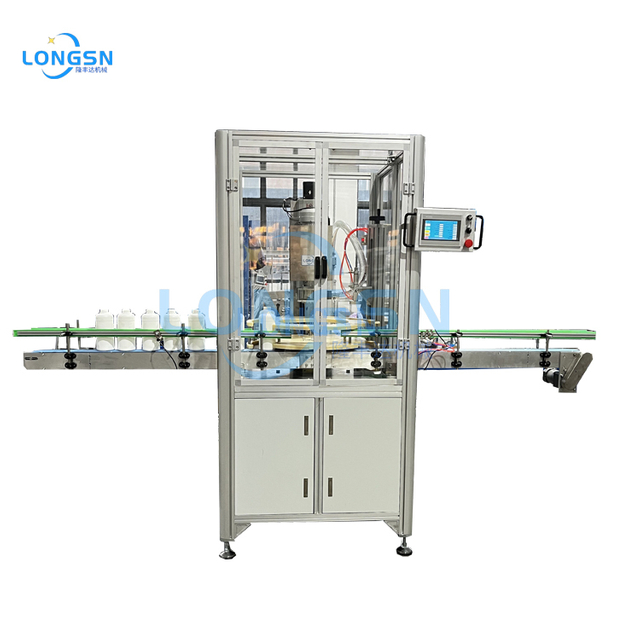
Assess downstream integration capabilities immediately. Your machine must sync flawlessly with upstream preform unscramblers. It also needs seamless handoffs to downstream filling and capping lines to prevent damaging bottlenecks.
Mold Changeover & Flexibility
Measure the true SMED (Single-Minute Exchange of Die) capabilities. Ask vendors to demonstrate a complete mold swap. Rapid changeovers prove critical for facilities running high-mix, low-volume product lines. If a changeover takes four hours, you lose half a shift of profitable production. Look for quick-release water couplings and sliding mold rails.
4. Implementation Realities, Facility Footprint, and Hidden OPEX
A production machine never operates in a vacuum. It forms the center of a complex industrial ecosystem. Ignoring environmental and infrastructural requirements leads to massive budget overruns.
Auxiliary Equipment Dependencies
You must account for the substantial cost and footprint of auxiliary equipment. High-pressure air compressors often run at 30-40 bar for PET applications. These require massive electrical panels and reinforced flooring. You also need heavy-duty water chillers and precise mold temperature controllers. This peripheral gear often costs nearly as much as the main unit.
Facility Layout & Environmental Controls
Assess your physical building constraints thoroughly.
- Vertical Clearance: Check your ceiling height. You need ample clearance for resin silos and tall preform unscramblers.
- Foundation Strength: Verify load-bearing capacities. High-speed clamping generates intense dynamic vibrations.
- Climate Control: Analyze ambient temperature impacts. Heat and humidity change resin flow behaviors. You must climate-control the production floor to maintain steady quality.
Maintenance & Degradation Risks
Analyze the most common mechanical failure points. You will experience wear on stretch rods and inevitable seal degradation. Infrared oven lamps possess strict operational lifespans and burn out regularly. Verify the accessibility of these wear components. Your maintenance team must perform routine replacements without executing complete machine tear-downs.
5. Vendor Shortlisting Framework & Next Steps
Never rely solely on a slick sales brochure. You must force vendors to prove their claims. Implement a rigid evaluation framework before signing any purchase orders.
Certifications & Safety Compliance
Ensure the equipment meets CE, UL, or your regional safety standards. Verify all physical safeguarding measures. Light curtains and interlocked safety doors remain non-negotiable. Test the localized E-stop protocols to ensure they halt high-pressure air immediately.
The Factory Acceptance Test (FAT)
Mandate a strict FAT before the vendor ships the equipment. You must run this test using your specific molds and preforms. Demand proof of sustained BPH over a continuous 4-to-8-hour run. Do not accept a 15-minute burst speed as proof of capability. A long run exposes heating fluctuations and mechanical vibrations.
After-Sales Architecture
Scrutinize the fine print inside the warranty document. Check if it covers high-wear moving parts or only the static frame. Verify regional technician availability. Can they arrive on-site within 24 hours? Finally, investigate the electronics structure. Choose systems utilizing standard off-the-shelf PLC components. Proprietary black-box electronics hold your production line hostage during severe breakdowns.
Conclusion
Evaluating blow molding equipment requires looking deep past the initial spec sheet. You must focus entirely on integrated system performance and real-world yield. Theoretical maximums mean nothing if the machine suffers constant micro-stops. Match your resin type to the correct mechanical architecture before assessing auxiliary requirements.
We advise building a weighted decision matrix. Prioritize ongoing operational expenses like energy draw, scrap generation, and labor over the lowest initial purchase price. Ensure your vendor proves their claims through a rigorous Factory Acceptance Test using your specific materials.
Take action today by auditing your current facility. Map out your available utility capacities, specifically measuring power, high-pressure air, and chilled water. Once you define these limits, consult with an engineering specialist to draft a formal Request for Proposal (RFP).
FAQ
Q: What is the real-world difference in output between theoretical BPH and actual BPH?
A: Theoretical BPH represents the machine running continuously without interruption. Actual BPH accounts for operational reality. Industry standards calculate actual yield at 85-90% of the theoretical maximum. This reduction accounts for necessary micro-stops, mold changeovers, and routine daily maintenance.
Q: Can one machine handle multiple neck sizes?
A: It depends on the machine's specific neck handling system and mandrel spacing. Most machines handle minor variations easily. However, significant neck diameter changes require secondary investments in specialized change parts, rails, and new transfer arms.
Q: When should a business upgrade from semi-automatic to fully automatic blow molding?
A: You should upgrade when labor costs exceed automation financing costs. The break-even threshold usually occurs during high-volume scaling. Fully automatic systems also become mandatory when clients require strict, hygienic, zero-touch production standards for food or medical packaging.
Q: Are standard molds compatible across different machine brands?
A: No. You should never assume universal fit. Machines utilize vastly different mold pitches, mounting plate configurations, and clamping stroke depths. Always verify exact compatibility specifications before attempting to move existing molds to a new machine brand.

 English