Manual or outdated labeling processes remain a primary bottleneck for scaling production facilities today. These older methods often cause severe line bottlenecks. They also introduce alignment errors and create serious compliance risks. You cannot afford these delays in high-volume manufacturing environments. We must view a sticker labeling machine not just as a standalone purchase. Instead, it serves as a critical integration point for end-of-line packaging automation. Upgrading your equipment transforms how your facility operates.
This guide aims to provide operations and procurement teams an objective framework. You will learn how to evaluate, shortlist, and implement labeling equipment across different industrial environments. We explore industry-specific requirements, machine configurations, and critical performance metrics. By following this framework, you gain actionable insights to optimize your production lines, reduce operator errors, and maintain strict compliance.
Key Takeaways
- Industry-specific compliance: Regulated sectors (like pharma and food) require machines with GMP-compliant builds, vision inspection integration, and high placement accuracy (±1mm).
- Configuration dictates efficiency: Selecting between wrap-around, top, or multi-side applicators depends entirely on primary packaging geometry and line speeds.
- Risk mitigation: Successful deployment relies on rigorous Factory Acceptance Testing (FAT) and verifying modularity for future packaging changes.
Cross-Industry Applications: Where a Sticker Labeling Machine Drives ROI
Pharmaceuticals and Nutraceuticals
The pharmaceutical sector operates under uncompromising regulatory scrutiny. Facilities prioritize track-and-trace compliance, strict serialization, and extreme precision above all else. Every single vial, ampoule, or bottle must carry accurate dosage and batch information.
The core application focuses on applying wrap-around labels at extremely high speeds. Operations frequently run up to 300 or more bottles per minute (BPM). You must integrate vision systems directly into the labeling workflow. These cameras instantly detect and reject any mislabeled or misaligned units before they leave the station.
Deploying an automated sticker labeling machine eliminates human error in critical dosage labeling. Equipment built using stainless steel (SS 304 or 316) construction easily meets strict FDA and GMP regulatory standards. This robust construction ensures easy sanitization and long-term durability in cleanroom environments.
Food and Beverage
Food and beverage packaging lines demand high throughput and extreme flexibility. Labels face harsh environmental conditions. They require moisture resistance for cold chain logistics. You also need seamless variable data printing for batch numbers and expiry dates.
Application focuses vary widely across this industry. Facilities require front and back labeling for condiments. They need top labeling for clamshell containers and specialized neck-labeling for beverage bottles. A versatile machine manages these distinct requirements seamlessly.
Automation standardizes brand presentation on competitive retail shelves. High-mix production environments face constant product changes. Modern equipment handles rapid SKU changeovers efficiently. This flexibility keeps your production lines running smoothly during seasonal product shifts.
Cosmetics and Personal Care
Cosmetic packaging relies heavily on visual appeal. Consumers associate aesthetic perfection directly with product quality. Production lines must handle irregular container shapes constantly. Tapered bottles, soft squeeze tubes, and wide jars complicate the application process.
Many premium brands utilize clear labels to create a "no-look" aesthetic. This specific application requires specialized sensors. Standard sensors fail to detect transparent label gaps accurately. Upgraded sensors ensure the equipment dispensing mechanism triggers at the exact right millisecond.
Precision application prevents bubbling, tearing, or wrinkling on premium packaging. Flawless execution protects brand integrity. Customers notice even minor alignment flaws on luxury goods. Automated precision guarantees every product looks pristine.
Chemicals and Lubricants
Industrial chemicals and lubricants present unique packaging challenges. Durability stands as the core requirement. Production lines handle heavy, bulky containers like jerrycans and steel drums. The environment itself is often harsh, dusty, or exposed to chemical spills.
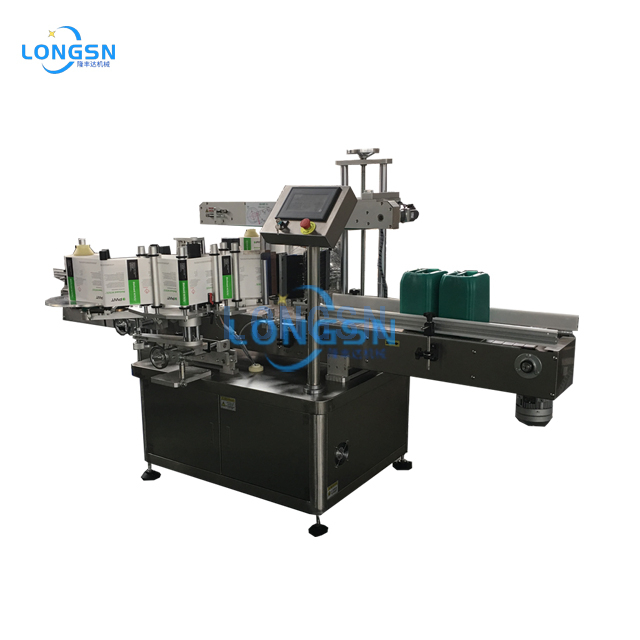
Facilities focus on heavy-duty double-sided or wrap-around applications. The equipment must exert sufficient pressure to bond adhesives to rugged plastic or metal surfaces securely. Flimsy applicator arms will fail under these industrial conditions.
Reliable application ensures hazard warnings and compliance data remain permanently affixed. Regulatory bodies mandate strict labeling for hazardous materials. Equipment designed for harsh environments guarantees your safety warnings survive transit and rough handling.

Evaluating Machine Configurations for Your Production Line
Wrap-Around Labeling Systems
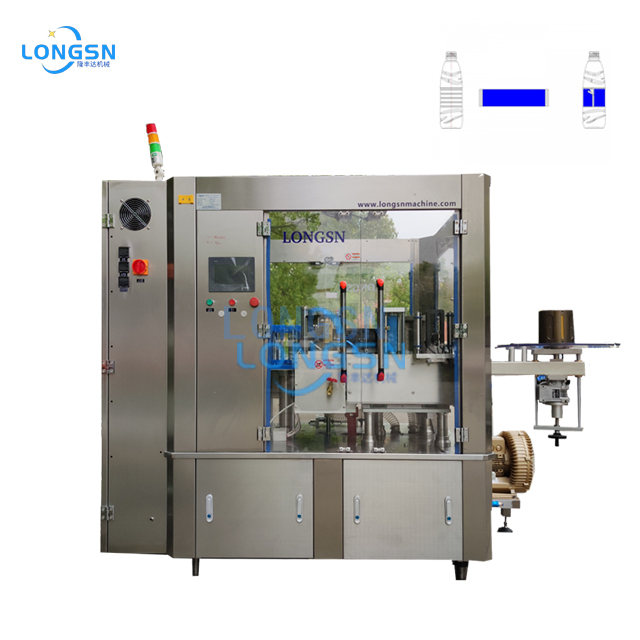
These systems work best for cylindrical containers. Common examples include standard bottles, medical vials, and aluminum cans. The packaging rotates against a pressure surface to secure the adhesive evenly.
When evaluating these systems, look closely for motorized wrap-belt mechanisms. A motorized belt spins the container consistently during application. This specific feature ensures a smooth, bubble-free finish. Static wipe-down pads often struggle to eliminate air pockets on high-speed lines.
Front and Back (Double-Sided) Applicators
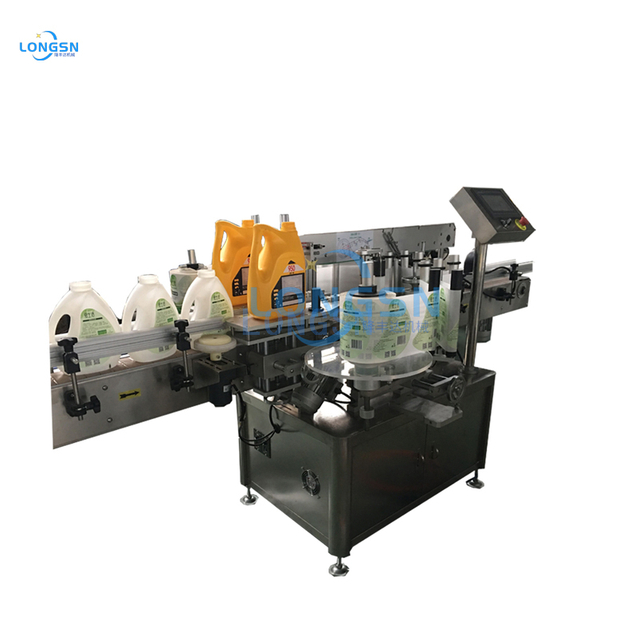
Use double-sided applicators for flat, oval, or rectangular containers. Shampoo bottles, detergent jugs, and flat-faced flasks fit this category perfectly. Applying two labels simultaneously requires perfect container orientation.
This configuration requires precise container-alignment modules prior to the labeling station. Look for heavy-duty chain aligners or stabilizing belts. If the bottle shifts slightly on the conveyor, both labels will sit crookedly. Alignment determines your final accuracy.
Top and Bottom Labelers
Top and bottom labelers apply decals to flat surfaces. They work best for folding cartons, plastic clamshells, food trays, and jar caps. Some facilities use them to seal tamper-evident edges.
Assess the split-conveyor designs carefully for bottom labeling. The container must travel across a gap where the bottom applicator sits. Ensure the conveyor transition provides total stability. Unstable transitions cause the product to tilt, ruining the bottom label placement.
Print and Apply Systems
Logistics hubs and secondary packaging lines rely on print and apply systems. They work best for outer cases, shipping cartons, and pallets. These units generate variable data in real-time.
Evaluate these systems based on printer engine integration. Industry leaders like Zebra and Sato provide highly reliable print engines. You must also evaluate tamp-blow versus wipe-on application methods. Tamp-blow uses a pneumatic arm and air blast. This avoids physical contact, making it ideal for fragile cartons.
Labeling Machine Configuration Matrix
| Configuration Type | Best Suited For | Primary Evaluation Focus | Common Industry Usage |
| Wrap-Around | Cylindrical (Bottles, Vials, Cans) | Motorized wrap-belt mechanisms | Pharma, Beverages |
| Front and Back | Flat, Oval, Rectangular (Jugs) | Chain aligners & stabilizing belts | Cosmetics, Chemicals |
| Top and Bottom | Cartons, Clamshells, Trays | Split-conveyor transition stability | Food Packaging |
| Print and Apply | Logistics, Secondary Packaging | Printer engine (Zebra/Sato) & Tamp-blow mechanics | Logistics, Warehousing |
Critical Performance Metrics and Specifications
Dispensing Speed vs. Actual Throughput
Buyers often confuse raw dispensing speed with actual production throughput. Dispensing speed measures how fast the web moves in meters per minute. Actual throughput measures bottles per minute (BPM) completed on your line.
You must factor in container pitch and product spacing requirements. A machine dispensing at 40 meters per minute might only label 100 large bottles per minute. Wide gaps between containers reduce your actual BPM. Calculate throughput using your specific label length and required container spacing.
Motor and Control Architecture
The driving motors dictate long-term reliability and precision. Stepper motors provide a cost-effective solution for lower-speed lines. They move in fixed increments and generally perform well for basic applications.
Servo motors offer superior precision and torque at high speeds. They provide continuous feedback to the control system. This prevents label drift during extended production runs.
Your PLC and HMI interfaces must feature intuitive recipe management. Recipe management allows operators to store exact parameters for different SKUs. Pre-saved recipes minimize operator error during changeovers. A user-friendly interface significantly reduces scrap rates.
Sensors and Material Compatibility
Accurate dispensing relies entirely on sensor technology. Standard photoelectric sensors work perfectly for opaque labels. They use a light beam to detect the physical gap between paper labels.
You must use capacitive or ultrasonic sensors for clear or transparent labels. Light passes straight through clear materials, rendering photoelectric sensors useless. Capacitive sensors measure changes in material thickness. Ultrasonic sensors use high-frequency sound waves. Both easily detect the slight thickness difference at the label gap.
Implementation Realities and Integration Risks
Format Changeovers and Downtime
Frequent format changeovers pose a massive risk to production efficiency. Excessive mechanical adjustments between SKUs kill Overall Equipment Effectiveness (OEE). Operators wasting an hour tweaking guide rails destroy your daily output targets.
Demand tool-less changeover mechanisms from your vendor. Operators should use quick-release levers and hand wheels rather than wrenches. Implement digital position indicators on all adjustment points. Combine these indicators with pre-programmed HMI recipes. Operators simply dial the physical settings to match the recipe numbers.
Upstream and Downstream Integration
An isolated machine operates perfectly, but an integrated line presents complex challenges. The sticker labeling machine causes bottlenecks if adjacent conveyors lack speed synchronization. Containers will either jam at the infeed or back up at the discharge.
Solve this using Variable Frequency Drives (VFD) and synchronization encoders on the main conveyor. Encoders measure the exact speed of the primary line. They feed this data to the labeler's PLC. If the upstream filler slows down, the labeler automatically adjusts its speed to match.
Operator Training and Maintenance
We must acknowledge the inherent complexity of modern automation. Complex servo-driven machines require skilled, confident maintenance personnel. Operators cannot treat these machines like basic mechanical conveyors.
Ensure the vendor provides comprehensive training manuals and on-site instruction. Look for localized support networks to prevent extended downtime. Verify easy access to standard wear-and-tear parts. Items like timing belts, peel plates, and tension springs require regular replacement. Stock these consumables locally to maintain high OEE.
Shortlisting Criteria for Equipment Manufacturers
Factory Acceptance Testing (FAT) Protocols
Never finalize a purchase without a documented FAT. This testing phase proves the equipment handles your exact products. You must travel to the manufacturer or demand an unedited live video test.
Always use your actual containers and production label rolls during the FAT. Prototype bottles often behave differently than mass-produced glass or plastic. Verify the placement accuracy against your specified tolerance levels before approving shipment.
Engineering Customization
Production demands change rapidly over a few years. Assess the vendor's ability to add functional modules later. Ask about their framework modularity.
You might need to add a vision inspection camera next year. Retailers might demand batch codes, requiring a thermal inkjet printer integration. Quality control might request an automated pneumatic reject station. Choose a manufacturer offering modular frames to accommodate future upgrades seamlessly.
Warranty and Service-Level Agreements (SLAs)
Standard one-year warranties offer minimal protection for long-term investments. Look beyond the basic warranty and evaluate the comprehensive Service-Level Agreements (SLAs). You need guaranteed response times for critical line-down situations.
Evaluate their remote troubleshooting capabilities. Modern PLCs feature IoT connectivity. Technicians can log in remotely to diagnose servo faults or software glitches in minutes. Finally, verify their domestic spare part inventory. Waiting three weeks for an overseas shipment cripples production.
Conclusion
The right labeling automation bridges the crucial gap between manufacturing and market-readiness. Selecting appropriate equipment standardizes your brand presentation, eliminates compliance risks, and keeps downstream packaging flowing smoothly. You must carefully align your machine configuration with your primary container geometry.
Take immediate action to structure your procurement process. First, audit your current line speeds and measure your actual bottleneck rates. Next, document all container dimensions, surface geometries, and label formats. Finally, compile a detailed User Requirement Specification (URS) before requesting any vendor quotes. A thorough URS guarantees you purchase the exact performance capabilities your facility requires.
FAQ
Q: What is the standard tolerance for label placement accuracy?
A: Industry standard for servo-driven machines is typically ±1mm. Variables like container consistency, conveyor stability, and environmental humidity heavily influence real-world results. Maintaining strict container manufacturing tolerances helps ensure optimal placement accuracy.
Q: Can one sticker labeling machine handle both cylindrical and flat bottles?
A: Yes, multi-function or modular machines exist. They handle various shapes but require longer changeover times and specific alignment modules. Dedicated machines remain recommended for high-volume, single-format production lines to maximize daily throughput.
Q: Do these machines support transparent/clear labels?
A: Yes, but only if equipped with capacitive or ultrasonic label gap sensors. Standard photoelectric sensors will fail to read clear labels because light passes directly through the transparent material without detecting the gap.
Q: What is the typical lead time for an automatic labeling machine?
A: Standard configurations typically take 4–8 weeks for assembly and testing. Custom-built systems featuring integrated vision, specialized coding printers, and automated rejection modules generally take 12–16 weeks depending on component availability.

 English