In today’s fast-paced manufacturing world, efficiency is key. Particularly in bottle handling, where traditional manual labor processes can slow down production and rack up unnecessary costs. The introduction of automated empty bottle bagging systems has completely revolutionized this process. These systems not only reduce labor costs but also enhance production speed, allowing companies to double their output. In this article, we’ll explore how automated empty bottle bagging machines help manufacturers reduce inefficiencies and increase profitability.
The Bottleneck of Traditional Bottle Handling
The Challenges of Manual Bottle Bagging
Bottle packaging is a critical step in the production process. Yet, traditional methods of empty bottle handling, particularly manual bagging, often become a bottleneck in high-volume production lines. Bottles need to be accurately placed into bags without delays, and this requires precision, coordination, and labor.
Unfortunately, manual labor often leads to inefficiencies, inconsistent results, and higher costs. Workers must constantly monitor and adjust the process, leading to increased human error and slower packaging speeds. Moreover, as production volumes grow, more laborers are required, which compounds the problem.
Why Labor Costs Are Increasing
As production demands rise, the need for more labor increases, which ultimately leads to higher operational costs. Manual packaging processes require workers to spend long hours bagging and sealing bottles, which leads to:
Increased wage costs: More workers are required to keep up with production speeds.
Training costs: Continuous recruitment, onboarding, and training for seasonal or fluctuating labor needs.
Health & safety risks: Labor-intensive manual processes often lead to worker fatigue and potential injuries, adding to insurance costs.
What is an Empty Bottle Bagging Machine?
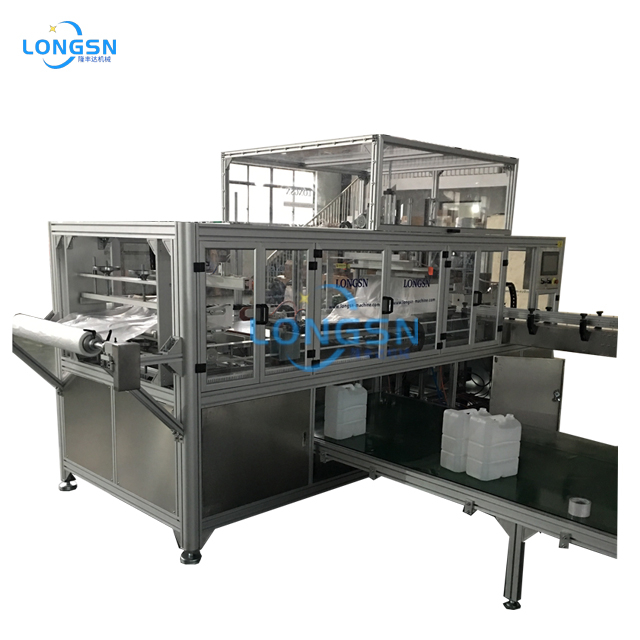
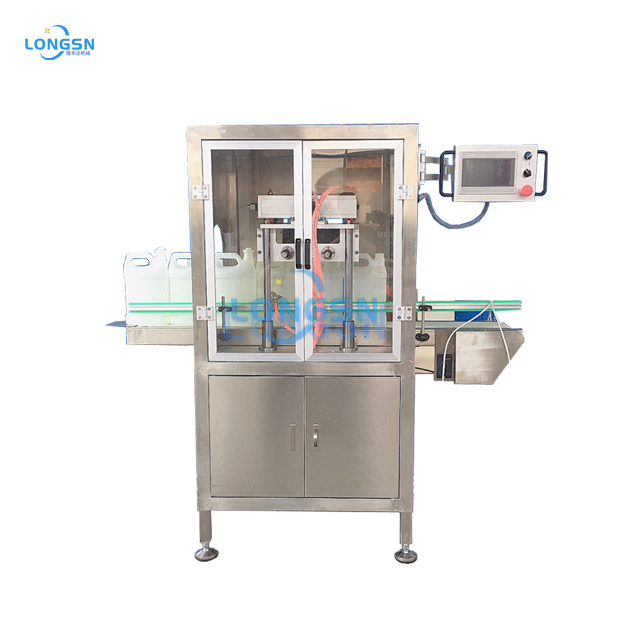
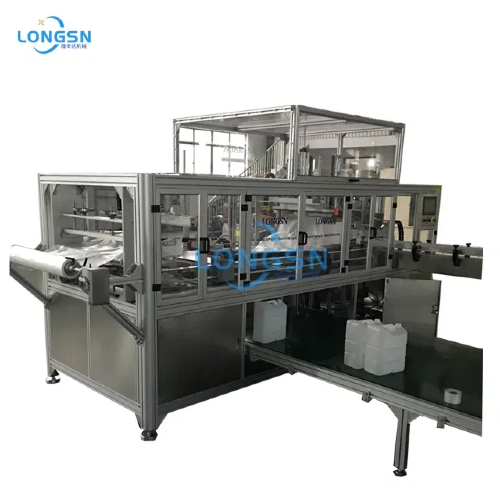
An Empty Bottle Bagging Machine is an automated system designed to streamline the process of packing empty bottles into bags for storage or shipment. It eliminates the need for manual labor by automating the entire bagging process, from bottle alignment to bag sealing.
How Does It Work?
The machine works by feeding bottles from the production line into a series of automated components. These include conveyor systems, alignment tools, bagging arms, and sealing mechanisms, which work together to perform the following tasks:
Bottle Feeding: Bottles are transferred from the production line to the bagging machine.
Bottle Alignment: Bottles are automatically aligned in the proper position for bagging.
Bagging: A pre-made bag or roll film is fed automatically to receive the bottle.
Sealing: Once the bottle is inserted into the bag, the bag is sealed with a heat-sealer or mechanical clamp.
Discharge: The sealed bag is then discharged from the system for further processing or shipping.
The automation of this process improves the speed and quality of packaging, reduces human error, and enables manufacturers to meet high production demands.
Slashing Labor Costs: How Automation Saves Money
The High Cost of Manual Labor
Traditionally, packaging lines rely heavily on human labor, particularly in the bottle bagging process. This labor is essential for tasks like placing bottles in bags, adjusting the bag size, sealing, and ensuring that the bags are correctly filled. However, the reliance on human labor introduces a variety of inefficiencies:
Labor costs increase as production scales: More workers are needed to keep up with demand.
Training is time-consuming: Workers need regular training to avoid costly mistakes.
Inconsistent quality: Humans are prone to errors, leading to improperly bagged bottles, which could lead to product damage or rejection.
How Automated Empty Bottle Bagging Machines Cut Labor Costs
By automating the bagging process, empty bottle bagging machines drastically reduce the need for manual labor. This not only leads to direct cost savings but also increases efficiency across the entire packaging line. Here’s how:
Fewer Workers: Automated systems can handle the tasks previously done by multiple employees, drastically reducing the need for additional labor.
Reduced Training Costs: Since the machines are easy to operate and require minimal human intervention, training costs are reduced.
Minimized Human Error: With automation, human errors such as incorrect bagging or improper sealing are eliminated. This ensures higher product quality and fewer rejected items.
Cost Savings in Action
Let’s break down how much a manufacturer could save by replacing manual labor with an automatic bagging machine:
Scenario | Manual Labor | Automated Bagging Machine |
Workers Required | 4-6 employees per shift | 1-2 employees per shift |
Training Time (Per Worker) | 1 week per employee | 1 day per employee |
Labor Cost (Annual) | $200,000+ | $50,000+ |
Machine Cost (Annual) | N/A | $100,000+ (with service fees) |
By cutting down on manual labor, companies can reinvest the savings into further automation or other areas of the business.
Doubling Output: How Automated Systems Improve Efficiency
The Limitations of Manual Systems
Manual bagging systems are inherently slow and can’t keep up with modern production speeds. Workers can only handle a limited number of bottles per hour, and production lines are frequently halted to address issues like bagging errors, misalignment, or staff shortages.
Boosting Production Speed with Automation
Automated empty bottle bagging machines can dramatically increase output by packaging bottles at speeds far beyond what human labor can achieve. Depending on the machine’s configuration, an automatic system can handle between 3,000 and 8,000 bottles per hour.
Speed and Consistency: A Major Advantage
Compared to manual methods, automation offers:
Consistent Speed: Once set up, automated systems can operate at a constant speed without the fatigue or mistakes that human workers might encounter.
Faster Packaging: With the ability to process thousands of bottles per hour, automated bagging machines eliminate bottlenecks in the production line.
High Efficiency: The system runs 24/7 with minimal downtime for maintenance, ensuring maximum output.
Case Study: Beverage Production Line
Consider a beverage company that needs to package thousands of bottles per day. Traditionally, the manual bagging process could only handle 1,000 bottles per hour, leading to delays and requiring extensive labor.
By installing an Empty Bottle Bagging Machine, the company could increase packaging output to 8,000 bottles per hour, effectively doubling the production rate without increasing the workforce. This means the company could meet higher demand and reduce operational costs simultaneously.
The Long-Term Impact on Output
Not only do automatic bagging systems boost output in the short term, but they also offer long-term benefits:
Reduced Downtime: The machines require less maintenance and operate continuously, ensuring the production line runs efficiently.
No Slower Shifts: Unlike manual labor, where workers tire, the machine consistently performs at peak efficiency, providing the same output every hour.
Choosing the Right Empty Bottle Bagging Machine
Factors to Consider When Selecting a Machine
Choosing the right Empty Bottle Bagging Machine depends on several factors, including production needs, bottle types, and automation requirements. Here are the main factors to consider:
Production Speed: How many bottles per hour does your facility need to process? Choose a machine that meets or exceeds this requirement.
Bottle Size and Shape: Some machines can handle different bottle shapes, including round, square, and rectangular bottles. Consider the types of bottles your company manufactures.
Automation Level: Do you need a semi-automatic or fully automatic machine? A semi-automatic machine requires more manual intervention but costs less, while fully automatic systems provide higher efficiency at a higher cost.
Bag Type: Make sure the machine can handle the type of bag (pre-made bags vs. roll film) and bag size you use.
Customization for Different Bottles
Most modern bagging machines are customizable to handle various types of bottles. Some systems can handle bottles from 50 ml to 5 L, while others are suited for larger containers.
Machine Model | Speed | Bottle Type | Automation Level | Bag Type |
LSN-BS180 (Semi-Automatic) | 2,000 – 3,000 bottles/hour | Round, Square, Rectangular | Semi-Automatic | Pre-made Bags |
LSN-BA200 (Full-Automatic) | 6,000 – 8,000 bottles/hour | Round, Square, Rectangular | Full-Automatic | Roll Film |
Heavy-Duty Model | 8,000+ bottles/hour | Large Containers | Full-Automatic | Pre-made Bags |
Industry Applications and Benefits
Which Industries Benefit from Empty Bottle Bagging Machines?
Beverage Industry: Automates the bagging of water, soda, juice, and other bottled drinks.
Chemical Industry: For bottles of cleaning products, oils, and chemicals.
Pharmaceutical Industry: For bottles of medicines and health products.
Food Industry: For bottles of sauces, oils, and packaged food items.
Each of these industries can benefit significantly from reduced labor costs, faster production speeds, and increased overall efficiency.
Case Example: Chemical Packaging Industry
A chemical company used to package 100,000 bottles per week by relying on manual labor. After implementing an automatic empty bottle bagging machine, the company saw its production rate jump to 300,000 bottles per week. The move resulted in lower operational costs and more efficient packaging, improving their bottom line.
The Future of Bottle Handling Automation
Technological Advancements on the Horizon
The future of automated bottle bagging is exciting, with innovations such as AI, machine vision, and IoT technologies integrating into systems. These advancements can provide real-time monitoring, quality control, and predictive maintenance, further enhancing the efficiency of production lines.
Global Demand for Automation
As manufacturers strive to meet the growing demands of the global market, the push for automation will continue to increase. Companies that invest in these technologies will not only keep up with industry standards but will also gain a competitive advantage in the marketplace.
Conclusion
Automated Empty Bottle Bagging Machines are an essential investment for any bottle packaging line. These advanced systems not only help manufacturers significantly reduce labor costs, but also increase production speeds and enhance overall efficiency. By incorporating automation into their operations, companies can streamline their packaging process, scale production, and ultimately double their output, all while maintaining consistent quality.
If you're looking to boost your production line's performance and cut down on operational costs, it's time to explore automated bagging solutions. Zhangjiagang Longsn Machine Co., Ltd. specializes in providing state-of-the-art empty bottle bagging machines designed to meet the unique needs of various industries. With their expertise in creating efficient and reliable packaging systems, Longsn offers the perfect solutions to elevate your business.
Reach out to them today for more information, expert guidance, and customized recommendations that will help you take your packaging operations to the next level.
FAQ
1. What is an Empty Bottle Bagging Machine?
An Empty Bottle Bagging Machine automates the process of packing empty bottles into plastic bags. It increases efficiency, reduces labor costs, and improves packaging quality.
2. How does automation reduce labor costs?
Automation reduces the need for manual labor by performing tasks like bagging, aligning, and sealing bottles. This saves on wages, training, and worker management.
3. What bottle shapes can the machine handle?
The machine can handle various bottle shapes, including round, square, and rectangular bottles.
4. How much faster is an automated bagging machine compared to manual labor?
An automated system can process 3,000 to 8,000 bottles per hour, significantly faster than manual methods, which may only process a few hundred per hour.
5. Can the machine handle different bag sizes and materials?
Yes, most automated machines can work with pre-made bags or roll film and accommodate different bag sizes and materials, providing flexibility for various production needs.
6. What industries use empty bottle bagging machines?
These machines are used in a wide range of industries, including beverages, chemicals, pharmaceuticals, and food packaging.
7. How do I choose the right Empty Bottle Bagging Machine?
Consider factors like production speed, bottle size and shape, automation level, and bag type when choosing a machine for your production line.

 English